

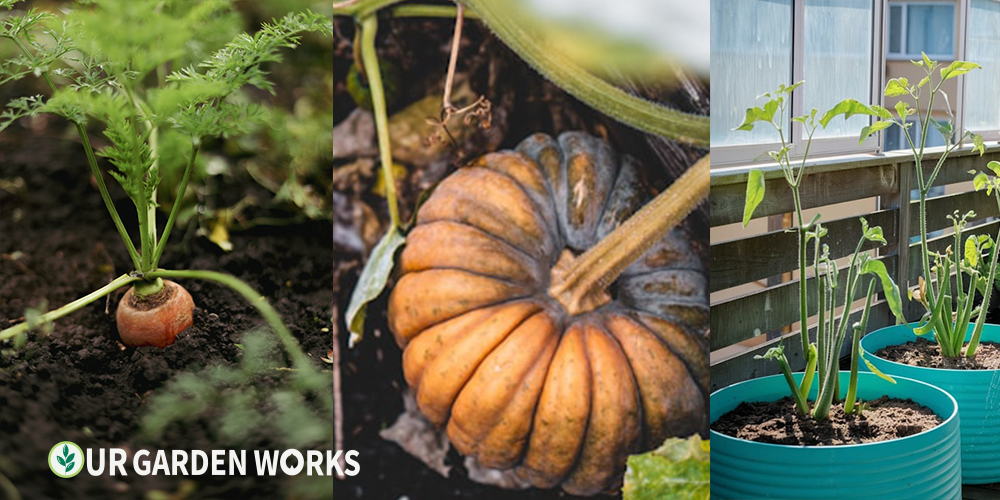
Let me tell you what nobody says clearly enough about growing vegetables: the goal is not a perfect garden. The goal is food on your table — and getting better at it every single season until growing your own produce feels as natural as cooking it.
I’ve been growing vegetables for years, and I still kill things. I still get the timing wrong sometimes. I still find mystery bugs I’ve never seen before. What changed is that I know what to do next. That’s what this guide is for — not just the basics, but the knowledge that makes you a confident vegetable gardener, season after season.
This is our hub for everything vegetable gardening at OurGardenWorks. Every section links out to our detailed articles when you want to go deeper. Start here, then follow the links that match what you’re growing.
🌿 Editor’s Note
“The single most useful thing I ever did in my vegetable garden was stop trying to grow everything at once. Pick three crops, learn them well, and you’ll eat better than someone with 20 struggling plants.”
Why Grow Your Own Vegetables?
This question sounds rhetorical, but it’s worth asking seriously — because your answer changes how you garden.
People who grow food for taste garden differently than people growing for savings, or for therapy, or for their kids. Know your reason, and your decisions will be clearer all season long.
The Case for Homegrown
Store-bought tomatoes are picked green and ripened with ethylene gas in transit. A tomato from your garden, picked warm off the vine, is a completely different food.
The same is true of cucumbers, lettuce, carrots, and most other vegetables — the flavor difference is not subtle. It’s the reason that once people start growing their own food, they almost never stop.
Beyond flavor, there’s the question of what’s actually in your food. When you grow it yourself, you choose the soil, the amendments, the pest control method.
You can grow varieties that are simply unavailable in stores — heirloom tomatoes, purple carrots, rainbow chard, watermelon radishes — because commercial farming selects for shipping durability, not taste.
The Honest Cost-Benefit
Vegetable gardening saves money over time, but not necessarily in year one. The upfront costs — raised bed materials, quality soil, seeds, basic tools — add up. The savings become real when your garden infrastructure is in place and you’re just buying seeds and amendments each spring. Most gardeners break even around year two and are genuinely saving money from year three onward.
💡 Pro Tip
The fastest way to see real savings: grow what you actually eat a lot of. If your family goes through two heads of lettuce per week, grow lettuce. At $3–4 per head in the store, a 4×4 bed of lettuce can save you $200–$300 in a single season.
Recommended Reads:
Choosing the Right Crops for Your Season and Space
The biggest planning mistake in vegetable gardening is choosing what sounds good and ignoring whether it will actually work in your climate, soil, and available space.
Before you spend a dollar on seeds or transplants, answer these three questions: What’s your zone? What’s your last frost date? And how much sun does your growing space get?
Cool-Season vs. Warm-Season Crops
This single distinction prevents more gardening failures than anything else I know. Plant warm-season crops too early and a late frost kills them. Plant cool-season crops in summer heat and they bolt immediately. Get this right and half your problems disappear.
| Crop | Season | Difficulty | Time to Harvest | Best For |
|---|---|---|---|---|
| Radishes | Cool | Easy | 22–30 days | First-timers; fastest reward in the garden |
| Lettuce / Greens | Cool | Easy | 30–45 days | Cut-and-come-again; ideal for containers |
| Cucumbers | Warm | Easy | 50–70 days | Prolific producers; great on a trellis |
| Sunflowers | Warm | Easy | 70–100 days | Harvested seeds; morale-boosting scale |
| Garlic | Cool (fall plant) | Easy | 8–9 months | Plant in fall, harvest summer; almost no maintenance |
| Tomatoes | Warm | Medium | 60–80 days | The classic goal; worth the effort |
| Pumpkins | Warm | Medium | 90–120 days | Kids love every stage; great space-filler |
| Carrots | Cool | Medium | 70–80 days | Need loose soil; deeply satisfying to pull |
| Lima Beans | Warm | Medium | 65–90 days | Container-friendly; kids’ science project |
| Watermelon | Warm | Hard | 70–90 days | Needs companion plants and lots of space |
You might also like: 25 Easiest Plants to Grow for Beginner Gardeners — The No-Fail Starter List
Radishes: The Perfect First Crop
If you’ve never grown vegetables before, start with radishes. They’re ready in under 30 days, they’re brutally honest about your soil quality, and harvesting something — anything — in that first month creates the momentum that carries you through the season.
Understanding when radishes are ready to pick is simple, and the signs are unmistakable once you know what to look for.
Recommended Reads:
Lettuce: The Perpetual Harvest
Lettuce is the most immediately rewarding thing you can grow in a container or raised bed.
The trick most beginners don’t know is the cut-and-come-again method — harvesting outer leaves and leaving the center intact so the plant keeps producing. Done right, one small container of lettuce gives you salad greens for months, not weeks.
Recommended Reads:
- How to Grow Lettuce: Succession Planting for Leaves All Season (2026)
- When to Harvest Lettuce – Cut-and-Come-Again vs. Full Head Harvesting
- How to Harvest Lettuce So It Keeps Growing — the Cut-and-Come-Again Method
- How to Cut Lettuce from the Garden in 3 Easy Methods (So It Keeps Growing)
- How to Keep Lettuce Cool in Summer Heat (6 Methods That Work)
Cucumbers: The High-Volume Producer
Once cucumber plants hit their stride, they produce fast — sometimes faster than you can eat them. The key to peak flavor and continued production is knowing when to pick cucumbers: too early and they’re watery, too late and they turn bitter and yellow, and the plant slows down.
Recommended Reads:
- How to Grow Cucumbers — Planting to Harvest
- 8 Best Companion Plants for Cucumbers
- When to Pick Cucumbers: Signs They’re Ready & How to Keep Plants Producing
- Do Cucumbers Need a Trellis? (+ How to Train Them)
- Growing Cucumbers in Containers: The Vertical Method That Actually Works (2026)
- Why Are Cucumber Leaves Turning Yellow? 7 Causes
Cucumbers also have strong opinions about what grows near them. Learning about companion planting strategies can help both your cucumbers and neighboring crops thrive by deterring pests and improving pollination.
Pumpkins: The Long Game
Few things in the garden are as satisfying as growing your own pumpkins, and few require as much patience. There are eight distinct pumpkin growing stages from seed to maturity, and understanding each one helps you know whether your plant is on track or struggling.
One critical care question: Do pumpkins need full sun? The answer affects where you can grow them and how productive they’ll be.
Recommended Reads:
Sunflowers: The Morale Crop
Sunflowers do something no other vegetable crop does as well: they make the garden feel joyful while it’s growing.
They’re nearly impossible to kill, they attract pollinators that benefit everything else you’re growing, and knowing when to harvest sunflower seeds gives you a genuinely satisfying end-of-season reward you can roast, share, or save for next year.
Carrots: The Patience Crop
Carrots are worth growing for the sheer surprise of pulling them from the ground — but they require loose, deep, rock-free soil or they fork and twist into unusable shapes.
One issue that trips up almost every new carrot grower is pulling seedlings by accident. Knowing what carrot sprouts look like in the early stages can save an entire row.
Recommended Reads:
Growing Methods: Ground, Raised Beds & Containers
The method you choose matters as much as the crop you choose. Each approach has different soil requirements, watering needs, and productive lifespans.
Choose based on what you have — not what looks best in a gardening magazine.
In-Ground Gardening
In-ground beds are the lowest-cost starting point if your native soil is workable. The challenge is that most residential soil is not — it’s compacted from construction, too sandy, too clay-heavy, or nutritionally depleted.
Some vegetables are more forgiving than others. Knowing which vegetables grow in clay soil can determine whether your existing ground is worth amending or whether you’re better off building a raised bed.
Recommended Reads:
Raised Bed Gardening
A raised bed solves almost every soil problem immediately. You control what goes in, drainage is superior, soil warms earlier in spring, and pest and weed management is dramatically easier.
For most suburban and urban gardeners, a raised bed is the single best investment in the vegetable garden. The question is which one — and with so many options, finding the best raised garden beds for small spaces is a decision worth making carefully.
Recommended Reads:
Container Gardening
Containers are the true equalizer — they work on a balcony, a fire escape, or a south-facing kitchen windowsill.
The critical rules: drainage holes are non-negotiable, containers dry out twice as fast as in-ground soil, and minimum pot depth matters enormously.
Growing carrots indoors, for example, requires a deeper container than most beginners expect — at least 12 inches deep for full-size varieties.
Recommended Reads:
- How to Grow Tomatoes from Seed to Harvest
- How to Grow Basil Indoors & Outdoors
- How to Grow Peppers (Bell & Hot) — Complete Guide
- How to Grow Potatoes in Bags, Buckets & Ground
- How to Grow Zucchini — Planting to Harvest
- How to Grow Green Beans: Bush and Pole Varieties Compared
- How to Grow Onions from Seed & Sets
- How to Grow Kale — Container & Garden
- How to Grow Lettuce: Succession Planting for Leaves All Season (2026
- How to Grow Spinach (Including in Heat)
- How to Grow Cucumbers — Planting to Harvest
- How to Grow Strawberries
- How to Grow Garlic — Complete Guide
- How to Grow Carrots
- How to Grow Broccoli
- How to Grow Peas
- How to Grow Sweet Potatoes
- How to Grow Beets
- How to Grow Cauliflower
- How to Grow Lima Beans in a Cup — Urban Gardening Tips That Actually Work
- How to Grow Asparagus in a Container — The Complete Guide
- Growing Tomatoes in Containers: Pot Size, Varieties & Watering (2026)
- Growing Peppers in Containers: Varieties, Pots & Fertilizing (2026)
- Growing Cucumbers in Containers: The Vertical Method That Actually Works (2026)
- Growing Strawberries in Containers: Pots, Planters & Hanging Baskets (2026)
Indoor Grow Rooms
For year-round production or serious scale, some gardeners take the leap to building a dedicated indoor growing space.
Learning how to build a grow room in a garage opens up possibilities that no amount of outdoor bed space can match — total climate control, pest-free conditions, and harvests in any season.
Soil, Watering & Feeding Your Vegetables
These 3 factors — soil quality, consistent water, and appropriate nutrition — account for roughly 80% of vegetable growing success or failure. Get all three right and most plants will thrive despite your mistakes everywhere else.
Feeding Your Vegetables
Different vegetables have dramatically different nutritional needs.
Heavy feeders like tomatoes, cucumbers, and pumpkins need regular fertilizing throughout the season. Light feeders like carrots and radishes prefer lean soil.
Using the wrong fertilizer — or the wrong amount — can cause lush foliage with no fruit, or burned roots. Finding the right fertilizers for your plants is a good entry point into understanding vegetable nutrition more broadly.
Recommended Reads:
Companion Planting
What grows next to your vegetables matters almost as much as how you care for them directly.
Companion planting isn’t folklore — certain plant combinations genuinely improve yield, reduce pest pressure, and support pollination.
Watermelons in particular benefit significantly from the right neighbors: knowing what grows well with watermelon can mean the difference between a productive vine and a struggling one.
Recommended Reads:
Organic Pest Management
The question of how to manage pests without harming your soil, your harvest, or your health comes up every season.
Two of the most effective organic tools — insecticidal soap and neem oil — are often compared, and understanding the difference between insecticidal soap vs. neem oil helps you choose the right one for the right problem.
You might like: Garden Pest Control Guides
Harvesting at the Right Time
Harvest timing is the most underrated skill in vegetable gardening. Most vegetables have a specific window — sometimes just a few days wide — when they’re at peak flavor, texture, and nutrition. Miss that window in either direction and the experience is genuinely disappointing.
Learn Each Crop’s Visual Cues
Every vegetable tells you it’s ready in its own language — size, color, skin texture, stem condition. Radishes push out of the soil when they’re ready. Cucumbers get dull and yellow when they’re past peak. Sunflower seed heads droop and the backs turn yellow-brown. Learn these cues for whatever you’re growing.
Harvest Frequently to Promote More Production
Lettuce, cucumbers, beans, and herbs all produce more when harvested regularly. A plant’s biological goal is seed production — when you remove fruit before it sets seed, the plant redoubles its effort to produce more. Cutting lettuce properly keeps it producing for months instead of weeks.
Harvest in the Morning When Possible
Vegetables harvested in the morning — before the heat of the day draws moisture out — stay crisper longer after picking. This is especially true for leafy greens, cucumbers, and beans. An early-morning harvest can extend refrigerator life by two to three days compared to an afternoon harvest.
Know the Difference Between Mature and Overripe
Tomatoes left on the vine past peak split in rain and attract pests. Green tomatoes that are picked before frost can still ripen — storing green tomatoes properly is a useful skill for anyone gardening in a short-season climate.
Recommended Reads:
- Succession Planting Guide: Harvest All Season
- When to Harvest Broccoli – Signs It’s Ready and How to Cut It
- When to Harvest Garlic – How to Tell It’s Ready and How to Cure It
- When to Harvest Potatoes – New Potatoes vs. Full Harvest Timing
- When to Harvest Onions – Signs They’re Ready and How to Cure Them
- When to Harvest Lettuce – Cut-and-Come-Again vs. Full Head Harvesting
- When to Harvest Kale – How to Pick for Continuous Production All Season
- When to Harvest Zucchini – Size, Signs, and Harvesting Frequency
- How to Harvest and Cure Winter Squash Perfectly
Storing & Preserving Your Harvest
One of the quiet satisfactions of vegetable gardening is the abundance problem — you’ve grown more than you can eat this week. Knowing how to store and preserve your harvest extends the value of every plant you grew.
Recommended Reads:
- How to Store Green Tomatoes & Wait for Them to Ripen — Step-by-Step
- How to Store Fresh Green Beans & Prolong Their Shelf Life
- How to Preserve Carrots & Extend Their Shelf Life — 4 Methods That Work
- How to Store Rutabaga: 4 Powerful Ways + 4 Helpful Tips
- How to Dehydrate Bananas & Make Them into a Healthy Long-Lasting Snack
- How to Store Homemade Tortillas & Preserve Them Effectively
- The Noob Friendly Guide To Blanch Celery: 5+ Ways [and Means]
Troubleshooting Common Vegetable Garden Problems
Something will go wrong this season. That’s not pessimism — that’s the honest experience of every vegetable gardener who’s ever grown anything. The difference between a gardener who quits and one who improves is curiosity: what happened, what caused it, and what’s the fix?
“There Are White Spots on My Tomatoes”
White spots on tomatoes can mean several different things — sunscald, fungal disease, pests, or a nutritional issue — and the treatment differs significantly depending on the cause. Understanding what white spots on tomatoes actually mean is the starting point for knowing whether they’re safe to eat and how to prevent it next time.
“There Are Mushrooms Growing in My Mulch”
This is one of the most common panic moments for new gardeners — and almost never a problem. Mushrooms in mulch are a sign of healthy decomposition, not a disease. That said, knowing how to get rid of mushrooms in mulch if you want them gone is useful, and the methods are simpler than most people expect.
“Are These Vegetables Safe to Eat?”
Two questions come up regularly with less common crops: tomatillos look toxic but aren’t — understanding whether tomatillos are safe to eat removes a surprising amount of unnecessary hesitation. And radish leaves, which almost everyone throws away, are actually nutritious and edible.
⚠️ Important
When in doubt about whether something from your garden is safe to eat — especially anything with spots, unusual discoloration, or unfamiliar appearance — look it up before eating it. Most concerns have simple explanations, but it’s always worth checking.
Tomato Growing Deep-Dive
Tomatoes get more attention than any other vegetable in this guide for a reason — they’re the most-grown home vegetable, and also the one with the most technique-dependent results.
These articles go beyond the basic growing guide into the specific skills that separate a mediocre tomato harvest from a genuinely great one.
Recommended Reads:
- How to Grow Tomatoes From Seed to Harvest (Complete 2026 Guide)
- Growing Tomatoes in Containers: Pot Size, Varieties & Watering (2026)
- Best Companion Plants for Tomatoes – Full List (2026)
- Tomato Varieties Guide — Best Types for Every Garden (2026)
- When to Plant Tomatoes — Regional Planting Guide (2026)
- How to Stake Tomatoes — 5 Methods Compared (With Setup Instructions)
- How to Prune Tomato Plants: Suckers, Leaves & End-of-Season Cuts (2026)
- When to Pick Tomatoes – Variety Guide + 5 Ripeness Tests
- How to Save Tomato Seeds – The Complete Fermentation Method
- How to Store Green Tomatoes: Ripen Them Indoors (Complete 2026 Guide)
- Why Are My Tomato Leaves Curling? 5 Causes + Fixes
- Tomato Leaves Turning Yellow: 7 Causes and Exactly How to Fix Each One
- How to Fix Blossom End Rot on Tomatoes (It’s Not What You Think)
- Tomato Stem Rot: Causes, Treatment & Prevention Guide (2026)
- Why Do Tomatoes Crack and Split? 5 Causes + Fixes (2026)
- Holes in Tomato Leaves: 6 Causes, ID Guide & Organic Fixes (2026)
- Black Worms in Tomatoes: What They Are & How to Get Rid of Them (2026)
- White Spots on Tomatoes: 4 Causes, Fixes & Safety Guide (2026)
- 10 Best Fungicides for Tomatoes — Organic & Chemical Options (2026)
- Tomato Pesticides Guide: Organic & Chemical Options Compared (2026)
- 9 Best Tomato Blight Spray Recipes That Actually Work (2026)
- How Many Tomato Plants Per Person (and Per Family)? — 2026 Guide
- How to Get Rid of Ants on Tomato Plants — 8 Methods That Work (2026)
Seed Starting & Seasonal Planning
When and how you start your season sets up everything that follows. This section covers seed starting fundamentals plus the seasonal planning skills — succession planting, cold-hardy crop timing, and extending your harvest into fall — that keep a garden productive well beyond a single spring planting.
Seed Starting Guides: (Plan & Time; Set Up; Sow & Germinate & Grow & Care)
- (Hub) Seed Starting Guide – Everything You Need to Start Seeds Indoors
- When to Start Seeds Indoors — Region-by-Region Schedule (2026)
- Frost Dates by Zone — How to Use Them for Planting
- How to Read a Seed Packet — Every Field Explained
- How to Set Up a Seed Starting Station for Under $100
- Seed Starting Mix vs. Potting Mix — What’s the Difference and When to Use Each
- Best Seed Starting Mix — DIY Recipe vs Store-Bought (2026 Guide)
- Best Seed Starting Trays — 72-Cell, 50-Cell, Self-Watering & What to Actually Buy
- How to Start Seeds Indoors: Complete Step-by-Step Guide (2026)
- How to Germinate Seeds Fast — Paper Towel Method, Pre-Soaking & Heat Tricks
- Why Seeds Won’t Germinate — 7 Causes and Exactly How to Fix Each
- How to Harden Off Seedlings Without Shocking Them (7-Day Schedule)
- When and How to Fertilize Seedlings — The True Leaf Rule Explained
- 15 Seed Starting Mistakes That Kill Seedlings (And How to Avoid Them)
Seasonal Planning & Free Tools
- Seed Starting Calculator — When to Start Every Crop Indoors
- Frost Date by ZIP Code Finder
- What to Plant First in a Garden — Best Picks for New Gardeners
- Succession Planting: What It Is, How to Do It, and Why It Transforms Your Garden
- 15 Cold-Hardy Vegetables to Plant Before Last Frost
- How to Start a Fall Garden for Extended Harvests
- 8 Best Fall Vegetables to Plant in August for Autumn Harvest
Specialty Crops Worth Trying
Once you’ve mastered the basics, these crops expand what’s possible in your vegetable garden. Some are unusual. Some are more work. All of them are rewarding in ways standard crops aren’t.
Garlic: The Easiest Set-and-Forget Crop
Garlic is one of the most underrated vegetables for home gardeners. You plant it in fall, it grows through winter with essentially zero maintenance, and you harvest it in early summer.
Knowing how to plant garlic in the fall correctly sets you up for a generous harvest eight to nine months later — and homegrown garlic is dramatically more flavorful than anything from a store.
You might like: How Deep to Plant Garlic (+ When to Harvest)
Gourmet Mushrooms: A Different Kind of Growing
Mushrooms aren’t vegetables — technically, they’re fungi — but they belong in every vegetable gardener’s toolkit.
Learning how to grow gourmet mushrooms opens up a genuinely different kind of growing experience: no sunlight needed, fast turnaround, and varieties you’ll never find in a grocery store.
Growing Grapes Indoors
It sounds ambitious, but growing grapes indoors is genuinely possible with the right container, trellis system, and variety selection.
This is a multi-season commitment, but one that produces a remarkable result in a space most people would never expect to grow grapes.
Broccolini, Purslane & Chicory
These three crops sit at the intersection of unusual and genuinely useful. Broccolini is more cold-tolerant and faster than broccoli — you can start it from seed or learn to grow broccolini directly in the garden.
Purslane is technically a weed that most gardeners pull out — but grown intentionally, it’s one of the most nutritionally dense plants you can eat. Chicory is the reliable cool-season green worth learning to grow and harvest.
Sugar Cane, White Sage & Popcorn
For gardeners who want something genuinely unusual: growing sugar cane at home is possible in warmer climates and produces a remarkable raw ingredient.
White sage is a sacred and aromatic plant that thrives in dry climates. And growing popcorn from seed produces something the whole household will actually want to participate in harvesting.
Bananas: The Long-Season Reward
If you’re in a warm climate and want to try something dramatic, knowing how fast banana trees grow sets realistic expectations before you plant. They’re faster-growing than most people assume and deeply satisfying in a landscape or large container setting.
✅ Key Takeaways:
- Start with radishes and lettuce— they’re forgiving, fast, and teach you more about your soil than anything else
- Know your frost date— it determines when warm-season crops like tomatoes and cucumbers can go outside
- Match your method to your space— containers beat in-ground if your soil is poor; raised beds beat both if budget allows
- Harvest timing is a skill— learn the visual cues for each crop you grow, and harvest frequently to promote more production
- Store your surplus— green tomatoes ripen on the counter, carrots keep for months in the right conditions, and beans freeze beautifully
- Something will go wrong— treat every problem as useful data, not personal failure
