

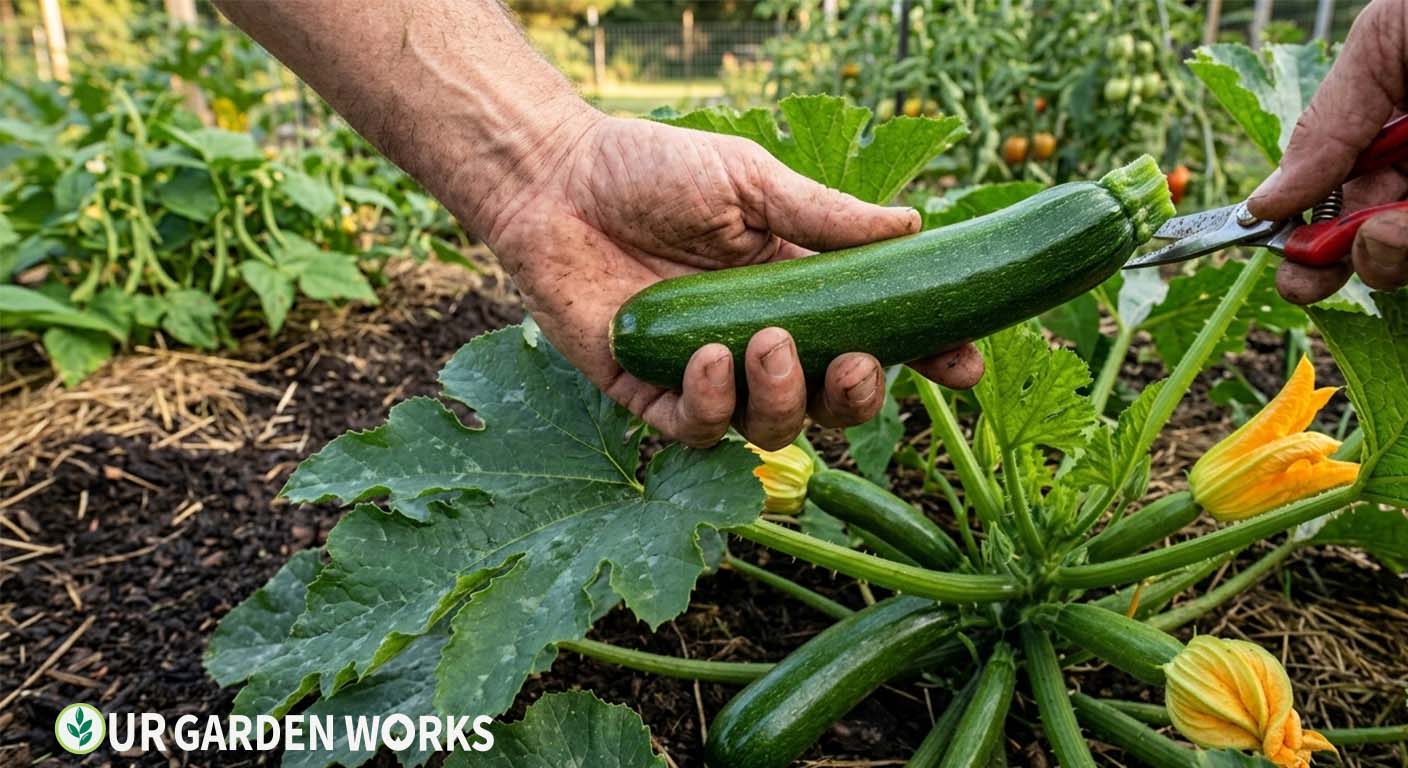
Zucchini is the vegetable that gets away from everyone at least once. You look at it on Monday — it’s finger length. You look on Friday — it’s a small log. This is not an exaggeration. In warm weather, zucchini grows an inch or more per day.
Getting harvest timing right isn’t just about flavor. It’s the key to keeping your plant productive all season. Every oversized zucchini left on the vine is actively slowing new fruit production. Harvest at the right size, harvest often, and one plant will supply your kitchen for months.
When to Harvest Zucchini – Quick Answer: Harvest zucchini when 6–8 inches long for standard varieties. Round types at tennis-ball size. Check every 1–2 days at peak season — daily during hot weather. Never let a zucchini turn yellow on the vine.
Why a Single Forgotten Zucchini Slows the Whole Plant
This is the single most important thing to understand about zucchini, and it explains nearly every “my plant stopped producing” complaint gardeners run into.
A zucchini left on the vine isn’t just sitting there harmlessly getting bigger — it’s actively maturing toward seed production, and as its seeds develop and harden, the plant receives a hormonal signal that its reproductive job for that fruit is essentially done.
Plants, like many organisms, allocate finite energy based on what’s already “invested” versus what still needs investment. Once a fruit is committed to seed-maturation, the plant redirects resources toward finishing that job rather than starting new flowers and fruit elsewhere on the vine.
This means one oversized, forgotten zucchini can measurably slow new fruit set across the entire plant, not just at that one fruit’s location — which is exactly why finding and removing it usually restarts production within about a week, once the plant’s hormonal signals reset and it goes back to treating flowering as the priority.
This is also why the daily or every-other-day check habit matters so much more for zucchini than for slower-growing crops.
A tomato or pepper plant carrying one overripe fruit doesn’t suffer nearly the same productivity penalty, since those crops aren’t pushing out new fruit at anywhere close to zucchini’s pace to begin with.
Zucchini’s whole reputation for prolific, almost overwhelming production depends entirely on you keeping that signal clear by harvesting consistently, rather than letting even one fruit slip past its window.
The Harvest Size by Variety Type
“Zucchini” isn’t a single uniform shape and size target — the right harvest window shifts noticeably depending on which type you’re growing, and using a one-size-fits-all rule across different varieties is a common reason gardeners harvest some types too early and others too late.
| Zucchini Type | Ideal Harvest Size | Why This Size |
|---|---|---|
| Standard green/yellow zucchini | 6–8 inches long | Tender flesh, small seeds, best flavor |
| Round zucchini (Eight Ball) | Tennis ball to softball size | Perfect for hollowing and stuffing |
| Pattypan / scallop | 3–4 inches across | Skin still tender, seeds minimal |
| Tromboncino (vining) | 12–18 inches, firm and pale | Harvested young before seeds develop |
| Baby zucchini with flower | 2–4 inches with flower attached | Restaurant-quality, harvest in morning |
💡 Yellow skin = harvest immediately
Any zucchini showing yellow skin is overripe. Harvest it today — not tomorrow. Leave it one more day and seeds will be large, skin tough, and the production signal to the plant (“I’m making seeds, slow down”) will be reinforced. Even overripe zucchini can be used: grated for zucchini bread, scooped and stuffed, or hollowed for soup vessels.
How to Harvest Zucchini Without Damaging the Plant
Directions
- Always use sharp pruning shears or a knife — don’t pull or twist. Twisting can damage the main stem or uproot a shallow-rooted plant.
- Cut the stem 1 inch above the cap of the zucchini. Leaving a short stub on the fruit prevents the cut surface from directly touching other produce in storage.
- Harvest in the morning when the fruit is at its most hydrated and the flesh is firmest.
- While harvesting, scan under all leaves for hidden fruit — zucchini hides remarkably well under its own enormous foliage.
- Remove any dead, yellowing, or diseased leaves at the same time. Good airflow prevents powdery mildew.
What to Do with Oversized Zucchini
It happens to everyone. Here’s how to use what you have, organized roughly by how far gone the fruit is:
- 6–10 inches: Still usable fresh. Slightly more seeds — remove them if cooking.
- 10–15 inches: Grate for zucchini bread, fritters, or muffins. Watery flesh cooks down well.
- 15+ inches: Scoop out the seeds, stuff with meat/cheese/vegetables, and bake like a squash boat. The flesh is bland but has good texture for this application.
- Baseball-bat size: Grate, squeeze out water, and freeze in measured portions for baked goods all winter. One very large zucchini can yield 4–6 cups of grated frozen zucchini.
Beyond a certain size, the seeds themselves become tough and woody enough that even cooking won’t soften them fully, so scooping and discarding the seed cavity (rather than trying to cook around it) generally produces a better final dish than attempting to use the whole interior.
For the complete growing guide that covers everything from planting to final harvest, see our how to grow zucchini guide.
Why Pollination Problems Masquerade as Harvest Timing Issues
Zucchini produces separate male and female flowers on the same plant, and only female flowers — identifiable by the small embryonic fruit already visible at the base, behind the petals — can develop into harvestable zucchini, and only if a bee or other pollinator has physically transferred pollen from a male flower to it.
A female flower that opens, blooms for a day, and then withers and drops without ever swelling into a fruit usually means pollination simply didn’t happen, not that something is wrong with your harvest timing or care.
This matters for this guide specifically because a sudden lull in fruit production, especially early in the season before pollinator populations have built up, can look identical to the “forgotten oversized zucchini” problem described above, but the fix is completely different.
If you’re checking diligently, finding no hidden overripe fruit anywhere on the plant, and still seeing flowers drop without setting, hand-pollination — using a small paintbrush or simply picking a male flower and brushing its center directly against several female flowers each morning — solves the problem directly rather than waiting for natural pollinator traffic to catch up.
This is especially useful in a wet or unusually cool spring stretch, when bee activity itself tends to drop off regardless of how many flowers your plant is producing.
Freezing and Preserving a Zucchini Surplus
Even with diligent daily harvesting, zucchini’s productivity at peak season often outpaces what one household can eat fresh.
Freezing is the most practical preservation method, though it requires some preparation since raw zucchini’s high water content turns to mush if frozen and thawed without pretreatment.
Grate zucchini and squeeze out as much liquid as possible using a clean kitchen towel or cheesecloth, then pack the dried, grated zucchini into freezer bags in portions sized for your typical recipes (1 or 2 cups is a common, versatile amount).
This grated, frozen zucchini works beautifully in baked goods like bread and muffins, where the slightly softened texture after thawing isn’t noticeable once baked.
For zucchini you want to use in dishes where texture matters more — sautés, gratins, or grilled slices — blanching sliced rounds for 1–2 minutes before freezing preserves a firmer bite than freezing raw.
Frequently Asked Questions
How often should I harvest zucchini?
Every 1–2 days during peak season (July–August in most climates). Daily during hot spells when growth is fastest. If you’re going away for a week, harvest everything before you leave — even undersized — so the plant doesn’t shift into seed-production mode while you’re gone.
Our harvest countdown calendar can remind you which zucchini plants are entering their fast-growth window, which is genuinely useful since “check every day” is easy to mean to do and easy to forget in practice.
Why has my zucchini plant stopped producing new fruit?
Almost always because there’s a large, overripe fruit on the vine that you’ve missed. Search under all foliage, remove it, and production will typically resume within a week.
Other causes: poor pollination, extreme heat (above 95°F), or end-of-season plant senescence.
Can I eat zucchini flowers from the plant?
Yes — harvest male flowers (straight stem, no developing fruit at base) in the morning when fully open, since they close up later in the day and become harder to work with in the kitchen.
Female flowers (with a miniature zucchini at the base) can also be harvested but each one removed means one fewer fruit, since that embryonic zucchini never gets the chance to develop further.
Most gardeners harvest male flowers only, since a healthy plant produces far more male flowers than female ones anyway and losing a few has essentially no impact on total fruit yield.
Is it normal for zucchini plants to produce mostly male flowers early in the season?
Yes, this is a completely normal pattern. Young zucchini plants typically produce a flush of male flowers first, partly to establish a pollinator-attracting presence before investing in the more resource-intensive female flowers and fruit.
Don’t worry if your plant seems “flower-only” for the first week or two of blooming — female flowers, and the fruit that follows, reliably show up shortly after.
Should I worry if my zucchini has a slightly bulbous or oddly shaped blossom end?
A small, harmless bit of irregularity right at the blossom end usually traces back to incomplete pollination of part of the flower rather than any disease concern, and it doesn’t affect the rest of the fruit’s eating quality.
If the fruit is rotting or shriveling specifically at that end rather than just showing minor shape irregularity, that’s a different issue worth investigating separately, often related to blossom end rot from inconsistent watering.
Related Articles in Our Vegetable Gardening Guide:
Free Tools to Time Your Harvest:
Final Thoughts
We hope this guide means you’re harvesting at peak size rather than discovering vegetables that could outfit a small army. The daily check habit is everything. For all our vegetable growing guides, our vegetable gardening guide has everything.
Share this post with a fellow gardener who’s ready to get growing — and let us know in the comments what you do with the inevitable oversized zucchini. Happy growing!
