

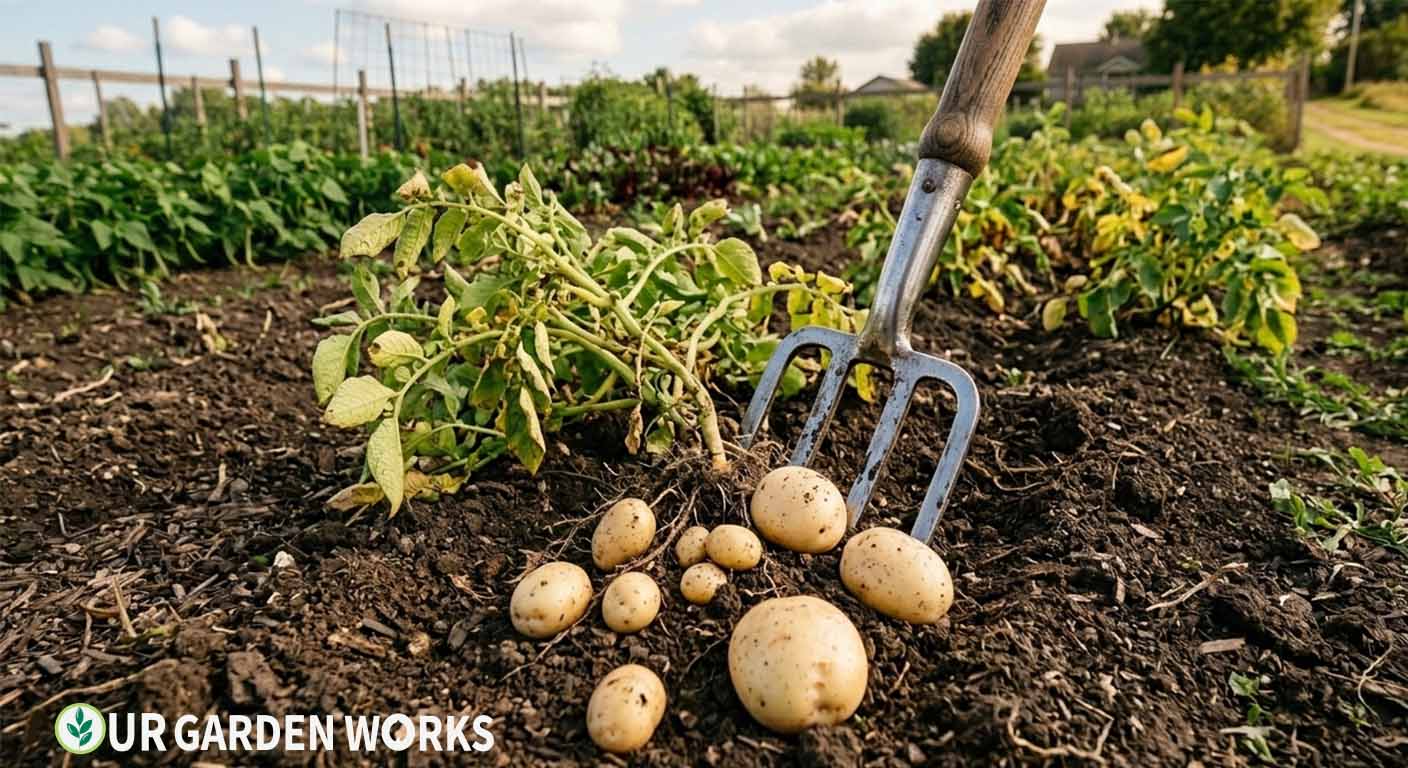
Potatoes are unique in the vegetable garden — they tell you exactly when they’re ready, if you know what to look for. The plant’s aboveground foliage essentially acts as a countdown timer. When it falls over and dies, your potatoes are done.
But there are two very different ways to harvest potatoes depending on what you want from them — early “new potatoes” or the full main-season harvest for storage. Both are right; they’re just different choices. This guide covers both.
When to Harvest Potatoes – Quick Answer: For new potatoes: harvest 2–3 weeks after the plant finishes flowering. For full harvest: wait until the foliage has completely died back (yellowed and fallen over), then wait 2 more weeks before digging. Those 2 extra weeks allow skins to set for storage.
Why Foliage Die-Back Is Such a Reliable Signal
A potato plant’s foliage isn’t decorative — it’s the plant’s entire energy-generating system, photosynthesizing sugars that get transported down into the underground tubers for storage.
As long as the foliage stays green and active, the plant continues this transfer, and the tubers continue gaining size and starch content. When the plant naturally begins shutting down at the end of its life cycle, the foliage yellows and collapses specifically because the plant has finished this transfer process and has nothing left to send.
This means the dying foliage isn’t just a visual cue you’re using as a proxy for tuber readiness — it’s a direct readout of whether the plant is still actively feeding its tubers or has already stopped.
A potato plant with green, vigorous foliage is still in the active growth phase no matter how long it’s been in the ground, while one with fully collapsed foliage has genuinely finished, regardless of how few weeks have passed.
This is also why the “wait 2 more weeks” step matters: even after the foliage dies, the tubers’ outer skin continues thickening and toughening in the soil for a short additional period, which is the maturation that actually makes them suitable for long storage rather than just immediate use.
Digging immediately when the foliage first collapses, without this additional wait, is one of the most common reasons home-grown potatoes don’t store as long as expected.
Two Harvest Windows – Choose Based on Your Goal
Unlike many vegetables where there’s really just one “correct” harvest moment, potatoes genuinely offer two distinct, equally valid harvest strategies depending on what you actually want from the crop.
Neither is more advanced or more correct than the other — they simply optimize for different things, and understanding both means you can pull a few new potatoes early for a special meal while still leaving the bulk of the planting to mature into full storage potatoes later in the same season.
New Potatoes (Early Harvest)
New potatoes are small, thin-skinned, and tender — harvested before they’ve fully sized up. They don’t store (the skins are too thin), but they taste extraordinary roasted or boiled fresh.
Harvest 2–3 weeks after the plant finishes flowering by carefully reaching into the soil around the plant’s edge and feeling for small potatoes. Take a few without disturbing the main root system — the rest keep developing.
Once you note your plant’s flowering date, our harvest countdown calendar can count forward that 2–3 week window for you, so you’re not relying on memory for exactly when flowering finished.
Main Harvest (For Storage)
For full-sized potatoes you can store through winter, wait for these signals:
- Foliage yellowing and falling over — the plant is dying back naturally, not from disease
- All vines brown and collapsed — full senescence complete
- Skin set: Rub a potato with your thumb — if the skin slides off easily, wait longer. If it holds firm, harvest time.
💡 Wait 2 weeks after vines die
After the foliage dies back completely, leave potatoes in the ground for 2 more weeks. This finishing period lets the skins cure in the soil itself, dramatically extending storage life. Don’t rush this step.
How to Harvest Without Damaging Potatoes
Directions
- Stop watering 2 weeks before harvest to firm up the soil and begin skin set.
- Use a garden fork — insert it 12 inches away from the plant base to avoid spearing potatoes.
- Angle the fork under the root ball and lever the whole plant upward in one motion.
- Search the loosened soil by hand for any potatoes that broke loose from the root system — this is where most are missed.
- Any damaged or speared potatoes: set aside and use within a few days. Don’t store damaged potatoes with healthy ones — one rotten potato genuinely spoils the whole bag.
Harvesting on a dry day, rather than right after rain, makes this whole process considerably easier and produces a better result. Wet soil clings stubbornly to tubers, hides them more effectively from your search, and increases the risk of bruising as you handle slippery, mud-coated potatoes.
If you have any flexibility in timing, waiting a day or two after rain for the soil surface to dry out is worth the patience.
Post-Harvest Curing
Brush off loose soil (don’t wash), then cure in a dark, humid, warm (50–60°F) spot for 1–2 weeks. After curing, store in a cool (40–50°F), dark, ventilated location — a root cellar, basement, or insulated garage.
Properly cured potatoes last 6–8 months. For the full growing guide, see our how to grow potatoes guide.
What “Skin Set” Actually Means and Why It Matters
A freshly dug, immature potato has a thin, fragile skin that rubs off with the lightest pressure — this is the same skin you see slip away easily when you scrub a young new potato under running water.
As the tuber matures underground, that skin thickens and toughens into a proper protective layer, a process gardeners call “setting.” The thumb-rub test described in the directions above is really just a quick, hands-on way of checking whether this thickening has progressed far enough.
This thickened skin matters enormously for storage because it’s the tuber’s primary defense against both moisture loss and pathogen entry.
A potato harvested before its skin has set loses water rapidly in storage, shriveling and softening within days, and offers far less resistance to the rot organisms present in any storage environment.
This is exactly why new potatoes, harvested deliberately before skin set for their tender texture, are a short-term, eat-soon proposition, while main-season potatoes harvested after full skin set can realistically last most of a winter in the right conditions.
There’s no shortcut to speeding this process artificially — it happens on the tuber’s own biological timeline underground, which is the entire reason the 2-week post-foliage wait exists as a recommendation rather than an arbitrary suggestion.
Why Potatoes Turn Green, and Why It Actually Matters
Green potatoes aren’t simply a cosmetic issue — the green coloring is chlorophyll, and its presence signals that the tuber has been exposed to light, which also triggers production of a genuinely toxic compound called solanine as a defensive response.
This is the same basic plant-defense logic you’ll find elsewhere in the nightshade family; the plant is reacting to light exposure (which in nature would often mean exposure to potential predators) by producing a compound that discourages being eaten.
Inadequate hilling during growth is the most common cause, since tubers that develop too close to the soil surface, or that get partially exposed as soil settles and erodes over the season, receive direct sunlight they wouldn’t get if properly buried.
Light exposure during storage causes the same reaction, which is why stored potatoes belong in a genuinely dark location rather than just a cool one — a cool pantry with a window letting in daylight still produces green potatoes over time, even if the temperature is otherwise ideal.
Frequently Asked Questions
Can I leave potatoes in the ground after the tops die?
Yes — for up to 3–4 weeks in dry, cool soil. In warm or wet soil, leave them longer than 4 weeks and you risk rot, slug damage, and re-sprouting. In consistently cool, dry climates, some gardeners leave potatoes in-ground well into fall.
Why are my potatoes green?
Light exposure during growing (inadequate hilling) or storage causes greening. Green potatoes contain solanine — a toxic compound. Cut away all green flesh generously before eating; discard any potato that is more than 20% green.
To prevent it going forward, hill soil up around stems generously through the growing season and always store harvested potatoes in complete darkness rather than just a cool spot.
Can I leave new potatoes in the ground longer if I'm not ready to harvest them yet?
Yes, within reason — new potatoes left a bit longer simply continue sizing up toward full maturity rather than spoiling immediately. The tradeoff is that you lose the thin-skinned, exceptionally tender quality that makes new potatoes distinctive in the first place, so there’s a real culinary reason to harvest them on the earlier side rather than treating the new-potato window as flexible.
Does potato variety affect how long I should wait after foliage dies back?
The 2-week guideline works well as a general rule across most varieties, though some thinner-skinned varieties bred for early harvest may reach adequate skin set slightly faster, while certain late-season storage varieties benefit from an extra few days beyond the standard window if soil conditions remain dry and favorable.
How do I know which potatoes are ready for new potato harvest?
Feel around the plant’s edge at soil level 2–3 weeks after flowering. New potatoes that are marble to golf-ball sized are ready. Anything attached to the root system you can’t feel easily — leave it to develop into full-sized storage potatoes.
Related Articles in Our Vegetable Gardening Guide
Free Tools to Time Your Harvest
Final Thoughts
We hope this guide takes all the guesswork out of potato harvest timing. The two-week post-foliage wait is the single most important thing most gardeners skip — and the most important thing for storage life. For all our vegetable growing guides, our vegetable gardening guide has everything.
Share this post with a fellow gardener who’s ready to get growing — and let us know in the comments whether you prefer new potatoes or waiting for the full harvest. Happy growing!
