
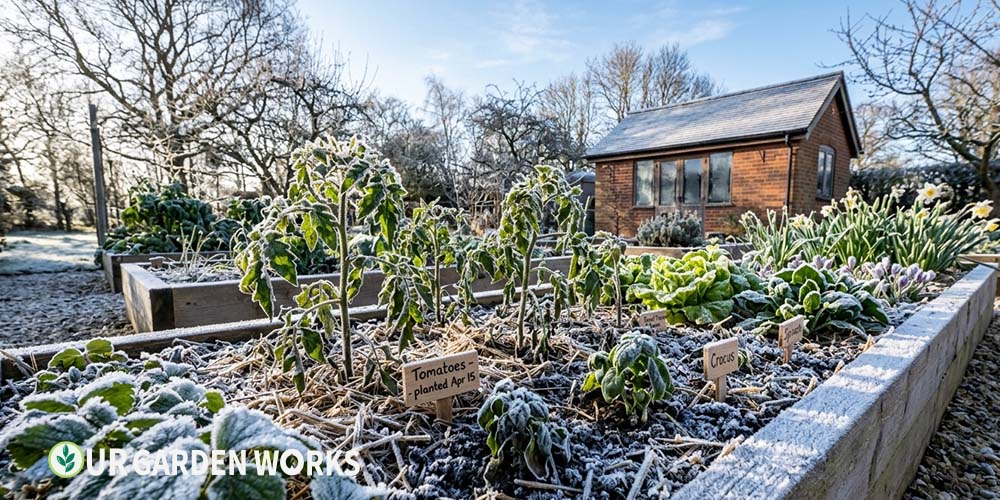
Your frost dates are the two most important numbers in your vegetable garden. Everything else — when to start seeds indoors, when to transplant, when to plant fall crops, when to cover your plants, when to finally relax — flows from these two dates.
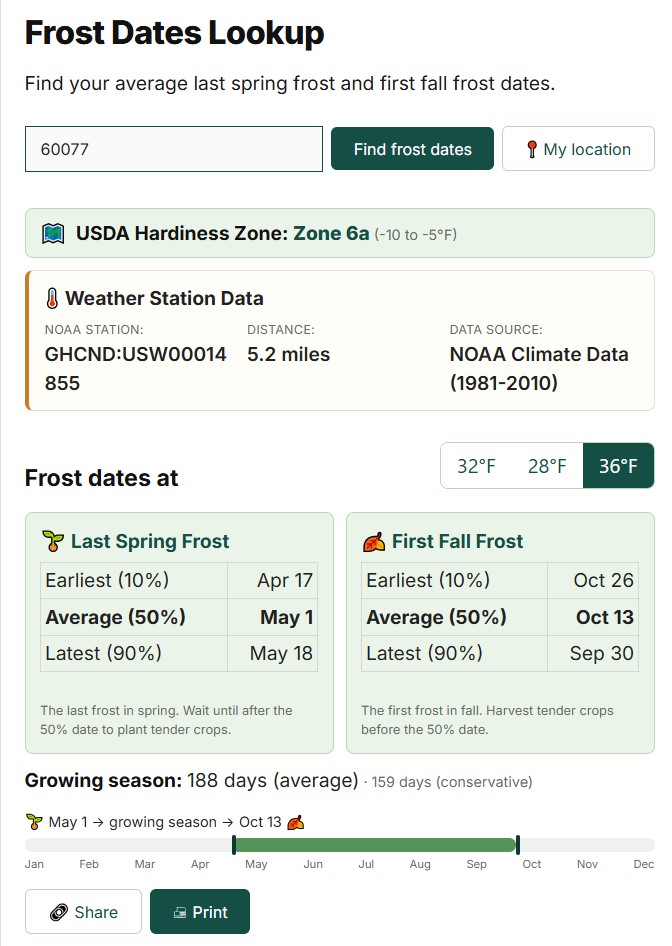
The tool above gives you your spring and fall frost dates for your specific ZIP code, based on NOAA climate data.
It shows you 3 probability levels for each — because “last frost date” isn’t one fixed day, it’s a range with different levels of risk. Below we’ll explain what each probability level means and exactly how to use these dates in your garden.
Your last spring frost date is the date after which frost is unlikely — use it to time transplanting warm-season crops like tomatoes and peppers. Your first fall frost date is when your growing season effectively ends for tender crops. The 50% probability date is the average; the 10% date is the safer choice for irreplaceable transplants.
Understanding the Three Probability Levels
This is the part most frost date tools skip — and it’s genuinely important. Frost dates aren’t a single calendar date. They’re a statistical probability based on historical climate data. The tool gives you three dates for a reason.
| Probability | What It Means | Use It For |
|---|---|---|
| 10% probability | Only 10% chance of frost after this date. Safest planting date — but you may wait an extra 1–2 weeks unnecessarily in most years. | Irreplaceable plants: rare tomato varieties, expensive grafted plants, seedlings you can’t replace |
| 50% probability | 50/50 chance of frost — this is the “average” last frost date most sources publish. In an average year, this is when frost stops. In a late spring year, it continues. | General planning, seed-starting schedules, most buying decisions |
| 90% probability | There’s still a 10% chance of frost before this date. This is the “early planting” date for risk-tolerant gardeners who accept the possibility of covering plants once or twice. | Hardy transplants like broccoli, kale, and lettuce that can tolerate a light frost |
💡 The rule we follow at OGW
We use the 50% date as our planning anchor for most vegetables. For tomatoes and peppers specifically — where a late frost means losing 6 weeks of indoor growing time — we wait until 2 weeks after the 50% date before transplanting. That buffer has saved us from a late frost scramble more than once.
How to Use Your Spring Frost Date
For Seed Starting Indoors
Count backward from your 50% last spring frost date to find your indoor seed-starting date for each crop. This is the math behind our seed starting calculator — which does this automatically for every crop once you enter your ZIP. Manually, here’s the timing:
- Tomatoes, peppers, eggplant: Start 6–8 weeks before last frost (peppers 8–10 weeks)
- Broccoli, cabbage, kale: Start 4–6 weeks before last frost
- Lettuce, spinach: Start 4–6 weeks before last frost (can also direct sow)
- Cucumbers, squash: Start 3–4 weeks before transplanting outdoors — time to soil temperature, not frost date
- Basil: Start 6 weeks before last frost
- Never start indoors: Beans, carrots, beets, radishes, corn — direct sow these after frost risk passes
For the complete crop-by-crop indoor timing chart by region, see our when to start seeds indoors guide.
For Transplanting Outdoors
| Crop Type | When to Transplant | Why |
|---|---|---|
| Frost-tender (tomatoes, peppers, basil) | 2 weeks after 50% last frost date | These crops die from frost — even a light one. The 2-week buffer covers most late springs. |
| Frost-tolerant (broccoli, kale, lettuce) | 3–4 weeks before last frost date | These crops actually prefer cool weather and can handle a light frost. Getting them in early extends your harvest window. |
| Direct-sow warm-season (beans, cucumbers) | When soil reaches target temperature after last frost | Soil temperature matters more than frost date for these crops. Beans need 60°F, cucumbers 70°F — check with a soil thermometer. |
How to Use Your Fall Frost Date
Your first fall frost date tells you when your growing season ends for tender crops — and when to start planning your fall garden. It’s actually two pieces of information in one.
Protecting Summer Crops
When your first fall frost is 2–3 weeks away, it’s time to:
- Pick any tomatoes showing color — they’ll ripen on your counter. For green ones, see our how to store green tomatoes guide.
- Harvest all pepper fruit regardless of ripeness — green peppers are fully edible
- Have frost cloth ready for unexpected early cold snaps — a single overnight frost can be covered, and the next 2–3 weeks of production saved
Planning Your Fall Garden
Count backward from your first fall frost to time fall crop planting. Cool-season vegetables (kale, spinach, broccoli, lettuce) actually thrive in fall’s cooler temperatures and often taste better after a light frost.
The rule: plant fall crops when temperatures are starting to cool but you still have enough warm days for the crop to reach maturity.
- Kale, broccoli, cabbage: Plant 8–10 weeks before first fall frost
- Spinach, lettuce: Plant 6–8 weeks before first fall frost
- Radishes, arugula: Plant 4–6 weeks before first fall frost
- Garlic: Plant 4–6 weeks before hard freeze (not first frost — garlic needs some green growth before winter)
Why Frost Dates Are Averages — And What That Means for You
A “last frost date” of April 15 means that in the historical climate data for your area, frost has occurred after April 15 about half the time. In a cold spring year, you might see frost in early May. In a warm spring year, you might be safe planting in late March. The date is a statistical center, not a guarantee.
This is why experienced gardeners always have frost cloth or old bedsheets ready — even a week after their “safe” planting date — and why we recommend the 2-week buffer for irreplaceable tomato and pepper transplants.
It’s also why your own multi-year garden journal is valuable. If you’ve been gardening in the same location for several years and you’ve noticed your actual last frost consistently falls earlier or later than the published date, trust your experience. Local observation beats averages.
💡 The soil thermometer matters more than the calendar
Frost date tells you when to start thinking about transplanting. Soil temperature tells you when to actually do it. A tomato transplanted after the last frost into 52°F soil will sit and sulk for 3 weeks. The same plant put into 62°F soil 2 weeks later establishes within days and catches up immediately. A soil thermometer is the most useful spring gardening tool you can own.
What to Do When a Surprise Frost Threatens
Even after your last frost date, a late cold snap can sneak in. Here’s the emergency protocol:
Frost Protection in 20 Minutes
- Check the 10-day forecast when you get within 2 weeks of your last frost date. If nighttime temperatures dip below 36°F, prepare to cover.
- Water your garden beds before covering. Moist soil retains heat much better than dry soil.
- Cover with frost cloth, old bedsheets, newspaper tents over cages, or upturned buckets over small transplants. Cover before sunset — don’t wait until the temperature is already dropping.
- Anchor edges so wind doesn’t pull covers off. Rocks, bricks, or soil work fine.
- Remove covers the next morning once temperatures are above 36°F. Leaving covers on in full sun can cook plants.
Frequently Asked Questions
What's the difference between a light frost and a hard freeze?
A light frost (28–32°F) damages tender annuals like tomatoes and basil and can kill unprotected flowers.
A hard freeze (below 28°F) kills most above-ground plant tissue on tender crops and damages unprotected root vegetables in the top few inches of soil. Most frost dates refer to 32°F — our tool also shows you 28°F hard freeze dates specifically.
My frost dates from different websites don't match — which is right?
Frost date sources use different baseline years and different probability thresholds — so slight variations are normal. Our tool uses NOAA climate data.
The Old Farmer’s Almanac uses similar data. Small differences (a few days) are normal and not meaningful for practical planting purposes. Larger differences (2+ weeks) may reflect different probability thresholds — check whether the source is giving you the 50% date or the 10% date.
Can I plant tomatoes before my last frost date if I use a frost cover?
Yes — Wall-O-Waters and similar season extenders let experienced gardeners transplant tomatoes 4–6 weeks before their last frost date by creating a warm microclimate around the plant. This is a common technique in Zone 5 gardens where the season is short and every week counts. Without protection, planting before last frost risks losing your transplants to a cold night.
How does my frost date relate to my USDA hardiness zone?
These are two different things that gardeners often conflate. Your zone tells you which perennial plants survive your winters. Your frost dates tell you when your annual growing season starts and ends.
Two gardens in the same hardiness zone can have frost dates 3–4 weeks apart. Use zone for perennial plant selection; use frost dates for annual vegetable timing. Our USDA zone tool covers zone in detail.
Final Thoughts
We hope this tool and guide give you exactly the dates you need to plan your best growing season yet.
Knowing your frost dates — and understanding the probability levels behind them — is one of those foundational pieces of knowledge that makes every other gardening decision easier.
For the next step, our seed starting calculator uses your frost dates to tell you exactly when to start every crop, and our planting calendar lays it all out month by month.
Share this tool with a fellow gardener who’s been guessing at planting dates — and let us know in the comments what zone and frost window you’re working with this season. Happy growing!

1 thought on “Frost Dates Lookup Tool — Spring & Fall Frost Dates by ZIP Code”