

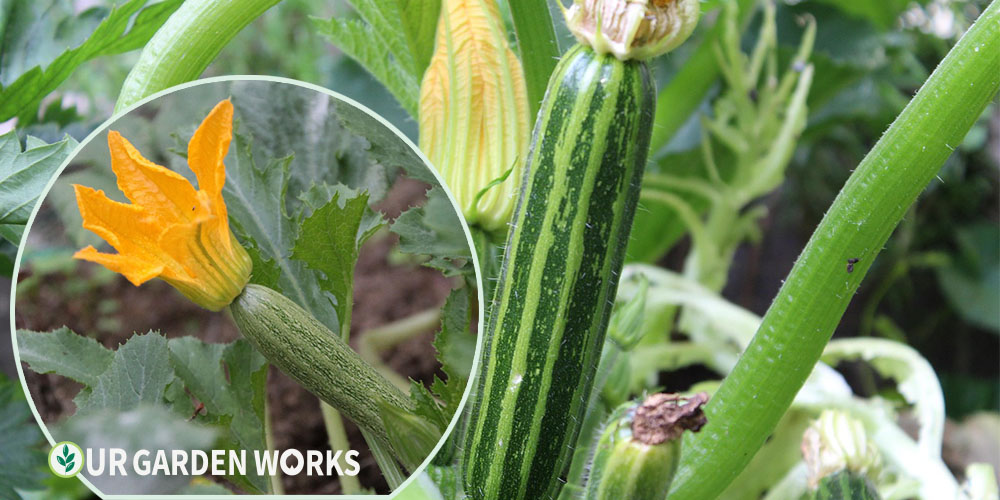
There is exactly one zucchini problem that every gardener has experienced: the zucchini that was finger-length on Monday and baseball-bat-sized by Thursday. You looked away for 4 days and it became a weapon.
Zucchini grows so fast that harvest frequency is genuinely the most important skill in growing it well. Get that right — and understand the pollination issue that stumps most beginners — and zucchini is one of the easiest, most productive crops in the vegetable garden. Two well-tended plants will keep a family of four in zucchini all summer.
In this guide, we cover everything you need to grow zucchini from planting through harvest — including exactly when to pick, why your female flowers aren’t setting fruit, and what to do with more zucchini than you can possibly eat.
Quick Answer: Direct sow zucchini seeds when soil reaches 65°F, ½ inch deep, 3 seeds per hill. Thin to 2 strongest plants. Space hills 3–4 feet apart — zucchini gets enormous. Harvest every 2 days at peak season when fruits are 6–8 inches long. Leaving fruit on the vine past this size slows production dramatically.
Choosing Your Zucchini Variety
Most home gardeners grow standard green zucchini and never look further. That’s fine — it works beautifully. But there’s a whole world of zucchini worth exploring.
| Variety | Type | Notes |
|---|---|---|
| Black Beauty | Standard green | Classic, productive, widely available |
| Costata Romanesco | Ribbed Italian heirloom | Superior flavor, used in Italian cooking |
| Golden Zucchini | Yellow | Same flavor, easier to spot under foliage for harvest |
| Patio Star / Bush Baby | Compact bush | Ideal for small beds and containers (2–3 ft spread) |
| Tromboncino | Vining Italian | Grows on trellis, nut-flavored when mature |
| Eight Ball | Round | Stuffing variety, harvest at tennis-ball size |
💡 Plant 2, not 6
Two healthy zucchini plants produce more than most families can eat. Three is ambitious. Six is a crisis. Start with two — you can always add more next year if you want to expand into preserving or selling at a farmers market.
Zucchini Growing Requirements
🥬 Zucchini Requirements at a Glance
- Sunlight: Full sun — 8+ hours. Will survive less; won’t produce well with less.
- Soil temperature: 65°F minimum to sow. Zucchini germinates best at 70–85°F.
- Space: 3–4 feet per plant minimum. Zucchini is enormous — it will smother neighbors.
- Soil pH: 6.0–7.5. Tolerant of a wider range than most vegetables.
- Watering: 1–2 inches per week, at the base. Overhead watering spreads powdery mildew.
- Days to harvest: 45–60 days from direct sowing.
How to Grow Zucchini: Step by Step
Step 1 — Direct Sow Into Warm Soil
Zucchini is one of the few vegetables where we strongly recommend direct sowing over transplanting. It grows so fast that indoor starts offer little advantage, and zucchini has sensitive roots that resist transplanting. Sowing directly into warm, prepared soil is simpler and more reliable.
Directions
- Wait until soil reaches 65°F at 4 inches — check with a soil thermometer. Zucchini planted in cold soil barely germinates and sits sulking for weeks.
- Prepare “hills” — slightly raised mounds of enriched soil about 12 inches across. Work 2–3 inches of compost into each hill. Hilled planting improves drainage around the crown, preventing the crown rot that kills many zucchini plants.
- Plant 3 seeds ½ inch deep per hill, evenly spaced. Cover and water gently.
- Seeds germinate in 4–8 days in warm soil.
- When seedlings are 3–4 inches tall and have their first true leaves, thin to the 2 strongest per hill by snipping the weaker ones at soil level. Don’t pull them — root disturbance can hurt the keepers.
Step 2 — Understand (and Fix) Pollination
This is the section that solves the mystery for most new zucchini growers. Your plant is covered in flowers but no fruits are forming. Here’s exactly what’s happening.
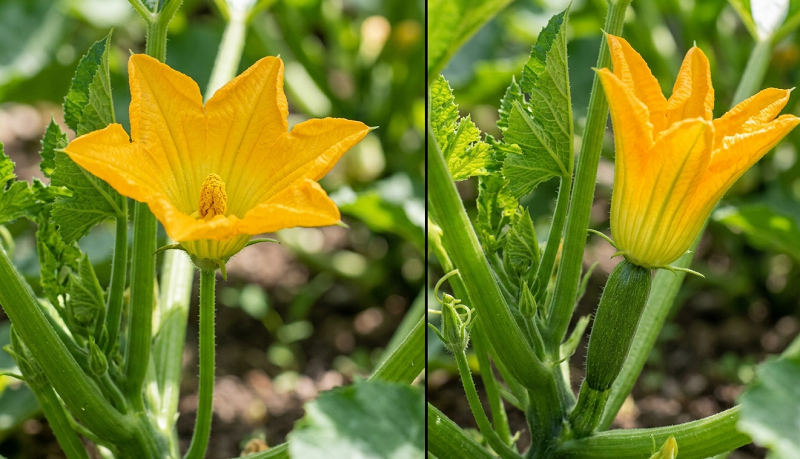
Zucchini produces separate male and female flowers on the same plant. Male flowers grow on straight stems and appear first — often 1–2 weeks before female flowers. They won’t produce fruit no matter what. Female flowers have a miniature zucchini at their base before the flower even opens. A bee must transfer pollen from a male flower to a female flower for fruit to form.
If female flowers are opening but fruits shrivel and fall off after a day or two, you have a pollination failure. Here’s how to fix it:
- Attract bees: Plant borage, marigolds, or basil nearby to bring bees into your garden. See our do bees like marigolds guide.
- Don’t spray during the day: Any pesticide application — even organic options — during daylight hours when bees are active will kill pollinators and end your fruit set. Spray at dusk or early morning.
- Hand-pollinate: In the morning when male and female flowers are both open, use a small paintbrush or cotton swab to transfer pollen from the male flower’s stamen to the female flower’s stigma (center). Or pick a male flower, peel back the petals, and rub the exposed stamen directly onto the female flower center. This takes 30 seconds and is completely reliable.
Step 3 — Water and Fertilize
Watering: Water at the base, deeply, 1–2 times per week. Zucchini crowns are susceptible to rot when water sits at the stem base — water around the plant, not on it. Mulch 2–3 inches deep around (not touching) the stem.
Fertilizing: Balanced 10-10-10 at planting. Once flowering begins, feed every 3–4 weeks with a low-nitrogen fertilizer. Zucchini is a heavy feeder — plants that run out of nutrients mid-season produce fewer, lower-quality fruit.
Step 4 — Harvest Frequently (The Most Important Step)
Harvest zucchini when it’s 6–8 inches long. At this size, the flesh is tender, the seeds are small, and the flavor is at its best. At 10+ inches, the flesh becomes watery and the seeds large. Past 12 inches, it’s only good for bread and stuffing.
The production-critical fact: leaving mature zucchini on the vine signals the plant to slow or stop producing. The plant’s goal is to ripen seed, and once it has a large fruit accomplishing that goal, it deprioritizes new fruit production. Pick religiously every 1–2 days during peak season.
⚠️ Check under the leaves
Zucchini fruit hides under the enormous foliage and can go from the right size to a small log in 48 hours. Actively look under leaves during every garden visit, not just a surface-level scan. The one you miss today becomes the one you’re photographing ironically tomorrow.
Powdery Mildew — The Late-Season Reality
Almost every zucchini plant gets powdery mildew by late summer. The white powdery coating on leaves looks alarming but rarely kills the plant or stops production — especially if you catch it early. The plant is usually ready to wind down by the time mildew is severe anyway.
Prevention: space plants correctly for airflow, water at the base only, and remove the worst-affected lower leaves. Treatment: spray with a diluted baking soda solution (1 tsp per litre of water with a drop of dish soap) or neem oil at first sign. See our pest control guide for the full treatment protocol.
Frequently Asked Questions
How many zucchini plants do I need?
Two plants per household is plenty for fresh eating. One plant per person if you want to preserve or freeze. Each plant produces 6–10 pounds of fruit per week at peak season — which is more than most families can eat fresh. Start with fewer than you think you need.
Can I grow zucchini vertically?
Yes, with the Tromboncino variety (a vining Italian heirloom) or compact varieties trained up a trellis. Standard bush zucchini doesn’t vine and won’t grow vertically. If space is tight, choose a compact bush variety like Patio Star instead.
Why did my zucchini plant die suddenly?
Sudden collapse is almost always squash vine borer — a white caterpillar that tunnels inside the main stem. Look for a hole near the base of the stem with frass (sawdust-like material) around it. Prevention with row covers early in the season is the most reliable strategy. Once the borer is inside, treatment is very difficult.
Can you eat zucchini flowers?
Yes — zucchini flowers are edible and prized in Italian cuisine, particularly stuffed and fried. Pick male flowers (the ones on straight stems, not attached to a developing fruit). Leave female flowers for fruit production. Harvest male flowers in the morning when they’re fully open.
🥬 Related Articles in Our Vegetable Gardening Guide
Final Thoughts
We hope this guide has taken the fear out of zucchini growing — and given you the key that most first-time growers miss: harvest frequency.
Get that right and zucchini is one of the most rewarding, low-maintenance crops in the entire garden. For all our vegetable growing guides, our vegetable gardening guide links to everything.
Share this post with a fellow gardener who’s ready to get growing — and let us know in the comments how many plants you’re starting with this season. Happy growing!
