Do you know what growing zone you’re in?
Understanding your USDA hardiness zone is the first step to choosing the right perennial plants for your garden.
Our Garden Works has built this tool to help you find your zone and learn what it really tells you about your growing conditions.
What Is a Hardiness Zone?
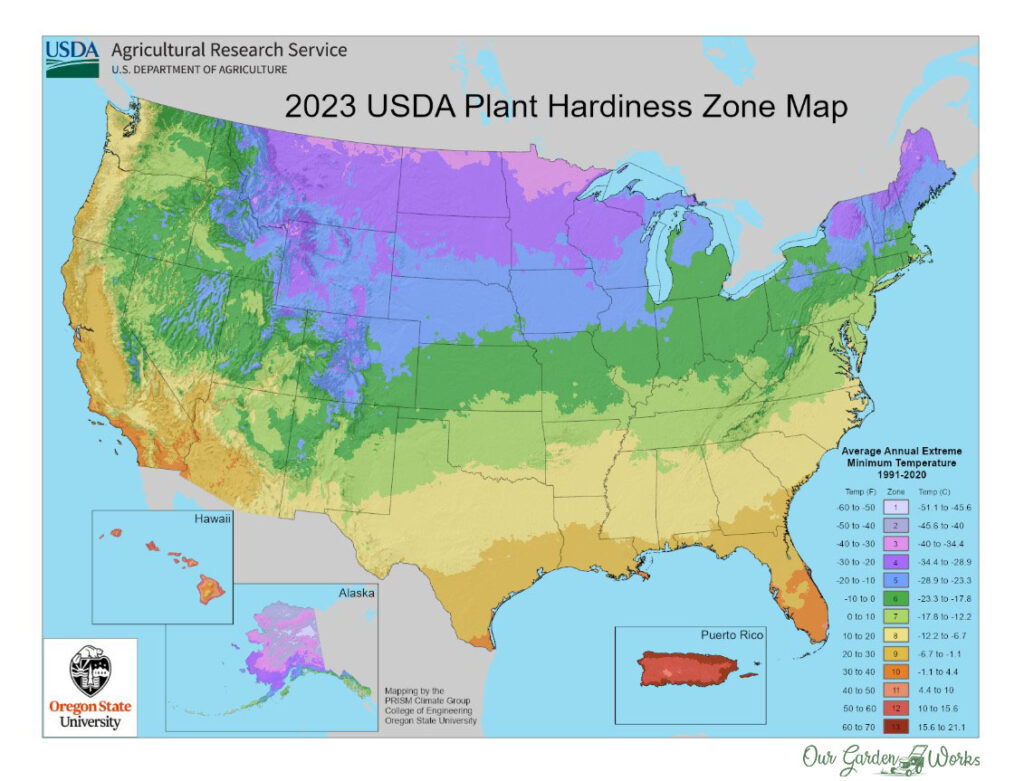
The USDA Plant Hardiness Zone Map divides North America into 13 zones based on average annual minimum winter temperatures. Each zone represents a 10°F temperature range, with half-zones (a and b) providing even more precision with 5°F increments.
Key Points:
- Zone 1 = Coldest (Alaska, northern mountains)
- Zone 13 = Warmest (Hawaii, southern Florida)
- Each zone number increase = 10°F warmer
- Half zones (6a vs 6b) = 5°F difference
Complete USDA Zone Temperature Chart
| Zone | Temp Range (°F) | Example Locations |
|---|---|---|
| 1a | -60 to -55 | Northern Alaska |
| 1b | -55 to -50 | Interior Alaska |
| 2a | -50 to -45 | Central Alaska |
| 2b | -45 to -40 | Fairbanks, AK |
| 3a | -40 to -35 | Northern Minnesota |
| 3b | -35 to -30 | International Falls, MN |
| 4a | -30 to -25 | Duluth, MN; Fargo, ND |
| 4b | -25 to -20 | Minneapolis; Helena, MT |
| 5a | -20 to -15 | Des Moines, IA; Chicago suburbs |
| 5b | -15 to -10 | Chicago; Denver; Boston |
| 6a | -10 to -5 | St. Louis; Pittsburgh |
| 6b | -5 to 0 | New York City; Bend, OR |
| 7a | 0 to 5 | Oklahoma City; Richmond, VA |
| 7b | 5 to 10 | NYC boroughs; Dallas suburbs |
| 8a | 10 to 15 | Dallas; Atlanta; Little Rock |
| 8b | 15 to 20 | Savannah, GA; Austin, TX |
| 9a | 20 to 25 | Houston; Portland, OR; Tampa |
| 9b | 25 to 30 | Orlando; Sacramento |
| 10a | 30 to 35 | Phoenix; South Florida |
| 10b | 35 to 40 | Los Angeles; San Diego; Miami |
| 11a | 40 to 45 | Key West; Hawaii (lower elevations) |
| 11b | 45 to 50 | South Florida; Hawaii coast |
| 12a | 50 to 55 | Rare in US |
| 12b | 55 to 60 | Rare in US; Hawaii highlands |
| 13a | 60 to 65 | Puerto Rico |
| 13b | 65 to 70 | Hawaii (some areas) |
What Your Zone TELLS You
Your hardiness zone tells you ONE THING ONLY: which perennial plants can survive winter in your area.
Example:
If you’re in Zone 6 and want to plant rosemary (hardy to zones 8-9), it likely won’t survive your winter outdoors. You’ll need to:
- Choose a hardier variety (like Arp rosemary, hardy to zone 6)
- Grow it as an annual
- Overwinter it indoors in a pot
Shopping Tip:
When you see “Zones 4-8” on a plant tag, that plant will thrive in all those zones but may struggle in warmer climates. Many spring bulbs (tulips, daffodils) need cold winters to bloom properly.
What Your Zone CAN’T Tell You
Here’s what’s equally important: your zone has significant limitations.
❌ Duration of Cold Weather
Your zone doesn’t indicate how LONG freezing temperatures last. Many frost-tolerant plants can handle brief freezes but will die if cold persists for weeks.
❌ Last/First Frost Dates
This is huge! Two cities in the same zone can have frost dates MONTHS apart.
Example:
- Pittsburgh, PA (Zone 6b): Last frost April 24
- Bend, OR (Zone 6b): Last frost June 26
That’s a 2-month difference in growing season length!
Pro Tip: Use our Seed Starting Calculator to find your actual planting dates based on frost dates, not zones.
❌ Microclimates
Your specific yard may be warmer or colder than the general zone. Consider:
- Proximity to buildings (urban heat island)
- Elevation differences
- Snow cover (or lack of it)
- Wind exposure
Example: Even though I’m in zone 6b, my microclimate is 5-10°F colder than the rest of town. I shop for zone 5 plants to be safe.
❌ Summer Heat
Zones ONLY measure winter cold. They say nothing about summer highs.
Example: Portland, OR and Houston, TX are both Zone 9, but:
- Portland August: High 80°F, Low 58°F
- Houston August: High 91°F, Low 76°F
Plants that thrive in Portland’s cool summers often fail in Houston’s heat.
❌ What Vegetables to Grow
Annual vegetables aren’t limited by hardiness zones since they complete their life cycle in one season. Your zone won’t tell you:
- When to plant tomatoes
- Whether lettuce will bolt in your heat
- If peppers will ripen before frost
Beyond Hardiness Zones: What Else Matters
For successful gardening, also consider:
- First/Last Frost Dates – Determines planting schedule – You can use our Find Frost Dates lookup tool
- Growing Season Length – Days between frosts
- Summer Heat – High temperatures and humidity
- Rainfall Patterns – Drought vs. abundant moisture
- Soil Type – Clay, sand, loam
- Sun Exposure – Hours of direct sun
- Wind Patterns – Drying winds vs. protected spots
State-by-State Zone Maps
Want to see zone variations across your state? Check out these detailed maps at here!
Frequently Asked Questions
Q: Has my zone changed from the old map?
The 2023 map updated from 2012 data. Many areas shifted to warmer half-zones due to climate change and better mapping technology.
Q: Can I grow plants from a warmer zone?
Not as perennials outdoors. Grow them as annuals or protect them in winter (mulch, containers moved indoors, cold frames).
Q: Can I grow plants from a colder zone?
Absolutely! Plants from colder zones thrive in warmer zones, though some (like tulips) may not perform well without winter chill.
Q: Do I need to know my zone for annual vegetables?
No, zones don’t apply to annual vegetables. Focus on frost dates instead.
Q: What if I’m between zones?
Choose the colder zone to be safe, or treat it as a microclimate and test both.
Next Steps
Now that you know your hardiness zone:
- ✅ Check plant tags when shopping
- ✅ Focus on perennials, trees, and shrubs rated for your zone
- ✅ Learn your frost dates for planting schedules
- ✅ Check our best plants for Zone X guides – Our tool also suggests some of the best plants for your location (your Hardiness zone)
- ✅ Download the official USDA map for your state
About This Tool
This lookup tool uses data from the 2023 USDA Plant Hardiness Zone Map, developed by the USDA Agricultural Research Service and Oregon State University’s PRISM Climate Group. For the most comprehensive interactive map, visit the official USDA site.
Ready to grow? Browse our zone-specific plant guides and start planning your garden today! 🌱