

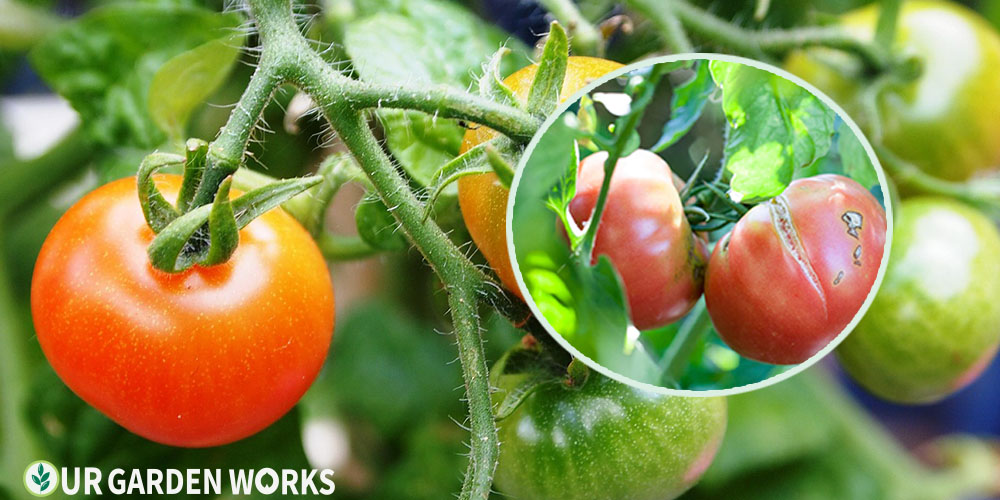
You’ve been watching them for weeks. The tomatoes are finally blushing red, they’re the size you hoped for, and then you go out one morning and find them split wide open — cracked across the top or ringed with concentric cracks around the stem. It’s one of the most demoralizing moments in a home garden season.
Here’s the good news: cracking and splitting in tomatoes is almost always preventable once you understand what’s actually causing it. And in most cases, it comes down to one thing — water. Not too much, not too little, but the wrong pattern.
In this post, we’ll walk you through the 5 real causes of tomato cracking and splitting, exactly what’s happening inside the fruit when it cracks, and the specific fixes for each one.
By the end, you’ll know how to stop it — and if your tomatoes are already cracking, you’ll know what to do right now.
Quick Answer: Tomatoes crack and split when they take up water faster than the skin can stretch to accommodate it. The most common trigger is heavy rain or deep watering after a dry spell. Fix it with consistent watering schedules, mulch, and choosing crack-resistant varieties.
What Is Tomato Cracking and Why Does It Happen?
Before we get into the specific causes, you need to understand the mechanism — because once you do, the fixes make complete sense.
A tomato’s skin is relatively thin and inelastic compared to the flesh inside. When the plant takes up a large amount of water rapidly — after a dry spell, after heavy rain, after irregular irrigation — the flesh of the fruit expands faster than the skin can stretch. The skin tears. That’s a crack.
There are two types of cracks you’ll see on tomatoes, and they tell you slightly different things:
- Radial cracks — lines that run from the stem end downward, like spokes on a wheel. These are the most common type and are almost always caused by water irregularity.
- Concentric cracks — rings that circle the stem end of the fruit. These are also water-related but often more strongly associated with sudden temperature changes and fruit maturity issues.
Both types are frustrating, but they’re different symptoms of overlapping causes. Let’s go through each one.
5 Causes of Tomato Cracking and Splitting
#1 Inconsistent Watering — The #1 Culprit
This is responsible for the majority of tomato cracking we see in home gardens. The pattern goes like this: dry spell → heavy watering or rainfall → rapid water uptake → flesh expands faster than skin → crack.
It doesn’t matter if you’ve been watering perfectly for weeks. One period of drought followed by one heavy irrigation event can split a tomato that was days away from a perfect harvest.
The tomato skin, especially on a nearly-ripe fruit, is at its thinnest and least flexible. The older the fruit, the more vulnerable it is to cracking from a sudden surge of water.
✅ The Fix
- Water deeply and consistently — 1–2 inches per week in a predictable rhythm
- Never let the soil go completely dry between waterings
- A moisture meter ($10–12) removes the guesswork entirely — water when it reads “dry” at 4 inches, not before
- Drip irrigation or soaker hoses are the most effective prevention — they deliver water slowly, directly to the roots, preventing the rapid uptake that causes cracking
- After a heavy rain following a dry spell, you can’t stop the water uptake — but you can pick fruits that are at the breaker stage (any color change at all) before the storm hits
#2 Sudden Heavy Rain After Dry Periods
This is the outdoor garden version of cause #1, and it’s the one you have the least control over — which makes it the most frustrating. A week of no rain followed by a 2-inch downpour can split tomatoes that were perfectly healthy the day before.
The good news is that you’re not completely powerless here. The key is managing soil moisture so the swing from dry to wet is as small as possible.
✅ The Fix
- Mulch is your best insurance policy — 2–3 inches of straw, wood chips, or shredded leaves around your plants buffers soil moisture and dramatically reduces the dry-to-wet swing when rain hits
- Water consistently even during cloudy or cool periods so plants are never in a truly dry state before a storm
- When a heavy rain is forecast and your tomatoes are near ripe, harvest anything at the breaker stage before the storm — they’ll ripen perfectly on your counter
- Row covers won’t stop the rain from hitting the soil, but they can reduce the intensity of a downpour reaching your plants
💡 Pick early to save your harvest
A tomato at the “breaker stage” — any visible color change from green — has already developed all of its sugars and flavor. It will ripen to full flavor on your kitchen counter in 3–5 days. Picking before a storm is not admitting defeat. It’s smart harvesting.
#3 Variety Susceptibility
Some tomato varieties crack much more readily than others, regardless of how well you manage water. This is a genetic trait. Large, thin-skinned heirloom varieties — Brandywine, Cherokee Purple, Mortgage Lifter — are beautiful, delicious, and notoriously prone to cracking. Their skin simply can’t keep up with their fruit growth rate.
Modern hybrid varieties have been specifically bred for crack resistance, and the difference is real and significant.
✅ The Fix
- Choose crack-resistant varieties if you’re in an area with inconsistent rainfall: Celebrity, Mountain Fresh, Jet Star, Sweet 100 (cherry)
- If you love heirlooms (we do too), accept that some cracking is part of the deal and pick earlier — right at the breaker stage rather than waiting for deep color
- Cherry tomatoes crack more than any other type because of their thin skins — harvest them frequently, every 2–3 days at peak season, before they get overripe
#4 Temperature Swings — Hot Days, Cool Nights
Sudden temperature changes — particularly very hot days followed by significantly cooler nights — cause the tomato fruit to expand and contract. Over time this creates stress in the skin, making it more prone to cracking when the other factors (water uptake, ripeness) align.
This is especially common in late summer and early fall when day-night temperature differences become more pronounced.
✅ The Fix
- Shade cloth (30–40% density) over plants during heat waves reduces the temperature stress on ripening fruit
- Consistent mulch again helps buffer soil temperature swings, which reduces the rapid water cycling that temperature changes drive
- Harvest fruit more frequently during periods of high temperature variation — don’t let tomatoes sit on the vine through multiple heat-cool cycles
Overripe Fruit Left on the Vine
The longer a tomato stays on the vine past its peak ripeness, the thinner and more fragile its skin becomes. An overripe tomato has very little buffer against water uptake or physical stress — even a light rain can split one that’s been left a few days past its prime harvest window.
This is one of the most controllable causes. The tomato didn’t crack because of a weather event — it cracked because it was left on the vine too long.
✅ The Fix
- Harvest tomatoes as soon as they reach their full color and have slight give when gently squeezed — don’t wait for them to get soft
- Walk through your garden every 2–3 days during peak tomato season and pick anything that’s ready
- A tomato left on the vine doesn’t gain flavor after it’s fully ripe — there’s no benefit to leaving it. There is significant risk.
Quick Reference: 5 Causes and Their Fixes
| Cause | Most Common Sign | Primary Fix |
|---|---|---|
| Inconsistent watering | Radial cracks after dry spell + watering | Drip irrigation + moisture meter |
| Heavy rain after drought | Mass cracking after a storm | Mulch + pick at breaker stage pre-storm |
| Crack-prone variety | Cracking despite good water management | Choose crack-resistant varieties |
| Temperature swings | Concentric rings, late summer | Shade cloth + harvest more frequently |
| Overripe fruit | Single fruit cracking, skin feels soft | Harvest every 2–3 days at peak season |
Can You Still Eat Cracked Tomatoes?
Yes — with conditions. A freshly cracked tomato is still safe to eat if you use it immediately. Cut away the cracked section and eat or cook the rest. The flesh is fine.
The problem is that cracks give bacteria, mold, and insects an entry point. A cracked tomato that’s been sitting for a day or two, especially in warm weather, can develop rot inside the crack quickly. When in doubt, smell it and look at the crack interior. If it’s clean, it’s fine. If there’s any mold or soft brown tissue inside, compost it.
🍅 Use cracked tomatoes immediately
Cracked tomatoes are perfect for sauce, salsa, and roasted tomatoes — preparations where appearance doesn’t matter. Don’t compost them if the crack is fresh and the flesh is firm.Tips and Reminders for Preventing Tomato Cracking
Tips and Reminders for Preventing Tomato Cracking
- Harvest frequently — most cracking happens to overripe or nearly-overripe fruit. Picking at the breaker stage removes the fruit from the vine before conditions cause cracking and gives you full-flavored tomatoes without the drama
- Mulch is the single best investment — it doesn’t just conserve moisture. It buffers every type of swing (water, temperature, even the soil-splash that spreads disease) simultaneously
- Crack-resistant doesn’t mean crack-proof — even Celebrity or Mountain Fresh will crack in extreme drought-to-flood conditions. Resistance reduces the risk; it doesn’t eliminate it
Frequently Asked Questions About Tomatoes Crack and Split
Why are only some of my tomatoes cracking, not all of them?
The tomatoes most vulnerable to cracking are the ones closest to full ripeness — their skins are thinnest. You may also see cracking on larger fruits before smaller ones because larger fruits absorb more water in a single event. Fruit on the sunnier side of the plant may crack before shaded fruit for the same reason (heat + water cycle).
Will a greenhouse prevent tomato cracking?
Yes, significantly — because you control watering completely and protect the plants from rain. This is one of the primary reasons greenhouse-grown tomatoes have lower cracking rates than field-grown ones. If you’re growing in containers and can bring them under a covered patio during heavy rain, that helps too.
Does fertilizer cause tomato cracking?
Excess nitrogen can contribute to cracking by pushing rapid plant and fruit growth that the skin can’t keep up with. This is another reason to switch to a low-nitrogen, high-potassium fertilizer once your tomatoes start flowering. High potassium actually helps build stronger cell walls in the fruit, slightly improving crack resistance.
How do I store cracked tomatoes?
Use them within 24 hours, refrigerated if necessary. Cut away the cracked section and any adjacent area that looks discolored. Cracked tomatoes are not good candidates for long-term storage. For ideas on what to do with a bumper harvest, see our guide on how to store green tomatoes.
🍅 More Tomato Growing Guides
Final Thoughts
We hope this post helped you finally figure out why your tomatoes are cracking — and more importantly, what to do about it. Most of the time, the fix is simpler than you’d think: more consistent watering, better mulch, and picking a little earlier. Once you nail that rhythm, cracking becomes a rare event rather than a seasonal heartbreak.
For the full guide to growing tomatoes from start to finish, our complete tomato growing guide covers every stage. And our vegetable gardening guide has every tomato article we’ve published in one place.
Share this post with a fellow gardener who’s been scratching their head over cracked tomatoes — and let us know in the comments which of the 5 causes was your culprit. Happy growing!
