

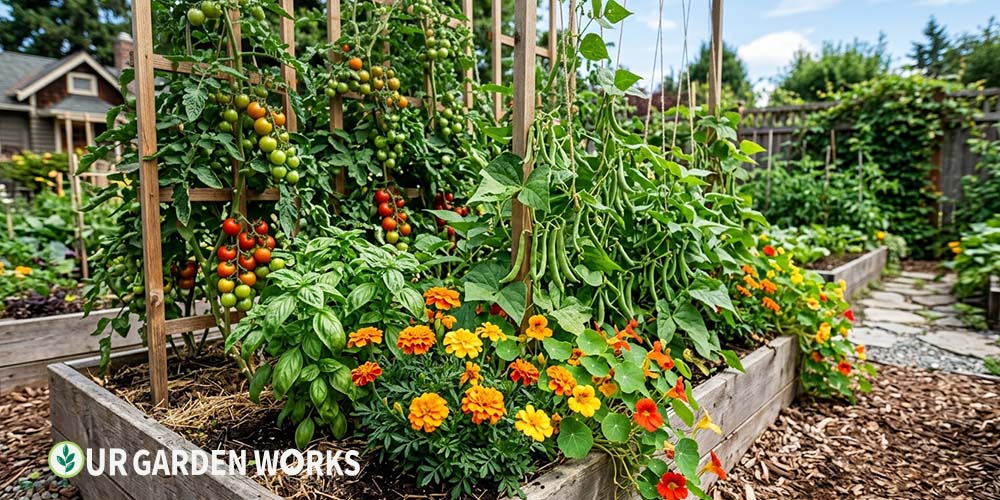
Companion planting is one of those garden strategies that rewards you more the more consistently you apply it. The right neighbors do things that no fertilizer or spray can replicate — they confuse and repel pests, attract the insects that do free pest control, fix nitrogen into the soil, improve pollination, and in some cases genuinely improve the flavor of nearby crops.
This guide gives you the complete companion planting chart for a home vegetable garden — organized by crop, with the specific plants to grow alongside each one, what each companion does, and the plants to keep well away.
We’ve also included the honest caveat: some companion effects are well-documented science, and others are gardening tradition. We’ll tell you which is which.
Quick Answer: The most universally beneficial companion plants are: French marigolds (pest suppression, nematode control), nasturtiums (aphid trap crop), basil (repels thrips and aphids), borage (attracts pollinators and beneficial insects), and flowering dill (hosts parasitic wasps). The worst companion for almost everything is fennel — it’s allelopathic to most vegetables.
How to Use This Companion Planting Chart
Find your crop in the left column. The “Good Companions” are plants worth growing nearby. The “Keep Away” plants should be separated by at least one full bed width — or grown in a completely different area.
The “Mechanism” column tells you why the companion relationship works — or if it’s traditional observation rather than documented science (marked “Traditional”).
The Full Companion Planting Chart
| Crop | Best Companions | Keep Away From | Key Mechanism |
|---|---|---|---|
| 🍅 Tomatoes | Basil, French marigolds, borage, carrots, garlic, chives, parsley (flowering), nasturtiums | Fennel, brassicas, corn, potatoes, eggplant (nearby) | Basil repels thrips (documented). Marigolds suppress nematodes + whiteflies. Nasturtiums trap aphids. Fennel allelopathic. |
| 🌶️ Peppers | Basil, French marigolds, carrots, geraniums, borage, spinach (spring) | Fennel, brassicas, apricot trees | Basil deters aphids + spider mites. Geraniums repel leafhoppers + Japanese beetles. Spinach acts as living mulch. |
| 🥒 Cucumbers | Nasturtiums, radishes, dill (flowering), French marigolds, beans, sunflowers | Potatoes, sage, fennel, melons (concentrates pests) | Radishes deter cucumber beetles (documented). Nasturtiums trap aphids. Dill attracts parasitic wasps. Beans fix nitrogen. |
| 🥬 Lettuce | Carrots, radishes, chives, strawberries, tall plants for shade (tomatoes, trellised beans) | Celery, parsley (crowding issue — not allelopathic) | Carrots loosen soil. Tall neighbors provide afternoon shade — extends lettuce season in heat. Radishes deter aphids. |
| 🧅 Onions & Garlic | Carrots, beets, tomatoes, chamomile, roses, strawberries, summer savory | Beans, peas, sage, parsley, asparagus | Onion/garlic sulfur compounds repel carrot fly (documented) and aphids. Chamomile improves garlic flavor (Traditional). Beans/peas inhibited by allium root exudates. |
| 🥕 Carrots | Onions, garlic, leeks, chives, rosemary, sage, lettuce, tomatoes | Dill (inhibits germination when mature), fennel | Alliums repel carrot fly — one of the most reliable companion effects (documented). Tomatoes improve carrot flavor (Traditional). Dill allelopathic when flowering. |
| 🫘 Beans (Bush & Pole) | Carrots, cucumbers, potatoes, squash, marigolds, summer savory | Onions, garlic, chives, fennel, brassicas | Beans fix atmospheric nitrogen — benefits neighboring crops. Summer savory deters bean beetles (Traditional). Alliums inhibit legume root nodule formation. |
| 🥦 Broccoli & Brassicas | Nasturtiums (trap crop for aphids), dill, rosemary, sage, thyme, onions, chamomile | Tomatoes, peppers, strawberries, grapes, fennel | Aromatic herbs mask brassica scent from cabbage moths. Nasturtiums trap aphids and cabbage aphids. Tomatoes and peppers — nutrient competition, no benefit. |
| 🥬 Spinach | Strawberries, garlic, peas, radishes, tall vegetables for shade | Fennel | Grows well in partial shade of taller companions — extends season. Strawberries benefit from spinach groundcover. No significant allelopathic conflicts except fennel. |
| 🥒 Zucchini & Squash | Nasturtiums, borage, beans, marigolds, corn (Three Sisters) | Potatoes, fennel | Borage attracts bumblebees critical for buzz pollination. Nasturtiums repel squash bugs (Traditional). Beans fix nitrogen under squash canopy. Three Sisters system documented. |
| 🥔 Potatoes | Beans, marigolds, horseradish (edge of bed), basil, peas, chamomile | Tomatoes, peppers, eggplant (shared diseases), cucumbers, sunflowers, apples | Horseradish repels Colorado potato beetle (Traditional — widely reported). Marigolds deter nematodes. Solanaceous family members share late blight — keep separated. |
| 🧄 Garlic | Roses, tomatoes, carrots, beets, chamomile, strawberries, fruit trees | Beans, peas, sage, parsley, asparagus | Sulfur compounds repel aphids, spider mites, Japanese beetles (documented). Beans/peas: garlic root exudates inhibit legume nitrogen fixation. |
| 🍓 Strawberries | Spinach, lettuce, borage, garlic, chives, thyme, sage | Brassicas, fennel, tomatoes (Verticillium wilt concern) | Borage attracts pollinators and is said to improve strawberry flavor (Traditional). Garlic/chives deter aphids and spider mites. Thyme deters slugs. |
| 🥬 Kale | Nasturtiums, dill, rosemary, sage, onions, garlic, marigolds | Tomatoes, fennel, other brassicas in same bed (disease concentration) | Same as broccoli — aromatic herbs confuse cabbage moths. Nasturtiums trap aphids. Diversifying brassica locations reduces clubroot buildup. |
| 🌿 Basil | Tomatoes, peppers, borage, chamomile | Sage (growth inhibition — Traditional), fennel | Basil benefits its neighbors — plant it for what it gives others rather than for its own companion needs. Mutual benefit with tomatoes is the most studied companion relationship in vegetables. |
| 🌼 French Marigolds | Tomatoes, peppers, cucumbers, beans, most vegetables | Nothing significant | Alpha-terthienyl from roots is toxic to nematodes (documented). Above-ground volatile compounds repel whiteflies. Flowers attract aphid-eating hoverflies and parasitic wasps. |
| 🌸 Nasturtiums | Tomatoes, cucumbers, squash, brassicas, beans — plant at perimeter | Nothing significant | Best aphid trap crop available. Aphids preferentially colonise nasturtiums over crop plants. Edible flowers. Reputed to deter squash bugs and whiteflies (Traditional). |
| 🌱 Dill | Brassicas, cucumbers, lettuce (when young); allow to flower near any vegetable bed | Carrots (inhibits germination when mature), tomatoes (debated), fennel | Flowering dill attracts parasitic wasps and predatory insects more than almost any other plant. Keep young and flowering — not allowed to go to seed near crops. |
| 🌱 Fennel | Other fennel plants only | Almost every vegetable — allelopathic to tomatoes, peppers, beans, lettuce, and most crops | Allelopathy documented. Fennel root exudates inhibit germination and growth of most vegetables. Grow in a dedicated separate bed or container. Never near vegetables. |
The Three Sisters — The Most Famous Companion Combination
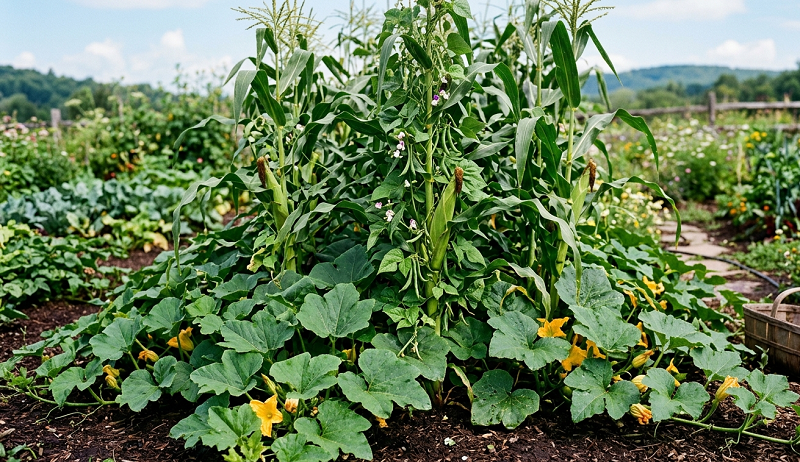
The Three Sisters is a Native American intercropping system that has been practiced for over 3,000 years — one of the best-documented examples of companion planting working through multiple mechanisms simultaneously.
The Three Sisters System
- Corn — grows tall, provides a living trellis for bean vines to climb
- Beans — fix atmospheric nitrogen into the soil, feeding the corn and squash
- Squash — sprawls at ground level, shading out weeds and retaining soil moisture with its large leaves
How to Plant
- Plant corn first — 4 seeds in a small mound, 3 inches deep, 12 inches apart.
- When corn is 4 inches tall, plant 4 bean seeds in a circle around each corn plant, 6 inches out from the stem.
- One week later, plant 3–4 squash seeds around the outside of the mound, 18 inches from the corn.
- This staggered timing ensures each plant is at the right stage to play its role when the others need it.
The Science vs. Tradition Breakdown
Companion planting occupies an unusual space in horticulture — some effects are well-documented in peer-reviewed research, and others are passed-down gardening tradition with consistent anecdotal support but limited formal study. Here’s an honest breakdown:
Well-Documented (Scientific Evidence)
- French marigold root exudates kill nematodes — multiple studies confirm alpha-terthienyl toxicity to root-knot nematodes
- Basil volatile oils (linalool, eugenol) deter thrips — 2009 JASHS study showed significant thrips reduction
- Alliums deter carrot fly — documented in UK agricultural research
- Fennel allelopathy — inhibitory root exudates confirmed in multiple studies
- Three Sisters system productivity — documented by agricultural researchers and indigenous knowledge studies
- Dill flowers attracting parasitic wasps — well-established in integrated pest management literature
Strong Traditional Evidence (Consistent Gardener Reports, Limited Formal Study)
- Basil improving tomato flavor when planted nearby
- Chamomile improving neighboring plant growth
- Nasturtiums repelling squash bugs
- Horseradish deterring Colorado potato beetle
- Borage improving strawberry flavor
The traditional effects are worth trying — if they work in your garden, they work. The honest caveat is that their benefits may vary significantly by climate, soil, pest pressure, and variety.
How to Build a Companion-Planted Bed From Scratch
Rather than trying to implement every companion relationship at once, we recommend starting with three rules that cover the most common pest problems:
- Ring every bed with French marigolds. This single habit addresses nematodes, whiteflies, and brings in beneficial insects to every bed in your garden. Plant them densely as a border, not scattered sparsely.
- Plant nasturtiums at the perimeter. Not interplanted — at the edges where aphids can colonise them without crowding your vegetables. Check weekly and spray with insecticidal soap when aphid colonies build up. See our insecticidal soap guide.
- Place basil next to every tomato and pepper. One plant per 2 vegetable plants. Pinch flowers to maintain volatile oil production. This covers your highest-value crops with the best-documented companion effect available.
Add additional companions from the chart above as your garden grows and you get comfortable with the system.
Frequently Asked Questions About Companion Planting Chart
Does companion planting replace pesticides?
No — companion planting reduces pest pressure. It doesn’t eliminate it. In a high-pressure year, you’ll still need to monitor and potentially treat. Think of it as one layer of a broader integrated pest management strategy — alongside crop rotation, physical barriers, and targeted treatments when needed.
How close do companion plants need to be to each other?
For volatile compound effects (basil, marigolds): within 12–18 inches for best results. For trap cropping (nasturtiums): at the bed perimeter works fine — aphids will find them. For physical companions (Three Sisters): interplanted in the same planting area. For allelopathic plants to avoid (fennel): keep at least 6–10 feet away — root exudates travel through soil water.
Do I need to replant companions every year?
Annual companions (basil, nasturtiums, marigolds, dill) need replanting each season. Perennial companions (chives, chamomile, borage — which self-seeds, garlic, horseradish) return on their own once established. Building a permanent framework of perennial companions with annual additions each spring is the most efficient long-term approach.
Can I use companion planting in containers?
Yes — even small containers benefit from companions. Plant one French marigold in a large tomato pot. Place a nasturtium pot next to your container peppers. Put a small basil plant in the same container as a cherry tomato (use at least a 15-gallon container so they don’t compete too heavily for water). The same principles apply at any scale.
🥬 Related Articles in Our Vegetable Gardening Guide
Final Thoughts
We hope this companion planting chart becomes a reference you come back to every planting season. The more consistently you apply companion planting — not as an afterthought but built into your bed design from day one — the more the cumulative effects show up in reduced pest pressure, better pollination, and healthier plants across your whole garden.
For our individual companion planting guides by crop, and all our vegetable growing articles, our vegetable gardening guide links to everything.
Share this post with a fellow gardener who’s ready to get growing — and let us know in the comments which companion combination you’re trying first and what results you’ve seen. Happy growing!
