

Lettuce has a built-in summer timer. Once day length exceeds 14 hours and temperatures push above 75–80°F consistently, a hormonal signal triggers bolting — the plant sends up a flower stalk, the leaves turn bitter, and the harvest season is over.
This is evolutionary, not a gardening failure. Lettuce evolved to complete its life cycle and set seed before summer heat arrived.
You cannot completely override this trigger. But you can delay it significantly — by 4–8 weeks in most climates — with the right combination of variety selection, physical cooling, and strategic planting.
Here is what actually works.
How to Keep Lettuce Cool in Summer Heat: The most effective combination for summer lettuce: choose heat-tolerant varieties (Jericho, Nevada, Muir, Flashy Trout’s Back), provide 30–40% shade cloth during the hottest part of the day, mulch heavily to keep soil cool, and water in the morning. Accept that June harvests are the limit in most climates — plant heat-tolerant alternatives like Malabar spinach for true midsummer salad greens.
Why Lettuce Bolts — the Short Version
Bolting is triggered by two independent factors: day length (photoperiod) and temperature. Either alone can trigger it; together they accelerate it dramatically.
The practical implication: even perfect cool temperatures will not prevent bolting once day length exceeds 14–15 hours (around the summer solstice in most of the US).
The window for extending summer lettuce is between when temperatures first get hot and the solstice — roughly May through mid-June in most zones.
Understanding which trigger is dominant in your situation actually changes which methods are worth prioritizing.
If your lettuce is bolting in early-to-mid May while temperatures are still mild, day length is doing most of the work and no amount of shade cloth or mulch will hold it back much longer — you’re better off accepting an earlier transition to summer crops.
If bolting is showing up later, alongside a clear stretch of 85°F+ days, temperature is the dominant factor, and the cooling methods below will buy you genuinely meaningful extra weeks of harvest.
Method 1 — Choose Heat-Tolerant Varieties
Variety selection is the single most impactful decision for summer lettuce. Heat-tolerant varieties have been bred to delay the bolting response in warm temperatures. They will still bolt eventually, but weeks later than standard varieties.
| Variety | Type | Heat Tolerance | Notes |
|---|---|---|---|
| Jericho | Romaine | Excellent | Developed in Israeli heat — one of the most reliable summer romaines |
| Nevada | Butterhead/looseleaf | Excellent | A standard summer lettuce; slow to bolt, mild flavour throughout |
| Muir | Butterhead | Very good | Developed specifically for warm conditions |
| Flashy Trout Back | Looseleaf heirloom | Very good | Austrian heirloom with good heat tolerance |
| Batavian types | Looseleaf/crisp | Very good | Batavian lettuces as a group tolerate heat better than iceberg or butterhead |
| Red Sails | Looseleaf | Good | Widely available, holds up better in heat than most red varieties |
| Iceberg / Great Lakes | Crisphead | Poor | Bolts rapidly in heat — avoid for summer growing |
Method 2 — Shade Cloth (Most Reliable Physical Method)
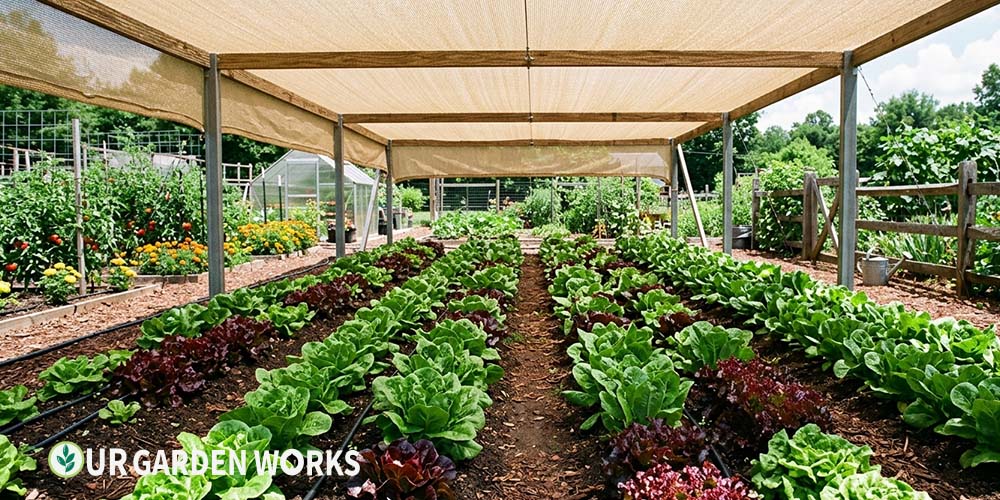
A 30–40% shade cloth over lettuce beds significantly reduces both air and soil temperature in the planting zone.
30% shade cloth reduces midday temperature by 5–8°F at the leaf level — enough to delay bolting by 2–4 weeks in most conditions. 50% shade cloth delays bolting longer but reduces growth rate.
Install shade cloth on a simple hoop frame over the lettuce bed, positioned so it intercepts afternoon sun (the hottest exposure) while allowing morning sun through.
Remove on cloudy days and in cooler periods — lettuce under shade cloth in cool weather produces etiolated, weak plants.
Using Natural Shade and Microclimates
Before investing in shade cloth, look at what your garden is already offering.
The east side of a fence, a spot beneath the dappled canopy of a tall deciduous tree, or the shadow cast by taller crops like pole beans or sweet corn can all provide a meaningful amount of afternoon relief without any additional materials or setup.
The key is afternoon shade specifically — lettuce still wants morning sun to photosynthesize efficiently, so a spot that’s shaded all day tends to produce weak, leggy plants rather than solving the heat problem.
Interplanting is a particularly efficient version of this strategy. Lettuce sown at the base of taller, slower-growing crops like tomatoes or trellised cucumbers gets a few extra weeks of useful shade as those plants fill in during early summer, right at the point when lettuce most needs the relief.
This approach also makes more efficient use of bed space than dedicating a separate area to shade cloth infrastructure, since you’re getting two harvests — the lettuce and the taller crop — from the same square footage.
Method 3 — Succession Planting Through May
Rather than planting all your lettuce at once, sow small amounts every 2 weeks from late March through mid-May. Each sowing produces for 3–4 weeks before bolting.
Staggered plantings mean the last sowing goes in around May 15, bolts around late June, and you pivot to summer alternatives by July 1.
This is the most sustainable approach for continuous harvest — working with lettuce’s biology rather than against it.
Try our free tool: Succession Planting Scheduler — Never Run Out of Fresh Vegetables Again
Method 4 — Soil Temperature Control Through Mulch
Lettuce roots respond to soil temperature as much as to air temperature. When soil exceeds 70°F, root activity slows and bolting accelerates.
A 3-inch layer of straw or shredded leaves over the root zone of established lettuce reduces soil temperature by 8–12°F on hot days — enough to add 2–3 weeks to the productive season.
Apply mulch after plants are 3–4 inches tall, keeping it back an inch from the stem base. Water before applying mulch so you are trapping moisture in — not locking dry soil in.
Watering as a Cooling Tool, Not Just Hydration
Most gardeners think of summer watering purely in terms of preventing wilt, but for lettuce specifically, watering timing and method also function as a temperature management tool.
Evaporative cooling from consistently moist soil keeps the root zone several degrees cooler than dry soil exposed to the same air temperature, which is part of why lettuce that’s watered on a careful, consistent schedule bolts noticeably later than lettuce left to dry out between waterings even when both receive the same total weekly amount.
A light midday misting of the foliage — distinct from the deep soil-level watering you’re doing for hydration — can also buy a few hours of relief during the most intense heat of the day by cooling leaf surface temperature through evaporation.
This isn’t a substitute for proper watering at the root zone, and it shouldn’t be done so heavily or so late in the day that foliage stays wet into evening, since that invites the same fungal problems any wet-leaf watering risks.
Used briefly during the hottest hour or two of a punishing afternoon, though, it’s a small trick that measurably reduces heat stress on the leaves themselves.
Method 5 — Morning Harvest
Once lettuce begins showing the earliest signs of stress in summer heat — slightly looser heads, center leaves beginning to elongate — harvest in the morning before heat builds.
Lettuce harvested early morning retains crispness and good flavor even when the plant is beginning to bolt.
By afternoon, the same leaves that were good in the morning have wilted and may have bitter notes. Harvest, refrigerate immediately in a damp paper towel, and use within 2 days.
Method 6 — Summer Substitutes (Accept the Transition)
The honest advice for July: stop fighting summer with lettuce and plant crops that genuinely thrive in heat.
For salad greens in true summer heat:
- Malabar spinach: A tropical vine that produces spinach-flavored leaves all summer. Plant when nighttime temperatures stay above 65°F. The most practical July-August salad green in hot climates.
- Swiss chard: Tolerates heat better than lettuce and produces continuously. Harvest the outer leaves and the plant regrows.
- Purslane: Thrives in heat and drought — considered a weed in most US gardens, but highly nutritious and with a pleasant lemony flavor. Let it grow deliberately in summer.
- Arugula: Bolts in heat like lettuce, but regrows after cutting and can be kept going later into summer than most lettuces with shade and consistent moisture.
Frequently Asked Questions
Can I eat bolted lettuce?
You can, but the flavor changes significantly when bolting begins. Outer leaves become bitter from the milky latex that develops as the plant sends energy to flower production. The bitterness increases rapidly once the flower stalk begins elongating.
Harvest everything before the stalk is taller than 4–6 inches — after that, most people find it too bitter. The bolted leaves can be used in cooked dishes where the bitterness is less prominent.
When can I plant lettuce again after summer?
Fall lettuce is often the most productive of the year — and our guide to cutting lettuce correctly shows how to harvest without killing the plant. Count back from your first fall frost date — lettuce needs 45–60 days to maturity.
In Zone 6, a first frost around October 15 means planting by August 15–September 1 for a reliable fall harvest. Fall lettuce started in summer heat will struggle until temperatures drop below 80°F, then accelerate rapidly.
Start seeds indoors in air conditioning during the hottest weeks and transplant out when temperatures begin to moderate.
Is container lettuce easier to keep cool than in-ground lettuce?
It can go either way, and it depends almost entirely on the container itself. A dark-colored pot in full sun heats the root zone faster than garden soil does, which can actually accelerate bolting rather than delay it.
A light-colored or unglazed container, positioned where it gets morning sun but afternoon shade — against an east-facing wall, for instance — often outperforms an in-ground bed precisely because you can move it to the best available microclimate as the day and season progress. The mobility is the real advantage; the container itself isn’t inherently cooler unless you’re managing its placement deliberately.
Related Guides:
- How To Harvest Lettuce So It Keeps Growing
- How To Cut Lettuce From The Garden in 3 Easy Methods
- How to Water a Vegetable Garden in Summer (Complete Guide)
- 22 Heat-Loving Vegetables for Summer Gardens
- Vegetable Gardening Guide: Grow More Food with Less Frustration
- Beginner’s Guide to Gardening: How to Grow Your First Garden This Season
Final Thoughts
We hope these 6 methods extend your lettuce season well into summer and take the frustration out of the June slump. Shade cloth plus heat-tolerant variety selection is the most effective combination for most gardeners.
For all our vegetable growing guides, our vegetable gardening guide links to every article we have published.
Share this with a fellow gardener who watches their lettuce bolt every June and gives up on salad greens until fall — and let us know in the comments how it went for you. Happy growing!
