

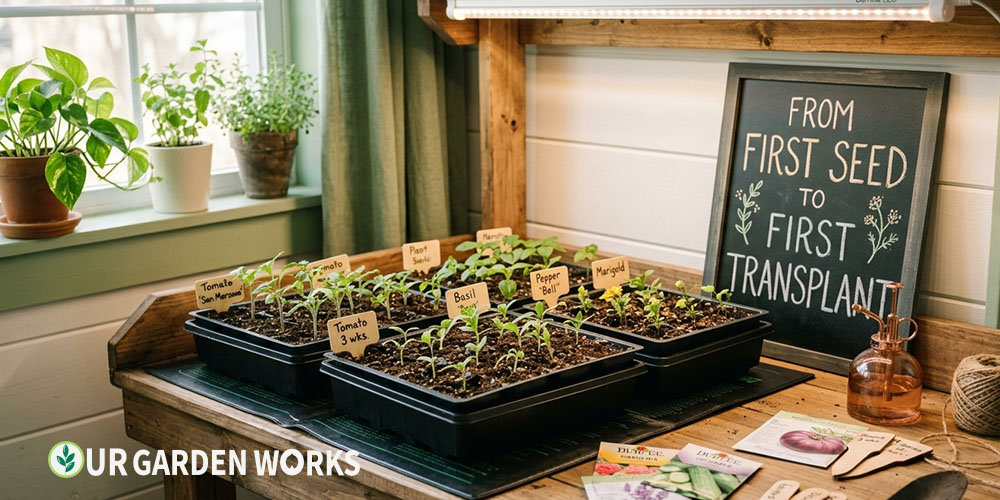
Seed starting is where a lot of gardeners feel the most intimidated — and where they lose the most plants. Not because seed starting is genuinely difficult, but because the gap between indoor conditions and outdoor reality is larger than most people realize. Fill that gap correctly, and you’ll have stronger, healthier transplants than anything you can buy at a garden center.
This hub organizes everything we’ve written about seed starting into a logical journey — from the first planning decision you make in January all the way to the moment your seedlings go into the ground. Follow the sections in order if you’re just starting out. Jump to the section you need if you’re troubleshooting something specific.
🌿 Editor’s Note
“The two mistakes I see most often: starting seeds too early (which creates root-bound, stressed transplants) and skipping hardening off (which creates transplant shock). Get these two right and seed starting becomes one of the most enjoyable parts of the whole growing season.”
The Seed Starting Journey — Start Here
Seed starting has five distinct phases, each with its own decisions and potential failure points. Here’s how they connect — and where each article in this cluster fits.
Plan — When to Start and What to Grow
Everything starts with two numbers: your last frost date and the weeks-before-frost timing for each crop. Get these wrong and every other decision is built on a bad foundation. Use the free Frost Dates Tool and the Seed Starting Calculator before you buy a single packet of seeds.
Set Up — Station, Equipment, and Mix
A grow light, a heat mat, the right mix, and proper trays. That’s the complete list. Most gardeners either overspend on things they don’t need or underspend on the one thing that matters most — light.
Sow and Germinate
Depth, moisture, warmth, and the critical first 48 hours after a seed breaks the surface. Most germination failures trace to one of three things: dry soil, cold temperatures, or delayed light.
Grow Strong Seedlings
The 6–8 week indoor growing period where light, feeding, and thinning determine transplant quality. The 15 most common mistakes happen in this phase.
Harden Off and Transplant
The bridge between indoor and outdoor — the 7–10 days that most gardeners rush and most seedlings suffer for. Slow here, fast everywhere else.
📅 Phase 1 · (Plan First): When to Start Seeds & How to Time It
The most common seed starting mistake is timing — specifically, starting too early. A tomato seedling sitting root-bound in a 3-inch pot for 12 weeks waiting for outdoor conditions is already behind. These two articles and two tools give you the exact timing for your specific location and crop list.
💡 Free Planning Tools — Use These First
Before reading the timing articles, run your ZIP code through our Frost Dates Tool and your crop list through our Seed Starting Calculator. They’ll give you exact calendar dates and make the articles much more concrete.
Recommended Reads:
💡 Phase 2 · Set Up Your Station: Equipment, Mix, and What to Skip
The right equipment matters — but not in the way most garden centers want you to think. You need a grow light, a heat mat, and the right mix. Everything else is optional. These 4 articles cover each decision without the expensive overkill.
Recommended Reads:
🌾 Phase 3 · Sow and Germinate: Seed in Soil — From Packet to Sprout
Germination looks passive — you plant a seed and wait. But most failures happen in these first 5–14 days. The depth, the moisture consistency, the soil temperature, and the critical first hour after emergence are all active decisions.
Recommended Reads:
🌿Phase 4 · Grow Strong Seedlings: The 6-Week Indoor Growing Period
This is where most seedlings are quietly compromised — not killed outright, but weakened in ways that follow them into the garden. Insufficient light produces leggy stems that never fully recover.
Overwatering causes damping off. Skipping feeding produces pale, slow-growing plants. Two articles cover everything that happens between germination and transplant day.
Recommended Reads:
☀️ Phase 5 · Move Outside: Hardening Off and Transplanting
The final 7–10 days of seed starting. Hardening off is the bridge between the controlled indoor environment and the variable outdoor world — wind, direct sun, temperature swings, low humidity. Every seedling needs this transition. None can skip it without paying for it in transplant shock.
Recommended Reads:
💡 Pro Tip: After Transplanting
Once your seedlings are in the ground, the seed starting cluster hands off to the crop-specific growing guides. For tomatoes: see our complete tomato growing guide. For the full list of every vegetable we’ve covered, the Vegetable Gardening Guide — the parent of this cluster — links to all of them.
Final Thoughts
We hope this seed starting hub gives you a clear path through what can feel like a complicated process. The journey is really just 5 steps — plan, set up, sow, grow, and harden — and each one has a small number of decisions that actually matter. Get those right and seed starting becomes one of the most rewarding parts of the whole growing year.
We’re adding three more articles to complete this cluster — germination troubleshooting, fast germination techniques, and a seedling fertilizing guide. When they’re live, this page will update automatically. In the meantime, every article that’s live links to the others, so you can move through the cluster from wherever you land.
Share this page with a fellow gardener who’s been buying transplants every spring and wondering whether seed starting is worth it — and let us know in the comments which phase you find hardest. Happy growing!
