

Standard germination advice is patient: sow, water, wait. And for most seeds in good conditions, that patience pays off in 5–10 days. But sometimes the calendar is tight, the growing season is short, or you simply want to know your seeds are alive before committing them to a full tray. That’s when these three techniques earn their place.
Each method has a specific best use. The paper towel method tests viability and pregerminate seeds before they go in soil. Pre-soaking wakes up hard-coated seeds faster. Heat optimization closes the gap between “seeds are alive” and “seeds are actively germinating” for temperature-sensitive crops like peppers.
We’ll cover all three — what they do, exactly how to do them, and which crops benefit most.
How to Germinate Seeds Fast: The fastest method for most seeds: pre-soak in room-temperature water for 8–12 hours, then sow on a heat mat at the crop’s optimal germination temperature. For testing viability first or starting large seeds: paper towel method. For peppers specifically: maintain 82–85°F soil temperature — it cuts germination from 14+ days to 7–9 days more than any other trick.
Method 1 — The Paper Towel Method
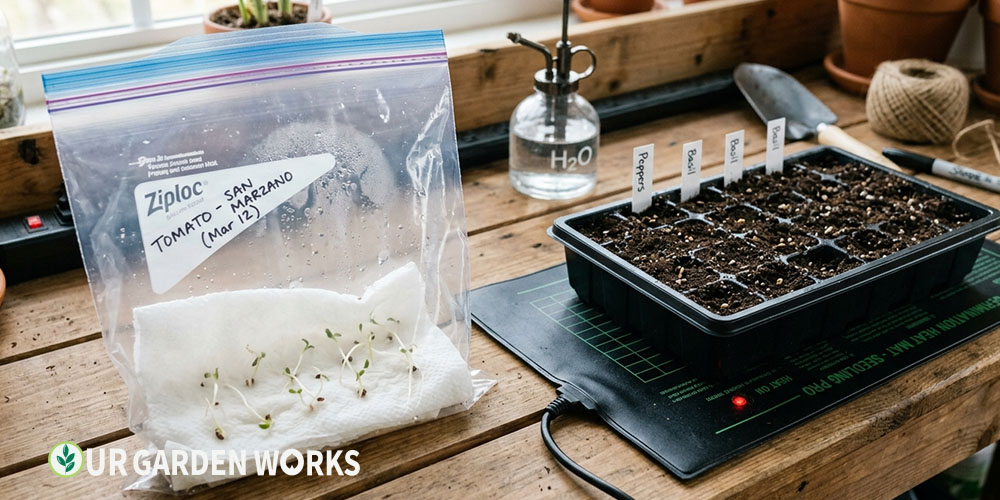
The paper towel method (also called the baggie method) germinates seeds between moist paper towels inside a sealed plastic bag rather than in soil.
It’s faster than in-soil germination for most crops, lets you see exactly which seeds are alive, and lets you transplant only the seeds that have sprouted — eliminating wasted cells in your tray.
When to Use It
- Testing seed viability on older seeds before committing to a full tray
- Hard-coated seeds that germinate slowly in soil (beans, peas, parsley, beetroot)
- When you want to start a small number of plants (2–4) rather than a full tray
- Large seeds where you want 100% germination rate before planting
Paper Towel Method — Step by Step
- Dampen a paper towel until it’s uniformly moist but not dripping — squeeze out excess water. Kitchen paper works; thicker paper towel holds moisture longer.
- Lay seeds on one half of the towel, spaced so they’re not touching each other. Fold the other half over to cover them.
- Slide into a zip-lock bag and seal. Label with crop name and date.
- Place in a warm spot — on top of the refrigerator, near a heat vent, or on a heat mat. Aim for the crop’s optimal germination temperature (see table below).
- Check daily by unfolding carefully. Look for a white root tip (radicle) emerging — this is germination, even before a shoot appears.
- Transplant immediately when germinated. The radicle is fragile — handle with tweezers or the tip of a pencil, plant root-down into pre-moistened seed starting mix, ¼ inch deep. Don’t let germinated seeds sit in the bag more than 24 hours after the root appears.
| Crop | Paper Towel Germination (days) | Soil Germination (days) | Time Saved |
|---|---|---|---|
| Tomatoes | 2–4 | 5–10 | 3–6 days |
| Peppers | 4–7 | 10–21 | 6–14 days |
| Cucumbers | 1–3 | 3–7 | 2–4 days |
| Beans | 2–4 | 4–10 | 2–6 days |
| Parsley | 5–10 | 14–28 | Up to 18 days |
| Basil | 2–4 | 5–10 | 3–6 days |
| Lettuce | 1–3 | 2–8 | Minimal — just direct sow |
⚠️ Don’t let germinated seeds dry out between bag and soil
The window between “seed germinated in paper towel” and “seed safely in soil” is short. A germinated seed left in a dry bag, or handled without care, dies within hours. Have your tray pre-moistened and ready before you check the bag. Transplant immediately when you see roots.
Method 2 — Pre-Soaking Seeds
Pre-soaking softens hard seed coats and jump-starts the moisture absorption process that triggers germination.
For crops with naturally tough coats, this single step can cut germination time in half and dramatically improve germination rate.
Which Seeds to Pre-Soak (and Which to Skip)
| Pre-soak: Yes | Pre-soak: No |
|---|---|
| Beans and peas (all types) — soak 8–12 hrs | Tomatoes — too small, can rot |
| Parsley and parsnips — soak 24 hrs | Peppers — minimal benefit, risk of rot |
| Beetroot and chard — soak 12 hrs | Lettuce — germinates fast without it |
| Nasturtiums — soak 12–24 hrs | Basil — small seeds, skip it |
| Squash and pumpkins — soak 8–12 hrs | Carrot — no benefit, direct sow only |
| Morning glory — soak or scarify | Any very small/fine seed |
Pre-Soaking — How to Do It
- Place seeds in a small bowl or cup. Cover with room-temperature water — not hot, not cold. Hot water above 110°F can kill seeds.
- Soak for the recommended time for your crop (see table above). Seeds should visibly swell — they’ve absorbed the water they need.
- Drain and sow immediately. Pre-soaked seeds need to go into moist soil the same day — don’t let them sit out or dry between soaking and sowing.
- Don’t soak longer than recommended. Over-soaking (36+ hours for most crops) can trigger fermentation and reduce germination rate.
Method 3 — Heat Mat Optimization
A heat mat is the most impactful single piece of equipment for faster germination, and most gardeners under-use it by putting it under the tray and walking away. Optimizing how you use it makes a significant difference.
The Right Temperature for Each Crop
| Crop | Optimal Soil Temp | Days at Optimal | Days Without Mat (65°F room) |
|---|---|---|---|
| Peppers | 82–85°F | 7–9 days | 14–28 days |
| Eggplant | 80–85°F | 7–12 days | 14–21 days |
| Tomatoes | 75–80°F | 5–7 days | 10–14 days |
| Basil | 75–80°F | 5–7 days | 10–14 days |
| Cucumbers | 75–80°F | 3–5 days | 7–12 days |
| Broccoli/Kale | 65–70°F | 5–7 days | 7–10 days |
Heat Mat Optimization Tips
- Add a thermostat. Basic heat mats raise temperature 10–20°F above ambient — in a 65°F room that gives you 75–85°F, which is good. But in a 70°F room it can push soil to 90°F, which inhibits germination. A thermostat pins the exact target temperature.
- Use the dome. A humidity dome over the tray traps warmth close to the surface and prevents moisture loss. Without a dome, heat escapes upward and the soil surface dries quickly — both reducing germination speed.
- Remove from the mat after germination. Heat mats are for germination, not seedling growing. Once sprouts appear, seedlings need light (grow light immediately) more than they need bottom heat.
- Stack multiple trays. If you have multiple trays to germinate, stack them on one mat (one tray per mat) rather than sharing one mat across multiple trays — the outer trays get inconsistent heat.
💡 Pepper trick — the 85°F rule
Peppers are the single crop where soil temperature makes the most dramatic germination difference. At 85°F soil, expect 7–9 days. At 70°F, expect 21+ days — some seeds won’t germinate at all.
If you’re struggling with pepper germination specifically, temperature is almost certainly the cause. A thermostat on your heat mat set to exactly 85°F is the most reliable fix available.
Combining Methods — The Fastest Possible Germination
For the fastest possible germination on large seeds (beans, squash, cucumbers, pumpkins): pre-soak for 8–12 hours, then use the paper towel method at optimal temperature.
You’ll often see radicles in 24–48 hours — transplant directly into pre-moistened soil. This is significantly faster than any single method alone.
For peppers specifically: don’t pre-soak (risk of rot outweighs benefit), use a heat mat with thermostat at 82–85°F, and check the bag daily.
Germination will happen in 7–9 days when temperature is right — not the 21 days many gardeners give up after.
Frequently Asked Questions
Can I speed up germination with a warm oven instead of a heat mat?
Not reliably. Oven temperatures are hard to control at the 75–85°F range seeds need — even the lowest setting on most ovens runs well above 100°F. The pilot light area of a gas oven can work but varies widely by model. A seedling heat mat is inexpensive enough ($20–25) that improvising alternatives isn’t worth the risk of cooking your seeds.
Does the paper towel method work for all vegetables?
It works for most, but tiny seeds (lettuce, celery, basil, carrots) are too fragile to transplant reliably from paper towel to soil without damaging the radicle. For these crops, direct sowing into pre-moistened mix at the right temperature is more reliable than the paper towel method.
My seeds germinated in the paper towel but died after transplanting — why?
Almost always one of 3 causes: the radicle dried out between bag and soil (transplant immediately, don’t let germinated seeds sit), the transplanting damaged the root (use tweezers, handle by the seed not the root), or the soil wasn’t moist enough when the seedling went in. Pre-moisten your tray before checking the germination bag so you can transplant directly without any waiting.
Related Articles in Our See Starting Guide:
- Seed Starting Guide – Everything You Need to Start Seeds Indoors (Hub)
- Why Are My Seeds Not Germinating? 7 Causes + Fixes
- How to Start Seeds Indoors: Complete Step-by-Step Guide (2026)
- 15 Seed Starting Mistakes That Kill Seedlings
- How to Set Up a Seed Starting Station for Under $100
- Vegetable Gardening Guide: Grow More Food with Less Frustration
Final Thoughts
We hope at least one of these three methods cuts your germination time and removes the uncertainty from the waiting period.
The combination of pre-soaking for large seeds and a properly calibrated heat mat for warm-season crops produces the most consistent results we’ve found.
For everything that happens once seeds have sprouted, our Seed Starting Guide hub maps the full journey from germination through transplanting.
Share this post with a fellow gardener who’s ready to get growing — and let us know in the comments which method you’re trying first and what crop you’re working with. Happy growing!
