

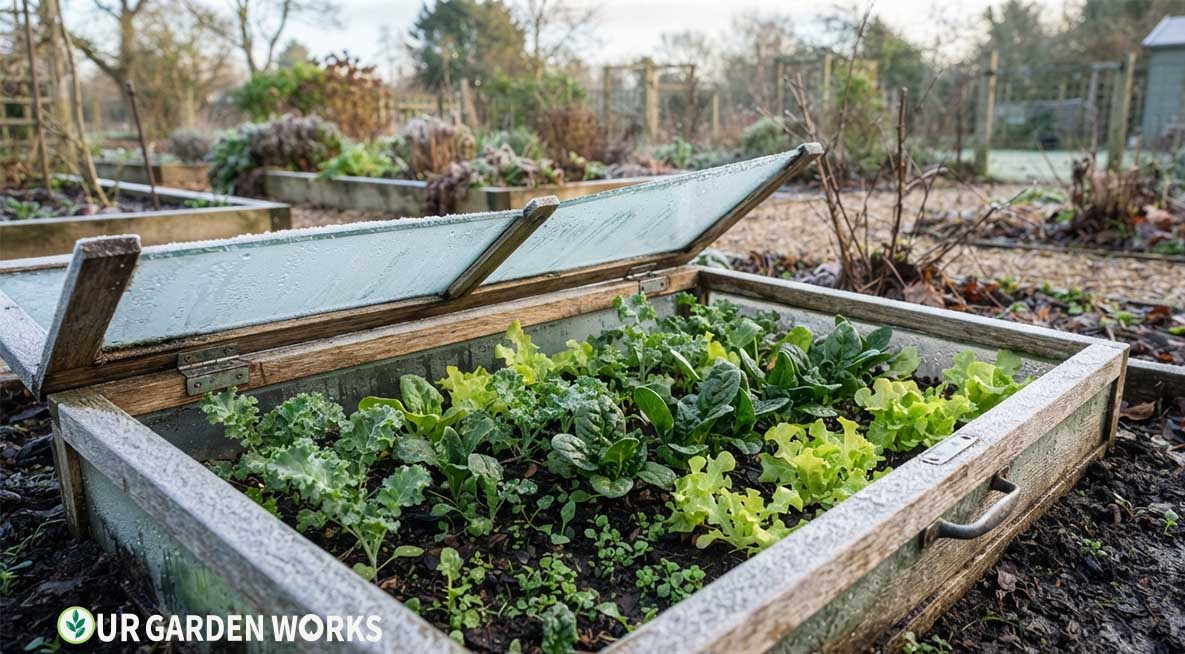
Most gardeners wait until after their last frost date to plant anything. The cold-hardy growers — the ones with lettuce in March and peas by April — know that waiting that long means giving up 6–8 weeks of free growing time.
Dozens of vegetables genuinely thrive in cold soil, survive light frosts, and produce better quality harvests in cool weather than they ever would in summer heat.
The key is understanding frost tolerance levels. Some vegetables can handle temperatures into the low 20s. Others tolerate a light 29–31°F freeze but need protection below that. And a few prefer cool weather but can’t handle hard frost.
This guide sorts out exactly which is which — so you know what to plant directly in February, what to start in March, and what to wait until just before your last frost date.
Editor’s Note: The hardiest vegetables — kale, spinach, arugula, mâche, leeks, and overwintered garlic — survive temperatures down to 20°F and can be planted 6–8 weeks before last frost. Peas, lettuce, broccoli, and carrots tolerate light frosts (28–32°F) and go in 4–6 weeks before last frost. Use our frost dates tool to get your exact planting window.
Understanding Frost Tolerance Levels
| Tolerance Level | Survives Down To | Plant This Early |
|---|---|---|
| 🔵 Very Hardy | 10–20°F | 6–8 weeks before last frost |
| 🟢 Hardy | 24–28°F | 4–6 weeks before last frost |
| 🟡 Semi-Hardy | 28–32°F | 2–4 weeks before last frost |
🔵 Very Hardy — Plant 6–8 Weeks Before Last Frost
1. Kale
Kale is arguably the most cold-tolerant vegetable in the home garden. Established plants survive temperatures down to 10°F — and a light frost actually improves the flavor by converting starches to sugars.
Direct sow or transplant when the ground is workable, even with overnight frost in the forecast. Varieties like Red Russian and Winterbor are the most cold-tolerant.
Direct sow or transplant: Either works · Days to harvest: 55–65 days
Further Reading: How to Grow Kale: Year-Round Harvests Even in Frost (2026)
2. Spinach
Spinach is a cold-season specialist that performs worse as temperatures rise. It tolerates down to 20°F and, when mulched lightly, can overwinter in Zone 6 and warmer. For best germination, sow when soil is at least 35°F — it will germinate slowly but steadily. Sow every 2 weeks for a continuous harvest window.
Direct sow: Best · Days to harvest: 40–50 days
Further Reading: How to Grow Spinach: Fast Harvests in Cool Weather (2026)
3. Arugula
Arugula is the fastest vegetable on this list — it germinates in 3–5 days in cool soil and goes from seed to salad in 35–40 days. It tolerates down to 22–24°F and rebounds strongly after light frosts. Sow thickly and cut at 3–4 inches for baby leaf harvests. It bolts quickly in summer, so spring and fall are its seasons.
Direct sow: Only · Days to harvest: 35–45 days
4. Mâche (Corn Salad)
The most cold-tolerant salad green available — mâche survives hard freezes and snow cover and will continue growing slowly all winter in Zone 6 and warmer. It’s essentially a set-it-and-forget-it cool-season crop. Sow thickly in fall or very early spring and harvest the entire rosette.
Direct sow: Only · Days to harvest: 45–60 days
5. Garlic (Planted in Fall, Harvested Spring–Summer)
Garlic planted in fall overwinters with no protection in Zones 4 and warmer. By February the green shoots are emerging.
While you can’t plant garlic in spring for a same-year harvest, fall-planted garlic is the most reliable cold-hardy crop in any garden — requiring virtually zero spring intervention beyond removing the mulch.
Further Reading: How to Grow Garlic: Complete Guide from Planting to Curing (2026)
🟢 Hardy — Plant 4–6 Weeks Before Last Frost
6. Peas
Peas are the quintessential early-spring crop. Once they are growing, our companion planting chart shows which crops grow well alongside them in the same bed.
They prefer cool weather (55–65°F) and produce poorly when summer heat arrives. Plant as soon as the soil can be worked, even if light frosts are still forecast. They handle down to 24–28°F without damage once germinated.
Most importantly: if you wait until after last frost to plant peas, you miss most of their best growing window. In many northern gardens, peas need to be in the ground by early April to produce before July heat shuts them down.
Direct sow: Only (doesn’t transplant well) · Days to harvest: 60–70 days
Further Reading: How to Grow Peas: Shell, Snow & Snap Peas From Seed (2026)
7. Lettuce
Lettuce tolerates down to 24–28°F once established and prefers cool temperatures for the best leaf quality — heat turns it bitter and causes it to bolt. Transplants and direct-sown seedlings can both go out 4–6 weeks before last frost with light protection (row cover) if temperatures drop below 25°F.
Start indoors or direct sow: Both work · Days to harvest: 45–60 days (leaf); 70–80 (head)
Further Reading: How to Grow Lettuce: Succession Planting for Leaves All Season (2026
8. Broccoli
Broccoli started indoors 6–8 weeks before transplanting and moved outside 4–6 weeks before last frost produces the sweetest, densest heads. It tolerates down to 26–28°F once established.
The secret: broccoli head quality is determined by the temperatures during head formation, not just germination. Getting plants established in cool soil produces much better heads than transplanting in warm soil.
Start indoors: Recommended · Days to harvest: 80–100 days from transplant
Further Reading: How to Grow Broccoli: Timing, Side Shoots & Harvesting Right (2026)
9. Cabbage
Like broccoli, cabbage transplants tolerate light frosts once hardened off. Harden off transplants carefully before moving any of these crops outside. Heads that mature in cool weather are denser and better flavoured than summer-matured cabbage. Transplant 4–5 weeks before last frost. Tolerates down to 26°F.
Start indoors: Recommended · Days to harvest: 80–120 days from transplant
10. Brussels Sprouts
Brussels sprouts are the longest-season vegetable on this list — they need 90–100 days to maturity and actually taste better after frost has hit the buttons. Starting transplants in early spring and getting them in the ground 4–5 weeks before last frost means they’ll be producing in fall when the first frosts improve their flavour.
Start indoors: Essential · Days to harvest: 90–100 days
11. Carrots
Carrot seeds germinate slowly in cold soil but are frost-tolerant once sprouted. Direct sow 4–6 weeks before last frost — they’ll germinate when soil reaches 45°F and will tolerate down to 26–28°F. Like peas, carrots benefit from having cool-soil establishment time before summer arrives. Thin carefully once they’re 2 inches tall.
Direct sow: Only · Days to harvest: 70–80 days
Further Reading: How to Grow Carrots: From Seed to Harvest Without the Forks (2026)
🟡 Semi-Hardy — Plant 2–4 Weeks Before Last Frost
12. Beets
Beet seeds germinate at 40°F and seedlings tolerate down to 28–30°F. Sow 3–4 weeks before last frost for an early summer harvest. Each “seed” is actually a cluster of 2–4 seeds — thin to one plant per 3 inches after germination. Beet greens are harvestable from the time plants are 4 inches tall.
Direct sow: Only · Days to harvest: 55–70 days
13. Swiss Chard
Chard is less cold-hardy than spinach but tolerates light frosts down to 28–30°F. It has the advantage over spinach of not bolting in summer heat, making it a bridge crop that starts in spring and produces all season.
Start transplants indoors or direct sow 2–3 weeks before last frost.
Direct sow or transplant: Both · Days to harvest: 50–60 days
14. Radishes
The fastest return on investment in the spring garden. Radishes go from seed to table in 25–30 days, tolerate down to 28–30°F, and can be sown as early as 4–5 weeks before last frost.
Their fast growth makes them ideal for marking slow-germinating carrot rows — plant a radish seed every few inches alongside carrots; the radishes mark the row and are harvested before the carrots need the space.
Direct sow: Only · Days to harvest: 25–30 days
15. Leeks
Leeks are among the hardiest alliums and tolerate down to 24–26°F once established. They’re slow to mature (100–120 days from transplant) so starting indoors in January–February and transplanting 4–6 weeks before last frost is the standard approach. Leeks started late never catch up — early is essential.
Start indoors: Essential · Days to harvest: 100–120 days from transplant
Row Cover — Your Cold Insurance
A single layer of lightweight floating row cover (1.5 oz fabric) adds 4–6°F of frost protection and allows light and water through. It’s the single most cost-effective way to extend your early planting season.
Drape it loosely over seedlings any night the forecast drops below 28°F — no structure needed, just lay it over the plants and weight the edges with rocks or soil.
For the complete timing guide for each of these crops by zone and frost date, our seed starting calculator converts your frost date into exact sowing dates for every crop on this list.
Frequently Asked Questions
How cold is too cold to plant cold-hardy vegetables?
The limiting factor isn’t air temperature — it’s soil temperature. Most cold-hardy vegetables need soil at least 35–40°F to germinate. Air can be colder.
If your soil thermometer reads below 35°F, wait a week or two. Row cover or black plastic warms soil several degrees and can unlock early planting when air is still cold.
Do I need row cover for these plants?
For the Very Hardy group — kale, spinach, arugula — established plants generally don’t need row cover unless temperatures are expected below 20°F.
For the Hardy group — peas, lettuce, broccoli — row cover is recommended for any night below 26°F.
For the Semi-Hardy group, cover any night below 28°F. The main benefit of row cover isn’t saving plants from frost — it’s accelerating growth in cold temperatures even when no frost is forecast.
Can I plant these in raised beds earlier than in-ground?
Yes — raised bed soil warms 1–3 weeks earlier than in-ground soil in spring because it drains faster and has more sun exposure.
If you have raised beds, move your planting dates 10–14 days earlier for all crops on this list. Add a cold frame over the bed and you can plant another 2–3 weeks earlier still.
Can I direct sow all 15 of these, or do some need to be started indoors first?
Most of this list direct sows best — radishes, carrots, peas, spinach, arugula, mâche, beets, and lettuce all prefer direct seeding because they dislike root disturbance during transplanting.
Broccoli, cabbage, Brussels sprouts, and leeks are the exceptions: they’re typically started indoors 6–8 weeks before transplant date and moved out as hardened-off transplants, since direct seeding these brassicas outdoors in early spring rarely gives enough growing time before summer heat triggers bolting.
Will a late surprise frost after planting kill these crops?
For the Very Hardy group, an unexpected late frost — even below 20°F — rarely kills established plants, though it can damage outer leaves temporarily. The Hardy group can handle a night down to 26°F with minimal damage.
The key word is “established” — seedlings that just germinated are more vulnerable than plants that have been growing for 2–3 weeks, so timing your planting a couple of weeks earlier than strictly necessary gives young plants extra hardening time before any late cold snaps arrive.
🥬 Related Articles in Our Vegetable Gardening Guide
Final Thoughts
We hope this list takes the guesswork out of early-season planting and gives you the confidence to get in the garden weeks earlier than you have been.
Cold-hardy planting is one of the highest-return habits a home vegetable gardener can build. For the exact dates for each crop in your specific location, our frost dates tool gives you the numbers by ZIP code.
For all our vegetable growing guides, our vegetable gardening guide links to every article we have published.
Share this with a fellow gardener who has been waiting until after last frost to plant everything — and doesn’t know how much free growing time they’ve been leaving on the table — and let us know in the comments which crop you’re most excited to get in the ground this season. Happy growing!
