

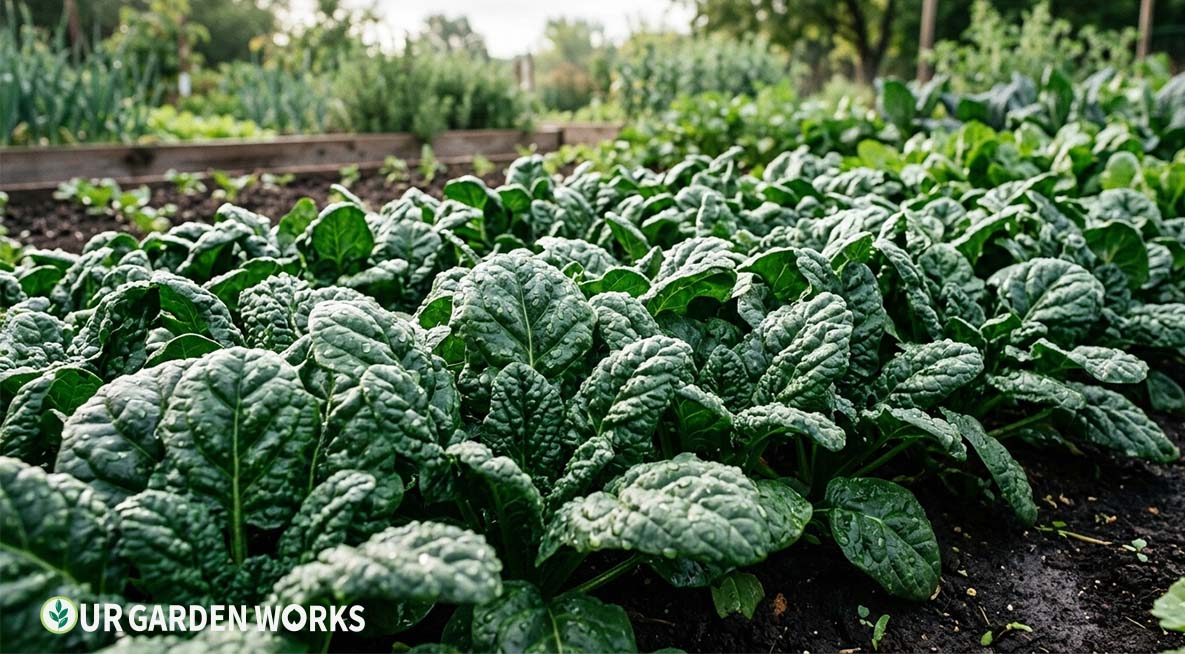
Spinach is the sprint car of the vegetable garden — fast, intense, and over before you know it.
A properly timed spinach planting goes from seed to harvest in 30–45 days, which means you can sow it, harvest it, and sow a summer crop in the same bed before most of your other vegetables have even hit their stride.
The challenge with spinach is that it’s strictly a cool-season crop. Once day length exceeds 14 hours and temperatures climb above 75°F, spinach bolts — transitioning from leaf production to flowering in a matter of days.
Understanding and working with that timeline is the whole game, and once you’ve grown a few rounds successfully, the rhythm becomes second nature.
How to Grow Spinach – Quick Guide: Direct sow spinach seeds ½ inch deep as soon as soil can be worked in spring — it germinates at 35°F. Sow every 2 weeks through cool weather. Switch to the fall crop 6–8 weeks before first frost. Harvest outer leaves continuously or cut whole plants 1 inch above soil for regrowth.
Spinach Growing Requirements
What Spinach Needs
- Sunlight: Full sun in cool weather; light afternoon shade helps extend the season as temperatures rise in late spring.
- Soil pH: 6.5–7.5. Spinach is notably pH-sensitive — acidic soil below 6.0 stunts growth significantly, more so than most leafy greens.
- Soil texture: Loose, fertile, well-draining soil rich in organic matter. Spinach’s shallow root system can’t forage far for nutrients or moisture.
- Spacing: 4–6 inches between plants after thinning, rows 12–18 inches apart.
Test your soil pH before the first spring sowing if you’ve never grown spinach in that bed — correcting acidic soil with lime takes weeks to take effect, so this isn’t a fix you can apply right before planting and expect results from immediately.
A bed that’s hosted brassicas or other heavy feeders in recent seasons, with compost worked in regularly, is usually close to ideal without much additional amendment.
Choosing Your Spinach Variety
| Type | Best Varieties | Bolt Resistance | Notes |
|---|---|---|---|
| Smooth-leaf (Savoy) | Bloomsdale Long Standing, Tyee | Good | Easiest to clean; excellent for cooking |
| Semi-savoy | Catalina, Space, Acadia | Best for heat | Best choice for extending spring season into early summer |
| Flat-leaf | Corvair, Reflect | Good | Easiest to clean; preferred for salads and baby leaf harvest |
Tyee and Catalina are two of the most bolt-resistant spinach varieties available. In a warm-spring climate, this difference can add 2–3 weeks to your harvest window.
Read seed catalog descriptions carefully — “bolt resistant” or “slow to bolt” on the label is meaningful and worth choosing.
How to Grow Spinach: Step by Step
Step 1 — Sow as Early as Possible
Spinach germinates at soil temperatures as low as 35°F — making it the first direct-sown vegetable of the season in most climates.
Sow 4–6 weeks before your last frost date, or as soon as you can work the soil in spring. The early sowing takes advantage of the longest possible cool-weather window before bolting season arrives.
Directions
- Sow seeds ½ inch deep, 1 inch apart, in rows or broad beds. Cover lightly and firm gently for seed contact.
- Germination takes 5–14 days depending on soil temperature. In 35–40°F soil, expect up to 3 weeks. In 50–60°F soil, expect 7–10 days.
- Thin to 4–6 inches between plants when seedlings are 2 inches tall. Use the thinnings as baby spinach.
- Succession sow every 2 weeks until temperatures regularly hit 65°F daytime. Then switch to heat-tolerant crops in the same space and plan your fall spinach.
Step 2 — Watering and Fertilizing
Watering: Keep soil consistently moist — 1 inch per week. Spinach has shallow roots and dries out quickly in warm weather. Drought stress is the second-fastest trigger for bolting after heat and day length. Mulch between plants to retain moisture.
Fertilizing: Spinach is a nitrogen-hungry crop — it’s all leaf. Side-dress with a nitrogen fertilizer 2–3 weeks after germination. In well-amended soil, a single compost application at bed prep may be sufficient for the short growing season.
Step 3 — Harvest Before It Bolts
Watch for these bolting signals: a central stem beginning to elongate, leaves becoming narrower and more pointed, or any flower bud formation. At the first sign, harvest the entire plant immediately — cut 1 inch above the soil surface for potential regrowth, or pull the whole plant. Bolted spinach is edible but increasingly bitter.
For detailed harvest timing guidance, see our harvest timing guide.
Step 4 — The Fall Crop (Often Better Than Spring)
Many experienced spinach growers prefer fall plantings. Sow 6–8 weeks before first frost — the crop establishes in warm weather, grows through cooling fall temperatures (which slow bolting dramatically), and in Zones 6–7 can even overwinter under a low tunnel for late-winter harvests.
Fall spinach faces no day-length pressure toward bolting and often produces more tender, flavorful leaves than spring crops.
Using Spinach as an Intercrop
Spinach’s fast growth and shallow roots make it an ideal “catch crop” planted between slower-growing vegetables. Tuck spinach seeds between newly transplanted tomatoes, peppers, or brassicas in early spring — the spinach matures and gets harvested out long before the main crop needs the space, effectively giving you two harvests from the same square footage.
This works especially well in raised beds and intensive gardens where space is at a premium.
Just avoid intercropping spinach directly beneath anything that will eventually cast heavy shade once it leafs out — the goal is using the empty window before the main crop fills in, not competing with it long-term.
Common Pests and Problems
Leaf miners: The most common spinach pest — larvae tunnel inside leaves, leaving pale, winding trails. Row covers installed at sowing prevent the adult flies from laying eggs in the first place; once tunnels appear, simply remove and discard affected leaves.
Aphids: Cluster on the undersides of leaves, especially in warm, humid conditions late in the season. A strong water spray dislodges most populations; insecticidal soap handles persistent infestations.
Downy mildew: Shows as yellow patches on top of leaves with fuzzy gray growth underneath, favored by wet foliage and poor airflow. Water at the soil line rather than overhead, space plants adequately, and choose resistant varieties like Tyee where this disease is a recurring problem.
Frequently Asked Questions
Why did my spinach bolt so quickly?
Long days (over 14 hours) combined with warm temperatures trigger bolting — this is genetically programmed and can’t be stopped once triggered. Prevent it through timing: sow early in spring before days lengthen, choose slow-bolt varieties, and plan for a fall crop when days are shortening instead of lengthening.
Can I grow spinach in summer?
Standard spinach won’t work in summer. If you want summer salad greens, try Malabar spinach (not true spinach, but similar use and heat-loving) or New Zealand spinach — both thrive in heat that would immediately bolt regular spinach. Both also have a different growth habit, sprawling rather than forming a rosette, so give them more room than you would standard spinach.
How do I get a second harvest from spinach?
Cut plants 1 inch above the soil surface rather than pulling them. In cool weather, they’ll regrow from the base for a second harvest in 2–3 weeks. This only works in genuinely cool conditions — if temperatures are rising toward bolting, pulling and replanting is more productive.
Is baby spinach a different variety from mature spinach?
No — baby spinach is simply any variety harvested young, typically 3–4 weeks after sowing when leaves are 2–3 inches long, rather than letting plants mature fully. Sowing seeds more densely than usual and harvesting the whole bed young is the easiest way to produce a steady supply of baby leaves for salads.
Does spinach need a different fertilizer than other leafy greens?
Not fundamentally — spinach simply benefits from a nitrogen-forward feeding more than fruiting vegetables do, since every part of the harvest is leaf tissue. A standard balanced fertilizer with a slightly higher first number (nitrogen) works well, or side-dress with compost or blood meal partway through the growing cycle.
🥬 Related Articles in Our Vegetable Gardening Guide
Final Thoughts
We hope this guide has given you the timing and variety tools to finally get a satisfying spinach harvest. The key is working with the cool season, not against it — and the fall crop is where most gardeners find their best results.
For all our vegetable growing guides, our vegetable gardening guide links to everything.
Share this post with a fellow gardener who’s ready to grow their own — and let us know in the comments whether you’re planning a spring or fall sowing — and which variety you chose. Happy growing!
