

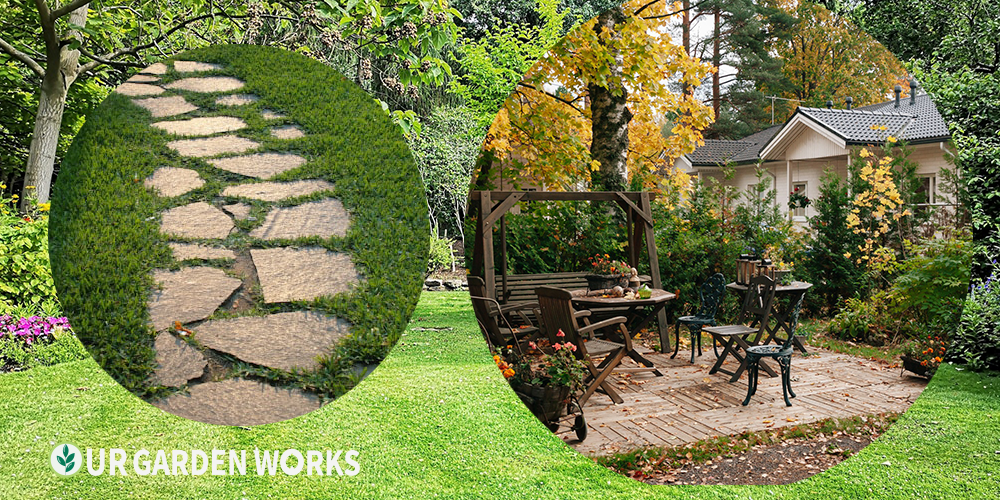
A backyard doesn’t need to be large to be functional, beautiful, and deeply satisfying.
The difference between a backyard that gets used every day and one that just exists comes down to intentional design — understanding what you actually want from the space, then organizing it so those uses don’t fight each other.
If growing food is part of your vision, the soil underneath your backyard matters as much as the layout above it.
✅ Key Takeaways:
- Zone first, plant second— define what you want from each area before spending money on plants or materials
- Observe before building— sun, shade, drainage, and traffic patterns determine where everything should go
- Moss is a legitimate lawn alternative— thrives where grass struggles, requires no mowing or fertilizing
- Water features attract natural pest control— birds, frogs, and beneficial insects follow water sources
- Vertical space is free— fences, walls, and trellises can become productive growing surfaces
- Trees are permanent decisions— research mature size and root spread before planting near structures
This guide covers the full spectrum of backyard design: from ground-level garden beds and paths to vertical planting on fences, living moss walls, water features, wildlife habitats, and DIY projects that transform unused space into something the whole family uses.
Every section links to our in-depth guides and to the best external resources for inspiration and research.
🌿 Editor’s Note
“The first question I ask anyone redesigning their backyard is: how do you actually want to use it? The answer — growing food, hosting people, playing with kids, creating a wildlife habitat, or just having somewhere beautiful to sit — changes everything about the design.”
Design Principles That Scale to Any Yard
Good backyard design follows a few principles that hold regardless of yard size or budget.
The Royal Horticultural Society’s garden design principles identify unity, balance, and movement as the three foundational elements — a garden that feels cohesive typically has a clear focal point, repeated materials or colors that tie spaces together, and pathways that guide movement naturally.
For practical backyard spaces, the most useful principle is zoning: dividing the yard into defined areas for different purposes — a growing zone, a relaxation zone, a wildlife zone, a play zone — and then designing each zone independently before connecting them.
Within a growing zone, raised beds are the most popular choice because they let you control soil quality, drainage, and layout independently from the surrounding yard. This prevents the common problem of a yard that feels cluttered and purposeless because everything is everywhere.
💡 Before You Build Anything
Spend a full week observing your yard at different times of day — morning, midday, late afternoon. Note where the sun hits, where water pools after rain, where it’s always shady, and where foot traffic naturally flows. These observations determine where each zone should go, and ignoring them is the most expensive backyard design mistake there is.
Moss Gardens & Living Walls
Moss gardening has moved from a niche interest to a mainstream design trend — and for good reason. It requires no mowing, no fertilizing, and minimal water once established. It thrives in shade where grass struggles, creates a lush, ancient atmosphere, and is genuinely low maintenance.
The University of Maryland Extension’s moss guide explains why moss appears naturally in yards (usually as a signal of soil acidity, poor drainage, or shade) and how to intentionally cultivate it as a design element rather than treating it as a weed.
Moss Lawn — The Low-Maintenance Alternative
A moss lawn uses dramatically less water than grass, requires no mowing or fertilizing, and stays green even in dry shade. The same moss species that work in a lawn can also be trained onto rocks or grown indoors as a living wall — making moss one of the most versatile design materials available.
How to Grow a Moss Lawn & Save on Lawn Maintenance Costs
Irish Moss — Grass Alternative for Paths & Edges
Irish Moss Care Tips & How to Use It as a Grass Alternative
Moss on Rocks
2 Ways of Growing Moss on Rocks (+ Fun Facts About Moss)
Indoor Moss Garden
Moss Garden Indoors: 6 Best Ideas to Transform Your Space
Moss Wall
How to Grow a Moss Wall at Home — Instagrammable Living Walls
Water Features — Koi Ponds & Water Gardens
Water features are one of the highest-impact design elements you can add to a backyard. The sound of moving water reduces perceived noise from neighbors and traffic.
A well-designed pond creates a microhabitat that attracts beneficial insects, frogs, and birds — natural pest controllers.
According to the National Wildlife Federation’s wildlife habitat certification program, adding a water source is one of the four core requirements for certifying your yard as a wildlife habitat.
Koi Ponds
A koi pond is a long-term commitment — koi can live 20–30 years and grow to 12–18 inches. The design decisions made at the start (depth, filtration, surface area) determine whether the pond stays healthy or becomes an ongoing problem.
A water garden without fish is a lower-maintenance starting point if you’re unsure about the commitment level. Getting the basics right before breaking ground saves enormous effort later.
🐟 91 Creative Koi Pond Ideas for a Refreshing Yard Experience
Water Gardens
33 Water Garden Ideas for a Tranquil Outdoor Design
External Resource: Certify Your Backyard as a Wildlife Habitat — NWF
Garden Paths, Edges & Ground Cover
Paths do more than prevent muddy feet — they define the structure of a garden, direct attention toward focal points, and determine how the space feels to move through. Curved paths create a sense of mystery and discovery; straight paths feel formal and efficient.
If conifers or pines line your path, needle drop creates a natural mulch layer that both softens the path edge and suppresses weeds. The material choice (stone, gravel, mulch, brick) determines maintenance requirements as much as aesthetics.
Garden Path Ideas
🛤 87 Garden Path Ideas for Your Ultimate Garden Makeover
Landscaping Pine Trees
🌲 10 Cool Ideas in Landscaping Pine Trees
Rock Removal
12 Best Landscape Rock Removal Equipment for Gardens (2026)
Muddy Yard & Drainage Problems
A muddy backyard is usually a drainage problem — water is not moving away from the surface fast enough because of compaction, clay soil, or poor grade.
The fix depends on the cause: surface compaction can be broken up with aeration; low spots need grading or French drains; chronic high-traffic areas need a more permanent surface solution.
Vertical & Fence Planting
Vertical space is the most underused dimension in most backyards. Fences, walls, and trellises can be transformed into productive and beautiful growing surfaces — flowers, herbs, vegetables, and moss all grow vertically with the right support. For small yards and balconies, vertical growing can multiply effective growing area without expanding the footprint.
Fence Planter Boxes
46 Stunning Fence Planter Box Ideas to Make the Most of Your Space
Trees, Stumps & Palm Tree Care
Trees are the backbone of backyard design — they define scale, provide shade, create privacy, and support wildlife. They also outlive most other backyard decisions by decades, which makes placement critical.
The Arbor Day Foundation’s Right Tree, Right Place guide covers how to choose trees based on mature size, soil type, sun exposure, and proximity to structures — common mistakes here result in roots lifting patios and branches threatening power lines years later.
Palm Tree Care & Aesthetics
Tree Stumps
A leftover tree stump is either a liability or an asset depending on what you do with it. Preserved and treated correctly, a large stump can become a planter, a garden table, or a focal point feature. Left untreated, it becomes a source of fungal disease and a slow collapse risk — the same decay that damages stumps spreads to nearby trees and shrubs through root contact.
- How to Preserve a Tree Stump — 5 Helpful Steps + Tips
- Can You Use Copper Nails to Kill Trees? Fact or Myth
Acorns
How to Pick Up Acorns in 5 Easy Ways (+ Other Uses of Acorns)
Attracting Wildlife to Your Backyard
A backyard that supports wildlife is a more resilient and lower-maintenance space. Birds eat insects and weed seeds. Frogs eat slugs and mosquito larvae. Beneficial insects pollinate crops and prey on garden pests — reducing or eliminating the need for spray treatments in a well-balanced backyard ecosystem.
The National Wildlife Federation’s backyard habitat tips identify four things every wildlife-friendly yard needs: food sources, water, cover, and a place to raise young — all of which can be designed into any backyard.
- 🐦 How to Attract Birds to Your Yard in 8 Ways
- 🐝 When Is It Too Late to Split a Hive? The Complete Guide
- 🦎 What Do Garden Lizards Eat? Your Reptile Ally in the Garden
DIY Backyard Projects
Some of the most transformative backyard improvements are DIY projects that cost a fraction of professional installation. The key principle from any construction perspective: do the structural or irreversible work first (grading, drainage, underground utilities), then surfaces (paths, decks), then plantings, then accessories.
Greenhouse Heating
How to Heat a Greenhouse with Solar Panels — Step-by-Step
Underground Room / Safe Room
How to Build an Underground Room or Safe Room in Your Yard
Backyard Sports
- How to Build a Pitching Mound Using Scrap Woods
- How to Build a Backyard Football Field
- How to Build Dirt Jumps in Your Backyard
Comfort & Insulation
- 10 Best Backyard Hammocks to Reinvent Your Home (2026)
- Fireplace 101: 6 Ways to Seal Your Fireplace
- How to Place Loose-Fill Insulation by Hand
- How Long Does Deck Stain Need to Dry Before It Rains?
- What Are Breakaway Screws and How Do They Work?
- Do-It-Yourself: How to Move a Light Switch
- DIY Broadfork: How to Make One from Metal Scraps
