

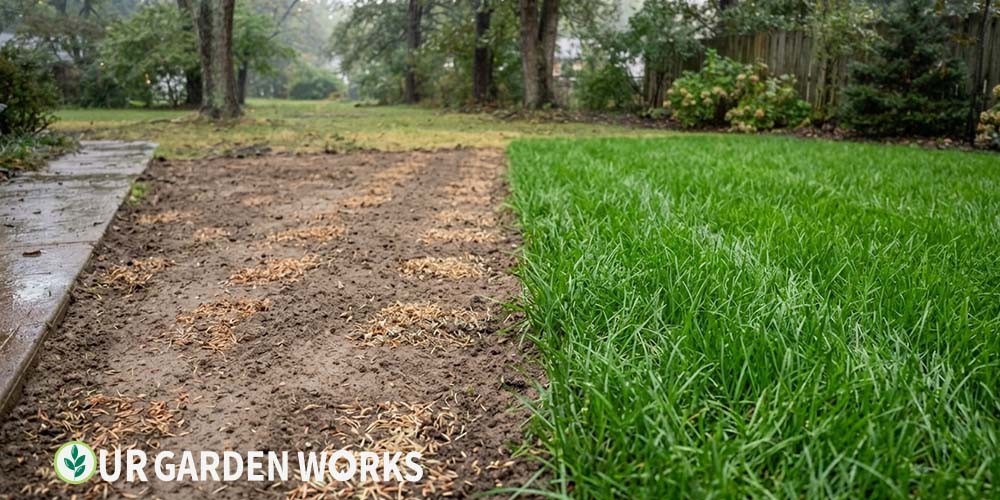
Few gardening disappointments feel as deflating as carefully seeding a lawn area and watching weeks pass with little to nothing coming up.
The good news is that grass seed failure almost always traces back to one of a handful of well-understood causes, each with a clear fix once identified.
We’ll walk through the most common reasons seed fails to germinate or establish, since getting the right diagnosis here saves you from repeating the same mistake on a second attempt.
Quick Answer: Grass not growing after seeding is most often caused by poor seed-to-soil contact, incorrect watering (too little or inconsistent), wrong seeding timing for your climate and grass type, seed washed away or eaten by birds, old or low-quality seed, soil temperature outside the ideal germination range, or pre-emergent herbicide residue still active in the soil. Check timing and watering consistency first, since these explain most cases.
Cause 1 — Poor Seed-to-Soil Contact
Grass seed needs direct contact with soil to germinate reliably — seed sitting on top of thatch, mulch, or a hard, uncultivated surface often simply doesn’t get the moisture and soil contact it needs, regardless of how much you water from above.
This is one of the most common and most overlooked causes of seeding failure.
How to confirm it’s a contact issue:
- Soil surface was not loosened or raked before seeding
- Existing thatch or debris was present on the soil surface at seeding time
- Seed is visibly still sitting on the surface rather than settled into the soil
Fix: Rake or lightly till the soil surface before reseeding to create good contact, then rake again lightly after spreading seed to work it into the top quarter-inch of soil. A light layer of straw or seeding mulch afterward helps retain moisture while keeping seed in place.
Cause 2 — Inconsistent or Inadequate Watering
Grass seed needs consistently moist (not waterlogged) soil throughout the germination period, and allowing the surface to dry out even once during this critical window can kill emerging seedlings or stall germination that was otherwise progressing normally.
This is often the single biggest behavioral factor separating successful and failed seeding attempts.
How to confirm watering is the issue:
- Watering schedule has been infrequent or inconsistent since seeding
- Soil surface has visibly dried out and cracked at any point during the expected germination window
- Some seed shows partial germination, suggesting it started but then failed, rather than never germinating at all
Fix: Water lightly but frequently — often once or twice daily — to keep the top inch of soil consistently moist without creating standing water, continuing this routine through germination and the first few weeks of seedling establishment before transitioning to a deeper, less frequent watering schedule.
Cause 3 — Wrong Seeding Timing
Grass seed germinates best within a specific soil temperature range that varies by grass type, and seeding outside this window — too early in cold spring soil, or too late into the heat of summer for cool-season grasses — significantly reduces germination success regardless of how well you handle every other factor.
How to confirm timing is the issue:
- Seeding occurred notably early or late relative to the recommended window for your grass type and climate
- Soil temperature, if checked, falls outside the ideal germination range for that specific grass type
Fix: For cool-season grasses, early fall is generally the most reliable window in most climates, with early spring as a secondary option. For warm-season grasses, late spring through early summer typically works best. Check our spring lawn care schedule for general timing guidance specific to seasonal lawn tasks.
Cause 4 — Seed Washed Away or Eaten by Birds
Heavy rain shortly after seeding can wash seed into low spots or off the intended area entirely, particularly on any slope, while birds are notoriously efficient at finding and eating exposed grass seed before it has a chance to germinate. Both factors can leave an area with far less viable seed remaining than was originally applied.
How to confirm this is the issue:
- Heavy rain occurred shortly after seeding, especially on sloped ground
- Seed appears concentrated in low spots rather than evenly distributed as originally applied
- Bird activity has been notably heavy in the seeded area
Fix: A light covering of straw mulch or seeding mulch protects against both washout and bird predation considerably better than leaving seed fully exposed. For slopes specifically, an erosion control blanket or netting provides additional protection against heavy rain washing seed away.
Cause 5 — Old or Low-Quality Seed
Grass seed viability declines over time, and seed stored improperly (in humid or hot conditions) or kept for several years past purchase can have significantly reduced germination rates even when every other condition is handled correctly.
Cheap, low-quality seed blends sometimes also include a higher percentage of filler material or weed seed rather than pure, viable grass seed.
How to confirm seed quality is the issue:
- Seed is several years old or was stored in less than ideal conditions
- No germination at all occurred despite otherwise correct seeding technique and timing
- Seed packaging doesn’t list a germination rate, or lists an unusually low one
Fix: Purchase fresh, quality seed for any future attempt, checking the package for a stated germination percentage (ideally 85% or higher) and a recent test date. This is a relatively inexpensive factor to control compared to the time invested in the rest of the seeding process.
Cause 6 — Soil Temperature Outside the Ideal Range
Beyond general seasonal timing, specific soil temperature at the time of seeding matters precisely, since most cool-season grasses germinate best in soil between roughly 50-65°F, while warm-season grasses typically need soil in the 65-70°F range or warmer.
Seeding into soil outside these windows, even within the generally correct season, can still produce poor results.
How to confirm this is the issue:
- A soil thermometer reading at seeding time falls notably outside the ideal range for your specific grass type
- An unusual cold snap or heat wave occurred right around the seeding date
Fix: Check soil temperature with a simple thermometer before seeding rather than relying purely on calendar dates, since actual soil conditions can vary from typical seasonal expectations in any given year.
Cause 7 — Pre-Emergent Herbicide Residue
If a pre-emergent herbicide was applied to the area earlier in the season — even one intended to prevent weed seeds like crabgrass — that same product often prevents grass seed from germinating as well, since most pre-emergent herbicides work by blocking germination broadly rather than targeting weeds specifically.
How to confirm this is the issue:
- A pre-emergent herbicide was applied to the area within the past several months
- Product label specifies a waiting period before seeding that wasn’t observed
Fix: Check the specific pre-emergent product’s label for its recommended waiting period before seeding, which often ranges from 6 weeks to several months depending on the product. If you’ve already seeded too soon after application, waiting out the remainder of the specified period before attempting again is usually necessary.
Telling the Seven Causes Apart at a Glance
| Cause | Key Clue |
|---|---|
| Poor seed-to-soil contact | Seed visibly sitting on surface, no raking done |
| Inconsistent watering | Watering gaps, surface dried out during germination window |
| Wrong timing | Seeded outside recommended seasonal window |
| Washed away/eaten | Heavy rain or bird activity after seeding, no mulch cover |
| Old/low-quality seed | Seed several years old, no germination at all |
| Wrong soil temperature | Thermometer reading outside ideal range |
| Herbicide residue | Pre-emergent applied without observing wait period |
A Realistic Seeding Checklist Before Your Next Attempt
Given how many of these causes are preventable with the right preparation, working through a quick checklist before your next seeding attempt addresses most of these factors proactively rather than discovering them after another failed attempt.
Confirm soil temperature and seasonal timing align with your grass type, prepare the soil surface properly for good seed contact, check that no pre-emergent herbicide is still active in the area, use fresh, quality seed, and plan for consistent watering and protective mulch from day one rather than improvising as you go.
This methodical approach takes only slightly more upfront time than a quick, unplanned seeding attempt, but it meaningfully improves the odds of success on the first try rather than needing this diagnostic process at all.
Frequently Asked Questions
How long should I wait before assuming grass seed has failed to germinate?
Germination timelines vary by grass type, typically ranging from 5-10 days for fast-germinating types like ryegrass to 2-4 weeks for slower types like Kentucky bluegrass.
If you’ve waited well beyond the expected range for your specific seed type with consistent watering and no visible germination at all, it’s reasonable to suspect one of the causes above rather than simply waiting longer.
Can I just add more seed to an area that already failed, or should I start over?
If you’ve identified and corrected the underlying cause, adding fresh seed directly to the same prepared area is usually fine and doesn’t require fully starting over, as long as the soil surface is reasonably intact and you address whatever specifically went wrong the first time.
Full surface re-preparation (raking, loosening) is worth doing again regardless, even if it’s not a complete restart.
Should I use a starter fertilizer when reseeding a failed area?
Yes, a starter fertilizer formulated with higher phosphorus content specifically supports new root development during establishment, giving reseeded grass a stronger foundation than a standard maintenance fertilizer would provide at this critical early stage.
See our purple grass blades guide for more on phosphorus’s specific role in new lawn establishment.
Related Articles in Our Lawn Care Guide
- Pre-emergent vs. Weed & Feed: Which Is Better?
- Herbicide 101: Can You Apply Pre-Emergent In The Rain Or Wet Grass?
- Bare Spots in Lawn That Won’t Grow – 5 Causes and Fixes
- Purple Grass Blades — Causes + Fix
- (Free tool) Lawn Overseeding Calculator – How Much Grass Seed and Fertilizer You Need
- Spring Lawn Care Schedule
- How to Overseed a Lawn for Thick, Green Growth
Final Thoughts
We hope this guide has helped you pinpoint exactly why your grass seed didn’t take — most causes here are entirely preventable once you know what to check before your next attempt.
For more lawn care guidance, our full collection of lawn articles on the soil and fertility page covers everything from seasonal maintenance to soil health.
Share this post with a fellow homeowner who’s dealing with failed grass seed — and let us know in the comments which cause matched what you found. Happy growing!
