

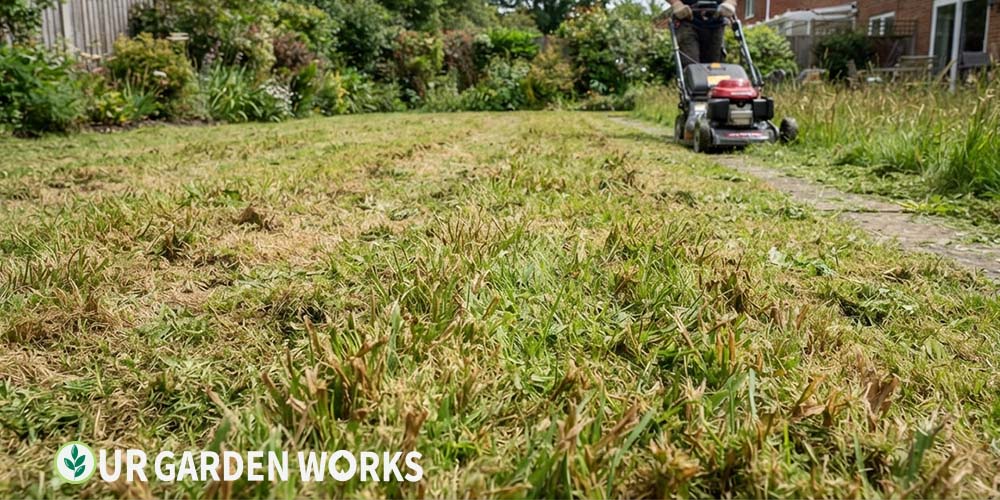
A lawn that looks noticeably worse right after mowing, rather than the clean, refreshed look mowing is supposed to produce, almost always points back to the mowing process itself rather than anything happening separately in the soil or from pests.
The good news is that mowing-related causes are entirely within your control to fix.
We’ll cover the specific mowing mistakes most likely responsible, since this is a different category of cause than the disease and pest issues covered in our other lawn guides.
Quick Answer: Lawn turning brown after mowing is most often caused by scalping (cutting too short, removing too much blade height at once), dull mower blades (tearing rather than cutting cleanly), mowing during heat or drought stress, or mowing wet grass (which tears more easily and spreads any disease present). Check how much height was removed and recent weather conditions to narrow it down.
Cause 1 — Scalping (Cutting Too Short)
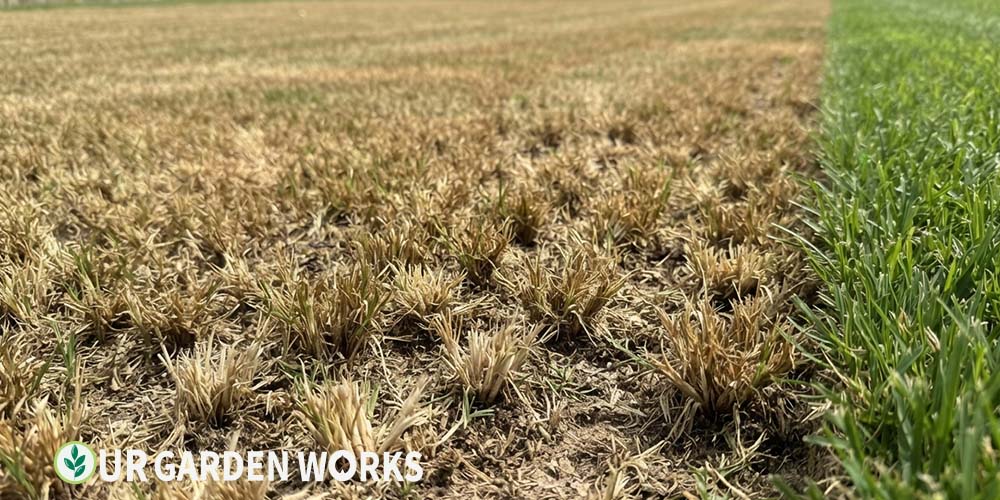
The general rule of never removing more than about a third of the grass blade’s height in a single mowing exists for good reason — removing significantly more than this stresses the plant considerably, sometimes producing a uniform brown or yellow-brown cast across the entire mowed area as the grass struggles to recover from the sudden, severe height reduction.
How to confirm it’s scalping:
- Mower was set to a notably low height, or grass had grown unusually tall before mowing, creating an especially dramatic height reduction
- Browning is fairly uniform across the mowed area rather than following equipment-specific stripes
- Grass crown (the base growing point) may be visible or exposed where it normally wouldn’t be
Fix: Raise the mower deck to an appropriate height for your grass type going forward, and if grass has grown unusually tall, mow it down gradually over two or three sessions spaced a few days apart rather than removing the full excess height in one pass.
⚠️ Never “catch up” by scalping overgrown grass in one session
If grass has gotten away from you and grown taller than usual, the temptation to mow it back down to normal height in a single session is understandable but risks serious scalping stress. Gradual height reduction over multiple mowing sessions protects the lawn far better than one dramatic cut, even though it takes a few extra days to reach your target height.
Cause 2 — Dull Mower Blades
A dull blade tears and shreds grass tips rather than slicing them cleanly, and that torn, ragged tissue browns and dies back visibly within a day or two of mowing, creating a hazy brown cast across the lawn that a clean cut wouldn’t produce. This is one of the most common, and most overlooked, causes of post-mowing browning.
How to confirm it’s dull blades:
- Close inspection of cut grass tips shows a frayed, torn, whitish appearance rather than a clean, sharp cut
- Blades haven’t been sharpened in a while — most need sharpening every 20-25 hours of use, roughly once or twice per season for typical residential mowing
Fix: Sharpen or replace mower blades, and build a regular sharpening schedule into your seasonal mower maintenance routine going forward rather than waiting until damage becomes visible.
Cause 3 — Mowing During Heat or Drought Stress
Grass already stressed by heat or limited soil moisture has less resilience to handle the additional stress of mowing, and cutting drought-stressed grass can push it from merely stressed into visibly browned, sometimes taking longer to recover than grass mowed under more favorable conditions.
How to confirm this is the cause:
- Lawn was already showing some heat or drought stress signs before mowing
- Mowing occurred during the hottest part of the day or during an extended dry stretch without recent watering
Fix: Water the lawn adequately before mowing if it’s been dry, and mow during cooler parts of the day (early morning or evening) rather than peak afternoon heat. If drought stress is severe, consider delaying mowing until conditions improve, since dormant or severely stressed grass benefits from minimal additional disruption.
Cause 4 — Mowing Wet Grass
Wet grass blades are more prone to tearing rather than clean cutting, similar in mechanism to the dull blade issue but caused by moisture rather than blade condition. Wet mowing can also spread fungal disease spores more readily across the lawn if any disease is present, compounding the direct tearing damage with potential disease transmission.
How to confirm this is the cause:
- Mowing occurred while grass was visibly wet from dew, rain, or recent irrigation
- Cut grass tips show the same frayed, torn appearance associated with dull blades, even if blades are actually sharp
Fix: Wait for grass to dry before mowing, ideally mowing in the late morning once dew has evaporated but before the heat of midday sets in. If you must mow wet grass for scheduling reasons, recognize that some additional stress and browning risk comes with that choice.
Telling the Four Causes Apart at a Glance
| Cause | Pattern | Blade Tip Appearance | Key Factor |
|---|---|---|---|
| Scalping | Uniform across mowed area | May show exposed crown | Too much height removed |
| Dull blades | General haze across lawn | Frayed, torn, whitish | Blade sharpness/age |
| Heat/drought + mowing | Worse where already stressed | Variable | Pre-existing stress |
| Wet grass mowing | General haze, similar to dull blades | Frayed, torn | Grass moisture at mowing time |
Does Mower Type Affect How Likely This Is to Happen?
Reel mowers, which cut with a true scissor-like shearing action, generally produce a cleaner cut than rotary mowers even when both are reasonably well maintained, which is part of why reel mowers are often preferred for the most demanding, manicured turf applications like golf greens.
For typical residential lawns, rotary mowers remain by far the most common choice and work perfectly well when blades are kept sharp, though they’re inherently somewhat more prone to tearing if blade maintenance lapses compared to a well-adjusted reel mower.
Robotic mowers, covered briefly in our lawn striping guide, typically mow more frequently with smaller height reductions per session, which actually works in their favor for avoiding both scalping and the stress of removing too much height at once.
The tradeoff is that robotic mower blades, often smaller and less robust than traditional mower blades, may need more frequent replacement or sharpening to maintain the same cut quality, making blade condition checks just as important with this equipment type as with conventional mowers.
Adjusting Mowing Height Seasonally
Beyond the basic one-third rule, seasonal adjustments to your target mowing height can further reduce post-mowing stress and browning risk.
Many lawn care guides recommend mowing slightly taller during the hottest part of summer, since taller grass shades its own root zone better and retains soil moisture more effectively than closely mowed turf, reducing the underlying heat and drought stress that compounds mowing-related browning in the first place.
Conversely, a slightly lower mowing height heading into fall dormancy for cool-season grasses, sometimes called a final “fall cut,” helps reduce the risk of matted, disease-prone grass over winter, though this should still respect the one-third rule applied gradually rather than as a single dramatic height drop.
Adjusting your target height by season, rather than maintaining one fixed setting year-round regardless of conditions, supports better overall lawn resilience and reduces how often mowing itself becomes a stress factor.
The One-Third Rule — Why It Matters More Than Most People Realize
The guideline to never remove more than about a third of the grass blade’s total height in a single mowing isn’t an arbitrary suggestion — it reflects how grass actually stores and uses energy.
A significant portion of a grass plant’s energy reserves are held in the lower stem and blade tissue, and removing too much of this at once forces the plant to draw heavily on root reserves to recover, weakening the root system in the process even if the visible browning eventually resolves.
Following this rule consistently, which sometimes means mowing more frequently during periods of rapid growth rather than letting grass grow tall between less frequent sessions, protects both the immediate visual appearance and the lawn’s longer-term root health and resilience.
Frequently Asked Questions
How long does it take for grass to recover from mowing-related browning?
Mild browning from minor scalping or dull blades often resolves within a week to two, as the grass produces new growth and the damaged tips are gradually replaced through subsequent mowing.
More severe scalping, especially combined with heat or drought stress, can take several weeks longer and may benefit from extra watering attention to support recovery.
Should I bag clippings or leave them on the lawn after mowing causes browning?
This isn’t directly related to the browning cause itself, but leaving fine clippings on the lawn (rather than removing them) returns some nutrients to the soil and generally doesn’t worsen browning, as long as clippings aren’t left in thick, smothering clumps.
If scalping has occurred and clumped clippings are visible covering already-stressed grass, removing those specific clumps helps prevent additional smothering stress on top of the existing damage.
How often should I sharpen my mower blades to prevent this from recurring?
Most residential mowers benefit from blade sharpening every 20-25 hours of use, which for a typical suburban lawn often works out to roughly once or twice per mowing season.
Checking blade condition periodically by examining cut grass tips for fraying, rather than relying purely on a time-based schedule, helps you catch dulling blades before they cause noticeable lawn stress.
Related Articles in Our Lawn Care Guide
Final Thoughts
We hope this guide has helped you trace your lawn’s post-mowing browning back to the right cause — most of these are simple technique fixes once identified, no products required.
For more lawn care guidance, our full collection of lawn articles on the soil and fertility page covers everything from seasonal maintenance to equipment care.
Share this post with a fellow homeowner who’s noticed browning after mowing — and let us know in the comments which cause matched what you found. Happy growing!
