

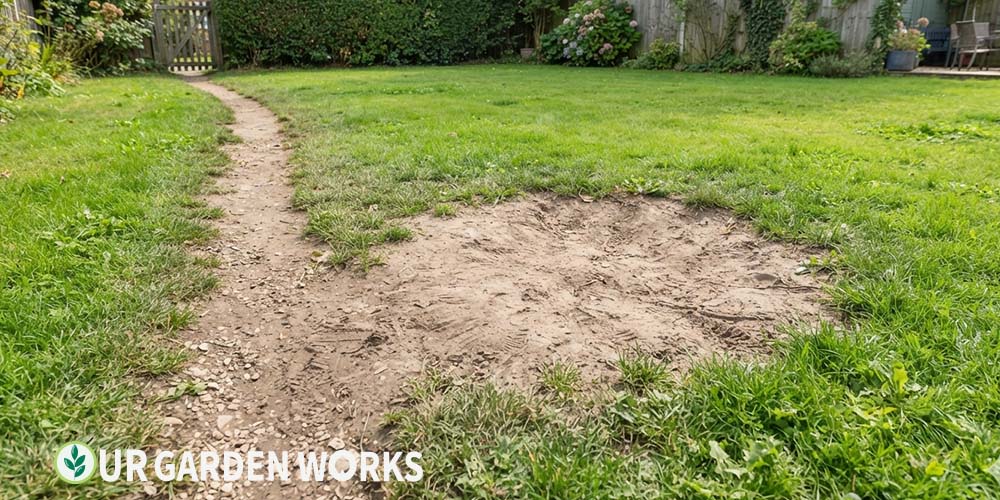
A bare spot that’s been reseeded two or three times without ever actually filling in is one of the more frustrating lawn problems, mostly because it usually means the real underlying cause was never actually addressed — you were just treating the symptom (no grass) without fixing the reason grass won’t grow there in the first place.
We’ll walk through the most common underlying reasons a spot stays stubbornly bare despite repeated reseeding attempts, since identifying the actual blocker is what finally breaks this frustrating cycle.
Quick Answer: Bare spots that won’t grow are most often caused by chronic foot traffic compaction (the real fix is rerouting traffic, not just reseeding), too much shade for the grass variety planted, buried debris or rocky subsoil blocking root development, soil pH or nutrient problems, or persistent pet activity. Reseeding alone rarely works until the underlying blocker is addressed directly.
Cause 1 — Chronic Foot Traffic (The Most Common Repeat Offender)
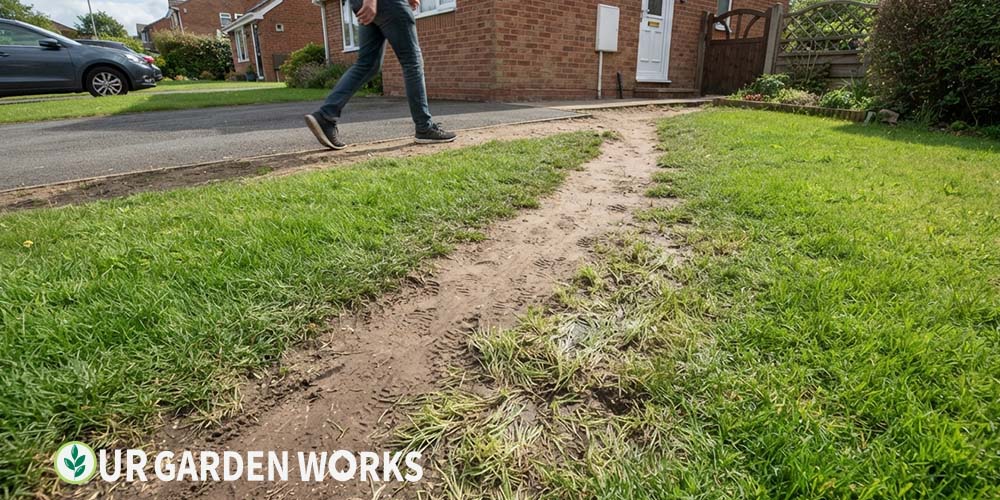
If a bare spot sits along an obvious path — between a driveway and a side door, near a gate, or cutting across a yard toward a common destination — foot traffic is very likely preventing any reseeding attempt from succeeding, regardless of how good the seed or soil prep was.
Each time new grass starts to establish, continued walking compacts the soil and damages tender new roots before they can take hold.
How to confirm it’s foot traffic:
- Location follows an obvious, logical walking route between two points
- Soil feels notably compacted and hard compared to surrounding lawn
- Previous reseeding attempts have failed to establish despite reasonable care
Fix: Rather than fighting the traffic pattern indefinitely, consider installing a proper path — stepping stones, mulch, or pavers — along the route people are already using. This converts an ongoing losing battle into a permanent, low-maintenance solution that actually matches how the space is being used.
💡 People will keep walking the same route regardless of what you plant there
It’s tempting to put up a small fence or sign asking people to avoid a worn path, but in practice, established walking patterns are remarkably persistent. Working with the traffic pattern by installing a path is almost always more successful long-term than trying to force grass to survive in a spot people are determined to keep walking through.
Cause 2 — Too Much Shade for the Grass Variety
Standard turf grass varieties, particularly many common Kentucky bluegrass and Bermuda grass types, need a meaningful amount of direct sun to thrive, and a spot that’s heavily shaded by a tree canopy, a building, or a fence simply can’t support that grass regardless of how many times you reseed it with the same seed mix. The grass germinates, struggles, and eventually fails as deeper shade and root competition from nearby trees take their toll.
How to confirm it’s shade-related:
- Location receives noticeably less direct sun than the rest of the lawn, often beneath a tree canopy or building shadow
- New grass germinates initially but thins and dies back over subsequent weeks
- Standard grass seed mix was used without considering the shade tolerance rating
Fix: Switch to a shade-tolerant grass seed blend specifically formulated for low-light conditions, which exists for both cool-season and warm-season regions. If shade is severe enough that even shade-tolerant grass struggles, consider a groundcover or mulched bed instead of continuing to fight for turf grass in a spot that simply isn’t suited to it.
Cause 3 — Buried Debris or Rocky Subsoil
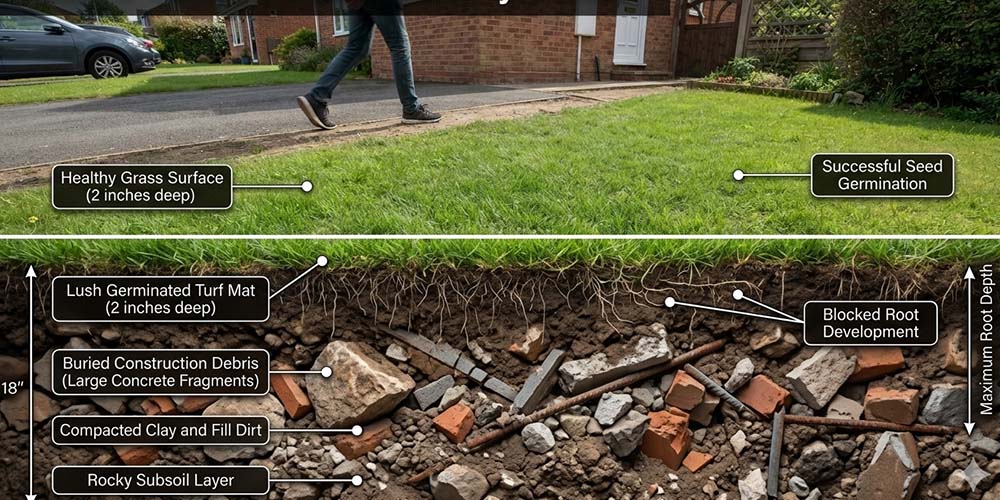
Construction debris, large rocks, or compacted fill dirt left over from a home’s original construction or a later landscaping project can sit just beneath the surface, blocking root development enough that grass simply can’t establish a deep enough root system to survive, regardless of how good the surface conditions look.
This is an easy cause to overlook since the problem is invisible from above ground.
How to confirm it’s buried debris or rocky subsoil:
- Digging a small test hole reveals rocks, construction debris, or unusually hard, compacted fill just a few inches down
- Location correlates with known past construction or landscaping work
- Grass roots, when checked, appear shallow and underdeveloped compared to healthy areas
Fix: Removing the obstruction and replacing it with quality topsoil, at least 4-6 inches deep, gives roots the room they need to establish properly. For smaller obstructions, working compost and topsoil into the area without full excavation can sometimes provide enough improvement, depending on how significant the underlying blockage actually is.
Cause 4 — Soil pH or Nutrient Problems
Soil that’s significantly too acidic, too alkaline, or severely depleted of key nutrients can prevent grass from establishing even when physical conditions (sun, traffic, drainage) are otherwise fine. This cause is less visually obvious than the others and often only becomes apparent after ruling out the more visible explanations.
How to confirm it’s a soil chemistry issue:
- No clear traffic, shade, or debris explanation fits the location
- A soil test reveals pH or nutrient levels well outside the ideal range for your grass type
- Nearby areas with presumably similar conditions establish grass successfully, while this specific spot doesn’t
Fix: A soil test identifies the specific issue, whether it’s pH requiring lime or sulfur correction, or a nutrient deficiency addressed through targeted fertilizing using a fertilizer calculator to apply the right amount. Correcting the underlying soil chemistry before reseeding again gives new grass a genuinely fair chance to establish.
Cause 5 — Ongoing Pet Activity
Beyond the urine-spot pattern covered in our general brown patches guide, a spot that serves as a dog’s regular digging location, resting spot, or frequent path between favorite yard areas can stay bare indefinitely simply because the disruptive activity never stops long enough for reseeded grass to establish, similar in mechanism to the human foot traffic cause above.
How to confirm it’s pet-related:
- Location correlates with a dog’s known favorite spot, digging area, or regular path
- Pattern persists or recurs despite reseeding attempts
Fix: Similar to the foot traffic solution, consider redirecting the pet’s activity with training, a designated digging area elsewhere, or physical barriers during the establishment period, combined with reseeding once the disruptive activity is genuinely reduced in that specific spot.
Telling the Five Causes Apart at a Glance
| Cause | Location Pattern | Soil Test Needed? | Key Fix |
|---|---|---|---|
| Foot traffic | Worn path between destinations | No | Install a proper path |
| Too much shade | Under tree canopy/building shadow | No | Shade-tolerant seed or groundcover |
| Buried debris/rocky subsoil | Often near past construction | No, but dig a test hole | Remove obstruction, add topsoil |
| Soil pH/nutrients | No obvious visual pattern | Yes | Correct pH/nutrients before reseeding |
| Pet activity | Dog’s favorite spot/path | No | Redirect activity, then reseed |
Why Reseeding Alone So Often Fails
The pattern across nearly every cause in this guide is the same: reseeding addresses the visible symptom (no grass) without touching whatever’s actually preventing grass from growing there.
New seed needs the same favorable conditions any grass needs — adequate light, undisturbed soil during establishment, reasonable soil chemistry, and enough root depth — and a spot that’s bare specifically because one of these conditions is missing will keep failing reseeding attempts until that underlying gap is closed.
This is why diagnosing the actual blocker before buying more seed saves both money and the recurring frustration of watching yet another reseeding attempt fail in the same spot.
Once the real cause is addressed — a path installed, shade-tolerant seed chosen, debris removed, soil corrected, or pet activity redirected — a single subsequent reseeding attempt is far more likely to actually succeed and stick.
Frequently Asked Questions
How many times should I try reseeding before assuming a deeper problem is at play?
If a single reseeding attempt with reasonable seed-to-soil contact and consistent watering fails to establish anything at all, that’s already a strong signal to investigate one of the underlying causes above rather than simply trying the exact same approach again.
A second identical failed attempt without changing anything essentially confirms an underlying blocker is present.
Can I use sod instead of seed to overcome a bare spot that won't grow?
Sod can sometimes succeed where seed has failed, since established sod arrives with a more developed root system that’s somewhat more resilient to marginal conditions during establishment.
However, sod still ultimately needs the same fundamental conditions as seed to thrive long-term, so it’s not a substitute for actually addressing causes like severe shade, chronic traffic, or poor soil chemistry.
Is artificial turf a reasonable solution for a spot that genuinely can't support grass?
For severely shaded areas or high-traffic spots where even a path doesn’t feel like the right aesthetic fit, a small section of artificial turf is a legitimate option some homeowners choose rather than continuing to fight unfavorable growing conditions indefinitely.
This is a personal preference and budget decision rather than a universal recommendation, but it’s worth considering for genuinely problematic spots after other fixes have been tried without success.
Will improving the soil in one bare spot affect the rest of my lawn?
Generally no, since soil amendments and corrections applied to a specific localized spot stay contained to that area and won’t meaningfully affect drainage, pH, or nutrient levels elsewhere in the yard.
If a soil test reveals a problem isolated to just the bare spot rather than the whole lawn, treating just that targeted area is the appropriate, cost-effective approach rather than amending the entire yard unnecessarily.
Related Articles in Our Lawn Care Guide
Final Thoughts
We hope this guide has helped you finally identify why a particular spot keeps refusing to grow grass — once the real blocker is addressed, a single reseeding attempt usually succeeds where several previous ones failed.
For more lawn care guidance, our full collection of lawn articles on the soil and fertility page covers everything from seasonal maintenance to soil health.
Share this post with a fellow homeowner who’s dealing with a stubborn bare spot — and let us know in the comments which cause matched what you found. Happy growing!
