

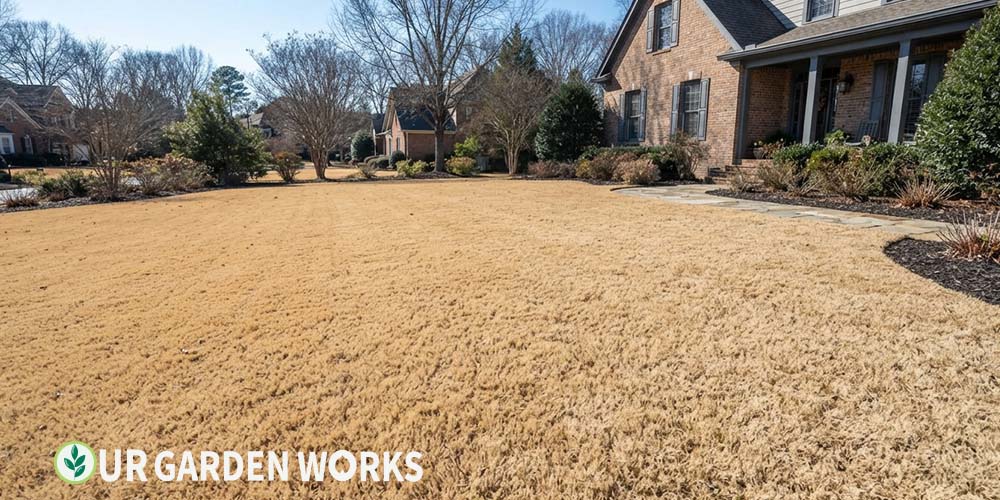
A lawn that’s lost its green color over winter triggers concern for many homeowners, especially those newer to lawn care who haven’t yet experienced a full seasonal cycle. In the great majority of cases, this color change is simply normal winter dormancy, not a sign that anything has gone wrong.
We’ll cover how to recognize normal dormancy confidently, and the specific situations where winter yellowing does deserve a closer look.
Quick Answer: A uniformly yellow, tan, or straw-colored lawn in winter is almost always normal dormancy, a natural survival response to cold temperatures, not a sign of damage or disease. Warm-season grasses go fully dormant and brown in winter in most climates; cool-season grasses may show some dormancy in extreme cold but typically stay greener. Genuine problems show as uneven patterns, persist well past the normal dormancy season, or come with other clear symptoms.
Why Lawns Go Dormant in Winter
Dormancy is a grass plant’s survival strategy for surviving conditions too cold to support active growth, similar in concept to how deciduous trees drop their leaves for winter.
Rather than continuing to attempt growth in conditions that can’t support it, the grass plant redirects its limited resources to crown and root survival, sacrificing the green color and active top growth until conditions become favorable again in spring.
This is a normal, healthy response rather than a sign of distress, and a properly dormant lawn typically resumes normal green growth reliably once temperatures warm consistently in spring, assuming the plant wasn’t also dealing with some other genuine problem during the dormant period.
How Dormancy Differs by Grass Type
Warm-season grasses — Bermuda, zoysia, St. Augustine, and similar types — go through a much more dramatic, complete dormancy than most cool-season grasses, typically turning fully tan or straw-colored for the entire winter in climates where they’re grown.
This complete color change is entirely normal and expected for these grass types and doesn’t indicate any problem at all.
Cool-season grasses — Kentucky bluegrass, fescues, and ryegrass — generally maintain at least some green color through milder winters, going more fully dormant and yellow-brown only during particularly harsh, extended cold spells or under significant snow cover for prolonged periods.
If you’re growing a cool-season grass and seeing complete winter yellowing similar to what’s expected for warm-season types, this is worth a slightly closer look, though it’s still often within the range of normal response to a particularly severe winter.
| Grass Type | Typical Winter Appearance | When Color Returns |
|---|---|---|
| Warm-season (Bermuda, zoysia, St. Augustine) | Fully tan/straw colored | Late spring as soil warms |
| Cool-season (bluegrass, fescue, ryegrass) | Mostly green, may yellow in severe cold | Quickly once mild weather returns |
Signs That Winter Yellowing Is Normal Dormancy
- Color change is fairly uniform across the entire lawn rather than patchy or uneven
- Timing aligns with consistently cold temperatures for your region and grass type
- No other symptoms present — no unusual patches, rings, or texture changes beyond the color itself
- The lawn followed a normal, healthy growing pattern through the previous spring, summer, and fall before winter set in
Signs That Winter Yellowing Might Signal a Genuine Problem
While most winter yellowing is simply normal dormancy, a few patterns are worth a closer look rather than automatically assuming dormancy explains everything.
- Uneven, patchy yellowing rather than a uniform color change across the whole lawn, which might suggest disease, pest damage from earlier in the season finally becoming visible, or localized drainage issues rather than simple seasonal dormancy.
- Yellowing that persists well past when dormancy should end for your specific climate and grass type, with no green return even as spring temperatures warm consistently.
- Combined with other symptoms like a spongy texture, visible disease signs, or areas that were already struggling before winter even began.
- Snow mold development — a fungal disease that can develop under extended snow cover, producing a grayish or pinkish web-like growth on grass as snow melts, distinct from simple dormancy coloring.
💡 The spring green-up test resolves most lingering uncertainty
If you’re unsure whether winter yellowing is normal dormancy or something more concerning, the most reliable resolution is simply waiting for spring and observing whether the lawn greens up normally and evenly as temperatures warm.
Normal dormancy resolves reliably and uniformly; a genuine underlying problem from the previous season often becomes more visible once dormancy ends and surrounding healthy grass green-up makes any remaining issue areas stand out by contrast.
Snow Mold — The One Winter-Specific Disease Worth Knowing
Snow mold develops specifically under prolonged snow cover, when cool, moist conditions beneath the snow create ideal circumstances for certain fungal pathogens.
As snow melts, affected areas show a grayish-white or pinkish, web-like or matted fungal growth, distinct from the uniform tan dormancy coloring covered throughout the rest of this guide.
How to confirm it’s snow mold rather than simple dormancy:
- Distinct circular or irregular patches with visible fungal growth, not uniform overall coloring
- Develops specifically following extended snow cover
- Grass beneath the fungal growth may be matted down rather than standing normally
Fix: Gently raking affected areas once snow has fully melted helps the grass dry out and resume normal growth. Severe cases may benefit from a fungicide application, though many cases of mild snow mold resolve on their own as spring growing conditions return, similar to how the lawn recovers from normal dormancy.
How Regional Climate Affects What “Normal” Winter Color Looks Like
Expectations for normal winter lawn color vary considerably by region, and comparing your lawn against a general description without accounting for your specific climate can create unnecessary worry or, conversely, mask a genuine problem.
In the warm, humid Southeast, many homeowners grow warm-season grasses that go fully, dramatically dormant each winter, making tan, straw-colored turf the completely expected norm for several months — a stark contrast to a Pacific Northwest lawn growing cool-season grass that may stay mostly green year-round in that region’s milder, wetter winter climate.
Transitional zones, where both warm-season and cool-season grasses are commonly grown and sometimes mixed within the same lawn, can show particularly variable winter appearance depending on the exact grass composition and that specific winter’s severity.
If you’ve recently moved to a new region or are unfamiliar with how lawns typically behave through winter where you now live, checking with local extension resources or simply observing how established, healthy-looking neighboring lawns behave through the same winter provides useful, regionally calibrated context for what counts as normal in your specific climate.
Should You Do Anything to a Dormant Lawn Over Winter?
Dormant lawns generally need minimal active care, though a few considerations remain worthwhile.
Avoiding heavy foot traffic on dormant grass, which is more brittle and slower to recover from compaction stress than actively growing grass, protects the lawn through the dormant period.
Continuing minimal watering during dormancy in regions with dry winters (rather than assuming dormant grass needs no water at all) supports better spring recovery, even though watering needs are considerably reduced compared to the active growing season.
Avoiding unnecessary fertilizing during true dormancy is also generally appropriate, since the plant isn’t actively growing and can’t make good use of nutrients applied during this resting period — saving fertilizer applications for when active spring growth resumes makes for more effective use of the product.
Frequently Asked Questions
Will my dormant lawn definitely come back green in spring, or could it be dead?
Properly dormant grass that went through a normal, healthy growing season beforehand almost always returns to green growth reliably once spring conditions arrive, since dormancy is specifically a survival mechanism rather than a step toward death.
Grass that was already struggling or stressed before winter, or that experienced a genuinely severe, prolonged cold event beyond what it’s typically suited for, carries somewhat higher risk of not fully recovering, though this remains less common than successful dormancy recovery.
Can I overseed a dormant lawn in winter to fill in thin areas?
Dormant-season overseeding, sometimes called frost seeding, is practiced in some regions and for some grass types, relying on natural freeze-thaw cycles to work seed into the soil, with germination occurring once spring conditions become favorable.
This is a more specialized technique than standard active-season seeding, and checking regional guidance for your specific climate and grass type helps determine whether this approach makes sense for your situation.
Is it normal for only part of my lawn to go dormant while another part stays green?
This is common and often simply reflects different grass types growing in different areas of the same lawn, with warm-season patches going fully dormant while any cool-season grass present stays greener through the same winter conditions.
It can also reflect microclimate differences — a more sheltered, sunnier section staying slightly warmer and greener than an exposed, shaded section experiencing more typical winter dormancy.
Related Articles in Our Lawn Care Guide
Final Thoughts
We hope this guide has put your mind at ease about your lawn’s winter color change — in the vast majority of cases, this is simply a healthy, normal seasonal response rather than anything to worry about.
For more lawn care guidance, our full collection of lawn articles on the soil and fertility page covers everything from seasonal maintenance to disease management.
Share this post with a fellow homeowner who’s wondering about their winter lawn color — and let us know in the comments how your lawn’s spring green-up turned out. Happy growing!
