

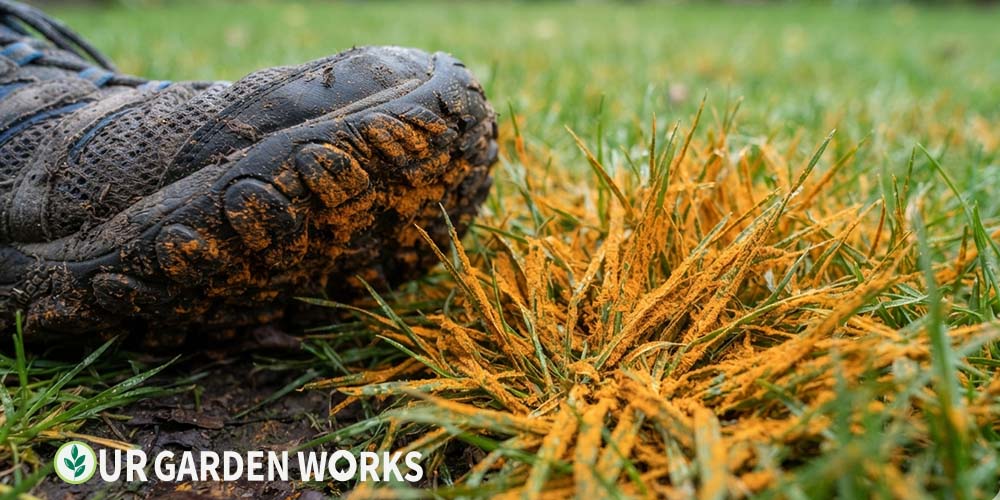
If you’ve noticed your shoes or pant legs picking up an orange, dusty residue after walking across your lawn, rust fungus is almost certainly the culprit — and this particular symptom, the shoe-staining residue, is one of the most distinctive and reliable confirmations available for any lawn disease in this entire series.
We’ll cover confirming the diagnosis, treating an active outbreak, and the specific conditions that bring rust on so reliably.
Quick Answer: Orange powder on lawn grass that transfers easily to shoes, mower wheels, or hands is rust fungus, identifiable by its fine, dusty orange spore coating on blade surfaces. It thrives in slow-growing, stressed grass during humid conditions, especially late summer. Improve lawn vigor through proper nitrogen fertilizing and reduce stress factors like drought and infrequent mowing to manage and prevent it.
The Shoe Test — An Unusually Reliable Confirmation
Few lawn diseases offer as clean and immediate a confirmation method as rust fungus: simply walk across an affected area in light-colored shoes or with white socks, and orange powder transferring visibly onto the shoe or sock surface essentially confirms the diagnosis on the spot.
This is genuinely one of the more satisfying diagnostic shortcuts available in lawn troubleshooting.
How to confirm it’s rust:
- Orange, dusty powder coats grass blades and transfers easily to shoes, mower wheels, or hands upon contact
- Grass overall looks somewhat thin, weak, or slow-growing in affected areas
- Most common in late summer, especially following a stretch of slow grass growth
💡 White socks make this test even clearer
If you want maximum visual confirmation, walking across a suspected rust-affected area in white socks (rather than just shoes) shows the orange transfer even more dramatically, since the spores show up clearly against the bright white fabric.
Why Rust Fungus Specifically Targets Slow-Growing Grass
Rust fungus has a particular preference for grass that’s growing slowly, whether from drought stress, nitrogen deficiency, excessive shade, or simply the natural growth slowdown many cool-season grasses experience during the transition from summer heat into fall.
Vigorously growing grass essentially outpaces the fungus’s ability to establish and spread, while slow-growing grass gives the fungus more opportunity to colonize blade tissue before new growth replaces it.
This connection to overall lawn vigor, similar in concept to red thread’s relationship with nitrogen deficiency, means rust often serves as a useful signal that something about the lawn’s growing conditions or care routine needs attention, beyond just treating the visible fungal symptom itself.
Treating an Active Rust Outbreak
Directions
- Mow more frequently if growth has been allowed to slow significantly, since regular mowing removes infected blade tissue and encourages fresh growth that outpaces the fungus.
- Apply nitrogen fertilizer if the lawn has been under-fed, addressing the slow-growth vulnerability directly — use a fertilizer calculator for the correct rate.
- Water deeply and consistently if drought stress has contributed to slow growth, supporting more vigorous, rust-resistant growth.
- A fungicide labeled for rust provides more direct, immediate control for significant outbreaks, particularly if growth-promoting measures alone aren’t producing fast enough improvement.
⚠️ Avoid mowing dry, dusty rust-affected grass without care
Mowing heavily rust-infected grass can release a visible cloud of orange spores into the air, similar to walking through dust.
Mowing when grass is slightly damp (though not wet enough to cause the mowing-related tearing issues covered in our other lawn guide) and bagging clippings rather than leaving them on the lawn both help limit spore spread during this process.
Telling Rust Apart From Other Orange or Yellow Lawn Symptoms
| Symptom | Texture | Transfers to Shoes? |
|---|---|---|
| Rust fungus | Fine, dusty orange powder | Yes, readily |
| General yellowing (nutrient/drought) | No powder, just discoloration | No |
| Dog urine spots | Dead spot, green halo, no powder | No |
The shoe-transfer test alone is usually sufficient to distinguish rust from these other causes of yellow or orange-tinted lawn discoloration, since none of the alternatives produce a genuine powdery coating that transfers readily to contact.
Does Grass Type Affect Rust Susceptibility?
Rust susceptibility varies meaningfully across grass types, with Kentucky bluegrass and perennial ryegrass both showing notable vulnerability to various rust species, while some other cool-season and warm-season grasses display somewhat better natural resistance under comparable conditions.
This variation is worth knowing if you have a mixed-grass lawn and notice rust concentrating in certain sections more than others, since this pattern may simply reflect genuine differences in susceptibility between the specific grass types present rather than localized differences in growing conditions alone.
Newer, disease-resistant cultivars within susceptible grass species increasingly offer improved rust tolerance compared to older varieties, which is worth researching if rust has been a persistent, season-after-season frustration despite reasonable fertilizing and watering practices.
Overseeding a chronically rust-prone area with a more resistant cultivar, blended into the existing stand rather than fully replacing it, can gradually shift the lawn’s overall composition toward better resistance over a few seasons of regular overseeding.
Tracking Weather Patterns That Favor Rust Development
Rust fungus development correlates fairly predictably with specific combinations of temperature and humidity, generally favoring warm days combined with cool nights and high humidity — a pattern commonly seen during the transition periods of late summer into early fall in many regions.
Extended cloudy or overcast stretches, which both reduce the direct sunlight that might otherwise help dry dew and moisture from grass blades and correlate with the cooler, more humid conditions rust favors, often precede or accompany visible outbreaks.
Keeping a rough mental note of when rust has appeared in your specific lawn in previous years, cross-referenced against the general weather pattern at that time, helps you anticipate and proactively address the underlying growth-slowdown vulnerability before symptoms actually develop the following year.
This proactive approach — boosting nitrogen and ensuring consistent watering just ahead of your lawn’s typical rust-prone window — generally produces better outcomes than waiting for the orange powder to appear before taking any action.
Preventing Rust From Becoming a Recurring Problem
Since rust so directly tracks with overall lawn vigor, maintaining consistent watering, appropriate seasonal fertilizing, and regular mowing throughout the growing season addresses the underlying vulnerability more effectively than any reactive treatment applied only once symptoms appear.
Lawns that experience this disease repeatedly, particularly in the same late-summer to early-fall window each year, often have an underlying pattern of seasonal growth slowdown that’s worth addressing proactively the following year rather than waiting for rust to reappear as the signal.
Choosing rust-resistant grass varieties, where available for your specific grass type and climate, provides an additional layer of protection for lawns where this disease has been a particularly persistent, recurring frustration despite reasonable general care.
Combining variety selection with the proactive seasonal timing covered above — rather than relying on either approach alone — gives the most comprehensive protection against this disease becoming an annual, predictable nuisance.
Frequently Asked Questions
Is lawn rust harmful to pets or children playing on the grass?
Lawn rust fungus isn’t considered a significant health hazard for typical incidental outdoor contact, though tracking the orange spore residue indoors on shoes can be a minor cosmetic annoyance worth being aware of. There’s no specific safety concern beyond this practical, cosmetic consideration for most households.
Will rust fungus kill my lawn if left untreated?
Rust is generally considered more of a vigor-sapping nuisance than a lawn-killing disease, since it primarily weakens grass blades rather than attacking roots or crowns directly.
That said, severe, prolonged infections can meaningfully reduce overall lawn density and appearance over time if the underlying slow-growth conditions aren’t addressed, even if outright death of the turf is uncommon.
Why does rust seem to appear at the exact same time every year in my lawn?
This pattern usually reflects a consistent seasonal growth slowdown specific to your lawn’s grass type and regional climate, often the natural late-summer transition period for many cool-season grasses before fall growth resumes more vigorously.
Recognizing this predictable pattern allows for proactive nitrogen fertilizing and consistent watering specifically timed just ahead of this vulnerable window in future seasons.
Can rust fungus spread from my lawn to nearby garden plants or shrubs?
Lawn rust species are generally specific to turf grass and don’t typically cross over to infect unrelated garden plants, ornamental shrubs, or vegetables growing nearby, even though “rust” as a general disease category does affect many different plant types with their own host-specific fungal species.
You can treat lawn rust and any rust-like symptoms on nearby garden plants as separate issues requiring their own specific diagnosis rather than assuming a single source is responsible for both.
Related Articles in Our Lawn Care Guide
Final Thoughts
We hope this guide has given you one of the more satisfying, conclusive diagnostic tests in our whole lawn series — that orange shoe transfer really does confirm rust fungus reliably.
For more lawn care guidance, our full collection of lawn articles on the soil and fertility page covers everything from seasonal maintenance to disease management.
Share this post with a fellow homeowner who’s noticed orange dust on their shoes after walking the lawn — and let us know in the comments how your treatment went. Happy growing!
