

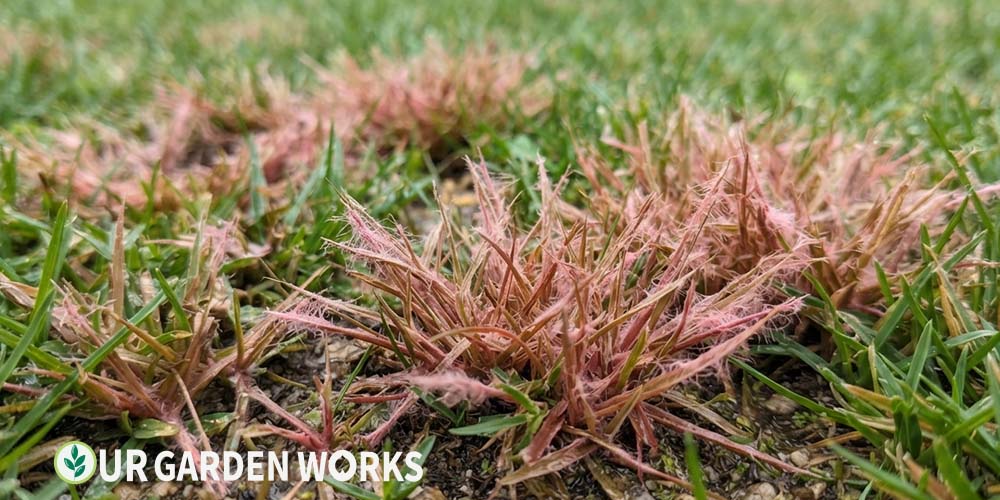
Pink or reddish patches in a lawn are distinctive enough that they almost always point to a single specific cause: red thread disease, named for the thin, thread-like pink to red fungal structures that extend from infected grass blades. This is one of the more visually confirmable lawn diseases in our entire series.
We’ll cover confirming the diagnosis, treating an active outbreak, and the conditions that consistently bring this disease on.
Quick Answer: Pink or red patches in lawn are almost always red thread disease, identifiable by thin, thread-like pink to coral-red fungal structures (sclerotia) extending from grass blade tips, especially visible after dew or light rain. It thrives in cool, humid, low-nitrogen conditions, common in spring and fall. Fertilizing with adequate nitrogen and improving airflow are the most effective management approaches.
What Red Thread Actually Looks Like
Red thread produces irregular patches of grass with a pink to reddish-tan tint, ranging from a few inches to a couple of feet across, sometimes merging into larger affected areas in severe outbreaks.
The defining diagnostic feature, though, is visible at close inspection: thin, gelatinous, thread-like structures called sclerotia, colored pink to coral-red, extending from the tips of infected grass blades.
These thread-like structures are most visible during humid conditions or shortly after dew, sometimes becoming less obvious as they dry out during the day.
A close, careful look at affected grass blade tips, ideally in the morning while dew or moisture is still present, usually confirms the diagnosis with genuine visual certainty rather than guesswork.
💡 Check in early morning for the clearest confirmation
The thread-like sclerotia structures that confirm red thread are most visible and most distinctly colored during cool, humid morning conditions, becoming less obvious as the day warms and dries. If you suspect red thread, an early morning inspection gives you the best chance of a clear, confident visual confirmation.
Why Red Thread Happens
Red thread is caused by a fungus that thrives specifically in cool, humid conditions combined with low nitrogen availability in the grass — a combination that makes this disease notably more common in spring and fall than the height of summer, and notably more common on lawns that are under-fertilized relative to what they actually need.
This nitrogen connection sets red thread apart from many other lawn fungal diseases that are more purely weather-dependent without as direct a nutritional component.
The fungus spreads through the thread-like sclerotia structures, which can survive in soil and thatch between seasons, ready to reinfect grass the following year when conditions become favorable again.
This creates the same kind of seasonal recurrence pattern covered for other fungal lawn diseases throughout this series.
Treating an Active Red Thread Outbreak
Directions
- Apply a balanced nitrogen fertilizer if your lawn’s feeding schedule has been light or inconsistent, since nitrogen deficiency is such a direct contributing factor to this specific disease.
- A fungicide labeled for red thread provides more immediate, direct control for significant outbreaks, particularly if nitrogen correction alone isn’t producing fast enough improvement.
- Improve airflow through proper mowing height and reduced thatch, addressing the humid microclimate the fungus favors.
- Water in the morning rather than evening, giving grass blades time to dry before the cooler, more humid nighttime conditions that favor disease spread.
Use a fertilizer calculator to apply the correct nitrogen rate for your lawn size, since both too little nitrogen (which contributed to the problem) and too much (which can create other issues) work against you here.
Does Grass Type Affect Red Thread Susceptibility?
Red thread shows notably stronger preference for certain cool-season grasses, with perennial ryegrass and fine fescues being particularly susceptible compared to Kentucky bluegrass, which generally shows somewhat better natural resistance under similar conditions.
This is worth knowing if you have a mixed-grass lawn and notice red thread concentrating specifically in certain sections rather than appearing uniformly, since the affected areas may simply correspond to where the more susceptible grass types happen to be growing.
Warm-season grasses can develop red thread as well, though it’s reported somewhat less frequently than in cool-season lawns, possibly reflecting both genuine differences in susceptibility and the fact that warm-season lawns are more commonly found in climates where the cool, humid conditions favoring this disease are less prevalent for extended periods during the growing season.
If red thread has been a persistent, recurring problem despite consistent nitrogen management, and you know your lawn includes a meaningful percentage of ryegrass or fine fescue, this variety-specific susceptibility may explain why the disease keeps returning even with otherwise solid prevention practices.
Distinguishing Red Thread From Pink Patch (A Related But Distinct Disease)
Pink patch is a separate, related disease that can produce a visually similar pink to reddish discoloration in lawns, sometimes causing confusion since the two diseases share overlapping favorable conditions and can occasionally appear together on the same lawn.
The most reliable distinguishing feature is the absence of the distinctive thread-like sclerotia structures in pink patch — instead, pink patch produces a more diffuse, cottony pink fungal growth across the blade surface rather than the thin, thread-like extensions characteristic of true red thread.
In practice, distinguishing precisely between these two related diseases matters less for home lawn management than it might initially seem, since both favor similar low-nitrogen, cool, humid conditions and respond to largely the same management approach — improved nitrogen fertility, better airflow, and appropriate fungicide treatment for significant outbreaks.
If you’re seeing pink to reddish lawn discoloration and the thread-like structures aren’t clearly visible upon close inspection, treating the situation according to the general approach outlined in this guide remains appropriate regardless of which specific related disease is technically responsible.
Why Red Thread Specifically Targets Under-Fertilized Lawns
Red thread’s strong connection to nitrogen availability sets it apart from most other common lawn diseases, which tend to favor excessive, lush growth from over-fertilization rather than the opposite condition.
Grass with adequate nitrogen reserves produces tougher, more resilient blade tissue that resists this specific fungal infection more effectively than nitrogen-starved grass, which has thinner, more vulnerable tissue more easily colonized by the fungus.
This is exactly why red thread often shows up as one of the clearer signals that a lawn’s fertilizing program needs adjustment, distinct from diseases like brown patch or dollar spot that more commonly indicate the opposite problem of excessive nitrogen and resulting lush, disease-prone growth.
Preventing Red Thread From Returning Each Season
Since nitrogen deficiency is such a direct contributing factor, maintaining a consistent, appropriate fertilizing schedule throughout the growing season is the single most effective long-term prevention step, addressing the underlying vulnerability rather than just managing symptoms once they appear.
See our spring lawn care schedule for general timing guidance on building this kind of consistent feeding program.
Improving airflow and reducing thatch, similar to prevention strategies for other fungal lawn diseases, further reduces the humid conditions the fungus favors.
Removing grass clippings during an active outbreak (rather than leaving them to decompose in place) also helps limit how much fungal material remains available to reinfect the lawn in subsequent seasons.
Frequently Asked Questions
Will red thread disease kill my lawn permanently?
Red thread is generally considered a cosmetic disease rather than a serious threat to overall lawn survival, since it primarily affects grass blades rather than roots or crowns.
Even significant outbreaks typically allow full recovery once nitrogen levels and growing conditions improve, without permanent damage to the underlying turf.
How quickly does red thread spread once it appears in a lawn?
Spread can be fairly rapid under favorable cool, humid conditions, with new patches potentially appearing within a week or two of initial symptoms if nitrogen deficiency and weather conditions both remain favorable for the fungus.
Addressing nitrogen levels promptly once you notice the first patches helps slow this progression considerably.
Can red thread spread to my garden plants from the lawn?
No — the fungus responsible for red thread is specific to turf grass and won’t infect unrelated garden plants like vegetables, roses, or other ornamentals growing nearby.
It can spread between different areas of the same lawn, however, which is why addressing the underlying nitrogen and humidity conditions across the whole lawn matters, not just the most visibly affected patches.
Is it safe to mow a lawn with an active red thread outbreak?
Mowing can be continued during an active outbreak, though it’s worth bagging and removing clippings rather than leaving them on the lawn, since clippings from infected grass can carry fungal sclerotia and contribute to further spread if left to decompose in place.
Cleaning mower blades after mowing an infected area also reduces the chance of spreading the fungus to other parts of the lawn during subsequent mowing sessions.
Related Articles in Our Lawn Care Guide
Final Thoughts
We hope this guide has given you a clear, confident way to confirm and treat red thread disease — that close-up morning inspection for the telltale thread structures really does settle the diagnosis.
For more lawn care guidance, our full collection of lawn articles on the soil and fertility page covers everything from seasonal maintenance to disease management.
Share this post with a fellow homeowner who’s spotted pink patches in their lawn — and let us know in the comments how your nitrogen and treatment approach worked out. Happy growing!
