

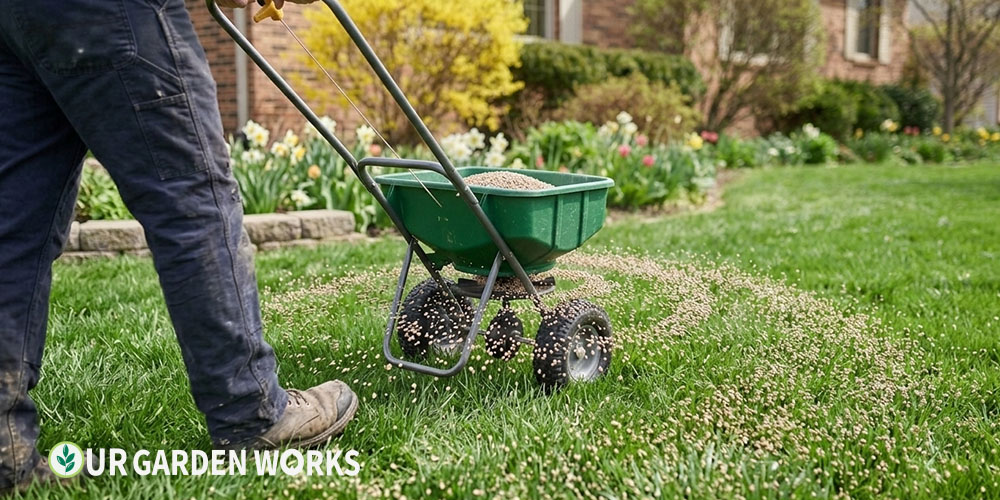
The fertilizer schedule on the bag is a reasonable starting point, but the right timing for your lawn depends heavily on whether you’re growing a cool-season or warm-season grass type — and getting this backward is one of the most common, avoidable lawn care mistakes homeowners make.
When to Fertilize Your Lawn – Quick Answer: Cool-season grasses (fescue, bluegrass, ryegrass) should get the bulk of their fertilizer in fall, with a lighter application in spring. Warm-season grasses (Bermuda, zoysia, St. Augustine) should be fertilized through late spring and summer, during their active growth period, and left alone in fall as they head into dormancy.
Why Grass Type Determines Almost Everything About Timing
Cool-season and warm-season grasses have fundamentally opposite growth cycles, and fertilizer only does meaningful good when a plant is actively growing and able to use the nutrients you’re providing.
Cool-season grasses grow most vigorously in spring and fall, slow down or go semi-dormant in summer heat, and benefit from their largest fertilizer application in early fall — exactly when root and energy storage development matters most heading into winter.
Warm-season grasses run on the opposite calendar entirely, growing actively through late spring and summer heat, then going dormant in fall and winter.
Fertilizing a warm-season lawn in fall, when it’s shutting down for the season, wastes the product and can even encourage late, tender growth that’s more vulnerable to winter damage.
Matching fertilizer timing to the grass’s actual growth cycle, not the calendar in general, is the entire principle behind correct lawn fertilizing.
What Actually Happens When You Fertilize a Dormant or Stressed Lawn
It’s worth understanding the actual biology behind why mistimed fertilizing fails, since “the grass can’t use it” undersells how this can sometimes actively cause harm rather than simply wasting the product.
A dormant or heat-stressed lawn has dramatically reduced root activity and nutrient uptake capacity, meaning much of an applied fertilizer’s nitrogen either sits unused in the soil — where it’s vulnerable to runoff and leaching, especially before rain — or gets absorbed in a limited, uneven way that can stress the plant further.
In warm-season grass specifically, fertilizing too late into fall can trigger a flush of new, tender growth right as the plant should be hardening off for dormancy.
That tender new growth has had no time to develop the cold tolerance the rest of the plant has built up, making it considerably more vulnerable to winter damage than it would have been if the plant had simply been allowed to wind down on its natural schedule.
The reverse mistake — fertilizing a cool-season lawn during peak summer heat — carries its own risk.
A heat-stressed lawn redirects much of its limited energy toward basic survival functions rather than the vigorous new growth fertilizer is meant to support, meaning the nitrogen applied often goes underutilized while simultaneously stressing an already-struggling plant with the metabolic demands of processing it.
This is part of why most lawn care guides specifically recommend skipping or minimizing summer fertilizer for cool-season grass, even though it might seem counterintuitive to withhold nutrients exactly when a lawn looks like it needs the most help.
Why Root Development Matters More Than Leaf Color
It’s worth understanding why fall fertilizing for cool-season grass focuses so heavily on supporting roots rather than simply chasing the greenest possible leaf color, since this priority shapes the entire seasonal approach.
As cool-season grasses enter fall, day length shortens and temperatures cool, triggering a shift in the plant’s internal resource allocation away from rapid leaf expansion and toward building root mass and storing carbohydrate reserves that will fuel both winter survival and the following spring’s green-up.
Fertilizer applied during this window supports exactly this root-building process, producing a lawn with deeper, more resilient roots heading into winter — a benefit that matters considerably more to long-term lawn health than the temporary leaf-color boost a heavier, earlier application might produce.
This is the underlying reason fall is consistently identified as the single most important fertilizing window for cool-season grass, even though spring green-up often feels like the more visually satisfying time to fertilize.
Cool-Season Grass Fertilizing Schedule
| Season | Action | Why |
|---|---|---|
| Early Spring | Light application, lower nitrogen | Supports green-up without pushing excess top growth before summer stress arrives |
| Summer | Skip or minimal feeding | Grass is semi-dormant in heat; fertilizing now wastes product and can stress the lawn |
| Early Fall | Largest application of the year | Active growth period — supports root development and energy storage for winter |
| Late Fall | Optional second fall application | Further strengthens roots heading into dormancy, especially in colder climates |
Warm-Season Grass Fertilizing Schedule
| Season | Action | Why |
|---|---|---|
| Spring (after green-up) | First application once grass is actively growing | Wait until full green-up to avoid feeding a still-dormant lawn |
| Late Spring–Summer | Regular feeding through active growth | This is the grass’s primary growing season — the bulk of fertilizing happens here |
| Early Fall | Light, reduced-nitrogen application if needed | Grass is slowing down; avoid pushing tender new growth right before dormancy |
| Winter | No fertilizing | Grass is dormant and cannot use nutrients applied during this period |
💡 Not sure which grass type you have?
Identifying your grass correctly matters more for fertilizer timing than almost any other lawn care decision. If you’re uncertain, our grass identification guide walks through the visual differences between common types.
Reading Your Specific Lawn Rather Than Following the Calendar Alone
While the seasonal schedules above provide a reliable starting framework, regional climate variation means the exact calendar dates can shift meaningfully depending on where you live.
A cool-season lawn in the upper Midwest enters fall dormancy on a noticeably different timeline than the same grass type grown in a milder transitional climate further south.
Rather than fixating on specific calendar dates, watch your lawn’s actual growth signals — active leaf growth, mowing frequency needed, and overall color and vigor — as the more reliable guide for exactly when to apply each seasonal feeding within the broader spring, summer, or fall window appropriate to your grass type and region.
Frequently Asked Questions
What happens if I fertilize at the wrong time of year?
At best, the fertilizer is simply wasted, since a dormant or stressed lawn can’t use the nutrients effectively.
At worst — particularly with high-nitrogen products applied to a cool-season lawn in summer heat — fertilizing at the wrong time can push tender growth that’s more vulnerable to heat stress and disease, actually weakening the lawn rather than helping it.
Should I fertilize a newly seeded or overseeded lawn on this same schedule?
Newly seeded areas need a separate, gentler approach — typically a starter fertilizer applied at seeding, regardless of season, to support root establishment.
Resume the standard seasonal schedule once new grass is mowing-height and established. See our overseeding guide for the full timing breakdown.
Starter fertilizers are formulated with a different nutrient ratio than standard lawn fertilizer, typically higher in phosphorus relative to nitrogen, specifically to support the root development new seedlings need most in their first few weeks rather than pushing leaf growth a not-yet-established root system can’t fully support.
Is it better to use a slow-release or fast-release fertilizer?
Slow-release products generally suit the larger seasonal applications (like fall feeding for cool-season grass) well, providing steady nutrition over weeks rather than a quick spike.
Fast-release products work better for situations needing a rapid green-up, but carry more risk of burn or runoff if over-applied. Many lawn care routines use a mix of both depending on the specific application’s goal.
How do I know if my lawn is actually ready for its first spring or summer feeding?
Watch for genuine green-up and active leaf growth rather than going strictly by the calendar date — a lawn that’s still mostly brown or just barely greening at the crown isn’t yet pulling enough nutrients through active growth to make fertilizer worthwhile.
Once you’re mowing regularly again, that’s usually a reliable sign the lawn has entered its active growth period and can make good use of the first feeding of the season.
What happens if I use a high-nitrogen fertilizer on a cool-season lawn during summer heat?
This is one of the more damaging timing mistakes possible. High nitrogen pushes rapid leaf growth at exactly the moment a heat-stressed lawn has the least capacity to support it, often resulting in burned or yellowed patches rather than the lush green the product promises.
If any summer feeding is needed at all for a struggling cool-season lawn, a lighter, slow-release, lower-nitrogen approach is considerably safer than a standard spring or fall-strength application.
If you’ve already made this mistake and are seeing stress symptoms, the best response is usually to water consistently to help dilute and flush excess nitrogen from the root zone, then hold off on any further fertilizer until temperatures cool and the lawn shows clear signs of recovery.
Related Articles in Our Soil & Fertility Guide
Final Thoughts
We hope this clears up exactly when your specific grass type actually needs feeding — the calendar matters far less than matching fertilizer timing to your grass’s real growth cycle.
For the rest of a complete seasonal lawn routine, our soil and fertility guides cover aeration, overseeding, and scarifying in depth.
If you only take one principle from this guide, let it be this: fertilize when your grass is actively growing and able to use the nutrients, not according to a fixed date on the calendar. Once that single idea clicks, the rest of the seasonal scheduling falls into place naturally for whichever grass type you happen to be growing.
It’s also worth keeping a simple record from year to year — when you fertilized, what product, and how the lawn responded in the following weeks.
Lawn care results compound slowly across multiple seasons rather than appearing instantly after a single application, and a year-over-year record makes it much easier to spot what’s actually working for your specific lawn, soil, and climate rather than relying purely on generic seasonal guidance like the schedules above.
Over two or three seasons, that record becomes more useful than any general guide, this one included, simply because it’s specific to the exact soil, microclimate, and grass type sitting right outside your own door.
Share this post with a fellow gardener who’s ready to get growing — and let us know in the comments which grass type you’re working with and what schedule you’re following. Happy growing!
