

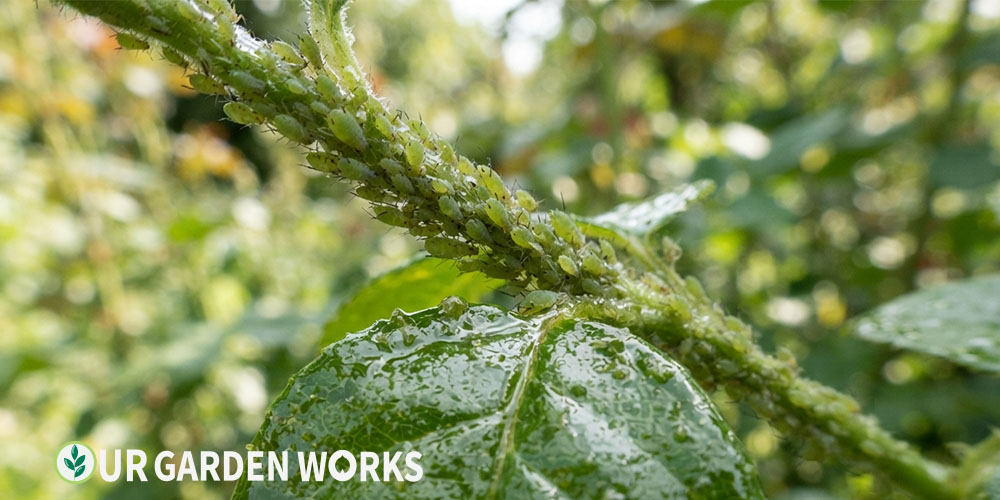
Sticky leaves have one of the more reliable single explanations in this entire series: a sap-sucking insect is almost certainly present somewhere on the plant, even if you haven’t spotted it yet.
The sticky substance itself, called honeydew, is essentially the sugary excrement these pests leave behind as they feed on plant sap.
This guide covers identifying which specific pest is responsible, since several different insects produce this same telltale stickiness, and the right treatment depends on knowing which one you’re actually dealing with.
Quick Answer: Sticky leaves almost always mean honeydew from aphids, scale insects, mealybugs, or whiteflies — all sap-sucking pests that excrete this sugary residue while feeding. Check the stem and leaf undersides for the actual insects, since appearance differs by pest. Treat with insecticidal soap or neem oil for most cases, and watch for sooty mold, a secondary fungal growth that often develops on honeydew residue over time.
Cause 1 — Aphids (Most Common)
Aphids are small, soft-bodied insects, typically green, black, or yellow, that cluster on new growth, stem tips, and leaf undersides while feeding on plant sap. They’re prolific honeydew producers, and a significant aphid population can leave plants and even surfaces beneath the plant noticeably sticky.
How to confirm it’s aphids:
- Small, soft-bodied insects visible in clusters, often on new growth or leaf undersides
- May be green, black, yellow, or other colors depending on species
- Ants are sometimes seen tending aphid colonies, attracted by the honeydew
- New growth may show some curling or distortion from feeding damage
Fix: A strong jet of water dislodges light aphid populations effectively. For heavier infestations, insecticidal soap or neem oil applied directly to affected areas, including leaf undersides, provides reliable control. See our insecticidal soap vs neem oil guide for choosing between the two.
Cause 2 — Scale Insects
Scale insects are small, often immobile once settled, appearing as small bumps or shell-like coverings on stems and leaf undersides rather than the more obviously insect-like appearance of aphids. They’re easy to mistake for a plant disease or growth at first glance, since their protective covering doesn’t look like a typical bug.
How to confirm it’s scale:
- Small, rounded or oval bumps on stems or leaf undersides that don’t move when touched
- Bumps can be scraped off with a fingernail, revealing the insect or its remains beneath
- Honeydew and resulting stickiness are often more concentrated and persistent than with aphids
Fix: Horticultural oil smothers scale effectively, particularly when applied during the insects’ more vulnerable crawler stage before they develop their protective covering. For light infestations, scraping or wiping off visible scale with a soft cloth dipped in rubbing alcohol provides direct, immediate control.
Cause 3 — Mealybugs
Mealybugs appear as small, white, cottony masses, typically clustered in leaf joints, along stems, and on leaf undersides. The cottony, waxy coating is the most visually distinctive identifying feature, setting them apart clearly from aphids and scale.
How to confirm it’s mealybugs:
- Small, white, cottony or waxy clusters visible at leaf joints and along stems
- Honeydew stickiness often accompanies visible mealybug colonies
- More common on houseplants and greenhouse-grown plants than outdoor garden plants in many climates
Fix: A cotton swab dipped in rubbing alcohol, applied directly to visible mealybugs, kills them on contact and works well for light, localized infestations. For broader infestations, insecticidal soap or neem oil applied thoroughly, including hard-to-reach leaf joints, provides more comprehensive control.
Cause 4 — Whiteflies
Whiteflies are small, white, moth-like insects that cluster on leaf undersides and fly up in a small cloud when the plant is disturbed — this sudden flutter of tiny white insects is often the first sign gardeners notice, even before the resulting honeydew stickiness becomes apparent.
How to confirm it’s whiteflies:
- Small white insects fly up briefly when you shake or touch the plant
- Concentrated on leaf undersides, where you may also see tiny pale eggs or nymphs
- Honeydew and sooty mold often develop on leaves beneath heavily infested foliage
Fix: Yellow sticky traps placed near affected plants capture adult whiteflies effectively and also help monitor population levels. Insecticidal soap applied to leaf undersides targets both adults and nymphs for more active infestations.
Telling the Four Causes Apart at a Glance
| Pest | Appearance | Location | Movement |
|---|---|---|---|
| Aphids | Small, soft-bodied, colored | New growth, leaf undersides | Slow-moving, clustered |
| Scale | Small bumps/shells | Stems, leaf undersides | Immobile once settled |
| Mealybugs | White, cottony masses | Leaf joints, stems | Slow-moving |
| Whiteflies | Tiny white, moth-like | Leaf undersides | Flies up when disturbed |
What About the Black, Sooty Coating That Sometimes Follows?
If sticky leaves go untreated for a while, you may notice a black, soot-like coating developing on top of the honeydew residue — this is sooty mold, a secondary fungal growth that colonizes the sugary honeydew rather than the plant tissue itself.
It’s not directly harmful to the plant the way a true plant pathogen would be, but it can block light from reaching leaf surfaces if coverage becomes extensive, indirectly reducing photosynthesis.
The most effective way to address sooty mold is simply treating the underlying insect infestation that’s producing the honeydew feeding it, since the mold has nothing left to colonize once that food source is eliminated.
Existing sooty mold can be gently wiped away with a damp cloth once the pest population is under control, speeding up the plant’s cosmetic recovery.
Which Plants Are Most Prone to These Pests
Some plants attract sap-sucking pests more readily than others, and knowing your specific plant’s risk profile helps with both prevention and faster diagnosis when sticky leaves do appear.
Citrus trees, gardenias, and hibiscus are particularly prone to scale and mealybug infestations, both indoors and out, due to their woody stems and dense, leathery foliage that provides good hiding spots for these slower-moving pests.
Roses, many vegetables, and most soft-stemmed annuals attract aphids readily, especially on tender new growth in spring when populations tend to build quickly.
Whiteflies show a particular fondness for tomatoes, peppers, and many ornamental flowering plants, often becoming most problematic in greenhouse or indoor growing situations where their populations aren’t naturally checked by outdoor predators and weather.
If you’re growing several plants known to be susceptible to the same pest in close proximity, checking all of them regularly rather than waiting for obvious symptoms on just one helps catch an infestation before it spreads broadly across your whole collection or garden bed.
Long-Term Prevention Beyond Direct Treatment
Beyond treating an active infestation, a few ongoing habits reduce how often sticky leaves become a recurring problem across your garden or houseplant collection.
Regularly inspecting new plants before bringing them home or introducing them to an existing collection catches hitchhiking pests before they have a chance to establish and spread to your other plants.
Encouraging natural predators — ladybugs, lacewings, and parasitic wasps in outdoor gardens specifically — provides ongoing biological control that keeps aphid and other sap-sucking pest populations naturally suppressed without needing constant direct intervention.
Avoiding excessive nitrogen fertilization also helps, since the same lush, tender new growth that nitrogen promotes is exactly the growth aphids and similar pests prefer to feed on most readily.
For houseplants specifically, periodically wiping down leaves with a damp cloth, beyond just addressing active infestations, helps you notice early pest activity sooner and removes dust that can otherwise provide additional hiding spots for tiny pests like spider mites and the early stages of scale insects.
Why Ants Often Show Up Alongside Sticky Leaves
Ants are drawn to the sugary honeydew produced by aphids, scale, mealybugs, and whiteflies, and in some cases actively protect these pest colonies from natural predators in exchange for ongoing access to this food source.
Seeing ants traveling up and down a plant’s stems is often a secondary confirmation that one of these sap-sucking pests is present, even before you’ve spotted the insects themselves.
Addressing the underlying pest infestation typically resolves the ant activity as a side effect, since the ants are responding to the honeydew availability rather than causing any direct plant damage themselves.
Treating ants alone, without addressing the actual pest producing the honeydew, won’t solve the underlying problem and often proves only temporarily effective at best.
Frequently Asked Questions
Is honeydew harmful to my plant directly?
The honeydew itself isn’t directly toxic or damaging to plant tissue, but the underlying insect feeding that produces it is what causes real harm — sap-sucking pests weaken plants over time, and heavy infestations can stunt growth or reduce vigor.
The secondary sooty mold that sometimes develops on honeydew can also indirectly harm the plant by blocking light if coverage becomes severe.
Can sticky leaves on one plant spread the pest to other plants nearby?
Yes, all four pests covered in this guide can spread to nearby plants, whether through insects crawling or flying between plants, or through contaminated tools and hands.
Isolating a heavily infested plant from others when possible, and treating promptly, helps limit this spread to the rest of your garden or houseplant collection.
Why do my houseplants get sticky leaves more often than outdoor plants?
Indoor environments often lack the natural predators — ladybugs, lacewings, parasitic wasps — that help keep sap-sucking pest populations in check outdoors, allowing infestations to build up more readily on houseplants without that natural control.
Indoor conditions, with generally stable warm temperatures, also favor continuous pest reproduction year-round rather than the seasonal population cycles outdoor pests experience.
Related Articles in Our Plant Care Guide
- How to Get Rid of Whiteflies on Plants (Fast & Organic)
- White Fuzz on Plant Leaves — Mold or Mealybugs
- Insecticidal Soap vs. Neem Oil: Which Is Better?
- 10 Best Insecticides For Citrus Trees – Top Picks for 2026
- 10 Spring Garden Pests to Watch For (And How to Stop Them)
- How to Get Rid of Ants on Tomato Plants — 8 Methods That Work (2026)
- Brown Leaf Tips on Peace Lily – 5 Causes and Fixes
- Wrinkled Leaves on Succulents – 4 Causes and Fixes
- Plant Care Guides (Hub)
Final Thoughts
We hope this guide has helped you identify exactly which sap-sucking pest is behind your plant’s sticky leaves — and given you a clear, targeted treatment path once you know which one you’re dealing with.
Share this post with a fellow gardener who’s troubleshooting sticky leaves — and let us know in the comments which pest turned out to be the culprit. Happy growing!
