
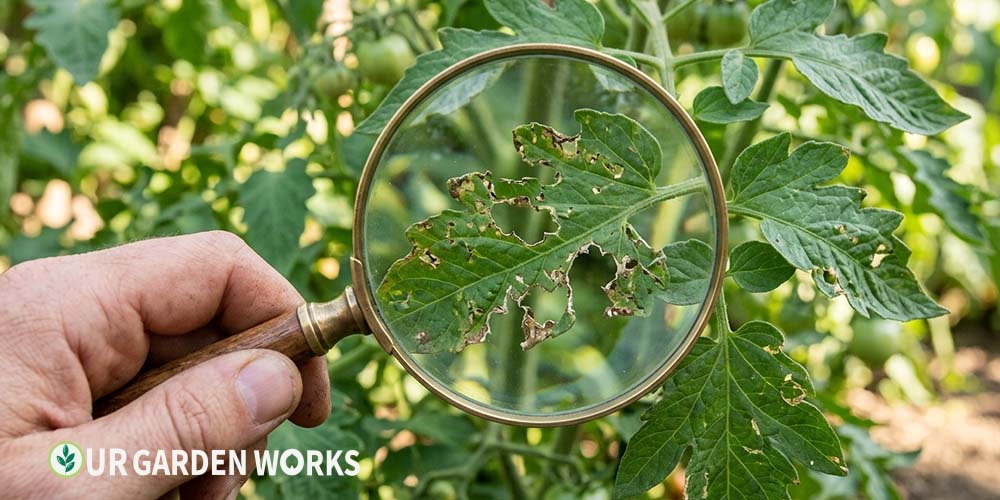
Garden pest identification is genuinely difficult — different pests cause similar damage, the same pest looks different at different life stages, and by the time you see the damage, the pest responsible is often gone.
This tool walks you through the diagnostic process — starting from what you can see right now (the damage pattern, the location on the plant, the time of day) and narrowing to the most likely pest.
Editor’s Note: The fastest identification method: check the damage pattern, check the time of day (most caterpillars and slugs feed at night), and check under the leaves and at stem bases where pests hide during daylight. Ragged holes with slime trails = slugs. Sticky honeydew on leaves = aphids. Skeletonised leaves with Japanese beetle adults visible = Japanese beetles. Brown patches in lawn in irregular circles = grubs below surface.
Common Damage Patterns and Their Most Likely Causes
| Damage Pattern | Most Likely Pest | When Most Active | Confirm By |
|---|---|---|---|
| Ragged holes in leaves with slime trails | Slugs | Night, after rain | Go out 2 hrs after dark with flashlight |
| Sticky honeydew, sooty mould, clustered soft insects | Aphids | All day — check stem tips | Look at undersides of young leaves and stem tips |
| Skeletonised leaves, adult beetles visible | Japanese beetles | Daytime, June–August | Metallic green/copper beetles on foliage |
| Clean round holes in leaves (like a hole-punch) | Flea beetles | Daytime — jump when disturbed | Tiny jumping black beetles on foliage |
| Irregular holes, caterpillar frass (dark pellets) | Caterpillars | Night | Frass below plants; check undersides of leaves |
| Stems cut at soil level overnight | Cutworms | Night | Dig in soil near cut stem — find curled grey larvae |
| Silver streaking on leaves, tiny moving dots | Spider mites | Hot, dry periods | Tap leaf over white paper — tiny moving specks fall off |
| White sticky masses on stems | Mealybugs | All conditions | White cottony masses in leaf axils |
| Tunnels/raised ridges in lawn | Moles | Year round | Surface tunnels; no plant damage above |
| Spongy brown patches in lawn, no roots | Grubs | Spring/fall | Peel back turf — white C-shaped grubs in top 2 inches |
For detailed treatment guides on the most common garden pests, see our how to get rid of aphids guide and how to get rid of slugs in the garden — both include identification confirmation steps and ranked treatment methods. Our garden pest control guide links to every pest article on the site.
Diagnosing Damage When You Can’t Find the Pest
The most frustrating garden pest situation is finding damage with no pest in sight. Most pests feed at night and hide during daylight — so daytime inspection misses them.
The diagnostic approach: go out 1–2 hours after dark with a torch and check the damaged plants directly. If you see the pest, you have your identification. If you don’t, dig in the soil at the base of the damaged plant — cutworms, vine borers, and wireworms operate underground.
For damage that appears to worsen after rain or irrigation, slugs are the primary suspect. For damage that appears during dry, hot periods, spider mites are most likely. For damage that appears in June – August on rose and bean foliage, Japanese beetles. Timing and weather pattern are as diagnostic as the damage pattern itself.
For lawn pests specifically — grubs, armyworms, chinch bugs — the diagnosis often requires pulling back a section of turf to examine the soil just below. Our guide to why grass won’t grow covers the full lawn pest and problem diagnosis process, and the spring lawn care schedule covers preventative grub and pest management timing.
Frequently Asked Questions
Something is eating my plants but I can't find any pest — what should I do?
Night inspection is the first step — go out 2 hours after dark with a flashlight and check plants that were damaged that day. Most garden pests (slugs, caterpillars, earwigs, cutworms) feed at night and disappear before dawn. If night inspection finds nothing, look below soil level — dig gently at the base of damaged plants to check for larvae. If still nothing, consider whether the damage could be animal rather than insect — rabbits, deer, and chipmunks leave characteristic damage patterns that differ from insects. Our do rabbits eat roses guide and rabbit pest cluster cover animal damage identification.
I identified the pest — what's the safest treatment?
The intervention sequence we recommend: physical removal first (hand-picking, water blast), then organic treatments (insecticidal soap, neem oil), then targeted organic pesticides (spinosad, pyrethrin), then synthetic pesticides as a last resort. Start with the least disruptive option — it protects beneficial insects that are also present in your garden and doing useful work. Our best neem oil guide covers the most versatile organic treatment available.
Free Tools & Guides:
Final Thoughts
We hope this tool takes some of the uncertainty out of pest diagnosis and gives you a clear starting point for treatment. The most important principle in garden pest management is catching problems early — a small aphid colony takes 5 minutes to address; a large one takes 5 weeks. For the complete pest control library, our garden pest control guide links to every pest article on the site.
Share this free tool with a fellow gardener who has been finding mystery damage on their plants every summer and never quite knows what caused it — and tell us in the comments how it helped. Happy growing!
