

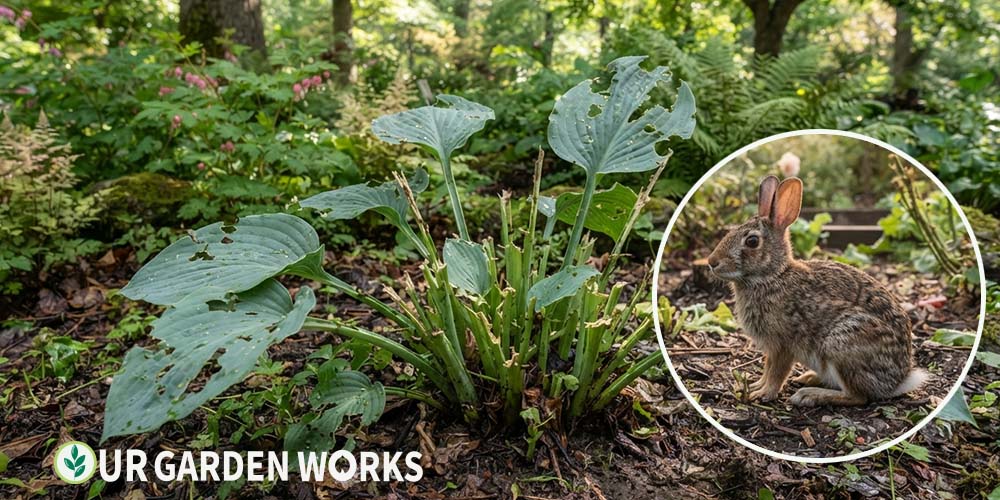
Hostas and rabbits share the same love of shade. Unfortunately, that means the same sheltered corner of your garden that’s perfect for growing hostas is also perfect cover for the rabbits eating them.
If you’ve gone outside in spring to find your hostas eaten to the ground — stems nipped cleanly, leaves gone — rabbits are almost certainly to blame.
The frustrating part: hostas look perfectly healthy one morning and bare by the next. Rabbits can strip a mature hosta plant in a single nighttime feeding session, then come back for seconds the following night.
Here’s how to confirm it’s rabbits and exactly what to do about it.
Quick Answer: Yes — rabbits eat hostas readily, especially new shoots in spring when growth is young and tender. They eat the stems, leaves, and will strip a plant to the ground if undisturbed. Rabbits are most active from March through early summer. Wire cages, repellents, and companion plantings are the most effective deterrents.
Why Rabbits Target Hostas Specifically
Three things make hostas particularly attractive to rabbits:
- Tender new growth. Spring hosta shoots are soft, moisture-rich, and easy to bite through. Rabbits prioritise new growth — the lower in protein and higher in water, the better for them early in the season.
- Shade location. Hostas grow in the same sheltered, low-traffic areas where rabbits feel safe feeding. A hosta bed under a shrub or along a fence line is a rabbit’s ideal dining environment: good food and good cover.
- Ground-level access. Hostas grow exactly at rabbit feeding height. There’s no reaching, no effort — just an easy meal at nose level.
The good news: hostas are generally not rabbit favorites when other options are available. Rabbits will eat lettuce, peas, and roses first. Hostas become primary targets when food is scarce or when rabbits have established a territory that includes your garden.
How to Identify Rabbit Damage on Hostas
The key signs that distinguish rabbit damage from slug, deer, or other pest damage:
- Clean-cut stems. Rabbit incisors make a sharp diagonal cut — stems look clipped, not torn. Slugs leave ragged irregular edges; deer tear leaves and leave them partially attached.
- Low damage height. Rabbit damage stays below 18–24 inches. If damage is only on the lower leaves and emerging shoots, it’s likely rabbits.
- Damage appears overnight. Rabbits feed at dawn, dusk, and at night. A hosta that was intact at sunset and stripped by morning is classic rabbit behavior.
- No slime trails. Slugs leave a silvery mucus trail on foliage. Rabbit damage is dry and clean.
- Small round droppings nearby. Pea-sized dark pellets near the hosta bed or along the garden perimeter.
💡 The March warning window
Rabbit activity peaks in March and April during mating season. This coincides exactly with hosta emergence — the moment those first rolled shoots appear above ground is the most vulnerable period. Start protection in late February before the first shoots appear, not after you’ve already found damage.
Are Hostas Safe for Rabbits to Eat?
This question gets asked both ways — by gardeners worried about their plants, and by rabbit owners wondering about safety. The answers differ:
- Wild rabbits eating garden hostas: Hostas are not significantly toxic to rabbits. Rabbits’ digestive systems handle the saponins in hosta tissue that are harmful to cats and dogs. They’re not poisoning themselves — they’re just eating your plants.
- Pet rabbits eating hostas: While hostas aren’t acutely toxic to rabbits, they’re not a recommended food. The saponin content that doesn’t seriously harm rabbits in small amounts can cause digestive upset in large quantities. Don’t intentionally feed hostas to pet rabbits.
How to Protect Hostas from Rabbits
Method 1 — Wire Cages (Most Reliable)
Hardware cloth formed into cylinders around individual hosta clumps is the most reliable physical barrier. Use 1-inch mesh hardware cloth, 18–24 inches tall, secured with stakes. Push the bottom edge 4–6 inches into the soil to prevent rabbits from pushing under the edge.
This method works for established hostas. For large beds, it’s labor-intensive — consider bed-perimeter fencing instead (see our complete rabbit control guide for fencing specs).
Method 2 — Repellents (Easiest for Large Beds)
Spray repellents applied directly to hosta foliage, and granular repellents scattered around the bed perimeter, significantly reduce rabbit interest. The key is reapplication — most repellents need refreshing after rain and every 2–3 weeks during peak feeding season.
Our best rabbit repellent guide reviews the most effective products available.
Most effective repellent ingredients for hostas: blood meal (most effective), garlic-based sprays, predator urine granules, hot pepper concentrate.
Method 3 — Companion Planting Around Hostas
Planting rabbit-deterrent species at the edges of your hosta bed creates a scent barrier that reduces rabbit interest. The most effective companions for hosta beds:
- Catmint (Nepeta): Shares shade tolerance with hostas, strongly aromatic, and naturally rabbit-resistant
- Astilbe: Rabbits dislike the texture and taste
- Ferns: Generally avoided by rabbits
- Bleeding heart: Mildly toxic to rabbits — they learn to avoid it
See our plants rabbits won’t eat guide for a complete list of companion options that work in shade settings.
Method 4 — Motion-Activated Deterrents
Motion-activated sprinklers work well for hostas near water access. A sudden burst of water is startling to rabbits and associates your garden with an unpleasant experience.
They’re less effective in winter or when rabbits become accustomed to the trigger pattern — vary the timing if possible.
Do Hostas Recover After Rabbit Damage?
Hostas are remarkably resilient. A hosta eaten to the ground in spring will typically re-shoot from its crown — you’ll see new growth emerge 2–4 weeks later. This is different from other plants that don’t recover from complete defoliation.
The concern is repeated damage within the same season. If rabbits return and eat the regrowth two or three times, the plant exhausts its energy reserves and may not come back the following year. Protect the regrowth just as carefully as the original shoots.
⚠️ Young hostas are more vulnerable than established ones
A newly planted hosta with a small crown has limited energy reserves to fuel regrowth. Repeated defoliation in the first or second growing season can kill a young plant. Established hostas with large crowns recover more readily. Protect new plantings more aggressively in the first two seasons.
Seasonal Timeline — When Hostas Are Most at Risk
Rabbit damage to hostas follows a predictable seasonal pattern. Knowing the risk windows lets you time your protection measures rather than responding after damage has already occurred.
| Month | Risk Level | What’s Happening | Protection Priority |
|---|---|---|---|
| February–March | 🔴 Critical | Rabbit mating season begins; first hosta shoots emerge — perfectly coinciding | Install cages before first shoots appear |
| April–May | 🔴 Very High | Peak hosta growth, peak rabbit activity; most damage occurs in this window | Repellents + cages both active |
| June–July | 🟡 Moderate | Hostas mature and toughen slightly; rabbits shift to vegetable gardens | Maintain repellent reapplication |
| August–September | 🟢 Low | Mature hosta foliage less palatable; rabbit attention on other plants | Minimal intervention needed |
| October–January | 🟢 Very Low | Hostas die back; no above-ground material to eat | No action needed until February |
The critical intervention window is late February to early March — before the first hosta shoots emerge. Installing wire cages or applying repellent at this point prevents the spring damage cycle entirely, rather than responding after the shoots have already been eaten.
Frequently Asked Questions
Is there any hosta variety that rabbits won't eat?
No — rabbits will eat any hosta variety given the opportunity. Some gardeners report that hostas with thicker, more heavily textured leaves (like Sum and Substance) get less attention than thin-leaved varieties, but this isn’t a reliable protection strategy.
The only variables that affect rabbit feeding are food availability and protective measures — not variety selection.
Why are rabbits eating my hostas but not my neighbour's?
Rabbits are territorial and follow established feeding routes. Your neighbor may have accidentally deterred rabbits (a dog, a motion light, a particular plant nearby), or a rabbit family has simply established territory that includes your garden but not theirs.
Once a rabbit finds a reliable food source, it returns to the same location repeatedly. Early intervention before a territory is established is much easier than displacing settled rabbits.
My hostas were fine for years and now rabbits are suddenly eating them — why?
Several things can change rabbit behavior: a new rabbit family establishing territory nearby, the elimination of a previous deterrent (a neighbor’s dog that moved away, a section of fence that degraded), a particularly hungry winter that made rabbits less selective, or population increase in your area.
Treat this as a new rabbit incursion and start protection measures immediately rather than hoping they’ll move on.
Part of Our Rabbit Garden Pest Guide
Final Thoughts
We hope this helps you protect your hostas before rabbits find them — because once a rabbit discovers a reliable food source, it will return every day. Wire cages before March is the single most effective thing you can do if you have a rabbit problem in your area.
For the complete rabbit control toolkit, our complete rabbit guide links to every article in this cluster.
Share this with a fellow gardener who is watching their hostas disappear every spring and has been blaming slugs — and let us know in the comments what rabbit damage you’re dealing with this season. Happy growing!
