

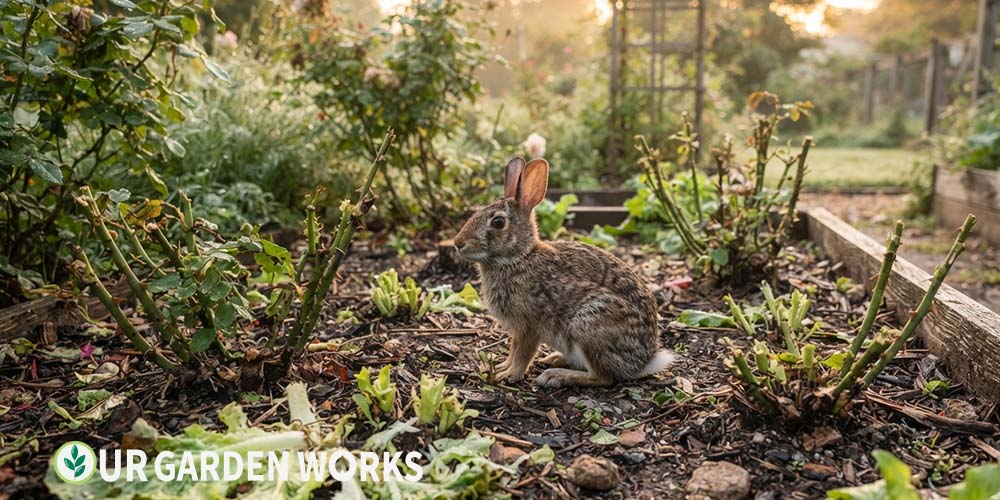
A wild rabbit eats up to one pound of vegetation per day. That’s an entire row of lettuce, half a rose bush, or a ring of bark stripped from a young fruit tree — all from one animal on one visit.
And unlike the cartoon version who only wants carrots, wild rabbits are opportunistic browsers who work methodically through whatever’s tender, young, and close to the ground.
The good news: rabbits have strong preferences and consistent aversions. Understanding both gives you the information to protect what’s vulnerable and choose plants that naturally discourage them.
This guide covers the complete picture — what rabbits target by season, how to read the damage they leave behind, and links to every specific plant guide in our rabbit cluster.
Quick Answer: Wild rabbits eat almost any tender, low-growing vegetation — roses, hostas, lettuce, beans, peas, strawberries, and young tree bark in winter are top targets. They avoid strongly aromatic plants (lavender, mint, garlic), toxic plants (daffodil, foxglove), and plants with fuzzy or very bitter foliage. Fencing is the only reliable full-garden protection.
What Rabbits Eat by Season
Spring — Their Peak Feeding Season
Spring is when rabbit damage is most intense and most visible. Rabbits are most active during mating season (March–April), feeding voraciously on new growth just as your garden is waking up.
Young shoots, tender new leaves, and early seedlings — all the things gardeners are most excited about — are exactly what rabbits prioritize.
- Rose new growth and budding stems — see our do rabbits eat roses guide
- Hosta shoots as they emerge — often eaten to the ground before the leaf even unfurls. See our do rabbits eat hostas guide
- Vegetable seedlings — especially lettuce, peas, beans, and brassicas
- Tulip shoots
- Strawberry crowns and new leaves
Summer — Vegetables Become the Target
As spring flowers mature and become tougher, rabbits shift focus to the vegetable garden. Tender seedlings transition to producing plants, and rabbits follow. Tomato plants, bean vines, and leafy greens face the highest pressure in early summer.
For specific vegetable garden protection, our rabbit and vegetable garden guide covers every crop.
Fall — Seeds and Hardy Foliage
As temperatures drop, rabbits eat more seeds, berries, and increasingly tough vegetation. Damage becomes less obvious but continues. This is the best time to install protective measures before winter.
Winter — Bark and Woody Stems
When snow covers ground-level plants, rabbits shift to bark. They girdle young trees — stripping bark in a complete ring around the trunk — which kills everything above that point. Young fruit trees, ornamental maples, and roses are most at risk.
Hardware cloth tree guards installed before the first snow prevent this type of damage entirely.
Flowers and Ornamentals Rabbits Target Most
| Plant | What They Eat | Damage Level | Guide |
|---|---|---|---|
| Roses | Stems, leaves, buds, flowers | 🔴 High | Full guide → |
| Hostas | New shoots, entire leaves | 🔴 High | Full guide → |
| Tulips | Shoots, buds, flowers | 🔴 High | — |
| Pansies/violas | Entire plant | 🔴 High | — |
| Impatiens | Stems, leaves | 🟠 Medium-high | — |
| Sedums | Fleshy new growth | 🟡 Medium | — |
| Lavender | Rarely, only if starving | 🟢 Very low | Full guide → |
Vegetables Rabbits Eat
| Vegetable | Favourite Parts | Risk Level |
|---|---|---|
| Lettuce and salad greens | Entire plant — cleared overnight | 🔴 Very High |
| Beans (bush and pole) | Seedlings, leaves, pods | 🔴 Very High |
| Peas | Shoots, leaves, pods | 🔴 Very High |
| Spinach and chard | Entire plant | 🔴 Very High |
| Strawberries | Fruit, leaves, crowns | 🔴 Very High |
| Broccoli and brassicas | Young plants, outer leaves | 🟠 High |
| Tomato plants | Young stems and leaves | 🟠 Medium-high |
| Carrots | Tops/greens (not usually the root) | 🟡 Medium |
| Garlic and onions | Rarely — avoided | 🟢 Low |
| Hot peppers | Avoided | 🟢 Very Low |
For tomato plant protection specifically, our do rabbits eat tomato plants guide covers the exact methods that work — including fencing heights and repellent application schedules.
How to Identify Rabbit Damage
Rabbit damage is distinctive once you know what to look for. It consistently differs from deer, groundhog, or insect damage in three specific ways:
- Clean 45-degree cuts. Rabbit incisors make a clean angled cut — almost as if the stem was clipped with pruning shears. Deer tear and twist; rabbits cut cleanly.
- Height below 2 feet. Rabbits are small animals feeding at ground level. Damage above 2 feet (outside of winter when snow raises their access) is almost certainly not rabbits.
- Small round droppings. Pea-sized dark pellets scattered near feeding areas or in small piles near burrow entrances.
💡 Dawn and dusk feeders
Wild rabbits feed primarily at dawn, dusk, and at night — rarely in full daylight when they feel exposed. If your garden looks intact at sunset and is damaged at sunrise, rabbits are the most likely cause. Set a motion camera to confirm before investing in fencing.
What Rabbits Consistently Avoid
No plant is completely rabbit-proof when rabbits are starving. But these categories are reliably low-risk under normal conditions:
- Strongly aromatic plants: Lavender, mint, sage, rosemary, catmint, wormwood — volatile oils are irritating to rabbits’ sensitive nasal passages
- Alliums: Garlic, onions, chives, ornamental alliums — sulfur compounds are mildly toxic to rabbits
- Toxic plants: Daffodil, foxglove, euphorbia, bleeding heart, monkshood — rabbits instinctively avoid plants that harm them
- Very fuzzy or prickly texture: Lamb’s ear, globe thistle, sea holly — unpleasant mouth feel
- Extremely bitter foliage: Yarrow, wormwood, rue — bitter alkaloids
For the complete list with growing notes for each plant, see our plants rabbits won’t eat guide — it covers 20+ reliable choices for rabbit-resistant garden design.
Protection — The Methods That Work
Understanding what rabbits eat is step one. Step two is deciding which protection strategy matches your garden’s scale and layout. Our how to keep rabbits out of your garden guide covers every method in detail — here’s the summary:
- Hardware cloth fencing (most reliable): 1-inch mesh, 3 feet tall, buried 6 inches underground. Prevents both jumping over and burrowing under.
- Commercial repellents: Reviewed in our best rabbit repellent guide — both granular and spray options with honest effectiveness ratings
- Border plantings: Ring beds with lavender, sage, or alliums. Reduces rabbit interest in what’s inside.
- Individual plant cages: Hardware cloth formed into cylinders. Best for high-value individual plants like roses and young trees.
Frequently Asked Questions
Do rabbits eat the same plants in every season?
No — their diet shifts significantly by season. Spring means new growth and flowers. Summer shifts to vegetables and producing plants. Fall brings more seeds and hardy vegetation.
Winter, with ground plants snow-covered, means bark on young trees and shrubs — their most serious long-term garden damage. Trunk guards are especially important from November through March.
How do I know if it's rabbits or deer eating my plants?
The two clearest tells: damage height and cut type. Rabbit damage stays below 2 feet (higher in deep snow). Deer damage reaches 4–6 feet. Rabbit cuts are clean and angled; deer tear and leave ragged edges.
If you see both low and high damage on the same plants, you may have both. Droppings help too — rabbit droppings are small pea-sized pellets, deer droppings are larger olive-shaped clusters.
Are there vegetables rabbits absolutely won't eat?
Under normal food conditions, garlic, onions, chives, hot peppers, rhubarb, and asparagus are reliably unattractive to rabbits. None are truly rabbit-proof when food is scarce, but these are the lowest-risk vegetable choices if you garden in a high-rabbit area and can’t fence everything.
Can rabbits kill mature established plants, or only damage them?
Rabbits can kill plants through two mechanisms: complete defoliation of plants with limited energy reserves (young transplants, small hostas), and girdling — stripping bark in a ring around a trunk or stem, which cuts off water and nutrient flow and kills everything above that point.
Established large perennials typically survive and regrow after defoliation. Young trees that are girdled in winter usually die above the damage point and must be removed. Hardware cloth trunk guards from November through April prevent girdling completely.
Does one rabbit signal that more are coming?
Yes — wild rabbits follow each other to food sources. One rabbit finding your garden undisturbed will return, and others will follow the scent trails.
A family of rabbits (doe plus one litter of 3–5 kits) can be established within a single season if conditions are good. Addressing the first rabbit sign quickly is significantly easier than dealing with a population.
Part of Our Rabbit Garden Pest Guide
Final Thoughts
We hope this guide helps you quickly identify what rabbits are targeting in your garden — and points you to the specific protection strategy that matches your situation.
For the complete fencing and repellent approach, our how to keep rabbits out of your garden guide walks through every method in detail.
Share this post with a fellow gardener who is dealing with rabbit damage right now — and whether the clean 45-degree cut helped them confirm the culprit — and let us know in the comments what rabbit damage looks like in your garden this season. Happy growing!
