

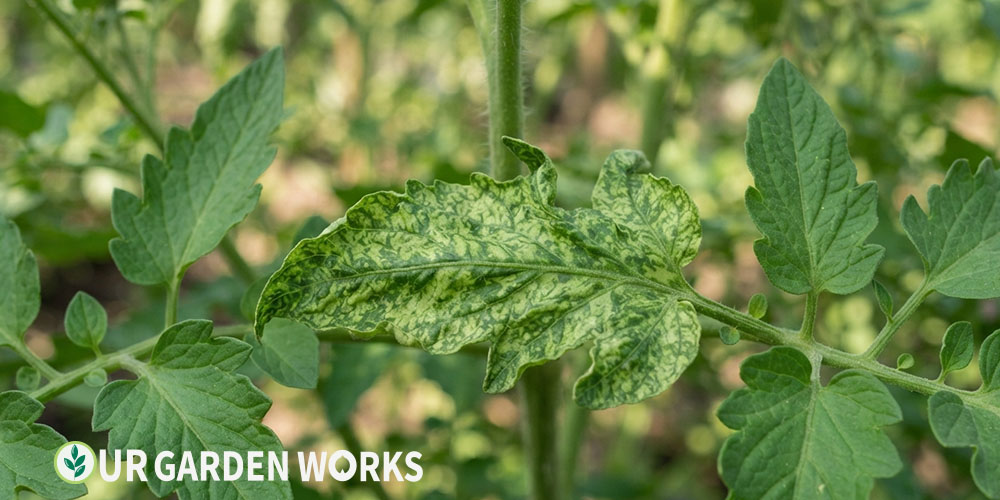
A mottled, patchwork pattern of light and dark green on tomato leaves is one of the more distinctive symptoms in this entire series, and unfortunately it usually means something gardeners don’t want to hear: a viral infection.
Unlike most of the problems covered elsewhere in this guide, there’s no fungicide or fertilizer that fixes a virus.
This guide focuses on confirming the diagnosis accurately, understanding why there’s no cure, and the prevention strategies that actually matter for avoiding this problem in future seasons.
Quick Answer: A mosaic pattern — mottled light and dark green patches, sometimes with leaf distortion or curling — on tomato leaves indicates a viral infection, most commonly tobacco mosaic virus or tomato mosaic virus. There’s no cure once a plant is infected. Remove and dispose of affected plants to prevent spread, control aphids and other insect vectors, and avoid handling tobacco products before working with tomatoes.
What Mosaic Virus Actually Looks Like
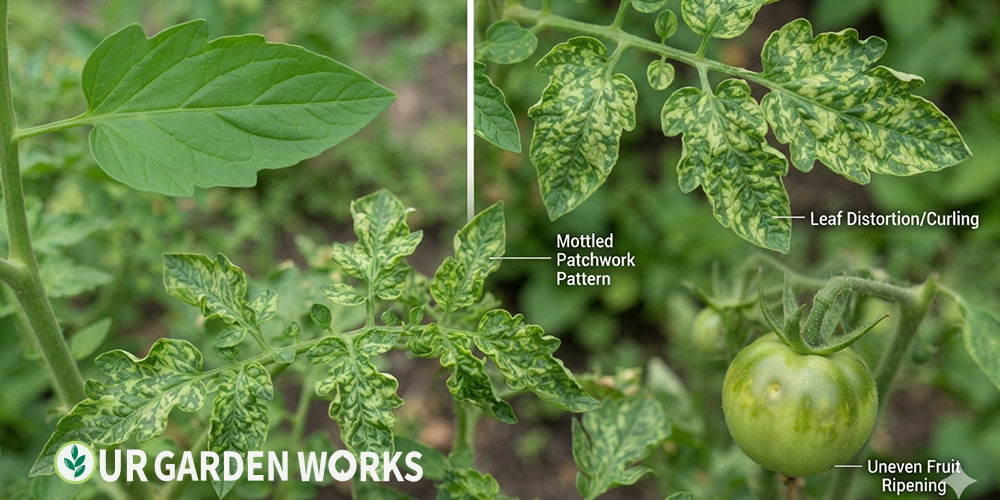
The defining feature is the mottled, patchwork appearance — irregular patches of lighter and darker green creating a pattern across the leaf that genuinely resembles a mosaic tile arrangement, which is exactly where the name comes from.
Leaves may also show some distortion, curling, or a slightly puckered, uneven surface texture compared to the smooth, flat leaves of an unaffected plant.
Beyond the leaves, infected plants often show stunted overall growth, and fruit can develop uneven ripening or internal browning in more severe cases.
Symptoms can vary somewhat depending on the specific virus involved, the tomato variety, and environmental conditions, which is part of why confirming a mosaic virus diagnosis sometimes benefits from comparing against reference photos or even professional testing if you want full certainty.
💡 Symptoms can be more or less obvious depending on temperature
Mosaic virus symptoms often appear more pronounced in cooler weather and can become less visually obvious during the height of summer heat, even though the virus itself remains fully present in the plant. Don’t assume a plant has recovered just because symptoms seem to fade during a hot stretch.
Which Virus Is Likely Responsible
Tobacco mosaic virus and tomato mosaic virus are the two most common culprits behind this symptom pattern in home gardens, and they’re closely related enough that visual symptoms alone often can’t reliably distinguish between them.
Both spread through similar mechanisms and require the same management approach, which is part of why precise identification matters less for home gardeners than simply confirming a virus is present at all.
Less commonly, cucumber mosaic virus — despite the name, capable of infecting tomatoes as well — can produce a similar mottled pattern, typically spread by aphids rather than the contact transmission more associated with tobacco and tomato mosaic virus specifically.
Regardless of which specific virus is responsible, the practical response is essentially identical across all three.
How Mosaic Viruses Spread
Tobacco and tomato mosaic viruses are unusually stable and easily transmitted through simple contact — on hands, tools, or clothing that have touched an infected plant, then touched a healthy one.
This contact transmission is part of why these particular viruses spread so readily in home gardens, since routine activities like pruning, tying up vines, or even just brushing past plants while working can move the virus between plants without any insect involved at all.
Cucumber mosaic virus, by contrast, relies primarily on aphids as its vector, with the insects picking up the virus from an infected plant and transmitting it to others as they feed.
Seeds from infected plants can also carry tobacco and tomato mosaic virus in some cases, which is one more reason saving seed from a plant showing mosaic symptoms is genuinely risky for future plantings.
There Is No Cure — What to Do Instead
Directions
- Remove and dispose of the infected plant promptly — bag it for household trash rather than composting, since composting doesn’t reliably destroy the virus.
- Wash your hands thoroughly and disinfect any tools that contacted the infected plant before working with other plants.
- Control aphid populations on remaining plants if cucumber mosaic virus is suspected, since reducing the insect vector population limits further spread.
- Avoid smoking or handling tobacco products before working with tomatoes if tobacco mosaic virus is a possibility, since the virus can persist in tobacco products and transfer to plants through hand contact.
- Monitor remaining plants closely for emerging symptoms, since early removal of any newly infected plants limits how far the virus spreads through your garden.
⚠️ Don’t try to save a symptomatic plant
It’s tempting to wait and see whether a plant with mild mosaic symptoms might still produce a worthwhile harvest, but keeping an infected plant in the garden only increases the risk of spreading the virus to healthy plants nearby through routine garden activity. Removing it promptly, even before symptoms become severe, is the more responsible choice for protecting the rest of your garden.
Telling Mosaic Virus Apart From Other Causes of Leaf Mottling
| Cause | Pattern | Other Symptoms | Cure Available? |
|---|---|---|---|
| Mosaic virus | Mottled light/dark patchwork | Distortion, stunting, uneven fruit ripening | No |
| Nutrient deficiency | Uniform or vein-pattern yellowing | Slow growth, no distortion | Yes |
| Herbicide drift | Distorted, twisted growth | Sudden onset, often whole-plant | No cure, but doesn’t spread |
| Normal variegation (rare ornamental varieties) | Consistent, symmetrical pattern | No distortion or stunting | N/A — not a problem |
Herbicide drift damage is worth mentioning specifically since it can superficially resemble viral mosaic symptoms but stems from an entirely different cause — accidental exposure to herbicide spray or vapor from nearby lawn or garden treatment.
Unlike a virus, herbicide damage doesn’t spread to other plants through contact, and affected plants sometimes partially recover if the exposure was minor and growth wasn’t severely distorted.
Why Some Infected Plants Seem to “Tolerate” the Virus
It’s not uncommon to see an infected tomato plant continue growing and even producing some fruit despite showing mosaic symptoms, which can create the false impression that the plant is managing or fighting off the virus successfully.
In reality, the plant is simply tolerating infection to varying degrees rather than clearing it — the virus remains fully present in the plant’s tissue throughout its life, continuing to pose a transmission risk to other plants regardless of how mild the visible symptoms appear.
Some tomato varieties do carry genetic resistance to specific strains of mosaic virus, which can explain why one variety in your garden shows severe symptoms while a different variety planted nearby remains symptom-free despite likely similar exposure.
This resistance is a meaningful consideration for variety selection in gardens with a known history of mosaic virus problems, though it’s worth checking that any resistance claim on a seed packet specifically covers the strain you’re dealing with, since resistance to one mosaic virus type doesn’t necessarily extend to all of them.
What to Do With Garden Tools and Stakes After an Infection
Beyond hand hygiene during active gardening, it’s worth considering the tools, stakes, and cages that contacted an infected plant even after that plant has been removed, since tobacco and tomato mosaic virus can persist on surfaces for a surprisingly long time under the right conditions.
Disinfecting pruners, stakes, and cages with a diluted bleach solution or a commercial disinfectant rated for plant pathogens before reusing them elsewhere in the garden reduces the risk of reintroducing the virus to a new planting.
For wooden stakes or cages that are difficult to fully disinfect, some gardeners prefer to retire that specific equipment from tomato use for at least a season, or replace it outright, particularly if mosaic virus has been a recurring problem despite other prevention efforts.
This level of caution may feel excessive for a single isolated infection, but it’s a reasonable additional safeguard if you’re trying to break a persistent cycle of reinfection in the same garden area.
Protecting Future Plantings
Since there’s no treatment once infection occurs, prevention is genuinely the only effective strategy against mosaic viruses.
Purchasing certified disease-free seed and transplants from reputable sources significantly reduces the risk of introducing virus into your garden in the first place, since infected seed is one of the more common entry points for tobacco and tomato mosaic virus specifically.
Practicing good hand and tool hygiene while gardening — washing hands and disinfecting pruners between handling different plants, especially if you’ve recently smoked or handled tobacco products — meaningfully reduces contact transmission risk.
For cucumber mosaic virus specifically, managing aphid populations throughout the season through beneficial insects, insecticidal soap, or other appropriate controls reduces the insect-vectored transmission pathway.
Frequently Asked Questions
Can I eat tomatoes from a plant showing mosaic virus symptoms?
Tomato and tobacco mosaic viruses don’t infect humans and pose no food safety risk, so fruit from an infected plant is generally safe to eat if it looks and tastes normal.
That said, severely affected fruit with internal browning or significant quality issues is best discarded for quality reasons rather than any safety concern.
Will mosaic virus spread to other vegetables in my garden, not just tomatoes?
Tobacco and tomato mosaic viruses have a fairly broad host range among related plants, including peppers and some ornamentals, while cucumber mosaic virus can affect an even wider range of vegetables including cucumbers, squash, and many others.
This broad host range is one more reason prompt removal of infected plants matters for protecting your whole garden, not just other tomatoes.
How can I be certain it's a virus and not something else before removing the plant?
Visual diagnosis based on the mottled pattern combined with distortion and stunting is reasonably reliable for an experienced eye, but if you want definitive confirmation, many state agricultural extension services offer plant disease testing services for a modest fee.
For a single home garden plant, though, most gardeners reasonably proceed with removal based on visual symptoms alone, given that the response is the same regardless of which specific virus is confirmed.
Related Articles in Our Tomato Leaf Problems Guide
- Wilting Tomato Plants (Not Drought) – What Is It
- Yellowing Lower Leaves on Tomatoes – What It Means
- Brown Spots on Tomato Leaves – What’s Causing It
- Why Are My Tomato Leaves Curling? 5 Causes + Fixes
- How to Grow Tomatoes from Seed to Harvest (2026 Guide)
- Why Are My Cucumbers Turning Yellow?: 8 Possible Reasons & How To Fix Them
- Vegetable Gardening Guide
Final Thoughts
We hope this guide has given you clarity on a difficult diagnosis to receive — mosaic virus isn’t fixable, but understanding why, and what prevents it next time, at least turns a frustrating loss into a more informed approach going forward.
For all our tomato and vegetable guides, our vegetable gardening guide links to everything.
Share this post with a fellow gardener who’s dealing with a suspected viral infection — and let us know in the comments how your garden recovered. Happy growing!
