

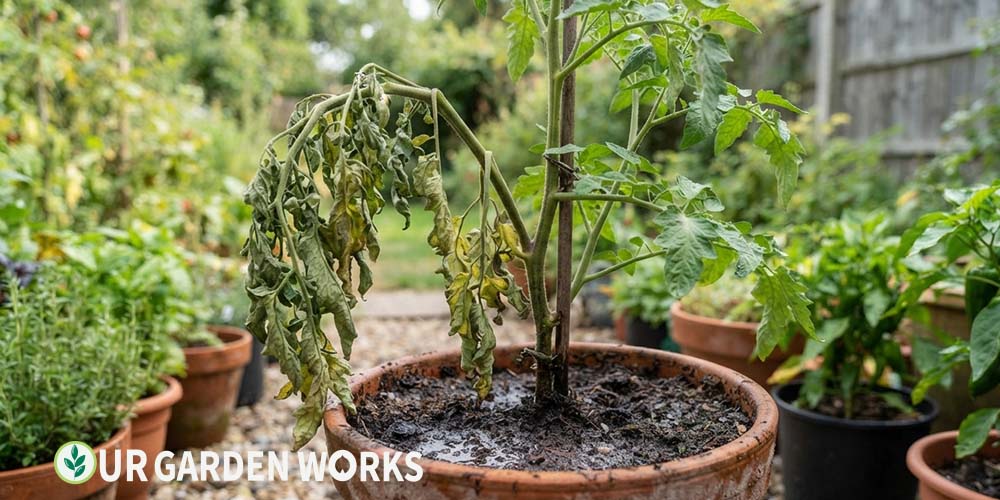
The most disorienting version of tomato wilt is the kind that happens despite soil that’s clearly moist, sometimes even recently watered.
If your instinct to water more isn’t fixing the problem, or is making it worse, you’re very likely dealing with one of several vascular diseases rather than a watering issue at all.
This distinction matters enormously, since the fixes for disease-related wilt are completely different from simply adjusting your watering schedule. We’ll walk through the most likely causes and how to tell them apart.
Quick Answer: Wilting despite moist soil usually means fusarium wilt, verticillium wilt, bacterial wilt, or southern blight — all vascular diseases that block water movement within the plant regardless of how much is available in the soil. Check for one-sided wilting (fusarium), stem discoloration when cut, or a white fungal mat at the soil line to narrow down which one you’re facing.
Cause 1 — Fusarium Wilt
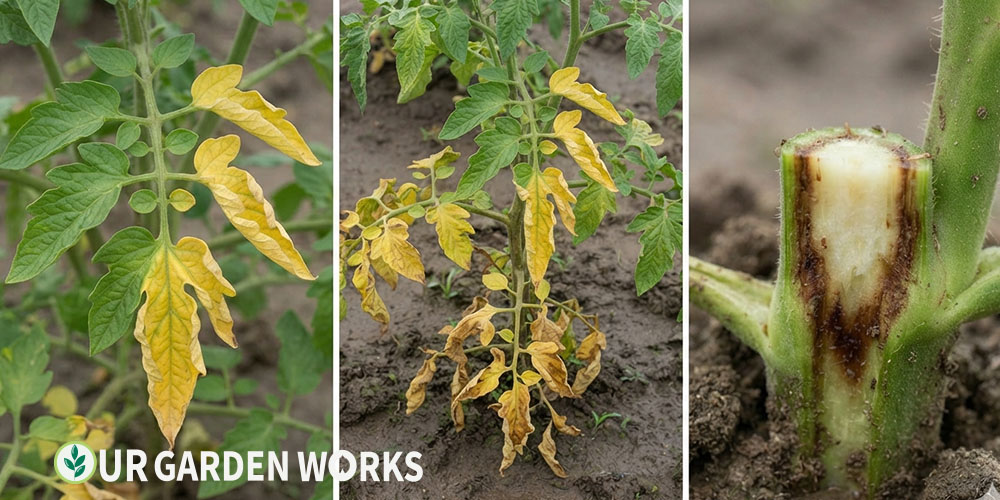
Fusarium wilt produces a distinctive one-sided wilting pattern — leaves on one side of the plant or even one side of a single leaf wilt and yellow while the other side remains healthy, at least initially.
This is one of the most reliable visual clues separating Fusarium from generic drought stress, which typically affects the whole plant more uniformly.
How to confirm it’s Fusarium wilt:
- Wilting starts on one side of the plant or progresses asymmetrically
- Lower leaves yellow and wilt first, working upward over time
- Cutting open the lower stem reveals brown discoloration in the vascular tissue (the ring just under the outer stem surface)
- Soil moisture is adequate, ruling out simple drought
Fix: There’s no cure once a plant is infected — remove and dispose of the affected plant to prevent the fungus from building up further in the soil. Choose fusarium-resistant varieties (labeled “F” or “FF” on seed packets) for future plantings, and rotate tomatoes away from the same bed for several years if possible.
Cause 2 — Verticillium Wilt
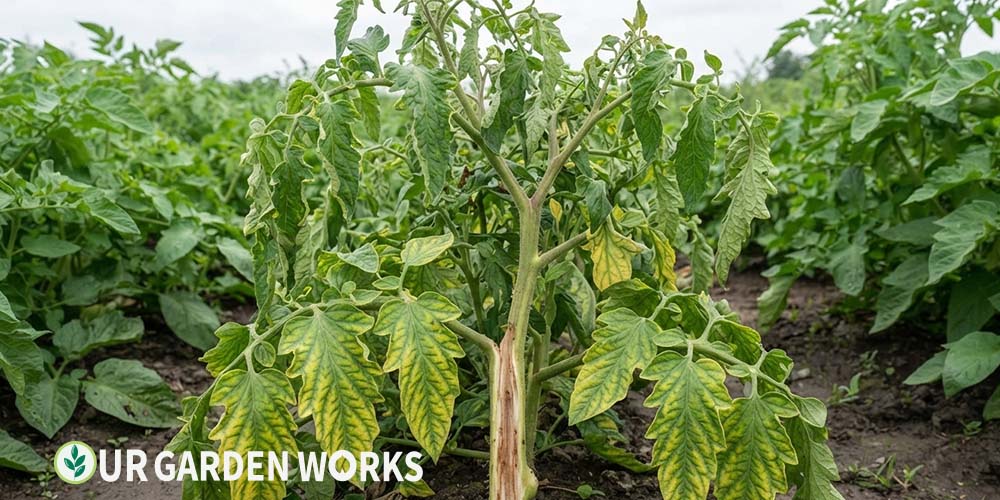
Verticillium wilt looks similar to Fusarium in many respects, including the vascular discoloration visible in a cut stem, but tends to produce a more uniform overall decline rather than the distinctly one-sided pattern Fusarium often shows.
Older leaves typically show a V-shaped yellowing pattern starting at the leaf margin before the whole plant begins to wilt.
How to confirm it’s verticillium wilt:
- Yellowing often starts as a V-shaped pattern on older leaf margins
- Wilting is more generally distributed across the plant than Fusarium’s one-sided pattern
- Stem discoloration when cut is present but sometimes lighter or more scattered than Fusarium
- Plant decline tends to be gradual rather than sudden
Fix: Same approach as fusarium — no cure, remove affected plants, choose resistant varieties (labeled “V”) for future plantings, and rotate crops since the fungus persists in soil for years.
Cause 3 — Bacterial Wilt
Bacterial wilt causes a notably rapid decline compared to the fungal wilts above — a plant can go from looking healthy to completely collapsed within just a few days under the right conditions.
A simple confirmation test: cut a wilted stem and suspend it in a clear glass of water; if milky bacterial streams ooze from the cut surface, that confirms bacterial wilt.
How to confirm it’s bacterial wilt:
- Wilting progresses unusually fast, sometimes within days
- The water test shows milky streaming from a cut stem
- Often follows root damage from cultivation, transplanting, or insect feeding that gave bacteria an entry point
- More common in warm, humid climates and heavier soils
Fix: No cure exists — remove and destroy affected plants promptly to limit spread to nearby plants through soil contact or insect vectors. Avoid working in the garden when plants are wet, and rotate away from the affected bed for at least 3-4 years.
⚠️ Bacterial wilt spreads through soil and water
Unlike the fungal wilts, bacterial wilt can spread more readily through soil splash, contaminated tools, and even irrigation water, making sanitation an especially important part of limiting an outbreak. Clean tools between plants if you suspect bacterial wilt, and avoid moving soil from an affected area to elsewhere in the garden.
Cause 4 — Southern Blight
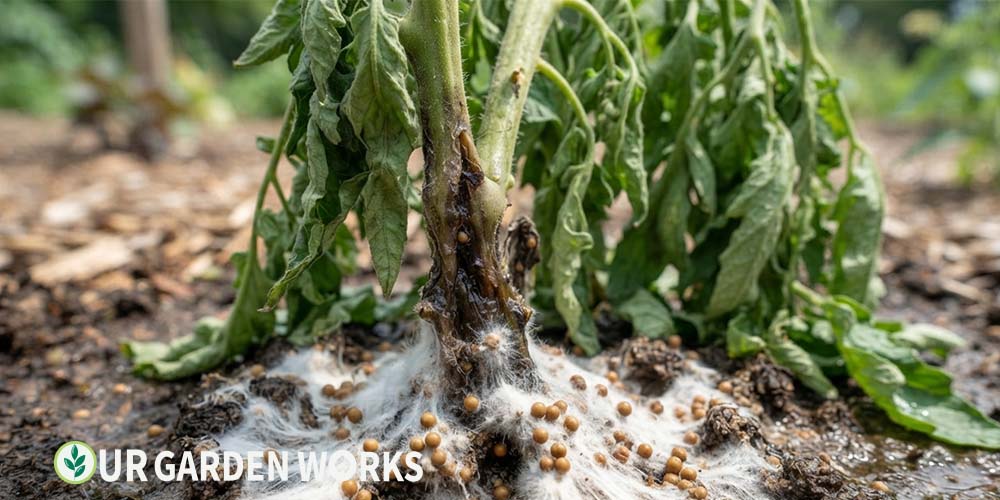
Southern blight, more common in warm southern climates, produces sudden wilting accompanied by a distinctive white, fan-like fungal growth visible at the base of the stem right at the soil line.
Small, round, tan to brown structures (sclerotia) resembling mustard seeds are often visible within this white growth.
How to confirm it’s southern blight:
- White, cottony or fan-shaped fungal growth visible at the stem base, right at soil level
- Small round tan structures resembling mustard seeds within the white growth
- Wilting is sudden and the whole plant typically declines rapidly once symptoms appear
- More common in warm, humid climates during hot summer months
Fix: Remove affected plants and surrounding soil where the fungal structures are visible, since the sclerotia can survive in soil for years and reinfect future plantings. Deep tilling or solarizing affected soil over a season can help reduce the fungal load before replanting tomatoes in that location.
Telling the Four Causes Apart at a Glance
| Disease | Wilt Pattern | Stem Test | Speed |
|---|---|---|---|
| Fusarium wilt | One-sided, asymmetric | Brown vascular ring | Gradual |
| Verticillium wilt | V-shaped leaf yellowing, general decline | Brown vascular ring | Gradual |
| Bacterial wilt | Rapid, whole plant | Milky bacterial streaming | Very fast (days) |
| Southern blight | Sudden, whole plant | White fungal growth at soil line | Fast |
Ruling Out Drought and Overwatering First
Before assuming disease, it’s worth genuinely confirming the soil moisture situation rather than just glancing at the surface.
Check soil moisture a few inches down near the root zone, not just at the surface, since surface soil can look deceptively moist while deeper soil where roots actually draw water is bone dry, or the reverse with surface crusting hiding genuinely saturated soil beneath.
Overwatering and root rot from poor drainage can also produce wilting that looks superficially similar to the vascular diseases above, since damaged roots struggle to take up water regardless of how much is present in the soil.
The key difference is that overwatering-related wilt typically resolves once watering is corrected and drainage improves, while the vascular diseases covered above continue progressing regardless of any watering adjustment.
How Climate and Soil History Affect Which Wilt You’re Likely Facing
Geography offers a genuine clue when narrowing down which of these four diseases is most likely responsible for what you’re seeing. Bacterial wilt and southern blight both favor warm, humid conditions and are considerably more common in the
Southeast and similar climates than in cooler, drier regions, where Fusarium and Verticillium tend to be the more frequent culprits when vascular wilt symptoms appear.
Soil history matters just as much as regional climate. A garden bed with a known history of any of these diseases from previous seasons carries elevated risk of recurrence, since all four pathogens persist in soil for multiple years after an infected plant has been removed.
If you’ve dealt with vascular wilt in a specific bed before, treating any new wilting symptoms in that same location as a strong candidate for the same disease, rather than starting the diagnosis from scratch, is a reasonable shortcut.
Preventing Wilt Diseases in Future Seasons
Since none of the four wilt diseases covered here have a cure once a plant is infected, prevention is genuinely the only effective long-term strategy.
Choosing resistant varieties is the single most impactful step — modern hybrid tomatoes frequently carry resistance codes (F, FF, V, and others) directly on their seed packets or plant tags, and selecting varieties with resistance to the diseases known to be present in your area or soil history prevents most cases before they start.
Crop rotation, moving tomatoes to a different bed location for several years at a time, matters enormously for these soil-borne pathogens, all of which can persist in soil for multiple years after an infected plant is removed.
Good sanitation — cleaning tools between plants, avoiding working among wet foliage, and promptly removing any plant showing wilt symptoms — further reduces the chance of disease spreading to unaffected plants in the same season.
Frequently Asked Questions
Can I save a tomato plant once it shows signs of vascular wilt disease?
Unfortunately, no — none of the four diseases covered in this guide have an effective cure once a plant is infected, and continued growing only risks further spreading the pathogen to nearby plants and soil.
Removing and disposing of the affected plant promptly, rather than continuing to nurse it along, is the right move once a wilt disease is confirmed.
Will these wilt diseases spread to other vegetables in my garden?
Fusarium and verticillium wilt have fairly broad host ranges and can affect related and sometimes unrelated vegetables, including peppers and eggplant for verticillium specifically.
Bacterial wilt and southern blight also affect a range of garden plants beyond just tomatoes, which is part of why removing affected plants and practicing crop rotation matters for garden-wide disease management, not just tomato-specific planning.
How do I dispose of a tomato plant infected with a wilt disease?
Bag and dispose of infected plants in household trash rather than composting them, since composting doesn’t reliably kill the fungal spores or bacteria responsible for these diseases.
Avoid leaving infected plant material in the garden even temporarily, since this gives the pathogen more opportunity to spread to soil and nearby plants.
Related Articles in Our Tomato Leaf Problems Guide
- Brown Spots on Tomato Leaves – What’s Causing It
- Purple Leaves on Tomato Plants — 3 Causes + Fixes
- Tomato Leaves Turning Yellow: 7 Causes
- Why Are My Tomato Leaves Curling? 5 Causes + Fixes
- Tomato Stem Rot: Causes, Treatment & Prevention Guide (2026)
- How to Grow Tomatoes from Seed to Harvest (Complete 2026 Guide)
- How to Water a Vegetable Garden in Summer (Complete Guide)
- Vegetable Gardening Guide
Final Thoughts
We hope this guide has helped you understand why your tomato is wilting despite moist soil, even though some of these diagnoses aren’t the news any gardener wants to hear. Catching a wilt disease early and removing the plant promptly is the best way to protect the rest of your garden and next season’s crop.
For all our tomato and vegetable guides, our vegetable gardening guide links to everything.
Share this post with a fellow gardener who’s troubleshooting wilting tomatoes — and let us know in the comments which cause matched what you found. Happy growing!
