

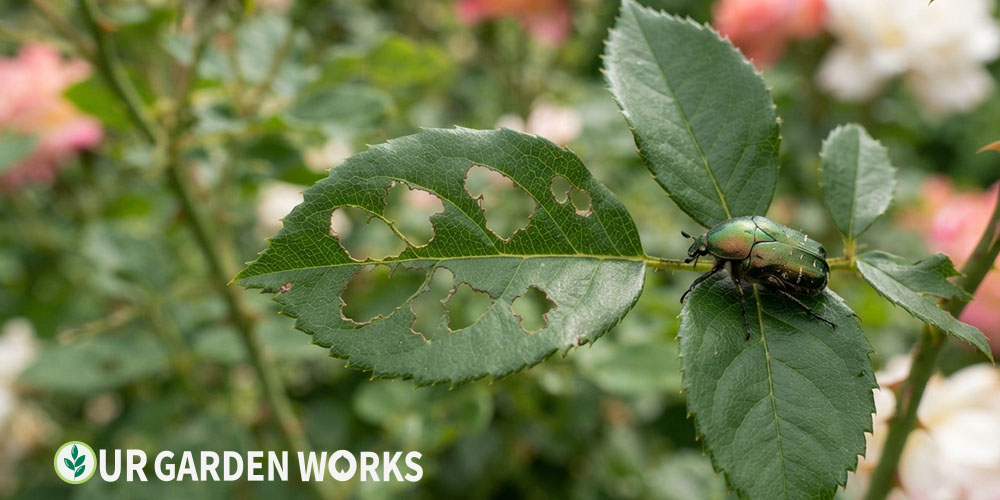
Holes in rose leaves almost always mean a pest is actively feeding, which is actually good news compared to many rose problems — pests are usually easier to identify and treat than disease.
The shape, size, and pattern of the holes narrows the list of suspects considerably before you even need to find the culprit in person, which matters since several of the most common culprits are easy to miss during a quick glance at the bush.
We’ll walk through the three most common causes in order of likelihood, with the specific visual signature that sets each one apart.
Most gardeners can identify their issue from the hole pattern alone, without needing to catch the pest red-handed.
Quick Answer: Holes in rose leaves are most often caused by Japanese beetles (large irregular holes, skeletonized leaves, visible metallic-green beetles), rose slugs (translucent papery patches that later become holes), or leafcutter bees (clean, perfectly round holes cut from the edges). Check the hole shape and whether you can spot the pest itself to confirm which one you’re dealing with.
Cause 1 — Japanese Beetles (Most Common, Most Destructive)
Japanese beetles chew large, irregular holes between leaf veins, often skeletonizing leaves entirely so only the vein structure remains. They feed in groups, so damage tends to appear suddenly and severely on multiple leaves at once rather than gradually on a single leaf.
How to confirm it’s Japanese beetles:
- Holes are large, irregular, and concentrated between leaf veins
- Damage appears suddenly across many leaves within days
- Metallic green and copper-colored beetles, about ½ inch long, visible on or near affected leaves
- Most active during the day, especially on warm, sunny afternoons
- Often clustered on the most sun-exposed parts of the bush
Fix: Hand-pick beetles into a bucket of soapy water in the early morning while they’re sluggish — this is genuinely effective for small numbers. For larger infestations, apply neem oil or a pyrethrin-based spray, and consider pheromone traps placed well away from your roses, since traps placed too close can actually attract more beetles to the area.
⚠️ Avoid systemic insecticides if you want pollinators around your roses
Japanese beetle treatments containing systemic neonicotinoids work well against the beetles but can also harm bees and other beneficial pollinators visiting the same flowers. Neem oil, pyrethrin sprays, and hand removal are gentler options if pollinator activity around your roses matters to you.
Cause 2 — Rose Slugs (Sawfly Larvae)
Despite the name, rose slugs aren’t true slugs — they’re the larvae of a small sawfly, and they cause a distinctive type of damage that starts before actual holes appear.
Early feeding creates thin, translucent “window pane” patches where the larvae have eaten through one leaf surface but left the other intact.
How to confirm it’s rose slugs:
- Early damage looks like translucent, papery patches rather than clean holes
- These patches eventually dry out and become actual holes as feeding continues
- Small, pale green, slug-like larvae visible on leaf undersides if you look closely
- Damage tends to start on lower, more shaded leaves first
Fix: A strong jet of water from a hose dislodges larvae effectively for light infestations. For heavier infestations, insecticidal soap applied directly to leaf undersides, where the larvae feed, is the most targeted treatment. See our guide to insecticides for roses for product-specific guidance.
Cause 3 — Leafcutter Bees
Leafcutter bee damage is the easiest to identify of the three causes once you know what to look for, since it’s the only one that produces perfectly clean, smooth-edged round or oval holes rather than the jagged, irregular damage typical of chewing pests. The bees cut these precise pieces to line their nests, not to eat.
How to confirm it’s leafcutter bees:
- Holes have smooth, clean edges — almost as if cut with scissors
- Holes are typically along the leaf margin rather than scattered across the surface
- Damage is cosmetic only and doesn’t progress or spread like pest feeding does
- You may spot a small, dark bee carrying a leaf fragment in flight near the bush
Fix: None needed, and we’d actively discourage treating for this one. Leafcutter bees are valuable native pollinators, the damage is purely cosmetic, and it never threatens the plant’s health or bloom production in any meaningful way.
💡 Leafcutter damage is a good sign, not a bad one
Finding clean, round cuts in your rose leaves means native pollinators are active in your garden, which benefits everything else you’re growing nearby. Many experienced rose growers consider a little leafcutter bee damage each season a welcome trade for the pollination services these bees provide.
Telling the Three Causes Apart at a Glance
| Cause | Hole Shape | Pest Visible | Treatment Needed? |
|---|---|---|---|
| Japanese beetles | Large, irregular, between veins | Metallic green beetles, daytime | Yes |
| Rose slugs | Starts translucent, becomes irregular holes | Small green larvae, leaf undersides | Yes |
| Leafcutter bees | Clean, smooth-edged, round/oval | Dark bee, brief sightings only | No |
Less Common Causes Worth Ruling Out
If the three causes above don’t match what you’re seeing, a couple of less frequent possibilities are worth checking.
Caterpillars from various moth species occasionally feed on rose foliage, producing irregular chewed holes similar to Japanese beetle damage but typically at night, with the caterpillars themselves hiding during the day — checking leaves after dark with a flashlight can confirm this when daytime inspection turns up nothing.
Hail damage, while not a pest at all, can produce small, somewhat round holes or tears in rose foliage following a storm, distinguishable from pest damage by the fact that it appears suddenly after a specific weather event and affects all nearby plants similarly, not just roses.
If holes appeared overnight following a storm with hail, this is almost certainly the explanation rather than any pest.
How to Inspect Your Rose Bush Properly
A thorough inspection makes the difference between a confident diagnosis and an ongoing guessing game, and most gardeners check less carefully than they think.
Start by examining several affected leaves rather than just one, since pattern consistency across multiple leaves is more diagnostic than any single example, which might be slightly atypical.
Turn leaves over to check the undersides specifically, since rose slug larvae and many caterpillars feed and rest there during the day, hidden from casual observation of just the leaf’s top surface.
A small handheld magnifying glass, while not strictly necessary, makes tiny rose slug larvae and early-stage translucent feeding damage considerably easier to spot than the naked eye alone manages.
If you suspect Japanese beetles but don’t see any during your inspection, try checking again at a different time of day, since their activity peaks during warm, sunny conditions and drops off considerably during cooler mornings, evenings, or overcast weather.
A pattern of damage with no visible pest at all, especially in cooler conditions, is also a reasonable signal to consider nighttime-feeding caterpillars as the more likely cause.
Preventing Future Hole Damage
Healthy, well-maintained rose bushes tolerate and recover from pest damage far better than stressed plants, which makes good general care your first line of defense regardless of which specific pest you’re dealing with.
Consistent watering, appropriate fertilizing through the growing season, and good airflow from proper spacing and pruning all contribute to a plant resilient enough to shrug off moderate pest pressure.
For Japanese beetles specifically, treating lawn areas near your roses for grubs (the beetle’s larval stage living in soil) in late summer reduces next year’s adult beetle population significantly, since this is when grubs are most vulnerable to treatment.
This long-term approach addresses the problem at its source rather than just managing adult beetles once they’ve already emerged and started feeding on your roses.
Frequently Asked Questions
Will holes in rose leaves kill my plant?
Rarely, unless the damage is severe and repeated across multiple seasons without any intervention. A healthy, established rose bush tolerates moderate leaf damage without lasting harm, though severe, repeated defoliation from heavy Japanese beetle pressure can weaken a plant over time and reduce its bloom production.
Should I remove leaves that already have holes?
Generally not necessary for cosmetic damage alone, since the leaf still photosynthesizes even with holes present. The exception is if the damage is accompanied by disease symptoms like black spot or significant yellowing, in which case removing affected foliage helps manage the disease separately from the hole damage itself.
Do all rose varieties get holes in their leaves equally?
No — some varieties, particularly older hybrid teas with tender, less waxy foliage, tend to attract more pest feeding than tougher, more disease-resistant modern shrub roses like many Knockout varieties.
If pest damage is a recurring frustration, choosing hardier varieties for future plantings can meaningfully reduce the problem.
What time of day should I check for the pests causing holes in my roses?
Japanese beetles are most active and visible during warm daytime hours, especially sunny afternoons, making midday the best time to spot and hand-remove them.
Rose slug larvae and most caterpillars are easier to find on leaf undersides regardless of time of day, while caterpillars specifically may require an evening or nighttime check with a flashlight if daytime inspection shows damage but no visible pest.
Can companion planting help reduce pest holes in rose leaves?
Yes, to a meaningful degree — certain companion plants attract beneficial predatory insects that feed on rose slug larvae and other pests, while others act as trap crops that draw beetles away from your roses entirely.
See our guide to companion plants for roses for specific pairings that support this kind of natural pest pressure reduction over a season.
Related Articles in Our Rose Leaf Problems Guide
- Black Spots on Rose Leaves — Complete Treatment Guide
- 10 Best Rose Fertilizers – (Reviews & Top Picks for 2026)
- 10 Best Insecticides For Roses – Reviews & Top Picks (2026)
- What Causes Yellow Leaves On Knockout Roses And How To Avoid Them
- How To Deadhead Knockout Roses & Why It’s Important
- Do Rabbits Eat Roses? – A Guide To Keep Rabbits From Eating Flowers
- (Free tool) Garden Pest Identifier — What’s Eating My Plants?
Final Thoughts
We hope this guide has helped you match the exact hole pattern on your rose leaves to its cause — and given you some relief if it turns out to be the harmless leafcutter bee. Most rose pest problems are manageable once correctly identified.
For all our rose care guides, our plant care guides cover everything from planting to pest and disease management.
Share this post with a fellow rose grower who’s troubleshooting their bushes — and let us know in the comments which cause matched what you found. Happy growing!
