

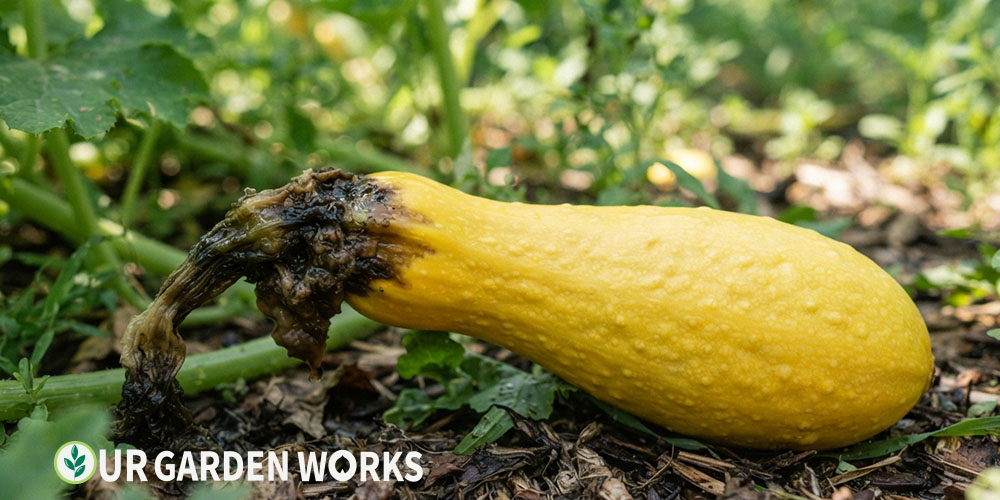
Rot specifically at the stem end of a developing squash, rather than the blossom end covered in our tomato and pepper guides, points to a different set of causes tied to this particular end of the fruit.
Most cases trace back to either failed pollination or a fungal infection taking advantage of the stem attachment point.
We’ll walk through both, since the visual difference between them is fairly clear once you know what to look for.
Quick Answer: Squash rotting at the stem end is most often caused by failed or incomplete pollination (the fruit starts developing but the unpollinated tissue near the stem rots and the fruit shrivels) or fungal stem rot (a soft, often fuzzy or discolored rot at the stem attachment point on an otherwise well-pollinated, developing fruit). Check whether the whole fruit is failing to develop or just the stem attachment area specifically.
Cause 1 — Failed or Incomplete Pollination
When a female squash flower isn’t fully or properly pollinated, the fruit often begins developing somewhat before stalling, with the stem end — the area closest to where pollination would have needed to be most effective — showing the first signs of rot and shriveling as the fruit fails to continue its development.
The blossom end may look comparatively more developed in these cases, since growth often starts from that end before the lack of proper pollination causes overall failure.
How to confirm it’s pollination-related:
- The fruit is small and clearly not developing at a normal rate compared to other successfully growing squash nearby
- Rot or shriveling is part of an overall fruit failure, not isolated just to the stem attachment point on an otherwise normal-looking fruit
- Coincides with known pollination challenges — limited bee activity, recent cool or rainy weather
Fix: Hand pollination, covered in detail in our zucchini pollination guide, addresses this directly for future flowers. Remove failed, rotting fruit promptly, since leaving it on the vine doesn’t help and can occasionally attract pests or disease to the surrounding healthy growth.
Cause 2 — Fungal Stem Rot
Various fungal pathogens can infect squash at the stem attachment point specifically, often entering through small wounds or simply taking advantage of the slightly more vulnerable tissue where the fruit connects to the vine.
This produces a soft, sometimes fuzzy or discolored rot concentrated at the stem end, even on a fruit that was otherwise developing normally and shows healthy growth and coloring everywhere else.
How to confirm it’s fungal stem rot:
- Rot is concentrated specifically at the stem attachment point on a fruit that otherwise looks normally developed and properly sized
- May show visible fuzzy fungal growth or unusual discoloration right at the rot site
- Worse in humid conditions or when fruit sits directly on damp soil
Fix: Remove affected fruit promptly to prevent the fungal infection from spreading to other developing squash on the same vine. Elevating fruit off direct soil contact using a layer of mulch, a piece of cardboard, or a dedicated squash cradle reduces this moisture-related rot risk for the remaining and future fruit on the plant.
💡 Soil contact is the biggest risk factor for fungal stem rot
Squash fruit resting directly on damp soil creates exactly the moist, fungus-favorable conditions that lead to stem rot, far more so than fruit that’s elevated even slightly above the soil surface. This single adjustment — placing something between developing squash and bare soil — meaningfully reduces this specific rot risk for the rest of the season.
Telling the Two Causes Apart at a Glance
| Cause | Fruit Development | Rot Pattern | Key Factor |
|---|---|---|---|
| Failed pollination | Stunted, not growing normally | Overall fruit failure, not isolated | Limited pollinator activity |
| Fungal stem rot | Otherwise normal, well-developed | Isolated to stem attachment area | Soil contact, humidity |
Don’t Confuse This With Blossom End Problems
It’s worth being precise about which end of the squash is actually affected, since the stem end and blossom end face genuinely different risk factors and require different prevention approaches.
The stem end is where the fruit attaches to the vine itself, while the blossom end is the opposite tip, where the flower was originally located before the fruit developed — these are often confused, especially on elongated squash varieties where the overall shape doesn’t make the distinction as visually obvious as it is on a round fruit.
Blossom end issues on squash, while less commonly discussed than the stem-end problems covered in this guide, can occasionally relate to similar calcium-and-water-delivery dynamics covered in our tomato and pepper blossom end rot guides, though squash is generally less prone to this specific mechanism than those crops.
If you’re seeing rot at the end of the fruit opposite from where it attaches to the vine, it’s worth considering whether the blossom-end mechanism from our other guides might actually be more relevant than the stem-end causes that are the focus here, even though the same general “rot at one end of developing fruit” description could initially apply to either situation.
Does This Vary by Squash Type?
Different squash varieties show somewhat different susceptibility patterns to these two stem-end causes, which is useful context if you’re growing several types side by side and noticing inconsistent results.
Summer squash varieties like zucchini and yellow squash, which develop and are harvested quickly while still immature, tend to show pollination-related stem-end failure more prominently simply because their rapid growth cycle gives less time buffer for a pollination problem to resolve before the fruit’s harvest window has effectively passed.
Winter squash varieties, which develop over a much longer period before harvest, have more time for fungal stem rot to develop and progress if soil contact and humidity conditions favor it, simply because the fruit sits in the garden considerably longer than quick-maturing summer squash does.
This longer development window for winter squash is part of why elevating these fruits off bare soil — using straw, a board, or a dedicated cradle — is such commonly recommended practice specifically for varieties like butternut, acorn, and pumpkin, where the extended soil contact period meaningfully raises fungal rot risk compared to summer squash’s shorter exposure window.
Preventing Both Causes Going Forward
Since these two causes have entirely different mechanisms, prevention requires addressing both separately rather than expecting a single fix to cover everything.
For pollination failure, the hand-pollination technique and pollinator-attracting companion planting covered in our dedicated zucchini guide apply equally to other squash varieties facing the same pollination challenges.
For fungal stem rot, elevating developing fruit off bare soil, improving airflow through reasonable plant spacing, and avoiding overhead watering that keeps fruit and surrounding soil consistently damp all reduce the humid conditions this fungal cause depends on.
Crop rotation, avoiding planting squash in the same soil location repeatedly, also helps reduce fungal spore buildup that could otherwise persist and reinfect new plantings in subsequent seasons.
Frequently Asked Questions
Can I still eat the unaffected part of a squash that's rotting at the stem end?
For fungal stem rot specifically, it’s safer to discard the entire fruit rather than trying to salvage the unaffected portion, since fungal growth can spread internally beyond what’s visible at the surface.
For a fruit that simply failed to develop from poor pollination without any fungal involvement, there typically isn’t enough edible flesh to bother with anyway, since the fruit usually stays quite small before failing.
Does this same stem-end rot pattern happen with cucumbers too, not just squash?
Yes, cucumbers share similar flower biology and can experience comparable pollination-related fruit failure, along with some susceptibility to fungal rot at fruit attachment points under similarly humid, soil-contact conditions.
The same hand-pollination and fruit-elevation prevention strategies covered in this guide apply reasonably well to cucumbers facing the same underlying issues.
Will removing one rotting squash fruit affect the rest of the plant's productivity?
No — removing a failed or rotting fruit promptly is beneficial rather than harmful to the plant’s overall productivity, since it redirects the plant’s energy away from a fruit that wasn’t going to develop properly anyway and toward other, more successfully developing fruit and new flower production. There’s no reason to leave a clearly failed fruit on the vine out of concern for the plant’s wellbeing.
Should I be concerned if several squash fruits fail at the stem end in the same week?
A cluster of failures within a short window often points to a specific shared cause affecting the whole plant at once — a stretch of poor pollination weather, for instance — rather than several unrelated individual problems, which is actually useful diagnostic information.
Checking recent weather conditions and pollinator activity against the timing of these clustered failures usually reveals a clear, single explanation rather than requiring you to diagnose each affected fruit separately.
Related Articles in Our Squash Growing Guide
Final Thoughts
We hope this guide has helped you tell apart these two very different reasons squash can rot at the stem end — getting that distinction right determines whether you need to focus on pollination help or fungal prevention.
For all our vegetable growing guides, our vegetable gardening guide links to everything.
Share this post with a fellow gardener who’s troubleshooting squash rot — and let us know in the comments which cause matched what you found. Happy growing!
