

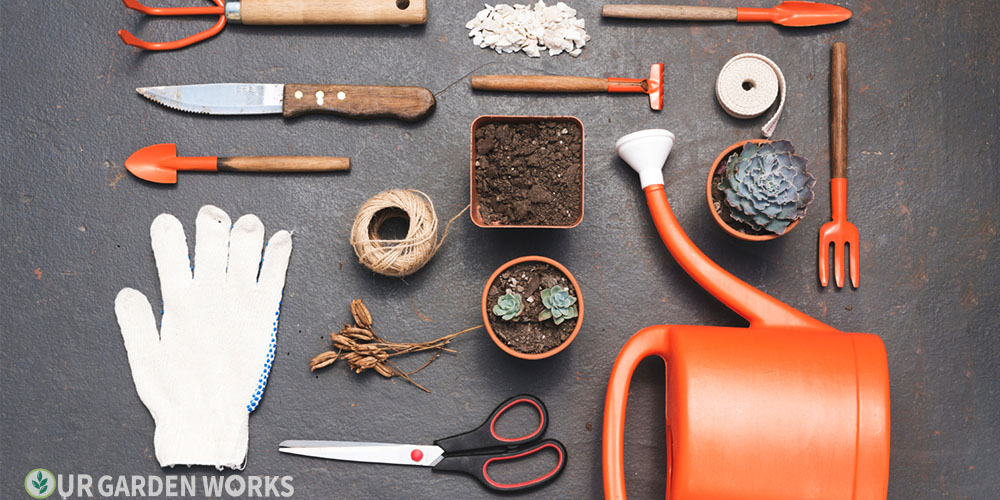
Walk into any garden center and you’ll be hit with an overwhelming wall of tools. Dozens of gadgets, each claiming to be “essential.” Fancy ergonomic handles, multi-tools that do seventeen things, and specialized implements you can’t even identify.
I’ve been there! In my first year of gardening, I spent $300 on tools that I thought I needed. Half of them are still sitting in my garage with the price tags on.
That expensive bulb planter? Used it once. The “revolutionary” three-pronged weeder? Sits gathering dust while I reach for my basic hand trowel every single time.
Here’s the truth: you need way fewer tools than garden stores want you to believe. A solid collection of 8-10 quality basics will handle 95% of your gardening tasks. The rest? Nice to have, but definitely not necessary when you’re starting out.
In this post, I’ll show you exactly which tools actually earn their spot in your shed.
I’ve included budget-friendly options alongside splurge-worthy upgrades, so you can build your collection at whatever pace works for your wallet.
No fluff, no fancy gadgets you’ll use once – just the tools that’ll become extensions of your hands as you grow your garden.
Let’s get you set up with everything you need – without spending a fortune.
| Must-Have Tools (Buy First) | Purpose | Price |
|---|---|---|
| (Click on each item to view our top picks) | ||
| 🧤 Garden Gloves | Protection and grip | $$ |
| 🔧 Hand Trowel | Planting and transplanting | $ – $$ |
| 🔨 Garden Spade | Digging and edging | $$ |
| 🍴 Garden Fork | Soil aeration and turning compost | $$ |
| ✂️ Pruning Shears | Trimming and deadheading | $$ |
| 💧 Garden Hose with Nozzle | Efficient watering | $$ |
| 🚰 Watering Can | Precision watering | $$ |
| 🔱 Garden Rake | Soil leveling and debris removal | $$ |
| Highly Recommended (Add Next) | ||
| ⚒️ Hoe | Weeding and soil cultivation | $$ |
| 🛒 Wheelbarrow or Garden Cart | Moving materials | $$ – $$$ |
| 🧎 Kneeling Pad | Comfort and joint protection | $$ |
| 🌱 Hand Cultivator | Loosening soil | $$ |
| ✂️ Garden Scissors | Harvesting and fine cutting | $$ |
| Nice to Have (When Budget Allows) | ||
| 🗡️ Soil Knife (Hori Hori) | Multi-purpose tool | $$ |
| 🚿 Watering Wand | Extended reach | $$ |
Total Investment:
- Essentials only: $150-300
- Complete collection: $300-600
Tool Categories Overview
Garden tools fall into five main categories, and understanding when you’ll need each type helps you prioritize your purchases strategically.
(1) Hand tools are your everyday workhorses. These include trowels, cultivators, and weeders—anything small enough to use while kneeling or sitting.
You’ll reach for these constantly for planting, weeding, and detailed work around established plants. If you’re just starting out, invest here first.
(2) Digging tools handle the heavy lifting. Spades, forks, and hoes break new ground, turn soil, and prepare beds.
You’ll use these intensively during setup and spring preparation, then occasionally throughout the season.
Quality matters here because cheap versions bend or break under pressure, and that’s infuriating when you’re mid-project.
(3) Watering tools keep your plants alive—pretty important! Hoses, nozzles, watering cans, and wands each serve different purposes.
You’ll use these multiple times per week (or daily during hot spells), so comfort and functionality matter more than you’d think.
(4) Cutting tools include pruners, scissors, and shears for trimming, harvesting, and maintaining plant health.
Sharp, quality cutting tools make clean cuts that heal quickly, while dull ones crush stems and invite disease. This is one category where upgrading to better quality pays immediate dividends.
(5) Support tools like wheelbarrows, kneeling pads, and carts make gardening easier on your body.
Beginners often skip these, then wonder why they’re sore after an hour of gardening! Your future back and knees will thank you for investing in these sooner rather than later.
The sweet spot? Start with 2-3 quality tools from each category, then add specialized items as you discover what your specific garden actually needs.
The 15 Essential Garden Tools
1. Garden Gloves – Your First Line of Defense
Let’s start with the absolute basics: protecting your hands.
Garden gloves save you from blisters, thorns, splinters, and countless cuts. Plus, they keep your hands from turning into dried-out, dirt-stained messes.
What to look for: You want gloves that fit snugly without being tight—baggy gloves are clumsy and dangerous around sharp tools.
Look for reinforced fingertips and palms, since that’s where wear happens first. Breathable materials like leather or synthetic leather blends work better than rubber, which gets sweaty fast.
My top picks:
- Budget: Atlas Nitrile Garden Gloves – Great grip, machine washable, come in multiple sizes
- Mid-range: Digz Gardener High Performance Gloves – Excellent dexterity, touchscreen compatible fingertips
- Splurge: WomensWork Stretch Gardening Gloves – Superior fit, extremely durable, worth it if you garden daily
Common mistake to avoid: Don’t buy one-size-fits-all gloves! Ill-fitting gloves cause blisters and reduce your grip strength. Measure your hand and buy the right size—most brands offer detailed sizing charts.
Maintenance: Rinse off obvious dirt after each use, then machine wash monthly or when they get stiff.
Let them air dry completely before storing to prevent mildew. Replace them when you see holes forming—compromised gloves are worse than no gloves.
Pro tip: Keep two pairs! One for dirty jobs like handling compost or pulling weeds, and one “clean” pair for delicate work like transplanting seedlings or harvesting vegetables.
2. Hand Trowel – Your Most-Used Tool
If I could only keep one tool, this would be it.
A hand trowel does everything: digs planting holes, transplants seedlings, mixes amendments, breaks up clumped soil, and even serves as an emergency weeding tool. You’ll use it every single time you garden.
What to look for: Weight matters! Too light and it feels flimsy, too heavy and your wrist fatigues quickly. Look for a one-piece forged design or a very solid connection between blade and handle. The blade should be slightly cupped and pointed, not flat. An engraved depth guide on the blade helps with consistent planting.
My top picks:
- Budget: Fiskars Ergo Trowel – Surprisingly durable for the price, comfortable grip
- Mid-range: Corona ComfortGEL Trowel – Excellent balance, cushioned handle reduces hand fatigue
- Splurge: DeWit Forged Hand Trowel – Lifetime quality, razor-sharp edge, virtually indestructible
Common mistake to avoid: Buying super-wide trowels marketed as “scoops.” They’re awkward for most tasks. A standard 2-3 inch blade width handles everything better.
Maintenance: Wipe clean after each use and occasionally rub the blade with an oiled rag to prevent rust. Sharpen the edges once or twice a season with a file—a sharp trowel makes gardening so much easier!
Pro tip: Paint the handle a bright color (I use neon orange) so you can spot it when you inevitably set it down somewhere in the garden and forget where.
3. Garden Spade – For Digging and Edging
A garden spade (different from a shovel—more on that in a second) is your go-to for digging, edging beds, slicing through roots, and moving soil.
The flat blade and sharp edge make it way more versatile than a rounded shovel for most garden tasks.
What to look for: A spade has a flat, rectangular blade—if it’s curved, that’s a shovel. Look for a D-handle or T-handle rather than a straight shaft, which gives you better leverage.
Stainless steel blades cost more but never rust and slide through soil like butter. The blade should be sharply beveled on both edges for easy cutting.
My top picks:
- Budget: Fiskars Steel D-Handle Square Garden Spade – Great value, tough enough for most home gardens
- Mid-range: Radius Garden Root Slayer Spade – Unique root-cutting design, O-handle is easy on wrists
- Splurge: VNIMTI Spade Shovel for Digging – Lifetime investment, effortless to use, stays sharp forever
Common mistake to avoid: Don’t buy a spade with a wooden handle unless you’re committed to maintaining it. Fiberglass handles are stronger and require zero upkeep.
Maintenance: Clean soil off after each use and hang it up rather than leaving it on the ground (where you’ll trip over it—ask me how I know). If the blade gets dull, sharpen it with a file at a 45-degree angle.
Pro tip: Keep a spare spade blade in your garage. Blades are replaceable on most quality spades, and having a backup means one broken tool doesn’t derail your whole project.
4. Garden Fork – The Soil Conditioning Powerhouse
A garden fork breaks up compacted soil, turns compost, aerates beds, lifts root vegetables without damaging them, and breaks up sod chunks.
It’s gentler on soil structure than a spade and works in clay soil that would clog up other tools.
What to look for: Four flat or slightly curved tines, not round ones (that’s a pitchfork for moving hay). Forged steel tines are vastly superior to welded, which can snap off under pressure. Look for tines at least 10 inches long for good soil penetration.
My top picks:
- Budget: True Temper D-Handle Garden Fork – Solid construction, good for average soil
- Mid-range: Radius Garden Ergonomic Digging Fork – Bent shaft design reduces back strain significantly
- Splurge: Spear & Jackson Neverbend Professional Digging Fork – Hand-forged, absolutely bomb-proof, will outlive you
Common mistake to avoid: Don’t use your garden fork to pry up rocks or tree roots. That’s a great way to bend tines. Use a digging bar or crowbar for those jobs.
Maintenance: Hose off after use, especially if you’ve been in clay soil. Oil the tines monthly if you want them to last decades. Check the connection between tines and handle periodically—tighten or replace as needed.
Pro tip: Use a stepping motion rather than jumping on the fork. Put one foot on the top of the tine, rock your weight onto it, then use the handle as a lever. Way less exhausting!
5. Pruning Shears – For Healthy Cuts
Also called secateurs or hand pruners, these are essential for trimming plants, deadheading flowers, harvesting vegetables with thick stems, and maintaining plant health. Sharp, clean cuts heal quickly and resist disease—ragged tears from dull tools invite problems.
What to look for: Bypass pruners (where blades pass by each other like scissors) are what you want for live plants. Anvil pruners (one blade closes onto a flat surface) crush stems and should only be used on dead wood.
Look for pruners that fit your hand size—most come in small, medium, and large.
My top picks:
- Budget: Fiskars Steel Bypass Pruning Shears – Comfortable, sharp out of the box, great for most gardeners
- Mid-range: Felco F-2 Classic Pruner – The gold standard, all parts replaceable, lasts for decades
- Splurge: ARS VS-8Z Signature Heavy Duty Pruner– Japanese precision, incredibly sharp, cuts up to 1-inch branches
Common mistake to avoid: Don’t use pruners on branches thicker than the manufacturer recommends (usually 3/4 inch). This dulls the blade and can damage the tool. Use loppers for bigger branches.
Maintenance: Wipe blades clean after each use, especially after cutting diseased plants. Sharpen with a whetstone or file every few months—the cutting blade only, never the anvil blade. Oil the pivot point occasionally to keep action smooth.
Pro tip: Keep a small bottle of rubbing alcohol in your pocket. Wipe blades with it between plants to avoid spreading diseases. This simple habit prevents countless plant health problems!
6. Garden Hose with Spray Nozzle – Efficient Watering System
A quality hose and adjustable nozzle make watering efficient, comfortable, and way less time-consuming than hauling watering cans back and forth.
You’ll use this almost daily during growing season, so don’t cheap out too much here.
What to look for: Hose length depends on your space—measure from spigot to furthest garden corner and add 10 feet. Rubber or hybrid hoses last longer than vinyl but cost more.
Look for solid brass fittings, not plastic that cracks after one season. For nozzles, get one with at least 7 spray patterns including shower, jet, and mist.
My top picks:
- Budget: Flexzilla Garden Hose 50ft + Gilmour Metal Nozzle – Great value, kink-resistant, comfortable to handle
- Mid-range: Craftsman Premium Rubber Hose 50ft + Dramm One Touch Nozzle – Extremely durable, easy shut-off control
- Splurge: Zero-G Lightweight Hose 50ft + Bon-Aire Ultimate Nozzle – Easiest to maneuver, professional-grade nozzle
Further Reading: 10 Best Flexible Garden Hoses for Your Home (Reviews in 2026)
Common mistake to avoid: Don’t leave your hose connected and pressurized 24/7. This reduces lifespan dramatically. Turn off water at the spigot when not in use and drain the hose at season’s end.
Maintenance: Store hoses coiled or on a hose reel, never kinked on the ground. Drain completely before winter and store indoors in freezing climates. Replace washers when connections start leaking—this simple 50-cent fix saves gallons of water.
Pro tip: Buy a hose splitter (around $15) so you can keep a sprinkler and your regular hose nozzle both connected. No more unscrewing and switching attachments constantly!
7. Watering Can – Precision Watering Control
Even with a hose, you need a watering can for seedlings, containers, and plants that need gentle, targeted watering. Hoses can blast tender seedlings out of the soil, but a watering can delivers moisture exactly where you want it.
What to look for: Capacity between 1-2 gallons strikes the right balance—large enough to avoid constant refills but not so heavy you can’t lift it when full.
A long spout reaches into containers without spilling. A detachable rose (the sprinkler head) gives you options for gentle vs. direct watering.
My top picks:
- Budget: Bloem Deluxe Watering Can 2.5 gallon – Lightweight plastic, comfortable handle, good spout reach
- Mid-range: Behrens Steel Watering Can 2 gallon – Classic galvanized steel, extremely durable
- Splurge: Megawodar 1 Gallon Metal Watering Can – Perfect balance, superior spout control, brass rose
Common mistake to avoid: Don’t buy one of those decorative watering cans with tiny spouts. They take forever to empty and the short spouts force you into awkward positions.
Maintenance: Empty completely after each use to prevent algae growth. Clean the rose periodically by soaking in vinegar to remove mineral deposits. Store indoors during winter if you have a metal can to prevent rust.
Pro tip: Fill your watering can in the morning and let it sit in the sun all day. Room-temperature water is less shocking to plant roots than ice-cold hose water, and chlorine evaporates during that time, too.
8. Garden Rake – Leveling and Cleanup Champion
A bow rake (also called a garden rake) levels soil, breaks up clumps, removes rocks and debris, spreads mulch, and creates smooth seedbeds. This is completely different from a leaf rake—don’t confuse them!
What to look for: Sturdy steel tines that won’t bend, welded or forged to a solid head. Fourteen to sixteen tines is standard and handles most tasks well.
The head should be securely attached to the handle—check this connection in the store by giving it a firm tug.
My top picks:
- Budget: Bully Tools Bow Rake 16-tine – American-made, solid construction, limited lifetime warranty
- Mid-range: True Temper Forged Bow Rake – Forged head is virtually indestructible
- Splurge: Ames Floral Tools Level Head Rake – Self-leveling head makes soil prep effortless
Common mistake to avoid: Don’t use your garden rake for heavy, wet clay. The tines will bend. Let clay dry slightly first, or use a fork to break it up before raking.
Maintenance: Knock off clumped soil after each use. Hang by the head rather than leaning on tines, which can bend them over time. Check the head connection annually and tighten or replace as needed.
Pro tip: Flip your rake upside down (tines pointing up) and drag the flat back across prepared beds for a perfectly smooth finish. This is the secret to professional-looking seedbeds!
9. Hoe – The Weeding Workhorse
A hoe slices through weeds at soil level, creates planting furrows, mounds soil around plants, and cultivates between rows.
There are dozens of hoe styles, but a simple stirrup hoe (also called a scuffle hoe) is most versatile for beginners.
What to look for: Stirrup hoes cut on both push and pull strokes, doubling your efficiency. The blade should be sharp and replaceable.
Look for a handle long enough that you can stand upright while using it—this saves your back tremendously.
My top picks:
- Budget: Walensee Adjustable Action Hoe (36-66″) – Slices through soil like nothing, adjustable head angle
- Mid-range: True Temper Action Hoe – Classic design, does the job reliably
- Splurge: Rogue Garden Hoe – Hand-forged, wickedly sharp, comfortable handle length
Common mistake to avoid: Don’t hack at weeds with a chopping motion. Keep the blade flat and parallel to soil surface, using a pushing or pulling skimming motion. This cuts weeds off cleanly at the roots.
Maintenance: Sharpen before each season with a file, maintaining the original bevel angle. Remove rust with steel wool and coat with oil if storing for winter. Keep the connection between blade and handle tight.
Pro tip: Hoe when the soil surface is dry and weeds are small (less than 2 inches). They’ll shrivel up and die on the soil surface. Hoeing wet soil just moves mud around and actually helps some weeds re-root!
10. Wheelbarrow or Garden Cart – Save Your Back
Once you start moving soil, compost, mulch, or plants around, you’ll wonder how you ever managed without a wheelbarrow. This tool saves countless trips and prevents back injuries from lifting heavy loads.
What to look for: Single-wheel wheelbarrows are more maneuverable but require good balance.
Two-wheel carts are more stable and easier to load/unload. Steel tubs last longer than plastic but are heavier.
Look for pneumatic (air-filled) tires, not solid rubber—they roll more smoothly over rough ground.
My top picks:
- Budget: True Temper Poly Wheelbarrow 6 cubic ft – Lightweight, rust-proof, good for average use
- Mid-range: Jackson M6T22 Contractor Wheelbarrow – Heavy-duty steel, handles serious loads
- Splurge: Gorilla Carts GOR6PS Dump Cart – Two wheels for stability, dumps for easy unloading, 1,200 lb capacity
Common mistake to avoid: Don’t overload it! A wheelbarrow is about leverage and balance, not maximum capacity. Fill it 2/3 full for easier control and less strain on your body and the wheelbarrow itself.
Maintenance: Keep tires properly inflated for easier rolling. Dump any standing water after rain to prevent rust. Tighten wheel bolts annually—loose wheels make pushing exponentially harder.
Pro tip: When loading heavy items like bags of soil, put them directly over the wheel rather than toward the back. This dramatically reduces the lifting weight on your arms and makes steering much easier.
11. Kneeling Pad – Protect Your Joints
Gardening requires a lot of kneeling and crouching.
A good kneeling pad protects your knees from rocks, prevents soil moisture from soaking through your pants, and provides cushioning that lets you work comfortably for longer periods.
What to look for: At least 1-inch thick foam—thinner pads compress too quickly and become useless. Water-resistant material that wipes clean easily. Large enough that you can shift your knees without sliding off. Some models fold into kneeling benches with handles that help you stand up—genius for anyone with knee issues.
My top picks:
- Budget: Fiskars Garden Kneeling Pad – Simple, effective, 3/4-inch thick foam
- Alternative Budget Option: Garden Kneeler Seat by Ohuhu – Premium cushioning, converts to low stool, includes tool pouch
Common mistake to avoid: Don’t buy super-thick gel pads that seem great in the store. They’re too squishy for stability when you’re planting or weeding. Firm foam works better for actual garden tasks.
Maintenance: Hose off after muddy days and let air dry. Store flat, not folded, to maintain cushioning integrity. Replace when foam compresses and no longer springs back.
Pro tip: Get one with a bright color so you can easily spot it when you inevitably leave it somewhere in the garden. I’ve lost more black kneeling pads to the compost pile than I care to admit!
12. Hand Cultivator – Soil Loosening Specialist
A hand cultivator (looks like a miniature claw) loosens compacted soil, works amendments into the top few inches, removes small weeds, and aerates around established plants without disturbing roots. It’s like a tiny, more precise version of a hoe.
What to look for: Three curved tines are standard and most versatile. Forged steel tines resist bending. The grip should be comfortable in your hand for extended use. Some have removable center tines that convert them into two-tine weeders—nice versatility.
My top picks:
- Budget: Gardener’s Supply Company 3-Tine Cultivator – Simple, effective, comfortable grip
- Mid-range: Nisaku Hori Hori Cultivator – Japanese design, ultra-sharp tines, multi-purpose
- Splurge: DeWit Hand Cultivator – Forged steel, supremely durable, perfect weight and balance
Common mistake to avoid: Don’t use a cultivator for heavy soil breaking. It’s for top 2-3 inches only. Use a fork or hoe for deeper work, or you’ll just bend the tines.
Maintenance: Clean soil out from between tines after each use (a strong spray from your hose works great). Wipe with an oiled rag occasionally to prevent rust. Sharpen tine tips once a season for easier soil penetration.
Pro tip: Use your hand cultivator to work granular fertilizer into the soil around established plants. The tines distribute it evenly and mix it in without damaging roots—way better than just sprinkling it on top!
13. Garden Scissors – Harvesting Precision
Garden scissors (not the same as pruning shears) handle delicate tasks like harvesting herbs, cutting twine, deadheading flowers, and snipping vegetables with precision. The smaller size gives you better control for detailed work.
What to look for: Stainless steel blades resist rust and plant sap buildup. Spring-loaded handles reduce hand fatigue. Pointed tips reach into tight spots. Some models include a serrated edge on one blade for gripping slippery stems—surprisingly useful!
My top picks:
- Budget: Fiskars Micro-Tip Pruning Snips – Sharp, comfortable, excellent control
- Mid-range: Okatsune Precision Pruning Shears – Japanese steel stays sharp forever
- Splurge: ARS V-Series Professional Shears – Premium craftsmanship, incredibly smooth action
Common mistake to avoid: Don’t use your kitchen scissors in the garden! Soil and plant matter will ruin them fast. And don’t use garden scissors in the kitchen—they’re not food-safe once used on plants.
Maintenance: Wipe clean after each use, especially after cutting herbs or flowers with sticky sap. Occasionally, wipe blades with rubbing alcohol to sterilize. Tighten the center screw if action becomes loose. Sharpen annually.
Pro tip: Keep a small pair of scissors in your pocket whenever you’re in the garden. You’ll find yourself using them constantly for quick snips—removing damaged leaves, harvesting a few herbs, cutting plant ties—way more convenient than running to get your pruners!
14. Soil Knife (Hori Hori) – The Multi-Tool Wonder
A soil knife, traditionally called a hori hori in Japanese, is like a trowel, knife, saw, and weeder combined into one genius tool.
Once you own one, you’ll find yourself reaching for it constantly. It digs, cuts, saws through roots, divides perennials, measures planting depth, and opens bags of soil.
What to look for: A 7-8 inch stainless steel blade that’s sharp on both edges, with a serrated edge on one side. Depth markings engraved on the blade help with consistent planting. A sturdy sheath protects the sharp blade when not in use. Leather or rubber grips prevent blisters during extended use.
My top picks:
- Budget: Classic Hori Hori Garden Knife – Solid construction, includes sheath, good value
- Mid-range: Nisaku Hori-Hori Weeding & Digging Knife – Traditional Japanese design, incredibly versatile
- Splurge: Barebones Living Hori Hori Garden Knife – Beautiful walnut handle, premium steel, lifetime quality
Common mistake to avoid: Don’t use your hori hori as a pry bar for rocks or roots. The blade can snap. Use the right tool (digging bar or fork) for leverage tasks.
Maintenance: Clean and dry thoroughly after each use since the blade stays sharp and can rust. Oil the blade regularly. Keep the sheath clean so it doesn’t trap moisture against the blade. Sharpen both edges and the point as needed.
Pro tip: Use the serrated edge to saw through stubborn roots when transplanting or dividing perennials. The saw teeth grip and cut where smooth blades would just slip. This makes tough tasks so much easier!
15. Watering Wand – Extended Reach Comfort
A watering wand attaches to your hose and extends your reach by 2-3 feet, making it easier to water hanging baskets, reach the back of deep beds, and water at soil level without bending over constantly. The shower-head attachment delivers gentle rain-like water that won’t damage plants.
What to look for: At least 16 inches long for meaningful reach extension. An on/off valve at the handle so you don’t have to walk back to the spigot constantly.
A soft shower pattern that mimics rainfall. Adjustable flow control lets you switch from gentle mist to stronger spray. Lightweight aluminum construction won’t fatigue your arms.
My top picks:
- Budget: Gardena Comfort Watering Wand – Good length, reliable shutoff, comfortable grip
- Mid-range: Dramm One Touch Rain Wand – Insulated grip, excellent spray pattern, very durable
- Splurge: Bon-Aire Ultimate Watering Wand – Professional grade, feather-light, lasts forever
Common mistake to avoid: Don’t buy super-long wands (30+ inches) thinking longer is better. They’re awkward to control and create too much leverage strain on your wrist. Stick with 16-24 inches for best maneuverability.
Maintenance: Drain completely after each use by holding upside down so water doesn’t sit in the wand body. Check the connection to your hose periodically and replace washers when it starts leaking. Store hanging up, not lying on the ground.
Pro tip: Use your watering wand for more than just watering! It’s perfect for gently washing off aphids and spider mites from plants, rinsing muddy vegetables before bringing them inside, and even cleaning garden tools. The soft spray pattern is surprisingly versatile!
Building Your Tool Collection Strategically
Now that you’ve seen all 15 tools, let’s talk about how to actually build your collection without emptying your bank account or cluttering your garage with stuff you don’t need yet.
Start with the Core Six
If you’re working with a tight budget, begin with these six tools that handle 80% of beginner gardening tasks:
- Garden gloves
- Hand trowel
- Pruning shears
- Garden hose with nozzle
- Watering can
- Garden rake
This core set costs roughly $100-150 and lets you start a basic garden successfully. You can plant, water, maintain, harvest, and clean up—everything else is honestly optional until you discover specific needs.
Add Tools Based on Your Garden Type
Container gardeners can skip the spade, fork, and wheelbarrow entirely. Add garden scissors and a watering wand instead—these make container maintenance way easier.
Vegetable gardeners should prioritize the hoe and hand cultivator next. You’ll be weeding and soil-working constantly, and these tools make those tasks dramatically easier.
Flower gardeners benefit most from quality pruning shears and garden scissors. Deadheading and maintaining ornamentals requires precise cuts, and cheap tools make this frustrating instead of enjoyable.
Large-space gardeners need the wheelbarrow or cart early on. Moving mulch, compost, and plants across big areas without one will burn you out fast.
Quality vs. Budget Considerations
Here’s where to splurge and where to save:
Invest in quality for:
- Pruning shears (you use them constantly, and sharp cuts matter for plant health)
- Hand trowel (your most-used tool deserves to be good)
- Garden gloves (cheap ones fall apart in weeks)
Save money on:
- Rakes and hoes (even budget versions work fine for years)
- Watering cans (plastic is perfectly functional)
- Kneeling pads (foam is foam—expensive doesn’t mean better)
The upgrade path strategy: Start with budget versions of tools you’re unsure about. If you find yourself reaching for that tool constantly and wishing it worked better, that’s when you upgrade to premium. But if you rarely use something? The cheap version is perfectly adequate!
Avoiding Common Tool-Buying Traps
(1) Tool sets sound like great deals but usually aren’t. Those 10-piece sets at big box stores often include tools you’ll never use (weird specialty items) and skip tools you actually need.
Plus, quality is usually mediocre across the board. You’re better off buying individual tools as you need them.
(2) Ergonomic claims are often marketing hype. Some ergonomic features genuinely help (like bent-shaft forks and ratcheting pruners), but many “revolutionary” designs are solutions to problems that don’t exist. Stick with tried-and-true tool designs unless you have specific physical limitations.
(3) Avoid cute decorative tools. Those adorable mini tools with painted designs? They’re garden decor, not functional tools. They’re too small to use effectively, made from flimsy materials, and fall apart quickly. Save your money!
(4) Be skeptical of multi-tools. That tool that claims to be a trowel, weeder, hoe, and bottle opener sounds amazing until you realize it does all four jobs poorly. Specialized tools exist because they work better. One exception: the hori hori soil knife actually lives up to its multi-tool claims.
Storage Solutions That Actually Work
Good tools deserve good storage—it extends their life and makes gardening more enjoyable when you’re not hunting for misplaced equipment.
(1) Hang everything you can. Wall-mounted tool racks keep tools off the floor, visible, and organized. Pegboards with heavy-duty hooks work great and let you customize spacing. This also prevents tool handles from warping from sitting in damp spots.
(2) Create a tool-cleaning station. Keep a bucket of sand mixed with mineral oil near your storage area. Plunge tools into it a few times after each use—the sand scrubs off soil while the oil prevents rust. This five-second habit extends tool life by years!
(3) Protect cutting tools. Store pruners and scissors with blade guards on. Keep them separate from other tools so blades don’t get dinged. A small toolbox or drawer just for cutting tools prevents damage and keeps them sharp.
(4) Group tools by task. Keep planting tools together, cutting tools together, and maintenance tools together. This makes grabbing what you need faster and helps you remember to put things back in the right spot.
Tool Maintenance Essentials
Proper tool maintenance sounds boring, but it takes maybe 10 minutes per month and saves you hundreds of dollars in replacement costs.
Here’s what actually matters:
Basic Cleaning After Each Use
The single best maintenance habit?
Clean your tools before putting them away. Soil contains moisture and minerals that cause rust and corrosion. Knock off obvious clumps, then wipe metal parts with a rag.
For stubborn soil on shovels and spades, use a putty knife or old screwdriver to scrape it off. A quick spray with the hose works too, just make sure to dry tools afterward—don’t leave them wet in your shed!
Cutting tools require extra attention. Wipe pruner blades with rubbing alcohol after each use, especially if you’ve cut diseased plants.
This prevents spreading pathogens to healthy plants next time you use them. Tree sap builds up on blades over time—remove it with rubbing alcohol or WD-40.
Seasonal Deep Maintenance
At the end of each growing season (or start of the next), give your tools serious attention:
(1) Sharpening: Dull tools make gardening harder and can damage plants. Sharpen spades, hoes, and pruners with a metal file or sharpening stone.
Always maintain the original bevel angle—usually around 45 degrees for digging tools and 20-30 degrees for cutting tools. It takes 5-10 minutes per tool and makes them feel brand new.
(2) Rust removal: Scrub rusty spots with steel wool or a wire brush, then coat with oil.
For heavy rust, soak tools in white vinegar overnight, scrub, rinse, and oil immediately. Prevent future rust by wiping tools with an oiled rag before storing for winter.
Further Reading: How To Remove Rust From Garden Tools
(3) Handle care: Wooden handles dry out and crack without care. Sand them lightly to remove splinters, then rub in linseed oil or handle treatment.
This keeps wood from splitting and makes grips more comfortable. Fiberglass and metal handles just need occasional cleaning—way less maintenance!
(4) Connection points: Check where handles connect to tool heads. Tighten loose bolts and screws. Replace any cracked or splintered handles before they break mid-use (way more annoying than preventative replacement!).
Winter Storage Best Practices
If you live in a freezing climate, proper winter storage prevents spring surprises:
- Drain all hoses completely and store indoors or in a heated garage
- Hang tools rather than leaving them on concrete floors where moisture collects
- Coat metal parts with a light oil film to prevent rust
- Empty and clean watering cans so water doesn’t freeze and crack them
- Store cutting tools with blades closed or guards on
- Keep tools in a dry location—dampness is the enemy
Pro tip: Before putting tools away for winter, take photos of your organized storage setup. Next spring, when you’re pulling everything out for a project, you’ll know exactly how it should go back!
Frequently Asked Questions about Beginner Gardening Tools
How much should I spend on starter tools?
Plan on $150-300 for a solid beginner collection. This gets you the essential eight tools in decent quality that’ll last for years. You can start with less ($100 for the absolute basics), but cheap tools that break or don’t work well will frustrate you and potentially cost more in replacements.
Think of it this way: $200 in quality tools lasts 10+ years, working out to $20/year. Buying cheap tools that need replacing every 2-3 years actually costs more long-term, plus the aggravation of broken tools mid-project!
If budget is really tight, check garage sales, estate sales, and Facebook Marketplace. Quality vintage tools often work better than new budget options. Just inspect carefully for rust, cracks, and loose connections.
Are expensive tools worth it for beginners?
It depends on the tool! For items you’ll use constantly (hand trowel, pruning shears, gloves), yes—the upgrade is worth it. Premium versions work better, feel more comfortable, and last dramatically longer.
For specialty tools you’ll use occasionally, mid-range is fine. That $70 hori hori isn’t necessary when you’re starting out—a $25 version works great until you decide if you love it enough to upgrade.
The sweet spot for most beginners? Buy mid-range tools for your core collection. These offer solid quality and durability without the premium price tag. You can always upgrade individual tools later if you find yourself using them daily and wanting better performance.
Should I buy tools individually or as a set?
Individual tools almost always make more sense. Here’s why:
Tool sets include filler. That 10-piece set sounds great until you realize it includes a specialized weeder you’ll never use, a tiny trowel that’s too small for real work, and a “cultivator” that’s just a bent piece of metal on a stick.
Quality varies within sets. Manufacturers put one or two decent tools in the set alongside junk to hit a price point. You’re paying for low-quality items you don’t need.
You can’t choose specifications. Maybe you need a longer-handled rake or prefer bypass pruners over anvil style. Sets give you no choice—you get what they included.
One exception: If you find a set containing ONLY tools you actually need, all from a reputable brand, and the price genuinely beats buying individually—then okay. But read reviews first! Many “great deal” sets fall apart within a season.
How do I maintain my tools?
We covered this in detail above, but here’s the quick version:
After each use:
- Knock or rinse off soil
- Wipe cutting tools with alcohol
- Hang or store properly (not on the ground!)
Monthly:
- Wipe metal parts with an oiled rag
- Check for loose connections
- Remove any rust spots
Seasonally:
- Sharpen digging and cutting tools
- Deep clean everything
- Treat wooden handles with oil
- Tighten all connections
Annually:
- Replace worn parts (pruner blades, hose washers, etc.)
- Consider upgrading tools you use constantly if they’re wearing out
The key? Make cleaning tools part of your gardening routine, not a separate chore. Five minutes after each garden session prevents hours of maintenance work later.
What tools should I upgrade first?
Upgrade tools in this order based on usage and impact:
First upgrade: Pruning shears if you’re using them regularly. The difference between cheap and quality pruners is dramatic—sharper cuts, less hand fatigue, and they stay sharp way longer. If you garden even semi-seriously, upgrade these within your first year.
Second upgrade: Hand trowel because you use it constantly. A premium trowel is sharper, stronger, better balanced, and makes planting so much more enjoyable. The $30 upgrade pays for itself in reduced frustration alone.
Third upgrade: Garden gloves if yours are falling apart or uncomfortable. Your hands deserve protection that actually works! Quality gloves last 10x longer than cheap ones.
Fourth upgrade: Spade or fork, whichever you use more. Premium digging tools slide through soil like butter and never bend or break. If you’re expanding beds or doing heavy soil work, the upgrade is absolutely worth it.
Everything else? Upgrade when your current tool breaks or when you find yourself constantly wishing it worked better. No need to replace functional tools just to have fancier versions!
Final Thoughts
Starting with the right tools makes gardening dramatically more enjoyable and successful. But remember—the fancy tool collection doesn’t grow your garden. You do!
Start with the 8 must-have tools that form your core collection. These handle every essential task from planting to harvest.
Add the highly recommended tools as your garden grows and you discover what you actually need. Save the nice-to-have specialty items for later when you’ve got the basics dialed in.
Focus your budget on quality for tools you’ll use constantly—especially pruners, trowels, and gloves. These work better, last longer, and make gardening more pleasant. For everything else, mid-range options work great.
Take care of your tools with basic cleaning and maintenance, and they’ll serve you for decades. I’m still using the Felco pruners I bought 10 years ago, and they work as well as the day I got them. Quality plus care equals lifetime tools.
Ready to start building your garden tool collection?
Focus on getting those first eight essentials, then get out there and start growing! Your garden doesn’t care if you have every tool in the catalog—it just needs you to show up with the basics and put in the work.
What tools are you most excited to add to your collection? Drop a comment below and let me know what you’re shopping for first. And if you found this guide helpful, share it with anyone else who’s starting their gardening journey!
Now go and get your hands dirty!
For everything else you need to set up your first garden — soil, plant selection, spacing, and timing — our beginner gardening guide covers the full picture.
Related Articles:

one of my hobbies is spearfishing. and when i’m spearfishing this works great.