

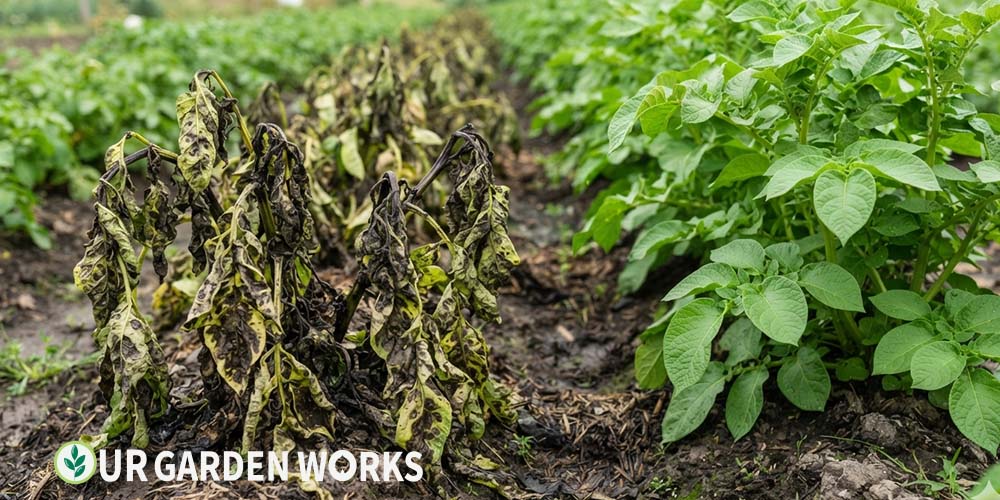
Potatoes are closely related to tomatoes, and as you might expect from that family connection, they share several of the same wilt-causing diseases covered in our tomato wilting guide — along with one disease, late blight, that’s specifically infamous in potato-growing history and deserves its own careful attention.
We’ll cover distinguishing simple drought stress from the more serious disease possibilities, since the response to each is completely different.
Quick Answer: Potato wilting from simple drought stress correlates directly with dry soil and resolves with watering. Wilting despite moist soil more often signals late blight (dark, water-soaked leaf lesions, especially in cool wet weather), bacterial wilt (rapid collapse, confirmed by a sticky ooze test), or fusarium/verticillium wilt (gradual, often one-sided, with vascular discoloration visible in a cut stem). Check soil moisture first, then look for lesions or test for ooze.
Ruling Out Simple Drought Stress First
Before considering any disease possibility, genuinely confirm soil moisture at root depth rather than just a surface glance, since potatoes have a fairly extensive root system and surface dryness doesn’t always reflect what’s happening several inches down where roots are actually drawing water.
How to confirm it’s simple drought stress:
- Soil is genuinely dry at root depth, not just the surface
- No spots, lesions, or unusual discoloration on leaves — just wilting
- Plant recovers within a day or so of adequate watering
Fix: Water deeply and consistently, particularly important during tuber development when potatoes have elevated water needs. Mulching helps maintain more even soil moisture between waterings.
Disease 1 — Late Blight (The Historically Significant One)
Late blight is the disease responsible for the Irish Potato Famine and remains one of the most serious potato diseases today, capable of destroying a crop remarkably quickly under favorable cool, wet conditions.
It produces dark, water-soaked-looking lesions on leaves and stems, often with a slight white, fuzzy growth visible on the underside of affected leaves in humid conditions.
How to confirm it’s late blight:
- Dark, irregular, water-soaked lesions on leaves and stems
- White fuzzy growth may be visible on leaf undersides, especially in humid morning conditions
- Spreads rapidly, especially in cool, wet weather
- Affected tissue may have a distinct, unpleasant odor as it breaks down
Fix: Remove and destroy affected plant material promptly — this disease spreads aggressively and can also affect stored tubers if spores reach them. A fungicide labeled for late blight, applied preventively in regions with known disease pressure, is far more effective than reactive treatment once an outbreak is already underway. Avoid overhead watering and ensure good airflow to reduce the humid conditions this disease favors.
⚠️ Late blight can spread to tubers in storage
Unlike many foliar diseases, late blight spores can wash down into the soil and infect developing tubers, and infected tubers can continue rotting in storage even after harvest. If late blight has affected your plants, inspect harvested tubers carefully before storing, and consider using affected-looking tubers promptly rather than attempting long-term storage.
Disease 2 — Bacterial Wilt
Similar to the bacterial wilt covered in our tomato and cucumber guides, this disease causes rapid wilting despite adequate soil moisture, confirmed using the same ooze test — cutting a wilted stem and checking for a sticky, stringy discharge from the cut surface.
Fix: No cure exists — remove and dispose of affected plants promptly to limit spread. Crop rotation, avoiding planting potatoes or other nightshades in the same soil for several years, reduces recurrence risk.
Disease 3 — Fusarium or Verticillium Wilt
These soil-borne fungal diseases produce more gradual wilting, often with a one-sided or asymmetric pattern, and cutting open a lower stem reveals brown discoloration in the vascular tissue just beneath the surface — the same diagnostic approach covered for tomatoes facing these closely related diseases.
Fix: No cure once infected — remove affected plants and rotate potato plantings to different soil for several years, since both fungi persist in soil long after the infected plant is removed.
Telling the Causes Apart at a Glance
| Cause | Soil Moisture | Key Confirming Sign | Speed |
|---|---|---|---|
| Drought stress | Dry | Recovers with watering | Resolves in a day |
| Late blight | Often adequate | Dark water-soaked lesions | Fast, especially in cool/wet weather |
| Bacterial wilt | Adequate | Sticky ooze test | Very fast (days) |
| Fusarium/verticillium | Adequate | Brown vascular discoloration in stem | Gradual |
Regional and Seasonal Patterns Worth Knowing
Late blight pressure varies considerably by region and season, generally favoring cool, humid climates and conditions over the hot, dry weather that suppresses this particular pathogen more effectively.
The Pacific Northwest, parts of the Northeast, and similar climates with cool, damp growing seasons historically face higher late blight pressure than hot, arid growing regions, where the disease struggles to establish and spread as readily.
Within a single growing season, late blight risk typically peaks during extended cool, wet stretches rather than during the hottest, driest parts of summer, making weather monitoring a genuinely useful tool for anticipating when preventive fungicide application matters most.
Bacterial wilt and the fungal wilts, by contrast, don’t show quite the same dramatic weather-driven seasonal pattern, tending to be more consistently present as ongoing risks throughout the growing season wherever the responsible pathogens are present in soil or transmitted by insect vectors, rather than spiking dramatically during specific weather windows the way late blight does.
Does Hilling Potatoes Provide Any Disease Protection?
Hilling — mounding soil up around potato stems as they grow, a standard practice primarily intended to support tuber development and prevent greening from sun exposure — also provides some secondary benefit against certain disease pressures, adding one more reason to maintain this practice consistently throughout the growing season.
Properly hilled plants have somewhat better drainage around the stem base and may show slightly reduced soil-splash transmission of some pathogens compared to plants grown without adequate hilling, where stems sit closer to bare, potentially pathogen-harboring soil surface.
This disease-protection benefit is secondary to hilling’s primary purposes and shouldn’t be relied upon as a standalone disease prevention strategy, but it’s a reasonable additional reason to maintain good hilling practice throughout the season rather than viewing it as solely relevant to tuber quality and sun protection.
Combined with the more direct prevention strategies — resistant varieties, certified disease-free seed, proper crop rotation, and weather-informed fungicide timing for late blight specifically — consistent hilling rounds out a comprehensive approach to keeping potato plantings healthy through a full growing season.
Why Potato Disease Management Leans Heavily on Prevention
Since none of the three diseases covered in this guide have an effective cure once established, and late blight specifically can devastate a crop within days under favorable conditions, potato growing has historically emphasized prevention and resistant variety selection more heavily than reactive treatment.
Choosing certified disease-free seed potatoes rather than saving tubers from a previous crop of uncertain disease history, practicing crop rotation away from nightshade family plantings, and selecting late blight-resistant varieties where available all address these risks proactively rather than hoping to successfully treat an active outbreak.
Frequently Asked Questions
Can I still eat potatoes from a plant affected by late blight?
Tubers that show no visible signs of rot or infection are generally safe to eat, but it’s worth inspecting harvested potatoes carefully and using any questionable-looking tubers promptly rather than attempting long-term storage, since late blight can continue progressing in storage even on tubers that looked fine at harvest. Discard any tubers showing soft, discolored, or foul-smelling areas.
Will potato diseases spread to my tomatoes growing nearby?
Yes, potentially — since potatoes and tomatoes are closely related nightshade family members, several diseases including late blight, bacterial wilt, and the fungal wilts covered in this guide can affect both crops.
If you’re growing both in the same garden, monitoring both for similar symptoms and considering separate growing areas for future seasons can help manage this shared disease risk.
How can I reduce late blight risk in a region known for this disease?
Choosing certified disease-free seed potatoes, selecting resistant varieties where available, avoiding overhead watering, ensuring good plant spacing for airflow, and applying preventive fungicide during historically high-risk weather windows (cool, wet stretches) all meaningfully reduce late blight risk in regions where this disease is a known recurring concern.
Many regional agricultural extension services also track and report current late blight activity, which can help time preventive treatment more precisely than general calendar-based timing alone.
Related Articles in Our Vegetable Growing Guide
Final Thoughts
We hope this guide has helped you tell apart simple drought stress from the more serious disease possibilities affecting your potatoes — catching late blight or bacterial wilt early genuinely matters given how fast both can spread.
For all our vegetable growing guides, our vegetable gardening guide links to everything.
Share this post with a fellow gardener who’s troubleshooting wilting potatoes — and let us know in the comments which cause matched what you found. Happy growing!
