

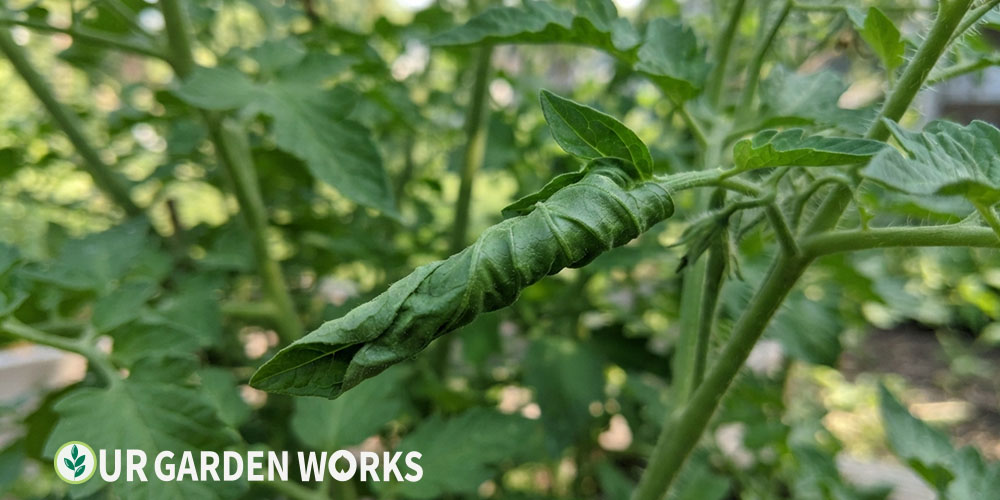
Tightly rolled tomato leaves look alarming — almost like the plant is in real distress — but in the majority of cases, this specific pattern is something called physiological leaf roll, a harmless stress response that doesn’t actually threaten the plant’s health or productivity. This is genuinely one of the more reassuring diagnoses in this whole series.
We’ll cover how to confirm this is the harmless version, and the less common alternative causes worth ruling out if the pattern doesn’t quite match.
Quick Answer: Tightly rolled tomato leaves are most often physiological leaf roll — a harmless response to heat, drought stress, or heavy pruning, where leaves curl tightly upward but stay healthy green and the plant continues growing and fruiting normally. Less commonly, viral disease (curling combined with mottling or stunting) or herbicide drift (curling combined with twisted, distorted growth) can cause similar symptoms but with additional red-flag signs.
Cause 1 — Physiological Leaf Roll (Most Common, Harmless)
Physiological leaf roll is the tomato plant’s own protective response to various stresses, most commonly heat and drought, sometimes triggered by heavy pruning or root damage as well.
Leaves roll tightly upward, sometimes into a near-tube shape, reducing the leaf surface exposed to intense sun and heat, which helps the plant conserve water during stressful conditions.
How to confirm it’s physiological leaf roll:
- Leaves remain healthy green in color despite the tight curling
- Lower, older leaves are typically affected first and most severely
- Plant continues growing and setting fruit relatively normally despite the leaf appearance
- Often follows a hot, dry stretch, recent heavy pruning, or root disturbance from nearby digging or transplanting
Fix: None strictly necessary, since this is a harmless adaptive response rather than damage. If the underlying trigger is drought stress, improving watering consistency can reduce the severity, though some degree of leaf roll during genuine heat waves is a normal, expected response even in well-cared-for plants.
💡 Fruit production is the real test of whether this matters
If your tomato plant is showing tightly rolled leaves but continues flowering and setting fruit at a reasonable rate, this is strong confirmation that you’re dealing with the harmless physiological version rather than anything seriously wrong. The leaf appearance looks more dramatic than its actual impact on the plant’s overall health and productivity.
Cause 2 — Viral Disease (Less Common, More Serious)
Certain viral infections, including some strains of curly top virus, can cause leaf curling that superficially resembles physiological leaf roll but comes with additional symptoms that distinguish it as a genuine disease concern rather than a harmless stress response.
How to confirm it’s viral rather than physiological:
- Curling is accompanied by yellowing, mottling, or a mosaic-like color pattern, not just tight rolling with normal green color
- Plant shows overall stunted growth disproportionate to what stress alone would explain
- New growth continues showing the same abnormal pattern rather than the plant simply curling existing leaves under stress
Fix: There’s no cure for viral infections — remove and dispose of confirmed infected plants to prevent spread to nearby tomatoes. See our mosaic virus guide for more on identifying and managing viral tomato diseases generally.
Cause 3 — Herbicide Drift
Accidental exposure to herbicide spray or vapor drifting from nearby lawn or garden treatment can cause distorted, twisted growth that sometimes includes leaf curling, though this typically comes with additional distortion in stems and overall growth pattern that goes beyond simple leaf rolling alone.
How to confirm it’s herbicide drift:
- Symptoms appeared suddenly, often within a day or two of a nearby herbicide application
- Distortion extends beyond just leaves to twisted stems or abnormal overall growth pattern
- Other nearby susceptible plants show similar sudden symptoms
Fix: No treatment reverses existing herbicide damage. Mildly affected plants sometimes grow out of the distortion in subsequent growth, while severely affected plants may not recover. Identifying and addressing the herbicide source prevents repeat exposure to other plants.
Telling the Three Causes Apart at a Glance
| Cause | Leaf Color | Other Symptoms | Fruit Production |
|---|---|---|---|
| Physiological leaf roll | Normal healthy green | None beyond curling | Continues normally |
| Viral disease | Mottled, yellowed | Stunting, mosaic pattern | Reduced or stopped |
| Herbicide drift | May show some discoloration | Twisted stems, sudden onset | Variable, often reduced |
Does Variety Affect How Readily Leaves Roll?
Some tomato varieties show physiological leaf roll more readily and more dramatically than others under the same environmental conditions, which is worth knowing if you’re growing multiple varieties side by side and noticing very different leaf appearances despite identical care.
Varieties with naturally larger, thinner leaves sometimes curl more visibly than those with smaller, more leathery foliage, simply due to differences in how each leaf type responds to the same heat and water-loss pressures.
This variety-level variation doesn’t indicate that one variety is healthier or better cared for than another — it’s simply a difference in how visibly each genetic type expresses what is fundamentally the same underlying stress response.
If you’ve grown a particular variety for several seasons and know it tends toward more dramatic leaf curling under heat stress, this prior experience is useful context for not overreacting when you see the same pattern repeat in a new season under similar conditions.
Why Container Tomatoes Show This More Often
Container-grown tomatoes experience physiological leaf roll more frequently than in-ground plants, for reasons that should sound familiar by now if you’ve read other guides in this series — container soil heats up and dries out faster than garden soil, intensifying the heat and water-stress triggers that cause this response in the first place.
A container tomato on a sunny patio during a hot stretch is almost a textbook setup for this harmless but visually dramatic leaf curling.
This is worth keeping in mind specifically so you don’t mistake a container tomato’s more frequent leaf rolling as a sign that something is uniquely wrong with that particular plant, when it’s really just a predictable consequence of the container growing environment’s inherent heat and moisture volatility compared to in-ground planting.
The same reassurance applies here as elsewhere in this guide — as long as the plant continues flowering and setting fruit at a reasonable rate, frequent leaf curling in a container tomato during hot weather is rarely something to actively worry about.
What Triggers Physiological Leaf Roll Specifically
Beyond simple heat and drought, a few less obvious triggers can produce this same harmless response, which is worth knowing if your plant is showing leaf roll without an obvious heat wave or watering lapse to explain it.
Heavy pruning — removing a significant portion of foliage in a single session, such as aggressive sucker removal on indeterminate varieties — can trigger leaf roll on remaining foliage as the plant adjusts to its sudden change in leaf surface area.
Root disturbance from nearby digging, transplanting, or even aggressive cultivation around the base of an established plant can similarly trigger this response, since the plant reacts to root stress in a way that parallels its response to water stress, even when soil moisture itself is perfectly adequate.
Recognizing these less obvious triggers helps you connect a seemingly unexplained leaf roll episode to a specific recent event in the garden, like a pruning session a few days prior, rather than assuming something more concerning is happening without any clear cause.
Frequently Asked Questions
Will physiological leaf roll go away on its own?
Often yes, especially if the triggering stress (heat, drought, recent pruning) resolves or the plant adjusts over time, with affected leaves sometimes relaxing back to a more normal shape, though some leaves may remain curled for the rest of their lifespan without this affecting their function.
New growth typically emerges without the curling once the underlying trigger has passed.
Should I remove leaves that are tightly curled from physiological leaf roll?
There’s no need to remove them, since curled leaves from this harmless cause continue functioning and contributing to the plant’s overall photosynthesis and energy production despite their unusual shape. Removing healthy, functioning leaf tissue purely for cosmetic reasons isn’t necessary and could very slightly reduce the plant’s overall energy production unnecessarily.
Can I prevent physiological leaf roll from happening at all?
Consistent watering reduces drought-triggered leaf roll specifically, and more gradual, less aggressive pruning practices reduce the pruning-triggered version, but some degree of leaf roll during genuine extreme heat is difficult to prevent entirely and isn’t necessarily worth aggressive intervention given how harmless the underlying response actually is.
Many experienced tomato growers simply accept occasional leaf roll during the hottest part of summer as a normal part of the growing season.
Related Articles in Our Tomato Growing Guide
Final Thoughts
We hope this guide has eased some concern about your tomato’s tightly rolled leaves — in most cases, this looks far more alarming than it actually is, and the plant continues growing and producing just fine.
For all our tomato and vegetable guides, our vegetable gardening guide links to everything.
Share this post with a fellow gardener who’s noticed rolled leaves on their tomato plants — and let us know in the comments which cause matched what you found. Happy growing!
