

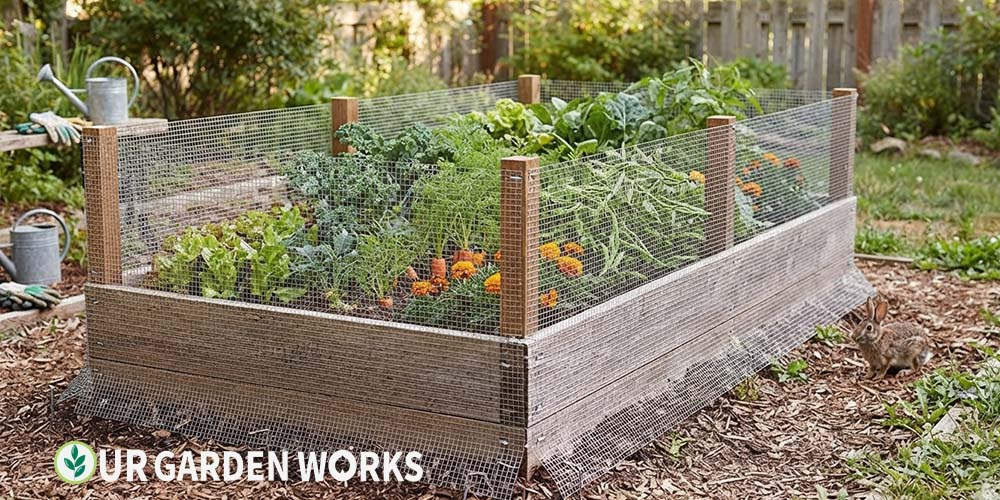
There’s a frustrating loop that every gardener with a rabbit problem goes through: find damage, buy a repellent, reapply repellent, find more damage, try a different repellent, give up and accept the losses. The loop breaks when you understand that different rabbit control methods work at very different effectiveness levels — and the most effective one (fencing) is the one most people try last.
This guide ranks 6 rabbit control methods by real-world effectiveness, covers exactly how to implement each one, and helps you choose the right combination for your garden’s size, layout, and rabbit pressure level.
Quick Answer: Hardware cloth fencing (1-inch mesh, 3 feet tall, buried 6 inches deep) is the single most effective rabbit deterrent — nothing else comes close for a whole garden. For individual plants or supplementary protection, combination of granular repellents + companion plantings of aromatic herbs provides meaningful deterrence. Motion-activated sprinklers work well for moderate pressure.
Method Rankings — Effectiveness Compared
| Method | Effectiveness | Cost | Effort | Best For |
|---|---|---|---|---|
| Hardware cloth fence | 🟢🟢🟢🟢🟢 Excellent | $$ | One-time high | Whole garden, long-term |
| Individual plant cages | 🟢🟢🟢🟢 Very Good | $–$$ | Per plant | High-value specific plants |
| Motion-activated sprinkler | 🟢🟢🟢 Good | $$ | Setup only | Moderate pressure areas |
| Commercial repellents | 🟡🟡🟡 Moderate | $–$$ recurring | Ongoing reapplication | Supplementary; small gardens |
| Companion plantings | 🟡🟡 Moderate | $ (plants) | Annual planting | Reduction, not elimination |
| Home remedies (soap, pepper) | 🟡 Low-Moderate | $ minimal | Frequent reapplication | Very light pressure only |
| Ultrasonic devices | 🔴 Unreliable | $$ | Low | Not recommended alone |
Method 1 — Hardware Cloth Fencing (The One That Actually Works)
No rabbit deterrent comes close to a properly installed hardware cloth fence for whole-garden protection. It’s a one-time installation that lasts 10–15 years and eliminates the ongoing cost and effort of repellents. If you have a serious rabbit problem, this is where to start — not as a last resort.
Materials
- 1-inch mesh hardware cloth (not chicken wire — gaps are too large)
- T-posts or wooden stakes, one every 6–8 feet
- Wire cutters
- Zip ties or fencing staples
- Shovel for burying the bottom edge
Installation
- Mark your fence perimeter. Leave enough space inside for comfortable working access.
- Drive T-posts or stakes every 6–8 feet around the perimeter, 6 inches inside where the fence will run.
- Unroll hardware cloth and attach to posts with zip ties or staples, keeping it taut.
- At the bottom, bend the hardware cloth outward (away from the garden) at a 90-degree angle and bury it 6 inches underground. This L-shape prevents rabbits from digging straight down and under.
- The fence should stand 3 feet above ground after burying. Rabbits rarely jump fences this height when other food is available.
- Install a gate that closes flush with no gap at the bottom — gates are the most common failure point.
💡 The buried L-flange is essential
Many gardeners install the fence upright but skip burying the bottom. Rabbits quickly discover they can dig under vertical fencing in 5–10 minutes.
The horizontal L-flange buried 6 inches out from the base means a rabbit digging at the fence base hits hardware cloth instead of soil. This single step is the difference between a fence that works and one that doesn’t.
Method 2 — Individual Plant Cages
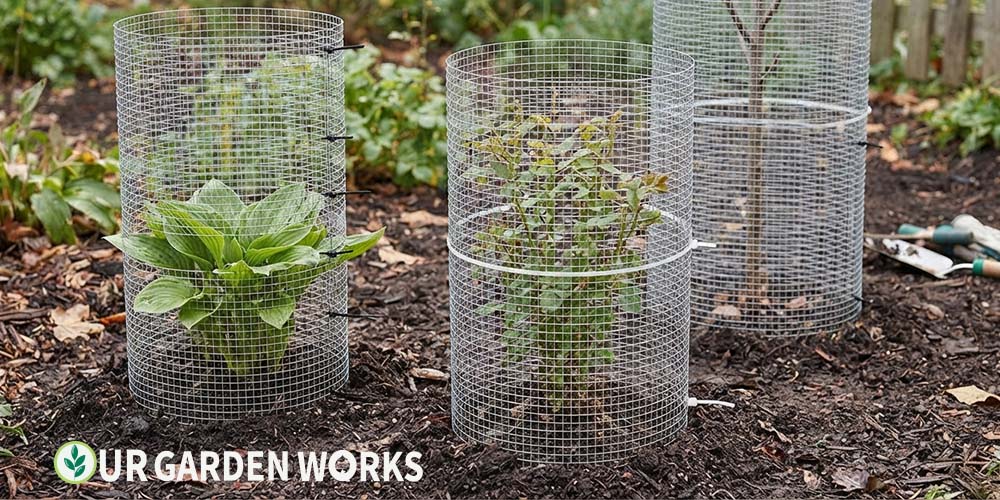
For high-value plants like roses, hostas, or newly transplanted vegetables, hardware cloth formed into cylinders around individual plants provides complete protection without fencing the whole garden.
- Cut hardware cloth into sections approximately 18–24 inches tall
- Form into cylinders 12–18 inches in diameter and secure with zip ties
- Push the bottom edge 3–4 inches into the soil
- For young trees at risk of winter bark damage, form cylinders around trunks and leave in place from November through April
Method 3 — Motion-Activated Sprinklers
Motion-activated sprinklers (Orbit Yard Enforcer and similar) work by triggering a burst of water when a rabbit (or any animal) enters the detection zone. The sudden spray startles rabbits and associates the garden with a negative experience.
Effectiveness limitations: Works best for moderate rabbit pressure. Rabbits that are very hungry or very established in an area may learn to tolerate the water. Vary the timing settings on the device if you notice rabbits becoming accustomed. Not effective in winter when sprinkler lines can freeze.
Coverage: One unit covers approximately 1,200 square feet. Multiple units may be needed for larger gardens.
Method 4 — Commercial Repellents
Repellents work by making plants smell or taste unpleasant to rabbits. They’re effective as supplementary deterrents but not as primary protection for a vegetable garden. Our best rabbit repellent guide reviews specific products — here’s the overview:
- Granular (blood meal, predator urine): Scatter around bed perimeters. Creates a scent barrier. Reapply every 2–3 weeks and after rain.
- Spray repellents (Liquid Fence, Bobbex-R): Applied directly to foliage and stems. Most effective on ornamentals. Reapply every 7–14 days and after rain.
- Rotate products: Rabbits can become habituated to the same repellent. Alternating between two different products maintains effectiveness.
Method 5 — Companion Planting as a Deterrent Border
Planting strongly aromatic herbs and rabbit-resistant plants at the perimeter of garden beds reduces rabbit interest in what’s inside. This isn’t a standalone solution but meaningfully reduces the frequency of rabbit visits when combined with repellents.
The most effective border plants:
- Lavender — the most reliable aromatic deterrent in the landscape
- Catmint — works in shade, where lavender won’t grow
- Wormwood (Artemisia) — extremely bitter and aromatic
- Ornamental alliums — sulfur compounds deter rabbits
- Russian sage — similar to lavender in effect, very drought-tolerant
For the full plant list with growing requirements, see our plants rabbits won’t eat guide.
Method 6 — Home Remedies
Home remedies have minimal effectiveness against established rabbit populations but can help deter scout rabbits from targeting a garden they haven’t committed to yet:
- Irish Spring soap shavings: Scatter around bed perimeters. Reapply weekly. Works for light rabbit pressure only.
- Hot pepper flakes/powder: Sprinkle around plants. Washes away quickly — reapply after every rain.
- Human hair: Place in mesh bags around the garden. Degrades quickly, requires very frequent replacement.
None of these are reliable for gardens with established rabbit populations or high pressure. Use as supplementary measures, not primary protection.
What Doesn’t Work
- Ultrasonic devices: Multiple independent studies show rabbits habituate quickly. Not worth the investment as a primary deterrent.
- Owl decoys: Rabbits learn within days that stationary decoys aren’t real predators. Occasional movement helps but they still habituate.
- Chicken wire: Gaps are large enough for rabbits to push through. Use hardware cloth instead.
- Any method alone without fencing for serious infestations: If you have consistent daily rabbit damage, no repellent or companion plant strategy will fully solve it. Fencing is necessary.
Frequently Asked Questions
How high can rabbits jump? Do I really need a 3-foot fence?
Wild rabbits can jump up to 3 feet but rarely attempt tall fences when food is available elsewhere.
A 2-foot fence may work for light rabbit pressure, but 3 feet is recommended for areas with established rabbit populations. In deep snow, rabbits can jump higher than their normal ground-level maximum because the snow raises their starting height — factor this in if you’re in a snowy climate.
Do I need to address the rabbit population itself, or just protect my garden?
For most home gardeners, protecting the garden is significantly more practical than trying to remove rabbits from the area. Live trapping and relocating works short-term but other rabbits fill the territory quickly. Exclusion fencing is the most sustainable long-term solution because it protects the garden regardless of how many rabbits are in the area.
The rabbits are coming through my existing fence — what do I do?
The most common entry points are: gaps at gates (even a 3-inch gap is enough), fence sections where hardware cloth has separated from posts, areas where the buried bottom has been exposed by erosion or animal digging, and corners where fencing sections meet imperfectly.
Walk the entire fence perimeter at ground level looking for gaps and repair them with additional hardware cloth and zip ties.
Part of Our Rabbit Garden Pest Guide
Final Thoughts
We hope this guide gives you a clear path from rabbit damage to a protected garden — because once the right barrier or combination of deterrents is in place, you stop losing plants and start enjoying the garden again.
Hardware cloth fencing is the highest one-time investment but the lowest ongoing effort, and it truly solves the problem.
For product recommendations on repellents and a complete plant list for companion planting, our best rabbit repellent guide and plants rabbits won’t eat guide have everything you need.
Share this with a fellow gardener who has been fighting rabbits for years and wants to finally solve it this season — and let us know in the comments what rabbit damage looks like in your garden this season. Happy growing!

If you start with hardware cloth that is 3′ tall (as you recommend) and then create an L and bury the bottom of the cloth 6″ in the ground (as you recommend) then the fence will only be 2′ 6″ high (not the 3′ you state).
You also state a rabbit can jump a 3′ fence, so a 2′ 6″ fence doesn’t seem to be much of a deterrent.
So unless I’m misunderstanding something I think you need to start with taller hardware cloth.
Thanks for catching that! You’re absolutely right.
If you start with 3-foot-tall hardware cloth and bury or bend about 6 inches at the bottom to create the L-shaped barrier, you’ll end up with only about 2½ feet above ground.
To maintain a full 3-foot fence above ground while also having a 6-inch buried/L-shaped section, you should start with hardware cloth that is at least 3½ feet tall. Going a little taller can provide even more protection in areas with persistent rabbits.
I appreciate you pointing this out. I’ll update the article to make the measurements clearer and avoid confusion for other readers. Thanks for taking the time to comment!