
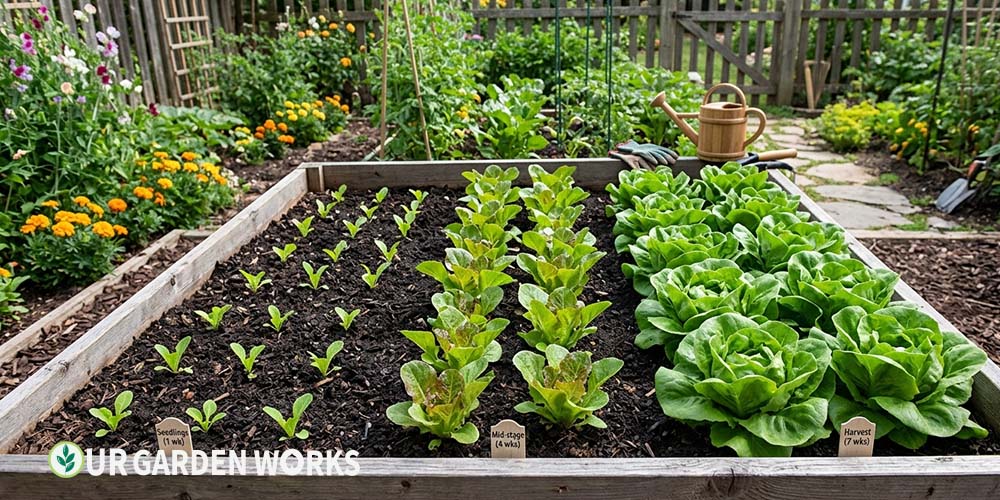
(Enter your crop, how often you want to harvest and your ZIP code. The scheduler generates a full sowing calendar with specific dates for each succession — so you always have something coming into harvest.)
The single planting mistake that causes the most frustration for home gardeners is sowing everything at once. One enormous harvest of lettuce in May, nothing in June. Thirty radishes ready on the same Tuesday. More zucchini in a single week than any family can eat.
Succession planting — sowing small amounts of the same crop at regular intervals — is the system that converts feast-or-famine harvests into a steady supply from spring through fall.
Editor’s Note: For most quick crops (radishes, lettuce, beans), sow a new small batch every 2–3 weeks through the growing season rather than all at once. For tomatoes and peppers, plant all at once (they have a long season) but choose varieties with different maturity dates — an early 65-day variety alongside an 85-day variety extends the harvest window automatically. The scheduler builds your specific sowing dates based on your frost dates and desired harvest frequency.
Which Crops Benefit Most From Succession Planting
| Crop | Succession Interval | Last Sowing Date | Notes |
|---|---|---|---|
| Radishes | Every 1–2 weeks | 4–5 weeks before first fall frost | Fastest succession crop — 25-day turnaround |
| Lettuce (leaf) | Every 2 weeks | 6–8 weeks before first fall frost | Also succession for fall; starts again in late July |
| Spinach | Every 2–3 weeks | 6–8 weeks before first fall frost | Spring and fall; avoid summer in hot climates |
| Arugula | Every 2 weeks | 4–6 weeks before first fall frost | Quick to bolt in heat; succession extends season |
| Bush beans | Every 3 weeks | 60 days before first fall frost | 3 successions from May to July = beans all summer |
| Cucumbers | One early, one 4–5 weeks later | 70 days before first fall frost | 2 successions is enough for most families |
| Carrots | Every 3–4 weeks | 10–12 weeks before first fall frost | Sow spring + summer; fall carrots are sweetest |
| Corn | Every 2 weeks (blocks) | 75 days before first fall frost | Must plant in blocks for pollination — at least 4 rows each sowing |
| Peas | One spring sowing only | Late winter/early spring as soon as soil works | Too heat-sensitive to succession; plant all at once early |
For exact planting dates by crop and zone, our seed starting calculator and planting calendar give the specific anchor dates. The succession scheduler builds from those same dates — so your first sowing date feeds directly into the first entry of your succession plan.
Succession Planting for Fall Harvests
Most gardeners think of succession planting only in spring. The most productive succession is actually the late-summer planting for fall harvest — sowing cool-season crops in late July and August for September – November harvest, when the bed is otherwise empty and the season’s best lettuce, kale, and carrot flavor is produced by cool autumn temperatures.
The key calculation for fall succession: count back from your first fall frost date by the crop’s days to maturity plus 2 weeks as a buffer. First fall frost October 15, lettuce at 55 days: plant by August 5. Broccoli at 80 days: plant by July 21.
Our frost dates tool gives you your specific first fall frost date, and the scheduler converts it to last-possible sowing dates for every crop automatically.
For keeping cool-season crops like lettuce productive through the early summer transition period before your fall succession comes in, our guide to keeping lettuce cool in summer heat covers shade cloth, variety selection, and timing.
Frequently Asked Questions
How much should I plant in each succession sowing?
For a family of two to four, a half-row of 3–4 feet is usually enough per succession for most crops. For lettuce, 6–8 plants per succession; for radishes, one 3-foot row. The goal is a moderate amount ready at the right time, not a large amount all at once. If you find yourself with too much, reduce the succession quantity or extend the interval. If you run out before the next succession is ready, reduce the interval or increase the planting size.
Does succession planting work in containers?
Yes — especially well for lettuce, herbs, and radishes in containers. A set of 3–4 containers planted with lettuce 2 weeks apart keeps a continuous supply going. When the first container’s lettuce bolts, it is ready to be replanted with the next crop while the second container is at peak harvest. This rotation system works very well on balconies and patios where space is limited but you want fresh food through the season.
Free Tools & Guides:
Final Thoughts
We hope this scheduler replaces the feast-or-famine harvest cycle with a steady stream of fresh food all season.
Once you have one succession system running — even just for lettuce — the satisfaction of always having something ready to harvest completely changes how rewarding vegetable gardening feels. For all your planting timing by zone, our seed starting calculator and planting calendar have everything you need.
Share this free tool with a fellow gardener who ends up with too much of everything at once and then nothing for weeks — and let us know in the comments how it helped. Happy growing!
