

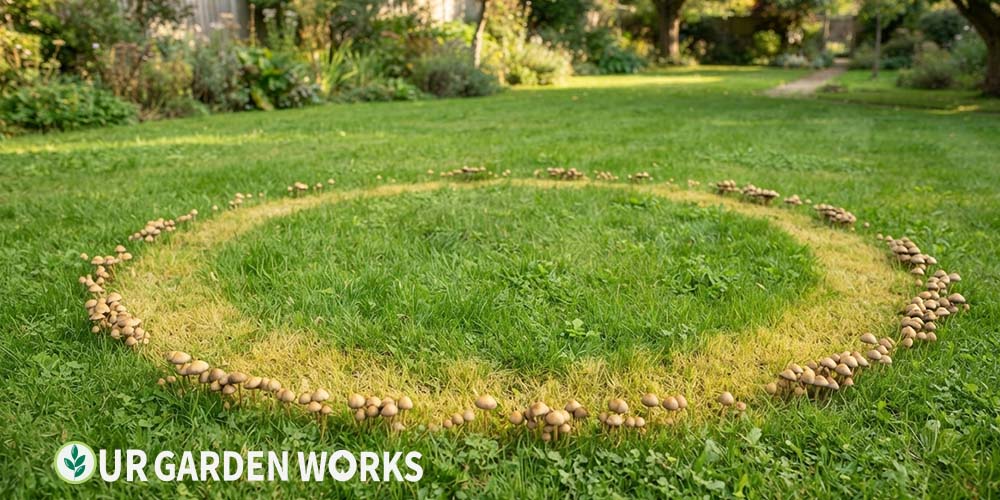
A genuine ring shape in your lawn — not just a random patch, but an actual circular or arc-shaped band — narrows the cause list down considerably compared to general brown or yellow patches.
Fairy ring fungus is the classic explanation, but it’s not the only one, and a couple of the alternatives are worth ruling out before you commit to a treatment plan.
We’ll walk through the genuine ring-producing causes, since this specific shape is the most useful diagnostic clue you have.
Quick Answer: Yellow rings in grass are most often fairy ring fungus (a true ring of darker or yellow grass, often with mushrooms at the edge), necrotic ring spot (a ring of dead grass with green grass in the center, common in cool-season lawns), or old tree stump or buried debris decomposition creating a ring-shaped nutrient pattern. Check for mushrooms and ring diameter growth over time to narrow it down.
Cause 1 — Fairy Ring Fungus (Most Common)
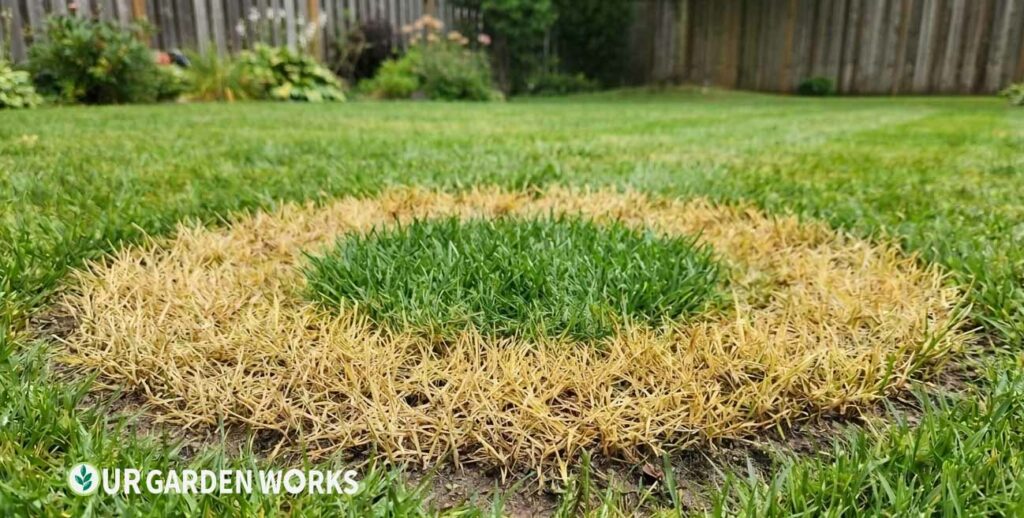
Fairy ring is caused by fungi decomposing organic matter in the soil — often old tree roots, stumps, or construction debris buried below the lawn — and the ring shape forms as the fungal colony grows outward from a central point at a roughly consistent rate.
You’ll often see a band of darker green or yellow grass, sometimes both depending on the stage, and small mushrooms frequently appear along the ring’s edge, especially after rain.
How to confirm it’s fairy ring:
- A genuine, closed or partial ring shape, not just an irregular patch
- Mushrooms present along the ring, especially after wet weather
- Ring gradually expands outward over months or years
- Grass inside the ring may be either notably darker green or notably yellow, depending on the fairy ring type
Fix: Fairy ring is notoriously difficult to eliminate completely since it’s tied to decomposing organic matter deep in the soil. Aerating the ring area to improve water penetration, along with deep watering to help break down the underlying organic matter faster, are the most practical management approaches.
Masking the cosmetic symptom with extra nitrogen fertilizer (which greens up the yellow band) is a common short-term cosmetic fix many homeowners use while the underlying decomposition continues.
💡 Fairy ring often traces back to a removed tree
If a tree was removed from your yard at some point, even years ago, the decomposing root system left behind is a classic fairy ring trigger. Rings that seem to radiate from roughly where an old tree or stump used to stand are a strong clue pointing toward this specific cause.
Cause 2 — Necrotic Ring Spot
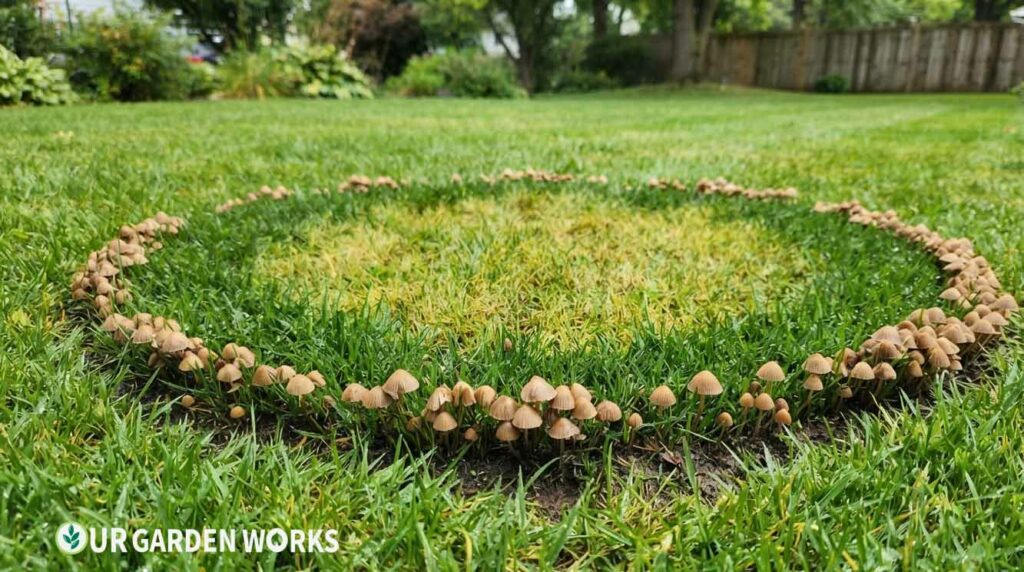
Necrotic ring spot, more specifically a disease of cool-season grasses like Kentucky bluegrass, produces a ring of dead or severely thinned grass with a tuft of seemingly healthy green grass persisting in the very center — sometimes described as a “frog-eye” pattern. Unlike fairy ring, there’s no mushroom growth associated with this disease.
How to confirm it’s necrotic ring spot:
- Ring of dead or thin grass with green grass surviving in the center
- No mushrooms present
- Most common in Kentucky bluegrass lawns specifically
- Often appears during stressful periods — heat, drought stress on top of an already weakened root system
Fix: A fungicide labeled for necrotic ring spot, applied preventively before symptoms typically appear in your region, provides the most reliable control.
Reducing stress on the lawn through proper watering, avoiding scalping, and core aeration to improve root health all support better resistance to this disease.
Cause 3 — Buried Debris or Old Stump Decomposition (Without Visible Fungus)
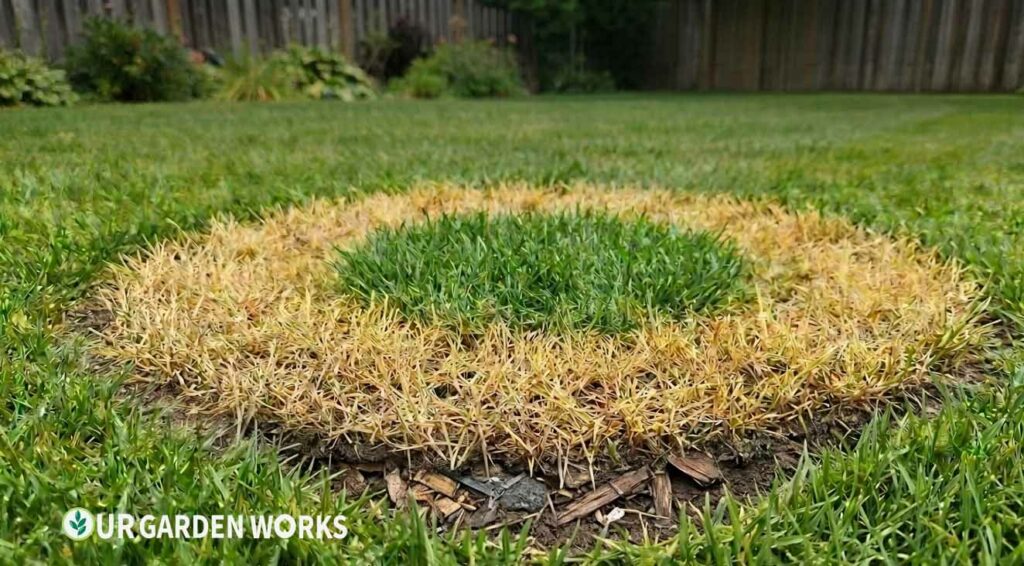
Sometimes a ring-shaped nutrient or moisture pattern develops over buried construction debris, an old stump, or even a buried utility line trench, without necessarily showing the obvious mushroom growth of classic fairy ring.
The decomposing material beneath creates uneven nutrient availability or water-holding capacity that shows up as a ring-shaped growth difference in the grass above.
How to confirm it’s buried debris:
- Ring location correlates with a known area of past construction, a removed structure, or utility work
- No mushrooms, though some may eventually appear as decomposition progresses
- Pattern has been relatively stable rather than rapidly expanding
Fix: If you can identify and aren’t disturbed by the buried material’s location, simply managing the surface symptom with appropriate fertilizing and aeration is often the most practical approach, since excavating buried debris is disruptive and not always necessary.
If the area continues declining or causes settling concerns, consulting a landscaper about removing the material may be worthwhile.
Telling the Three Causes Apart at a Glance
| Cause | Mushrooms? | Center Pattern | Grass Type Affected |
|---|---|---|---|
| Fairy ring fungus | Often, yes | Variable | Any grass type |
| Necrotic ring spot | No | Green tuft survives in center | Cool-season, especially Kentucky bluegrass |
| Buried debris | Rarely, at first | Variable, stable over time | Any grass type |
Why Fairy Ring Fungus Comes in Different Visual Types
It’s worth knowing that fairy ring fungus actually presents in a few distinct visual patterns depending on the specific fungal species involved, which can cause some confusion when trying to match symptoms to a single expected appearance.
Type 1 fairy rings kill the grass directly, producing a dead band; Type 2 rings stimulate excessive growth and dark green color rather than killing the grass; and Type 3 rings simply trigger mushroom production without much visible change to the grass itself.
This variation explains why two different lawns with fairy ring can look quite different from each other — one might show a band of dead grass, while another shows a band of unusually lush, dark green grass.
Regardless of which visual type you’re seeing, the underlying cause and general management approach remain the same.
Does Grass Type Affect Which Cause Is More Likely?
Grass type offers a genuine diagnostic clue worth factoring in alongside the visual patterns covered above.
Necrotic ring spot is specifically a cool-season grass disease, occurring almost exclusively in Kentucky bluegrass and to a lesser extent in fine fescues, which means if you’re growing a warm-season grass like Bermuda, zoysia, or St. Augustine, this particular cause can essentially be ruled out regardless of how closely the visual pattern might otherwise seem to match.
Fairy ring fungus, by contrast, isn’t picky about grass type at all and can appear in virtually any lawn, cool-season or warm-season, given the right combination of buried organic matter and soil conditions.
This makes fairy ring the more likely explanation by default for warm-season lawns showing ring symptoms, while cool-season lawns genuinely need to weigh both possibilities carefully using the mushroom-presence and center-pattern clues covered earlier.
Buried debris decomposition similarly affects any grass type equally, since the underlying cause has nothing to do with the grass species itself and everything to do with what’s happening in the soil beneath it.
How Lawn Age and History Inform the Diagnosis
A newer lawn, especially one installed within the past few years on a lot that was recently developed or had structures removed, carries meaningfully higher risk for both fairy ring and buried-debris-related rings, simply because there’s been less time for any leftover organic material from construction or land clearing to fully decompose.
If your lawn is relatively new and you’re seeing a ring pattern, this history alone makes these two causes more likely than necrotic ring spot, which tends to develop in more established, mature lawns under cumulative stress over multiple seasons.
Conversely, an older, well-established lawn that’s never previously shown a ring pattern but suddenly develops one during a particularly hot, stressful summer fits the profile for necrotic ring spot more naturally, especially if you know the lawn is a susceptible grass type and has experienced compounding stress from heat, drought, or recent heavy use.
Neither history check is definitive on its own, but combined with the mushroom and center-pattern observations, it adds useful supporting evidence to whichever diagnosis you’re leaning toward.
Should You Try to Remove Mushrooms From a Fairy Ring?
Removing visible mushrooms is a reasonable choice for appearance or if pets and children are present, since some lawn mushroom species can cause mild gastrointestinal upset if eaten, though removal won’t affect the underlying fungal colony living in the soil.
Raking or mowing over mushrooms before they fully mature also reduces spore spread to nearby areas of the lawn.
This is purely a surface management choice, though — the fungal network responsible for both the mushrooms and the ring pattern lives well below the surface, decomposing organic matter regardless of whether you remove the visible fruiting bodies above ground.
Frequently Asked Questions
Is fairy ring fungus harmful to my lawn long-term?
It’s primarily a cosmetic and sometimes frustrating long-term nuisance rather than a serious threat to overall lawn health, since it doesn’t typically spread aggressively or kill large areas of turf quickly. That said, rings can persist for years and slowly expand, making them a long-term management issue rather than something that resolves on its own.
Can I prevent fairy ring fungus from appearing in the first place?
Removing buried organic debris before establishing a new lawn, where practical, prevents the decomposition process that triggers fairy ring from ever starting in that location. For existing lawns with no known buried material, prevention is more difficult since the fungus is naturally present in many soils and simply needs the right conditions and organic matter to become active.
Will dethatching or aerating make a yellow ring worse?
Generally no — aeration is actually a recommended management step for fairy ring, since it improves water penetration that helps break down the underlying organic matter faster. For necrotic ring spot specifically, aeration also supports better root health, which helps the lawn resist and recover from the disease more effectively over time.
Related Articles in Our Lawn Care Guide
Final Thoughts
We hope this guide has helped you identify exactly what’s causing the ring pattern in your lawn — checking for mushrooms and watching how the ring changes over time really does narrow this down quickly.
For more lawn care guidance, our soil and fertility guides cover everything from seasonal maintenance to pest management.
Share this post with a fellow homeowner who’s troubleshooting their lawn — and let us know in the comments which cause matched what you found. Happy growing!
