
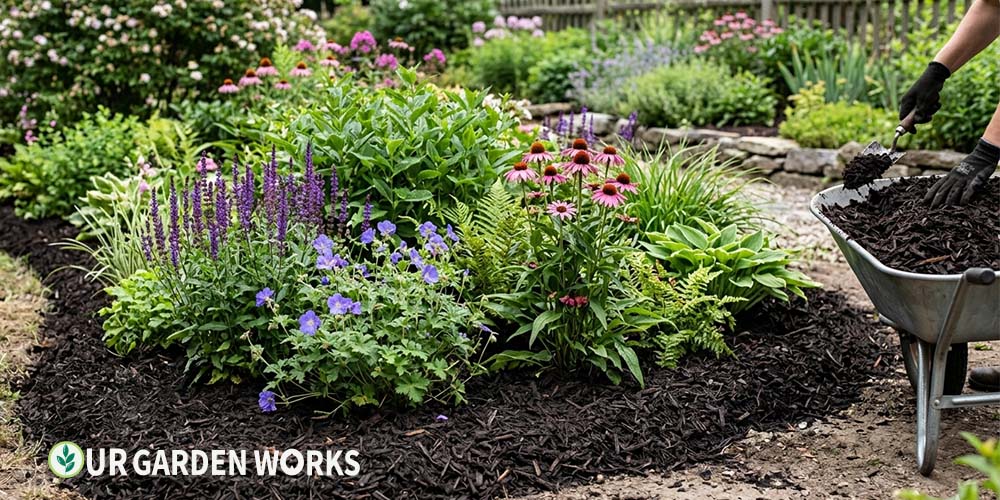
(Enter your bed length and width in feet (or total square footage) and your desired mulch depth in inches. The calculator shows cubic feet needed, cubic yards for bulk ordering, and bag count for any bag size.)
Mulch is one of the most reliable investments in any garden — reducing water needs by up to 50%, keeping soil temperatures stable, suppressing weeds, and improving soil structure as it decomposes.
The most common mulching mistake is applying too little: 1–2 inches of mulch does almost nothing for weed suppression. The correct depth for most applications is 3–4 inches. Calculate the volume before you buy and you will get it right the first time.
Editor’s Note: Mulch volume formula: (length × width × depth in inches) ÷ 324 = cubic yards for bulk ordering. A 4×8 bed mulched at 3 inches deep needs 0.3 cubic yards or roughly 8 bags at 2 cubic feet per bag. At 4 inches deep: 0.4 cubic yards or about 10 bags. For areas over 500 square feet, bulk mulch delivery is significantly cheaper than bags.
Mulch Depth Guide — How Deep for Each Application
| Application | Recommended Depth | Notes |
|---|---|---|
| Vegetable garden beds | 2–3 inches | Straw or shredded leaves; avoid wood chips near vegetables |
| Flower beds (annual) | 2–3 inches | Fine bark or shredded wood; replenish annually |
| Perennial beds | 3–4 inches | Keep clear of crown; pull back in spring as plants emerge |
| Trees and shrubs | 3–4 inches | Extend to drip line; never pile against trunk (volcano mulching kills trees) |
| Pathways | 4–6 inches | Wood chips; replenish every 2–3 years |
| Weed suppression (new beds) | 4–6 inches over cardboard | Cardboard layer + deep mulch = reliable weed suppression for one season |
Choosing the Right Mulch Type
Shredded bark / wood chips: Long-lasting (2–3 years), excellent for perennial beds, pathways, and trees. Not ideal for annual vegetable beds as it ties up nitrogen during decomposition and is difficult to plant through. Widely available as bulk delivery.
Straw: Best choice for vegetable beds — decomposes within one season, adds organic matter, easy to move for planting, does not compete with plants for nitrogen. Ensure you buy straw (seed-free) not hay (which contains weed seeds).
Shredded leaves: Best free mulch available. Excellent for all bed types, particularly good for perennial beds. Shred before applying — whole leaves mat and shed water. Run over them with a lawn mower before collecting.
Rubber mulch: Long-lasting, does not decompose, good for play areas. No benefit to soil health. Not recommended for planting beds — it does not improve soil and can harbour heat that stresses plant roots in summer.
For soil preparation before mulching in spring, our guide to preparing garden beds for spring covers the correct order of operations — compost and amendment first, then mulch on top.
Frequently Asked Questions
Should I remove old mulch before adding new mulch?
In most cases, no — old mulch that has broken down into fine material can be incorporated into the top inch of soil as organic matter.
Remove only if the old mulch is matted, moldy, or so thick from several years of additions that the total depth exceeds 4 inches. Rake the old material to the sides, add a fresh thin layer, and rake back.
Over-mulching — piling mulch 6+ inches deep — can become a habitat for rodents and can prevent water from reaching plant roots.
When should I apply mulch in spring?
Wait until the soil has warmed — typically after your last frost date and once soil temperatures are consistently above 50°F.
Mulching cold soil in early spring traps cold in the ground and delays soil warming, which slows early season plant growth and germination.
The exception: beds where you want to suppress weeds in paths and under established perennials, where the temperature effect on soil is less critical than weed management. See our spring lawn care schedule for the full spring garden timing sequence.
Free Tools & Guides:
- Raised Bed Soil Calculator
- How to Prepare Garden Beds for Spring
- Spring Lawn Care Schedule
- Fertilizer Calculator
- Soil pH Calculator
- Vegetable Gardening Guide: Grow More Food with Less Frustration
Final Thoughts
We hope this calculator gives you the exact number to bring to the garden center or call in for bulk delivery — no guessing, no second trip.
Mulching properly, at the right depth, is one of the most rewarding hours you can spend in the garden. Every problem it prevents over the season pays back that hour dozens of times. For all our soil and bed preparation guides, our vegetable gardening guide links to everything.
Share this free tool with a fellow gardener who applies a thin scattering of mulch every spring that looks good for a week and does nothing after that — and let us know in the comments how it helped. Happy growing!
