

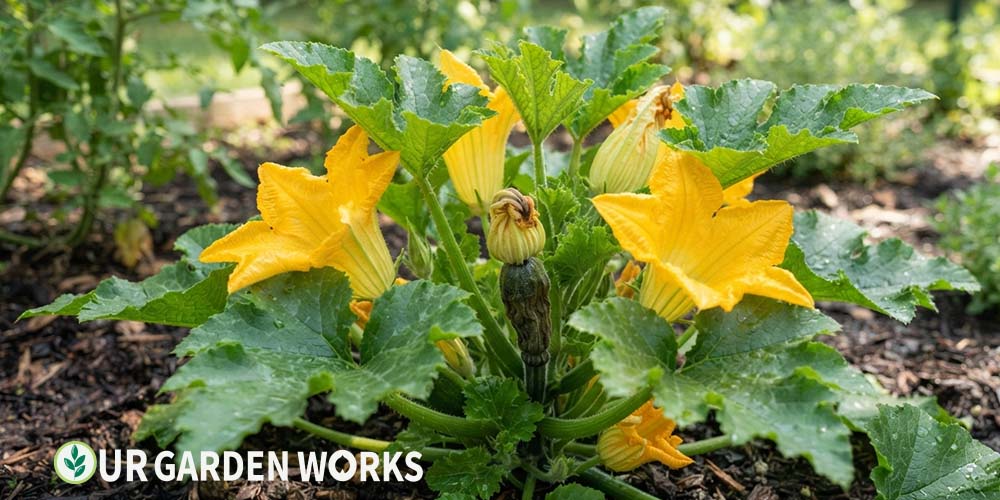
A zucchini plant covered in cheerful yellow flowers but producing no actual squash is one of the more common early-season frustrations in vegetable gardening, and it’s almost always a pollination problem rather than anything wrong with the plant’s overall health or care.
Understanding zucchini’s unusual flower biology is the key to fixing this quickly, since the plant actually produces two different types of flowers, and that distinction explains almost everything about why fruit set sometimes fails.
Quick Answer: Zucchini flowers but no fruit usually means a pollination failure — zucchini produces separate male and female flowers, and female flowers (with a small swelling at the base) need pollen physically transferred from male flowers by bees. Early in the season, plants often produce mostly male flowers first, before females appear. Hand-pollinating with a small brush, or simply waiting for more pollinator activity, typically solves it.
Understanding Zucchini’s Separate Male and Female Flowers
Unlike tomatoes, which have flowers containing both male and female parts in a single bloom, zucchini and other squash produce entirely separate male and female flowers on the same plant.
Pollen must be physically transferred from a male flower to a female flower, typically by bees, for fruit to develop at all — without this transfer, female flowers simply wither and drop without ever producing fruit.
How to tell male and female flowers apart:
- Male flowers sit directly on a thin, straight stem with no swelling behind the flower
- Female flowers have a small, swollen, bulb-like structure at the base — this is the immature ovary that will become the squash itself if pollination succeeds
- Male flowers typically outnumber female flowers, especially early in the season
💡 Plants often produce only male flowers at first
Many zucchini plants produce a flush of male flowers for one to two weeks before any female flowers appear at all. If you’re seeing plenty of flowers but no swollen female blooms yet, this is completely normal timing, not a sign of a problem — female flowers typically follow within a week or two of the initial male flush.
Why Pollination Sometimes Fails Even When Both Flower Types Are Present
Even once both male and female flowers are blooming simultaneously, successful pollination depends on adequate pollinator activity transferring pollen between them, and a few common situations can interrupt this process.
Cool, rainy, or overcast weather reduces bee activity significantly, and zucchini flowers themselves are only open for a single day, typically in the morning, giving a narrow window for pollination to actually occur.
Low overall pollinator populations in a specific garden or neighborhood, sometimes from pesticide use nearby or simply limited natural habitat, can also leave female flowers unpollinated despite both flower types being present and healthy.
Excessive nitrogen fertilization, similar to its effect on tomato flowering, can also push the plant toward more leafy growth at the expense of flower production generally.
The Fix — Hand Pollination
Hand pollination is simple, takes only a couple of minutes, and reliably solves this problem regardless of why natural pollination isn’t happening on its own.
Directions
- In the morning, when flowers are freshly open, identify a male flower and a female flower (look for the swollen base) blooming at the same time.
- Either pick the male flower and remove its petals to expose the pollen-covered center, or use a small, soft paintbrush to collect pollen directly from the male flower.
- Gently touch the pollen-covered center of the male flower (or the brush) to the center of the female flower, transferring pollen directly.
- Repeat with each open female flower, using a fresh male flower or reloading the brush as needed.
- Continue this process every morning that new flowers are open until you’re seeing reliable fruit set, at which point natural pollinator activity may be sufficient to continue without intervention.
You’ll typically see results within a few days — a successfully pollinated female flower’s base will begin visibly swelling and developing into a recognizable young squash, while an unpollinated flower will wither and the small fruit-to-be will yellow and drop.
Why Some Squash Varieties Almost Never Have This Problem
A category of squash varieties called parthenocarpic, sometimes labeled this way directly on seed packets, can set fruit without pollination at all, essentially bypassing the entire male-female pollination dependency covered throughout this guide.
These varieties are increasingly popular for greenhouse growing specifically, where pollinator access is limited, but they’re also available for outdoor garden use and can largely eliminate this particular frustration regardless of pollinator activity in your area.
If pollination failure has been a persistent, season-after-season issue despite hand-pollination efforts and attempts to attract more bees, switching to a parthenocarpic variety for at least part of your zucchini planting removes the dependency on pollination entirely, trading away the genetic diversity benefits of open pollination for much more reliable, hands-off fruit set.
This is a particularly useful option for gardeners in areas with documented low pollinator populations, or anyone simply looking to reduce the daily hand-pollination commitment covered earlier in this guide.
How Weather Patterns Affect This Problem Across a Season
Pollination failure tends to cluster during specific weather patterns rather than occurring randomly throughout a growing season, which is useful context for understanding why a plant might pollinate reliably for weeks and then suddenly stop producing fruit during a particular stretch.
Extended cool, rainy, or heavily overcast periods reduce bee activity dramatically, since most pollinating bees are considerably less active in cold, wet, or low-light conditions compared to warm, sunny weather.
Extreme heat can create a different kind of pollination problem, sometimes causing pollen itself to become less viable or causing flowers to wilt and close prematurely before pollination has a chance to occur during the shortened viable window.
If you notice pollination failure clustering specifically around either a rainy stretch or a heat wave, this weather correlation helps explain an otherwise puzzling pattern of inconsistent fruit set on a plant that seemed to be doing fine just a week or two earlier.
Hand pollination becomes particularly valuable specifically during these challenging weather windows, serving as a reliable backup exactly when natural pollination is least likely to succeed on its own.
Attracting More Natural Pollinators Long-Term
While hand pollination works reliably as an immediate fix, encouraging more natural bee activity reduces how much ongoing manual intervention your garden needs.
Planting bee-attracting flowers nearby, avoiding pesticide application during flowering periods, and providing some undisturbed habitat (even just a small patch of flowering ground cover or a bee house) all support a more robust natural pollinator population over time.
Companion planting with flowers like borage, calendula, or zinnias near your squash specifically draws pollinators into the immediate area where your zucchini flowers need them most, often improving natural fruit set within the same season as you establish these companion plantings.
Frequently Asked Questions
How can I tell if a female flower was successfully pollinated without waiting several days?
The most reliable sign within the first day or two is whether the flower itself starts to close and the small fruit at its base remains firm and green rather than turning soft, yellow, or shriveled.
A flower that simply falls off cleanly with a healthy-looking, slowly swelling fruit base behind it is a good early sign of successful pollination, while a yellowing, shriveling fruit base indicates the pollination attempt didn’t take.
Can I use pollen from one squash variety to pollinate a different variety?
Yes, different squash varieties within the same species can cross-pollinate without issue for the current season’s fruit, since cross-pollination only affects the genetics of any seeds saved from that fruit, not the eating quality or appearance of the squash itself this season.
If you’re planning to save seeds for next year, though, keeping varieties separate or hand-pollinating with same-variety flowers prevents unwanted genetic mixing in future plantings.
Why do my zucchini flowers open and close so quickly?
Squash flowers are naturally short-lived, typically opening in early morning and closing by afternoon on the same day, which is simply part of their natural flowering biology rather than any sign of a problem.
This short window is exactly why pollination (whether natural or by hand) needs to happen within that same morning timeframe to be successful.
Can I eat the male zucchini flowers instead of using them all for pollination?
Yes, squash blossoms — typically the more abundant male flowers — are edible and popular in various culinary preparations, including stuffed and fried squash blossom dishes.
Since male flowers usually outnumber female flowers, especially early in the season, harvesting some male flowers for cooking while still reserving enough for pollination purposes is a reasonable way to enjoy this often-overlooked edible part of the plant without compromising fruit production.
Related Articles in Our Squash Growing Guide
Final Thoughts
We hope this guide has demystified why your zucchini is all flowers and no fruit — once you understand the male-female flower system, hand pollination is a quick, reliable fix while you wait for natural pollinators to catch up.
For all our vegetable growing guides, our vegetable gardening guide links to everything.
Share this post with a fellow gardener who’s troubleshooting their zucchini — and let us know in the comments how hand pollination worked out for you. Happy growing!
