

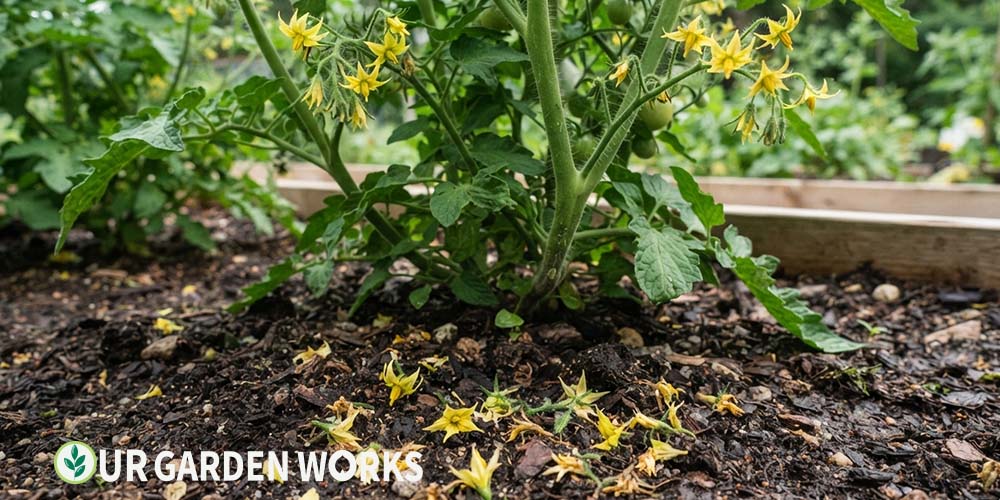
Blossom drop is one of the more disheartening tomato problems, since it happens right at the step between a healthy-looking flowering plant and an actual harvest. The flower simply falls off before pollination ever has the chance to produce fruit, and the plant moves on without anything to show for that particular bloom.
The good news is that blossom drop traces back to a fairly well-understood set of causes, most of them environmental rather than disease-related, which means most cases are preventable once you know what’s actually happening.
Quick Answer: Tomato flowers falling off before fruiting is most often caused by temperature stress (nights below 55°F or days above 95°F interfere with pollination), inconsistent watering, excess nitrogen fertilizer (promoting leaves over flowers), poor pollination from low humidity or lack of pollinator activity, or general plant stress from transplant shock or pest pressure. Temperature is the single most common culprit.
Cause 1 — Temperature Stress (Most Common)
Tomato pollen becomes less viable or fails to transfer properly outside a fairly specific temperature range, and both ends of that range can trigger blossom drop.
Nighttime temperatures consistently below about 55°F prevent proper pollen development, while daytime temperatures above roughly 95°F, especially combined with low humidity, can cause pollen to become non-viable or flowers to abort before pollination completes.
How to confirm temperature is the cause:
- Recent nighttime temperatures have dropped below 55°F, common in early spring plantings
- Or daytime temperatures have exceeded 95°F for multiple consecutive days, common in peak summer heat
- Flowers form normally but drop within a few days without any fruit developing
Fix: For cold stress, wait for consistently warmer nighttime temperatures before expecting reliable fruit set, or use row covers to buffer young plants during unseasonably cool spring nights. For heat stress, providing afternoon shade during the most extreme heat waves and ensuring consistent watering helps the plant cope better, though some blossom drop during genuine heat extremes is largely unavoidable until temperatures moderate.
💡 This is often a temporary, self-resolving problem
Blossom drop from temperature extremes typically resolves on its own once temperatures move back into the favorable range, with the plant resuming normal fruit set on its next flush of flowers. A few weeks of blossom drop during an unusual heat wave or early cold spell doesn’t mean the plant won’t produce a good harvest later in the season.
Cause 2 — Inconsistent Watering
Both drought stress and excessive, inconsistent watering can trigger a tomato plant to drop flowers as a way of conserving resources during a period it perceives as unfavorable for supporting developing fruit.
This is a similar stress-response mechanism to the temperature-related cause above, just triggered by water availability rather than temperature.
How to confirm watering is the cause:
- Watering has been irregular — alternating between notably dry stretches and heavy watering sessions
- Soil moisture, when checked, is either consistently dry or consistently waterlogged rather than evenly moist
Fix: Establish a consistent watering schedule, aiming for steady soil moisture rather than dramatic swings between dry and saturated. Mulching around the base helps buffer soil moisture more evenly between waterings.
Cause 3 — Excess Nitrogen Fertilizer
Too much nitrogen relative to phosphorus and potassium pushes a tomato plant toward vigorous leafy growth at the expense of flowering and fruit development, sometimes producing a lush, dark green plant that nonetheless drops flowers and sets little fruit. This is a common mistake among gardeners who assume more fertilizer always helps.
How to confirm excess nitrogen is the cause:
- Plant shows vigorous, dense, dark green leafy growth disproportionate to its flowering and fruiting
- A general-purpose, nitrogen-heavy fertilizer has been used regularly, especially after flowering began
Fix: Switch to a fertilizer with lower nitrogen and higher phosphorus and potassium content once flowering begins, supporting fruit development rather than continued leafy growth. Avoid additional nitrogen-heavy applications until fruit set improves.
Cause 4 — Poor Pollination
Tomatoes are largely self-pollinating, relying on wind and the vibration from bees (particularly bumblebees, which perform a specific “buzz pollination” especially effective for tomatoes) to shake pollen loose within the flower.
Low humidity can cause pollen to become too dry and powdery to transfer effectively, while a lack of pollinator activity or wind movement can leave flowers simply never properly pollinated before they naturally age and drop.
How to confirm pollination is the issue:
- Low humidity conditions have been persistent
- Limited pollinator activity observed around the plants, especially in a sheltered or enclosed growing area
- Plants are grown in a greenhouse or other enclosed space without natural wind or insect access
Fix: Gently shaking flowering stems by hand, ideally around midday when pollen is most viable, helps mimic the natural vibration that aids pollen transfer. For greenhouse growing specifically, a small fan providing gentle, consistent air movement or manual pollination with a small brush can compensate for the lack of natural wind and insect activity.
Cause 5 — General Plant Stress
Recent transplanting, significant pest pressure, or other compounding stress factors can all push a plant to drop flowers as it redirects limited resources toward more immediate survival needs rather than fruit development. This is a more general, catch-all category compared to the more specific causes above.
How to confirm general stress is the cause:
- Plant was recently transplanted and may still be establishing
- Visible pest damage or other stress signs are present alongside the blossom drop
Fix: Address any specific underlying stress factor (pest control, consistent care during establishment) and allow the plant time to recover and resume normal flowering and fruit set once the acute stress has passed.
Telling the Five Causes Apart at a Glance
| Cause | Key Clue |
|---|---|
| Temperature stress | Recent extreme heat or cold, otherwise healthy plant |
| Inconsistent watering | Watering swings between dry and saturated |
| Excess nitrogen | Lush leafy growth, disproportionate to flowering |
| Poor pollination | Low humidity, limited pollinators, enclosed growing space |
| General plant stress | Recent transplant or visible pest pressure |
Are Container Tomatoes More Prone to Blossom Drop?
Container-grown tomatoes face a somewhat elevated risk of several causes covered above, particularly temperature stress and inconsistent watering, simply because container soil heats up, cools down, and dries out faster than in-ground garden soil.
A container exposed to full afternoon sun on a hot patio can reach root zone temperatures considerably higher than the same air temperature would produce in an in-ground bed, compounding heat-related blossom drop risk beyond what ambient air temperature alone would suggest.
This is part of why container tomato guides often emphasize more frequent watering checks and, during extreme heat, the option to temporarily relocate a container to a more sheltered spot — an advantage in-ground plantings don’t have.
If blossom drop has been a persistent problem specifically with container-grown tomatoes, paying closer attention to root zone temperature and watering consistency, beyond just air temperature, often resolves the issue more completely than addressing air temperature alone.
Does Variety Type Affect Blossom Drop Risk?
Indeterminate tomato varieties, which continue producing new flowers and growth throughout the season, generally tolerate a temporary period of blossom drop better than determinate varieties, simply because they have more total flowering opportunities across a longer season to compensate for any lost flushes.
Determinate varieties, which set most of their fruit in a more concentrated window, can see a more meaningful overall yield impact if that specific window coincides with unfavorable temperature or watering conditions.
This is worth knowing if you’re choosing varieties for a climate with a known pattern of early-season cold snaps or late-season heat waves — an indeterminate variety’s extended flowering window provides more natural insurance against losing an entire harvest to a single period of temperature-related blossom drop, compared to betting on a determinate variety’s more concentrated, all-at-once fruit set.
Why Some Blossom Drop Is Simply Normal
It’s worth knowing that tomato plants naturally produce more flowers than they could realistically support as full-sized fruit, and a certain amount of blossom drop is a normal, healthy part of the plant’s own resource-allocation process rather than a problem requiring intervention.
If you’re seeing occasional flower drop on an otherwise vigorous, well-fruiting plant, this is likely just normal thinning rather than any of the causes covered above.
The causes in this guide become worth addressing specifically when blossom drop is severe, affects most or all flowers over an extended period, or coincides clearly with one of the specific triggers described — not when it’s just the occasional flower here and there on a plant that’s otherwise setting fruit normally.
Frequently Asked Questions
Will my tomato plant eventually produce fruit if it keeps dropping flowers?
In most cases, yes, especially if the cause is temperature-related and conditions are expected to moderate, since the plant will continue producing new flushes of flowers throughout the season.
Persistent, severe blossom drop continuing well past when the underlying trigger should have resolved is worth a closer look at the other causes covered in this guide.
Can I do anything to help pollination if I don't have many bees in my garden?
Yes — hand-pollinating by gently shaking flowering stems, or using a small, soft brush to transfer pollen between flowers, both help compensate for limited natural pollinator activity.
Planting bee-attracting companion flowers nearby can also help draw in more natural pollinators over time for future flowering cycles.
Does blossom drop affect all tomato varieties equally?
Some varieties show somewhat better heat tolerance and more resistance to temperature-related blossom drop specifically, often marketed as heat-set or heat-tolerant varieties for hot climates.
If blossom drop from heat has been a recurring, significant problem in your garden, researching these specific varieties for future plantings can reduce the issue more reliably than environmental management alone.
Related Articles in Our Tomato Growing Guide
Final Thoughts
We hope this guide has helped you understand why your tomato flowers are dropping before fruit ever forms — most cases trace back to temperature or watering and resolve once conditions even out.
For all our tomato and vegetable guides, our vegetable gardening guide links to everything.
Share this post with a fellow gardener who’s troubleshooting their tomato plants — and let us know in the comments which cause matched what you found. Happy growing!
