

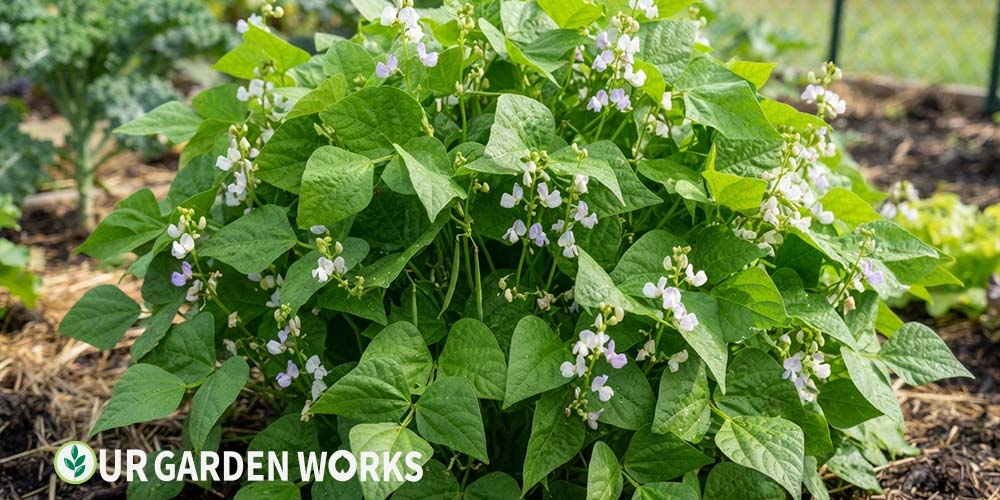
A bean plant that looks lush and healthy but isn’t actually producing many pods is a genuinely common frustration, and the cause is almost always identifiable once you look at the specific combination of growth, flowering, and recent conditions together.
We’ll walk through the six most common explanations, since beans share some causes with other flowering vegetables covered elsewhere in this series, plus a couple of considerations more specific to this particular crop.
Quick Answer: Beans not producing pods are most often caused by excess nitrogen (lush leafy growth, few flowers), temperature stress (extreme heat or cold interfering with flowering and pod set), inconsistent watering, poor pollination, planting the wrong type for your trellis or space, or simply not enough time yet for the plant to reach its productive stage. Check overall growth pattern and recent weather first.
Cause 1 — Excess Nitrogen Fertilizer
Beans, like many legumes, actually fix their own nitrogen from the air through a relationship with soil bacteria, meaning they need considerably less supplemental nitrogen than many other vegetables — and providing too much pushes the plant toward vigorous leafy growth at the expense of flowering and pod production, similar to the same mechanism covered for tomatoes elsewhere in this series.
How to confirm excess nitrogen is the cause:
- Plant shows lush, dense, dark green foliage disproportionate to its flowering
- A nitrogen-heavy fertilizer has been applied regularly
Fix: Stop additional nitrogen fertilizing and allow the plant’s own nitrogen-fixing capability to support its needs. If soil testing confirms genuinely poor fertility otherwise, a balanced, lower-nitrogen fertilizer formulated for legumes specifically supports better flowering and pod development going forward.
Cause 2 — Temperature Stress
Bean flowers are sensitive to both extreme heat (typically above 90°F) and cold, with either extreme capable of causing flowers to drop before pod set occurs, similar to the blossom drop mechanism covered in our tomato flowering guide.
This is often a temporary, weather-driven issue rather than an ongoing plant health problem.
How to confirm temperature is the cause:
- Recent weather has included a significant heat wave or unexpectedly cold stretch
- Flowers form but drop without producing pods, rather than failing to flower at all
Fix: Patience during temperature extremes, since pod production typically resumes once temperatures moderate back into the favorable range. Providing afternoon shade during extreme heat waves can reduce the severity and duration of this temperature-related flower drop.
Cause 3 — Inconsistent Watering
Both drought stress and erratic, inconsistent watering can cause beans to drop flowers before pods develop, as the plant redirects limited resources away from reproduction during periods of water stress.
How to confirm watering is the cause:
- Watering has been irregular, alternating between dry stretches and heavy watering
- Soil moisture, when checked, is inconsistent rather than evenly maintained
Fix: Establish a consistent watering schedule, aiming for steady soil moisture, particularly important during the flowering and early pod development stages when water needs are at their highest.
Cause 4 — Poor Pollination
While many bean varieties are largely self-pollinating and don’t depend as heavily on insect activity as squash, some pollinator assistance still improves pod set rates, and conditions that reduce pollinator activity (low humidity, lack of bee presence, enclosed growing spaces) can reduce overall pod production somewhat.
How to confirm pollination is a factor:
- Limited pollinator activity observed around flowering plants
- Growing in a greenhouse or other enclosed space without natural insect access
Fix: Gently shaking flowering stems can help with self-pollination, and planting pollinator-attracting companion flowers nearby supports better natural insect activity for any cross-pollination benefit some varieties may receive.
Cause 5 — Wrong Variety for Your Growing Setup
Pole bean varieties need substantial vertical support to climb and grow properly, and a pole variety planted without adequate trellising will sprawl, tangle, and generally underperform compared to how it would grow with proper support.
This is a setup mismatch rather than a plant health issue, but it directly affects pod production.
How to confirm this is the issue:
- You’re growing a pole bean variety without a trellis, or in too small a space for its mature size
- Plant looks tangled, sprawling, or generally struggling to support its own growth
Fix: Provide an appropriate trellis or support structure for pole varieties, sized for the variety’s expected mature height. See our peas not climbing the trellis guide for related trellis setup considerations that apply similarly to pole beans.
Cause 6 — Simply Not Enough Time Yet
Beans, like most vegetables, follow a predictable timeline from planting to flowering to pod production, and a plant that’s simply earlier in this cycle than expected hasn’t necessarily failed at anything — it just needs more time. This is the simplest explanation and worth ruling out before assuming a genuine problem exists.
How to confirm timing is the explanation:
- Plant is relatively young or was planted more recently than the variety’s typical days-to-maturity would suggest should already be producing
Fix: Patience — continue normal care and monitor for flowering and pod development as the plant continues maturing on its natural timeline.
Telling the Six Causes Apart at a Glance
| Cause | Key Clue |
|---|---|
| Excess nitrogen | Lush leafy growth, disproportionate to flowering |
| Temperature stress | Recent heat wave or cold spell, flowers drop |
| Inconsistent watering | Watering swings between dry and saturated |
| Poor pollination | Limited pollinator activity, enclosed space |
| Wrong variety for setup | Pole variety without adequate trellis |
| Not enough time yet | Plant younger than typical maturity timeline |
Does Crop Rotation History Affect Pod Production?
Soil nitrogen levels carried over from previous plantings can meaningfully affect how a bean crop performs, particularly if beans are planted in soil that recently grew another heavy nitrogen-feeding crop that left behind elevated nitrogen levels, or conversely, soil that’s been used for legumes repeatedly without rotation.
Since beans are nitrogen-fixers themselves, planting them in soil that’s already nitrogen-rich from a previous heavily fertilized crop can compound the excess-nitrogen cause covered above, even if you haven’t directly over-fertilized the beans this season.
This is one more reason crop rotation matters beyond just disease and pest management — rotating beans into a bed that previously grew a crop with more moderate nitrogen needs, rather than following directly after something like heavily fertilized corn or leafy greens, helps avoid this compounding nitrogen effect.
If you’ve ruled out direct over-fertilization but still suspect excess nitrogen based on the lush-growth, few-flowers pattern, checking what grew in that bed the previous season and how it was fertilized can reveal a less obvious contributing factor.
How Companion Planting Can Support Better Pod Production
Certain companion plants support bean productivity indirectly by attracting beneficial pollinating and predatory insects, or by improving the overall growing environment in ways that reduce the stress factors covered throughout this guide.
Summer savory, planted near beans, is a traditional companion specifically associated with improved bean flavor and is believed by many experienced gardeners to support better overall plant vigor, though this effect is less scientifically documented than some other companion planting benefits.
Marigolds and other pollinator-attracting flowers planted nearby provide more well-established support, drawing in beneficial insects that assist with the pollination covered as one of the six causes in this guide, while also helping manage some pest pressures that could otherwise stress the plant enough to reduce flowering and pod set.
Building these companion plantings into your bean bed from the start, rather than treating pod production issues purely as something to fix reactively once they appear, supports a more resilient growing environment overall.
Bush Beans vs. Pole Beans — Different Productivity Patterns
It’s worth understanding that bush and pole bean varieties have genuinely different productivity patterns, which affects how you should interpret what looks like “low” pod production at any given moment.
Bush beans tend to produce a more concentrated flush of pods over a shorter period, then decline, while pole beans produce more gradually but over a considerably longer overall season once they get going.
If you’re growing pole beans and comparing their current pod count against what you might expect from a bush variety at the same point in the season, this comparison itself may be creating a false impression of underperformance, when the pole variety is actually right on track for its own typical, more extended production timeline.
Frequently Asked Questions
How long after flowering should I expect to see bean pods forming?
Most bean varieties show visible pod development within about a week to ten days of successful flower pollination, with pods reaching harvestable size anywhere from one to three weeks after that depending on variety and whether you’re harvesting for fresh snap beans or allowing pods to mature further.
If flowers are forming and dropping without any pod development at all well beyond this window, one of the six causes above is worth investigating.
Can I do anything to encourage more flowering on a bean plant that's mostly producing leaves?
Reducing or stopping nitrogen fertilizer is the most direct lever available, since excess nitrogen is the most common cause of this specific leaves-over-flowers imbalance.
Switching to a lower-nitrogen, phosphorus-and-potassium-focused fertilizer, if any feeding is needed at all, supports the shift toward flowering and pod production more effectively than continuing a nitrogen-heavy feeding schedule.
Will picking existing pods encourage the plant to produce more?
Yes, for many bean varieties, regular harvesting of mature pods encourages continued flower and pod production, since the plant is freed from supporting maturing pods and can redirect that energy toward new growth.
Letting pods over-mature and dry on the plant, by contrast, can signal the plant that its reproductive cycle is complete, sometimes reducing further pod set for the remainder of the season.
Related Articles in Our Bean & Pea Growing Guide
Final Thoughts
We hope this guide has helped you figure out why your bean plant isn’t producing as many pods as you’d hoped — most causes here are manageable once correctly identified, and patience resolves a fair number of cases on its own.
For all our vegetable growing guides, our vegetable gardening guide links to everything.
Share this post with a fellow gardener who’s troubleshooting their bean plants — and let us know in the comments which cause matched what you found. Happy growing!
