

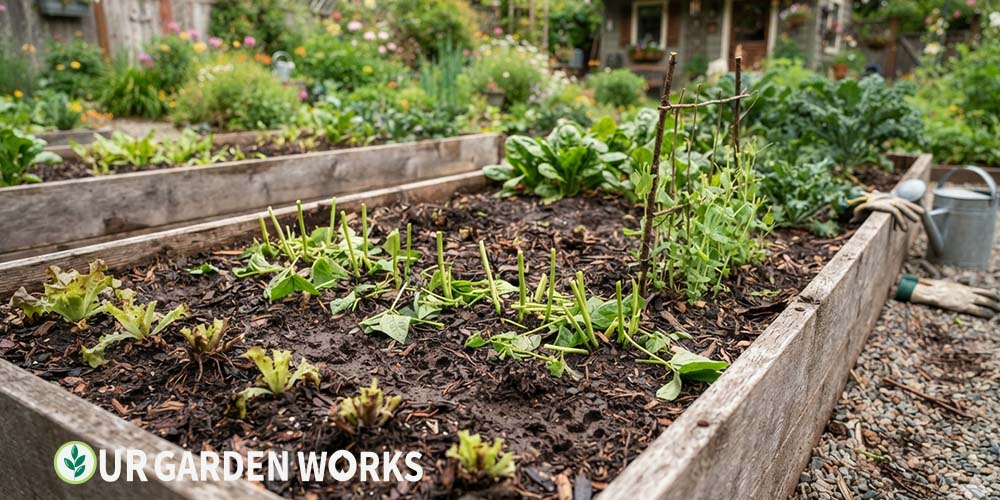
A vegetable garden is a rabbit’s ideal situation: tender, young, low-growing plants in a concentrated area, usually with no serious deterrents in place.
Where a flower garden has variety and some natural rabbit-resistant species mixed in, a vegetable bed is often wall-to-wall preferred rabbit food. Lettuce, beans, peas, brassicas, strawberries — all in one convenient location.
If you’ve found your vegetable garden cleared overnight, this guide covers exactly what rabbits prioritize, what they typically leave alone, and how to protect your beds without spending more on deterrents than your vegetables are worth.
Quick Answer: Yes — vegetable gardens are among rabbits’ most preferred targets. Lettuce, beans, peas, spinach, brassicas, and strawberries are at highest risk. They generally avoid garlic, onions, hot peppers, and rhubarb. A 3-foot hardware cloth fence buried 6 inches underground is the single most effective protection for a vegetable garden.
The Vegetable Garden Risk Ranking
| Crop | Risk Level | What Gets Eaten | When |
|---|---|---|---|
| Lettuce / salad greens | 🔴 Critical | Entire plant to the root | As soon as transplanted |
| Peas | 🔴 Critical | Shoots, leaves, pods | All season |
| Beans | 🔴 Critical | Seedlings, leaves | First 4 weeks |
| Spinach / chard | 🔴 Critical | Entire plant | All season |
| Strawberries | 🔴 Critical | Fruit, crowns, leaves | Spring and fruiting season |
| Broccoli / brassicas | 🟠 High | Young plants, outer leaves | Young plants and seedlings |
| Parsley / cilantro | 🟠 High | Entire plant | All season |
| Tomato plants | 🟡 Medium | Young stems and leaves | First month after transplant |
| Carrots | 🟡 Medium | Tops/greens | When greens are soft |
| Cucumber / squash | 🟡 Medium | Young plants | Seedling stage |
| Garlic | 🟢 Low | Rarely | Generally avoided |
| Onions / chives | 🟢 Low | Rarely | Generally avoided |
| Hot peppers | 🟢 Very Low | Almost never | Avoided |
| Rhubarb | 🟢 Very Low | Almost never | Mildly toxic to rabbits |
| Asparagus | 🟢 Low | Rarely | Generally avoided |
The Most Effective Vegetable Garden Protection
Option 1 — Perimeter Fencing (Best for Whole Beds)
A continuous hardware cloth fence around the entire vegetable garden is the most reliable protection for everything inside. The specifications that work:
- Material: 1-inch mesh hardware cloth (not chicken wire — rabbits push through chicken wire gaps)
- Height: 3 feet above ground (rabbits can jump 2 feet but rarely attempt 3-foot fences when other food is available)
- Buried depth: 6 inches underground, bent outward in an L-shape to prevent burrowing
- Gate: The most common failure point — ensure gates close flush with no gap at the bottom
For the complete fencing guide with step-by-step installation instructions, see our how to keep rabbits out of your garden guide.
Option 2 — Raised Beds With Buried Bottom Mesh
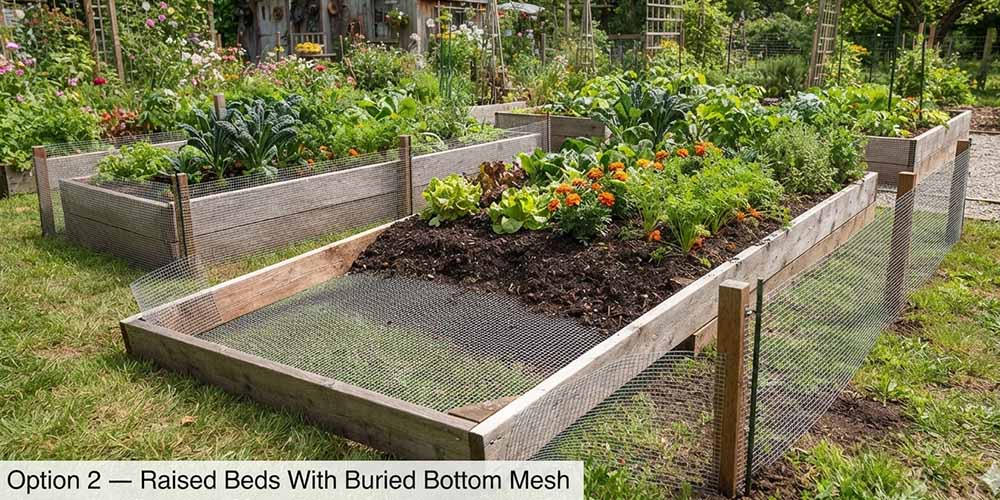
Raised beds with hardware cloth laid flat across the bottom of the bed frame (preventing rabbits from burrowing up from below) plus a low perimeter fence provide excellent protection. Many raised bed gardeners find this the best combination of aesthetics and effectiveness.
Option 3 — Individual Crop Protection for High-Risk Plants
If fencing the entire garden isn’t feasible, protect your highest-risk crops individually:
- Wire cloches over lettuce beds
- Hardware cloth hoops over pea and bean rows
- Individual cages around strawberry plants
- Repellents applied to broccoli and brassica leaves weekly
Option 4 — Strategic Crop Placement
Plant naturally rabbit-resistant crops (garlic, onions, chives, hot peppers, asparagus) around the perimeter of the vegetable bed, with vulnerable crops (lettuce, beans, peas) toward the center. This doesn’t eliminate risk but reduces how easily rabbits access your most vulnerable plants.
How to Identify Rabbit Damage in a Vegetable Garden
Several pests cause vegetable garden damage overnight. Before investing in rabbit-specific protection, confirm the culprit. Rabbit damage has four consistent signatures that distinguish it from slugs, cutworms, deer, and groundhogs:
- Clean diagonal cuts at stem level. Rabbit incisors make a sharp 45-degree cut — stems look like they’ve been clipped by scissors. A cutworm severs the stem straight across flush with the soil; deer tear and leave ragged edges.
- Damage concentrated below 18 inches. Rabbits feed at ground level. If your bean plants have damage only on the lowest leaves and stems but the tops are intact, it’s rabbits. If the whole plant is stripped top to bottom, it’s more likely deer.
- Pea-sized round droppings scattered near damaged plants or along the garden perimeter.
- Characteristic feeding pattern. Rabbits work systematically through a bed — an entire row of lettuce gone, not random holes. Slugs leave irregular damage with slime trails; rabbits clear whole plants cleanly.
💡 Set a motion camera before buying deterrents
A $30 trail camera aimed at your garden for 2–3 nights will tell you exactly which animal is responsible and how many are visiting. This saves significant time and money — the deterrent strategy for rabbits is different from deer, groundhogs, or squirrels.
Many gardeners who thought they had a rabbit problem discover they have two or three different animals requiring different solutions.
Crop-by-Crop Protection Priorities
If you can’t fence or protect everything, prioritize protection resources on your highest-risk crops. This tiered approach lets you garden without fencing everything while significantly reducing losses.
Protect These First (🔴 Critical Risk)
- Lettuce and salad greens: Wire cloches or a simple low frame of hardware cloth draped over the bed. Lettuce is cleared overnight — no protection means no harvest.
- Peas: A 2-foot fence of hardware cloth around the pea row or trellis is enough — peas climb above rabbit reach quickly but need protection during the seedling stage.
- Beans: Individual plant cages at seedling stage. Remove once plants are 12+ inches tall and stems have hardened.
- Strawberries: Dedicated cage or bird netting plus hardware cloth base to protect the fruit and crowns simultaneously.
These Can Use Repellent Alone (🟡 Moderate Risk)
- Tomatoes: Individual cages at transplanting + repellent spray on surrounding soil. See our tomato plant rabbit guide.
- Broccoli and brassicas: Weekly repellent spray on outer leaves + blood meal at perimeter.
- Carrots: Rabbits mainly eat the tops — a low perimeter of repellent granules usually suffices.
Generally Safe Without Protection (🟢 Low Risk)
- Garlic, onions, chives, leeks
- Hot peppers (any variety)
- Rhubarb
- Asparagus (once established)
Repellents for Vegetable Gardens
Commercial repellents are effective for vegetable gardens when fencing isn’t practical — but they require consistent reapplication and have limitations around edible crops.
| Repellent Type | Best For | Edible Crop Safe? | Reapply |
|---|---|---|---|
| Granular blood meal | Perimeter scent barrier | Yes — scatter around, not on plants | Weekly + after rain |
| Garlic-based spray | Leaf surface deterrent | Yes (wash before eating) | Every 5–7 days |
| Hot pepper spray | Direct plant application | Yes (wash before eating) | Every 5–7 days |
| Predator urine granules | Perimeter scent barrier | Scatter around beds only | Every 2–3 weeks |
| Commercial sprays (Liquid Fence, Bobbex) | General deterrence | Not directly on edibles | Per label instructions |
For detailed product reviews with honest effectiveness ratings, see our best rabbit repellent guide.
Frequently Asked Questions
Do rabbits dig under raised bed walls to get to vegetables?
Rabbits generally don’t dig down and then up again to access food — they prefer simple, direct routes. A rabbit is more likely to jump over a low raised bed wall or push through a gap than to burrow under.
The exception is rabbits that have established a burrow system nearby; these may dig more actively. Standard raised beds without underground hardware cloth are not burrow-proof but aren’t the primary entry point rabbits use.
My entire row of lettuce was gone in one night — is that definitely rabbits?
A completely cleared row of lettuce overnight is one of the most characteristic rabbit damage patterns in the vegetable garden. Rabbits work systematically through rows, eating the most tender plants completely.
Deer can do similar damage but typically leave torn stubs rather than clearing to the roots. Slugs work more slowly and leave slime trails. If it happened in one night with no other evidence, rabbits are the most likely cause.
What vegetables can I grow without worrying about rabbits?
In a high-rabbit area, the safest vegetables are those in the allium family (garlic, onions, leeks, chives), hot peppers, asparagus (which rabbits generally avoid), and rhubarb (mildly toxic to rabbits).
These aren’t completely rabbit-proof in starvation conditions, but they’re the lowest-maintenance choices for areas with persistent rabbit pressure.
Part of Our Rabbit Garden Pest Guide
Final Thoughts
We hope this guide helps you build a vegetable garden that actually makes it to harvest. The fence investment pays for itself the first season you don’t lose an entire planting to an overnight rabbit visit — and it protects the garden for 10+ years with minimal maintenance.
For the complete fencing and repellent approach, our how to keep rabbits out of your garden guide walks through every method in detail.
Share this with a fellow gardener who has been finding their vegetable garden cleared and finally wants to solve it once and for all — and let us know in the comments what rabbit damage looks like in your garden this season. Happy growing!
