

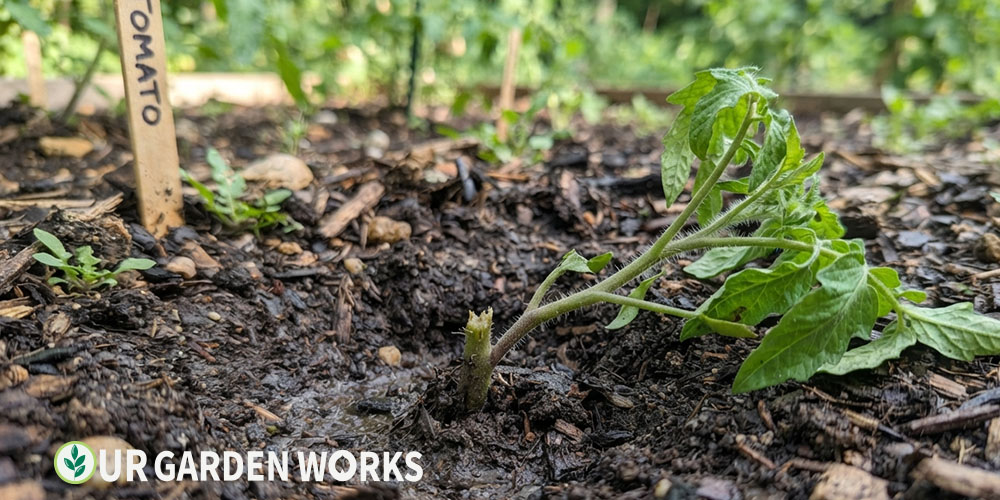
You transplanted your tomato seedlings — weeks of careful indoor growing, finally in the ground — and came out the next morning to find them toppled, stems clipped clean at soil level. If you’re wondering whether rabbits are responsible, the clean cut at the base is usually your first clue.
Tomatoes aren’t a rabbit’s top choice — they’ll take lettuce, beans, and peas first. But young tomato seedlings are tender and low to the ground in early summer, and a rabbit that’s been working through your garden will get to them eventually.
Here’s how to know for certain, and how to protect your plants.
Quick Answer: Yes, rabbits eat tomato plants — primarily young stems and leaves, especially right after transplanting when plants are small and ground-level. They rarely damage established tomato plants with fruit. The primary risk window is the first 3–4 weeks after transplanting outdoors. Fencing and repellents applied immediately after transplanting prevent almost all rabbit damage.
Is It Rabbits or Something Else?
Tomato plant damage has many possible causes. Here’s how to distinguish rabbit damage from the other likely culprits:
| Damage Sign | Rabbits | Cutworms | Deer | Slugs |
|---|---|---|---|---|
| Cut type | Clean 45° cut | Stem severed at soil line | Torn, ragged | Holes in leaves |
| Damage height | Up to 18 inches | At soil line only | Up to 6 feet | Ground level |
| Evidence left | Small round droppings | Grey grub in soil | Large oval droppings | Slime trail |
| Timing | Dawn/dusk/night | Night | Dawn/dusk | Night (wet) |
| Plant age targeted | Young plants most | Any transplant | Any size | Young seedlings |
💡 The clean cut test
Pick up the clipped stem and look at the cut end. A rabbit cut is clean and angled — like a diagonal made by scissors. A cutworm severs the stem straight across at soil level. A snapped stem from physical damage is usually crushed or torn. The clean angled cut is the most reliable rabbit identifier.
When Are Tomatoes Most at Risk from Rabbits?
Rabbits are most likely to damage tomato plants in three specific situations:
- Immediately after transplanting. Newly transplanted seedlings are small, tender, and at ground level. This is the highest-risk window — the first 3–4 weeks after going outside.
- During food scarcity. When other preferred plants (lettuce, peas, beans) are not available, rabbits work through less-preferred options including tomatoes.
- Spring for young plants. Seedlings started indoors and transplanted in May–June are at the most vulnerable size exactly when rabbit activity is highest.
Once tomato plants are established — 2+ feet tall with strong woody stems — rabbits rarely damage them. The fruit, however, can attract rabbits in late summer when other food sources decline.
5 Ways to Protect Tomato Plants from Rabbits
1. Hardware Cloth Cages (Most Reliable)
A cylinder of 1-inch hardware cloth around each tomato plant at transplanting time prevents rabbit access completely.
Make the cage 18–24 inches tall and push the bottom 4–6 inches into the soil. Remove or expand once plants are large enough to outgrow rabbit reach (~18 inches tall).
This is the single most reliable method for newly transplanted tomatoes. A 10-foot roll of hardware cloth cuts into several cages and costs about $15–20 — a good return on weeks of seed-starting investment.
2. Row Cover During the First Month
Lightweight row cover (floating fabric) draped over transplanted tomatoes prevents rabbit access while also protecting against late frost. Remove during the day for pollination once flowers appear, but replace at dusk during the highest-risk weeks.
3. Repellent Applied Immediately After Transplanting
Spray repellents applied to the soil surface and base of plants right after transplanting reduce rabbit interest during the critical early period. Reapply every 1–2 weeks and after rain.
See our best rabbit repellent guide for specific product recommendations.
4. Raised Beds With Buried Fencing
Raised beds with hardware cloth laid flat on the soil surface below the bed (to prevent burrowing up through the bottom) and a perimeter fence provide full-season protection. For complete bed fencing instructions, see our how to keep rabbits out of your garden guide.
5. Plant in Groups, Not Rows
Tomatoes planted in tight clusters are slightly harder for rabbits to access than plants in widely spaced rows. This isn’t a reliable deterrent on its own, but combined with repellents it reduces the “easy access” factor that makes individual plants attractive targets.
Seasonal Risk Calendar for Tomato Plants
Rabbit damage to tomatoes peaks during a specific window and largely resolves on its own as plants mature. Understanding the calendar helps you time protection efficiently rather than maintaining it all season.
| Stage | Timing | Risk Level | Primary Threat |
|---|---|---|---|
| Transplant week 1–2 | May–June | 🔴 Critical | Entire plant clipped at stem base |
| Weeks 3–6 (establishing) | June | 🟠 High | Lower stem and leaf stripping |
| Established plant (18″+ tall) | Late June–July | 🟡 Low-moderate | Occasional lower leaf nibbling |
| Fruiting (late summer) | August–September | 🟡 Moderate | Low-hanging fruit, especially cherry types |
The high-risk window is short — roughly the first 4–6 weeks after transplanting outdoors. Protective measures applied during this window can be removed or relaxed once plants have surpassed 18 inches and stems have begun to harden.
Protecting Tomatoes in Raised Beds vs In-Ground
Raised bed tomatoes and in-ground tomatoes face slightly different rabbit scenarios that call for different protection approaches.
Raised Beds
A raised bed with walls over 18 inches tall provides some natural deterrence — rabbits prefer not to climb when alternative food is available at ground level. However, a motivated rabbit or a raised bed with easy access points (wooden sides with horizontal rails rabbits can use as footholds) offers no real barrier.
For raised beds, a low perimeter fence of hardware cloth attached directly to the bed frame is the cleanest solution. It folds down for access and keeps rabbits out completely.
In-Ground Planting
In-ground tomatoes in open beds are fully exposed to rabbit access. Individual plant cages at transplanting are the most practical protection — one cage per plant, pushed 4 inches into the soil, 18–24 inches tall. Remove or expand the cage once the plant outgrows it (typically at 6–8 weeks after transplanting).
For large numbers of plants, a perimeter fence around the entire tomato section is more efficient than caging each plant individually.
What If Rabbits Already Damaged Your Tomatoes?
If a tomato plant has been clipped at the base (stem severed at or below soil level), it is very unlikely to recover — the growing point has been removed.
If leaves and lower stems were eaten but the main stem above the first set of leaves is intact, the plant may recover. Protect the remaining plant immediately with a cage or cover and monitor for new growth over 7–10 days.
If you’ve lost transplants to rabbits, the fastest recovery path is buying new transplants from a garden center rather than trying to re-start from seed with the season already underway.
Frequently Asked Questions
Do rabbits eat tomato fruit?
Yes, but they’re not the most common fruit pest. Rabbits can reach and eat low-hanging tomatoes, especially cherry tomatoes where fruit forms close to the ground. Deer, birds, squirrels, and hornworms are more common fruit-level culprits. If you’re finding fruit damage without plant damage, rabbits are less likely than these other pests.
Will rabbits eat tomato plants grown in containers?
Yes, if the container is at ground level and accessible. Raised containers (on a table, deck railing, or elevated stand) are generally out of rabbit reach.
Ground-level containers and grow bags are as vulnerable as in-ground plants. Moving containers to a raised surface during the high-risk first month is an easy solution for container gardeners.
At what size are tomato plants safe from rabbit damage?
Generally, once the main stem is pencil-thick and the plant is over 18 inches tall, rabbits rarely bother them. The lower leaves may still get nibbled, but established plants tolerate this without significant yield loss.
The critical protection window is the first 3–4 weeks after transplanting, when plants are small and stems are tender. After that, rabbit risk drops significantly.
Part of Our Rabbit Garden Pest Guide
Final Thoughts
We hope this helps you identify whether rabbits are behind your tomato plant losses — and gets your protection strategy in place before planting day. Cages at transplant time, every time, if you’re in a rabbit area.
For the complete rabbit control picture, our what do rabbits eat guide covers every plant they target.
Share this with a fellow gardener who lost tomato seedlings to an unknown culprit and finally wants to know which pest it was — and let us know in the comments what rabbit damage you’re dealing with this season. Happy growing!
