

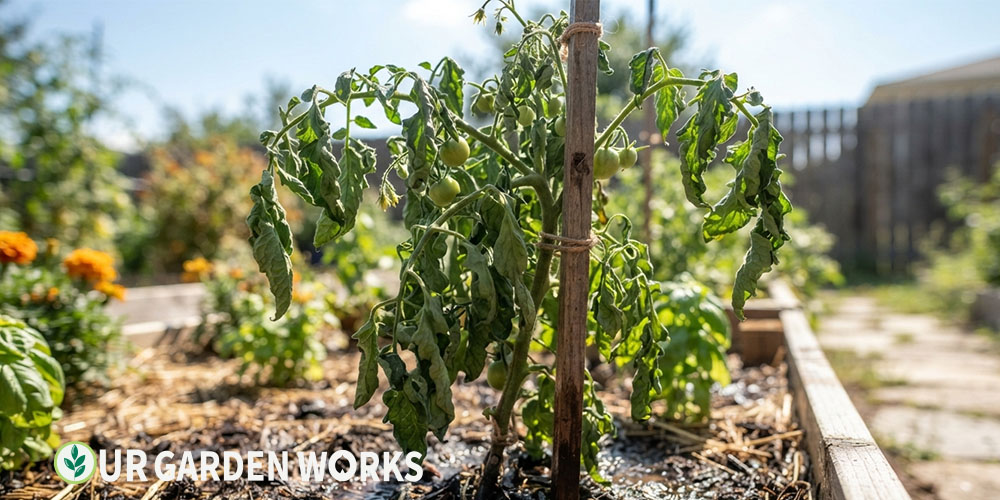
Few things trigger more unnecessary worry, and unnecessary watering, than tomato leaves drooping dramatically on a hot afternoon.
In a genuinely large share of cases, this is the plant doing exactly what it’s supposed to do — and watering more in response actually creates a new problem rather than solving one.
This guide focuses specifically on distinguishing that normal, harmless heat response from the situations where drooping genuinely signals something that needs attention.
Quick Answer: Tomato leaves drooping during peak afternoon heat, with soil that’s adequately moist and full recovery by evening or the next morning, is a normal protective response, not a problem requiring action. Drooping that persists into the evening, recurs daily despite adequate watering, or is accompanied by yellowing or wilting at the stem level suggests genuine drought stress, root damage, or disease instead.
Why Tomato Leaves Droop in Heat — The Normal Mechanism
Tomato leaves have a genuine, deliberate heat-management strategy: drooping and curling inward reduces the leaf surface area directly exposed to intense midday sun, which in turn reduces water loss through transpiration during the period when that water loss would otherwise be most severe.
This is an active, protective response rather than a sign of distress, even though it looks visually similar to the wilting that does signal a real problem.
The plant essentially trades some photosynthetic efficiency during the hottest part of the day for water conservation, then recovers its normal leaf position once temperatures moderate in the evening.
This daily cycle — drooping at peak heat, recovering by evening — is completely normal for healthy tomato plants in hot summer conditions and doesn’t indicate any underlying problem with watering, soil, or plant health.
💡 Check the soil before reaching for the hose
The single most useful habit for telling normal heat drooping apart from genuine drought stress is checking soil moisture at root depth before watering in response to afternoon drooping.
If soil is adequately moist, the drooping is very likely the normal protective response, and adding more water risks tipping the plant into overwatering territory instead.
How to Tell Normal Heat Drooping From a Real Problem
| Signal | Normal Heat Response | Genuine Problem |
|---|---|---|
| Timing | Worst during peak afternoon heat | Persists into evening or morning |
| Soil moisture | Adequate at root depth | Often dry, or conversely waterlogged |
| Recovery | Full recovery by evening/next morning | No recovery, or only partial |
| Other symptoms | None — otherwise healthy plant | Yellowing, spots, stem discoloration |
The recovery test is often the single most reliable indicator: a plant that’s drooping purely from normal heat management looks essentially back to normal by the following morning, while a plant with a genuine underlying problem either fails to recover or shows only partial, incomplete recovery even after the heat of the day has passed.
When Drooping Does Signal Genuine Drought Stress
If soil is genuinely dry at root depth, not just at the surface, and drooping persists well into the evening without meaningful recovery, this points to actual drought stress rather than the normal protective response.
Established tomato plants need consistent moisture, particularly during fruit development, and prolonged drought stress can affect fruit quality and increase blossom end rot risk even if the plant doesn’t die outright.
Fix: Water deeply and thoroughly, aiming for consistent soil moisture rather than allowing repeated dry-out cycles. Mulching around the base helps retain moisture between waterings, particularly valuable during sustained hot, dry stretches.
When Drooping Signals Root Damage or Disease
Drooping that persists despite clearly adequate or even excessive soil moisture, especially when accompanied by yellowing, stem discoloration, or a one-sided pattern, points toward the vascular wilt diseases covered in our wilting tomato plants guide rather than simple heat or drought response.
These diseases damage the plant’s internal water transport system, producing wilting and drooping symptoms regardless of how much water is actually available in the soil.
How to tell this apart from normal heat response:
- Drooping doesn’t correlate cleanly with the hottest part of the day, or persists regardless of temperature
- No recovery overnight, or only minimal, incomplete recovery
- Additional symptoms present — yellowing, spotting, or stem discoloration when cut
- Often affects one section or side of the plant disproportionately
Fix: See the complete wilting tomato plants guide linked above for identifying and responding to the specific disease responsible, since treatment differs from simple heat or drought management and generally involves removing affected plants rather than adjusting watering.
Container Tomatoes and Heat Drooping
Container-grown tomatoes experience more dramatic and more frequent heat drooping than in-ground plants, simply because container soil heats up and dries out faster than the ground, intensifying both the temperature stress triggering the protective drooping response and the genuine risk of actual drought stress developing alongside it.
This makes the soil-moisture check described earlier even more important for container tomatoes specifically, since visual drooping alone is a less reliable signal when the underlying soil conditions are inherently more volatile.
For container tomatoes in particularly hot climates or during sustained heat waves, checking soil moisture daily, sometimes twice daily during the most extreme conditions, helps you stay ahead of genuine drought stress before it develops, rather than reacting to visual drooping that may or may not indicate an actual watering need at that specific moment.
Should You Provide Shade During Extreme Heat?
For a genuinely extreme, prolonged heat wave — several consecutive days well above what’s typical even for a hot summer — temporary afternoon shade cloth can help reduce the intensity of the stress response and protect developing fruit from sunscald, even if the plant’s normal drooping response is otherwise handling more typical heat adequately on its own.
This is a reasonable precaution for unusual extreme weather rather than a standard practice needed for ordinary summer heat that tomato plants are well adapted to handle through their normal protective drooping mechanism.
Removing shade cloth once the extreme heat passes allows the plant to return to normal full-sun growing conditions, since tomatoes genuinely need substantial direct sun for healthy growth and fruit production under typical summer conditions, and prolonged unnecessary shading would do more harm than the occasional heat wave it was meant to protect against.
Do Some Tomato Varieties Handle Heat Better Than Others?
Heat tolerance varies meaningfully across tomato varieties, and this affects both how dramatically a plant droops during hot afternoons and how well it continues setting fruit during sustained hot weather.
Heat-tolerant varieties, often specifically bred and marketed for hot summer climates, generally show less dramatic drooping and maintain more consistent flower and fruit set even when daytime temperatures regularly exceed 90°F, compared to varieties bred more for cooler growing regions.
If you garden in a consistently hot summer climate and have noticed your tomatoes drooping dramatically and seeming to struggle through most of the summer despite otherwise good care, researching heat-tolerant varieties for your next planting season can make a genuine difference in both the visual drama of daily drooping and the more practically important question of sustained fruit production through extended hot stretches.
Many seed catalogs now note heat tolerance directly, especially for varieties bred or selected with southern and hot-climate growing conditions specifically in mind.
This variety consideration matters less for the basic question this guide addresses — distinguishing normal drooping from a genuine problem — since even heat-tolerant varieties still show some degree of the same protective drooping response under sufficiently intense heat.
The difference shows up more in degree and in sustained fruit production through a hot season than in eliminating the basic heat response mechanism entirely.
A Practical Daily Check-In Routine
Given how visually similar normal heat drooping and genuine problems can look in the moment, building a simple daily check-in routine removes most of the guesswork over the course of a hot summer.
A quick morning glance at your tomato plants, before the day’s heat sets in, tells you whether overnight recovery was complete — this is the single most useful data point, since it directly answers the central question this whole guide revolves around.
If morning checks consistently show full recovery day after day, you can comfortably ignore afternoon drooping as the normal, harmless response it almost certainly is, freeing you from the daily anxiety of wondering whether to water during the hottest part of each day.
If you ever notice a morning where recovery seems incomplete, that’s your specific signal to dig deeper — checking soil moisture, looking for other symptoms, and considering whether one of the genuine problems covered in this guide might be developing.
Frequently Asked Questions
Should I mist my tomato plants to help them cope with heat?
Misting foliage isn’t generally recommended for tomatoes, since wetting leaves — even briefly — can increase the risk of fungal diseases that thrive on leaf moisture, an issue covered extensively elsewhere in our tomato disease guides.
Focus on consistent soil-level watering and mulching instead, which address the plant’s actual water needs without the disease risk that comes with wetting foliage.
Does normal heat drooping affect tomato fruit production?
Brief, normal daily heat drooping that fully recovers by evening generally doesn’t meaningfully affect fruit production, since it’s a temporary, reversible response rather than ongoing stress.
Sustained heat stress over many consecutive days, even with adequate watering, can reduce flower set and fruit development somewhat, which is a different and more significant concern than the routine daily drooping cycle covered as the main focus of this guide.
At what temperature should I start worrying about heat stress beyond normal drooping?
Tomato plants generally handle daytime temperatures into the 90s reasonably well with normal protective drooping, but sustained temperatures above 95-100°F, especially combined with low humidity, start pushing into territory where genuine heat stress beyond the normal daily cycle becomes more likely.
This is the range where temporary shade cloth and extra watering attention, as covered above, become more clearly worthwhile precautions.
Related Articles in Our Tomato Leaf Problems Guide
Final Thoughts
We hope this guide has given you the confidence to watch your tomatoes droop on a hot afternoon without immediately reaching for the hose — checking the soil first, and watching for evening recovery, really does separate the harmless cases from the ones that need real attention.
For all our tomato and vegetable guides, our vegetable gardening guide links to everything.
Share this post with a fellow gardener who’s wondering whether their tomatoes need water on a hot day — and let us know in the comments how your plants are handling the heat this season. Happy growing!
