

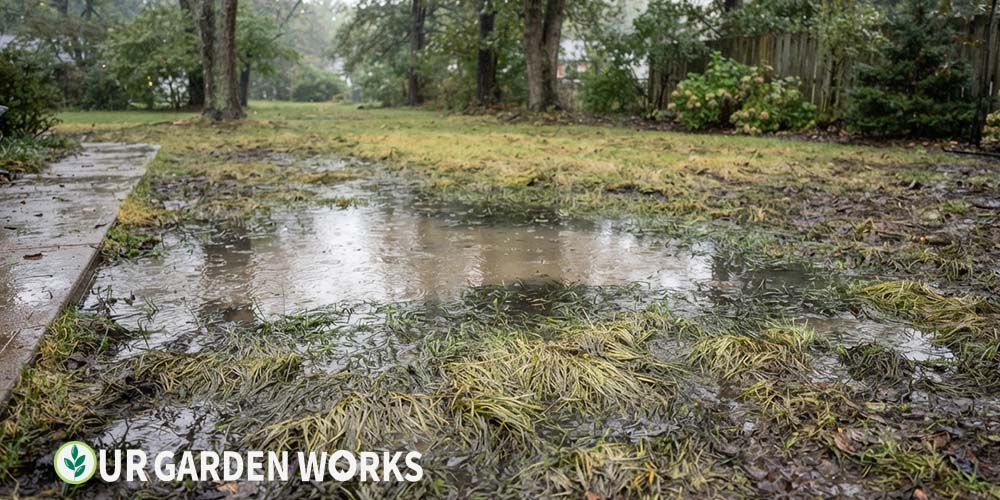
Lawn death following heavy rain feels especially frustrating since rain is supposed to be exactly what a thirsty lawn needs. But grass roots, like most plant roots, need oxygen as much as they need water, and prolonged saturation effectively suffocates roots even though the soil is anything but dry.
This guide focuses specifically on genuine waterlogging following significant rain events, expanding on the broader topic touched on in our dead-patches-after-rain guide, since severe or repeated waterlogging deserves its own closer, more complete look.
Quick Answer: Lawn dying after heavy rain is almost always waterlogging — saturated soil displaces the oxygen grass roots need, effectively suffocating them even though water is abundant. Recovery depends on how long the area stayed saturated and how severely roots were affected. Improve drainage through aeration, regrading, or a French drain for chronically affected areas, and avoid additional stress (foot traffic, mowing) while the area is still wet.
Why Waterlogged Soil Actually Kills Grass
Soil under normal conditions contains a network of air pockets between particles, and these pockets hold the oxygen plant roots need for cellular respiration — essentially the same basic biological process that makes oxygen necessary for most living things.
When soil becomes fully saturated, water fills these air pockets, displacing the oxygen that was there and effectively suffocating roots that depend on it.
Roots can tolerate brief saturation without lasting harm, but extended waterlogging — typically more than 24-48 hours of fully saturated, oxygen-depleted soil — begins causing genuine root damage that can ultimately kill the plant even after the water eventually recedes and soil conditions return to normal.
This is why the duration of waterlogging matters as much as its severity when assessing how much damage to expect.
💡 Compacted soil dramatically worsens waterlogging risk
Soil that’s already compacted has fewer air pockets to begin with and drains far more slowly than loose, well-structured soil, meaning the same rain event can produce much more severe waterlogging in compacted areas than in healthy, well-aerated soil elsewhere in the same yard.
This is exactly why aeration is such a consistently recommended fix throughout this lawn problems series.
Assessing the Damage After Water Recedes
Once standing water has drained and soil has returned to a more normal moisture level, assessing the actual extent of damage helps determine the right next steps.
Grass that looks yellowed or grayish but still shows some green color and resistance when gently tugged likely retains enough root function to recover with proper care.
Grass that’s turned uniformly brown, pulls up with little resistance, or shows a distinctly rotten odor at the root zone has likely suffered more severe, possibly unrecoverable root damage.
How to check root health directly:
- Dig a small sample from the affected area and examine the roots
- Healthy roots are firm, white to tan in color
- Damaged or dying roots are dark, soft, mushy, or have a notably reduced root mass compared to healthy areas nearby
Helping a Waterlogged Lawn Recover
Directions
- Avoid walking on or mowing the affected area while it’s still saturated or very soft, since additional compaction at this vulnerable stage compounds the existing root stress.
- Once soil has dried to a reasonable firmness, aerate the area to improve oxygen penetration and support faster root recovery.
- Apply a light, balanced fertilizer application to support new root and shoot growth, avoiding heavy nitrogen applications that could stress already-weakened grass.
- Monitor over the following 2-3 weeks for signs of recovery (new green growth) versus continued decline, which would suggest reseeding is necessary for that specific area.
⚠️ Resist the urge to walk on saturated lawn, even to assess damage
It’s natural to want to inspect a waterlogged area closely, but walking on still-saturated soil compacts it further and can cause additional root damage right when the grass is most vulnerable. Wait until the area has dried to at least a moderately firm consistency before close inspection or any foot traffic.
When Reseeding Is the Right Call
If grass in the affected area hasn’t shown any new growth within about 3 weeks of soil returning to normal moisture levels, and root inspection reveals significant damage, reseeding is generally the more efficient path forward rather than continuing to wait for recovery that may not be coming.
Preparing the soil properly — including any needed drainage improvements covered below — before reseeding gives the new grass a meaningfully better chance than the previous stand had.
Do Some Grass Types Tolerate Waterlogging Better Than Others?
Grass type genuinely matters for waterlogging tolerance, with some varieties showing meaningfully better resilience to saturated soil conditions than others.
Among warm-season grasses, St. Augustine and certain zoysia varieties tend to handle occasional waterlogging better than Bermuda, which generally prefers drier, well-draining conditions and shows more pronounced stress when soil stays saturated for extended periods.
Among cool-season grasses, tall fescue often demonstrates somewhat better waterlogging tolerance than Kentucky bluegrass, partly due to differences in root system depth and structure between these common turf types.
If a specific area of your yard experiences chronic waterlogging after every significant rain event despite reasonable drainage efforts, and you’re currently growing a variety known for poor wet-soil tolerance, switching that specific zone to a more water-tolerant grass type can meaningfully reduce how often you face this recovery process, even without fully solving the underlying drainage challenge.
Flooding vs. Simple Waterlogging — Does the Distinction Matter?
While this guide has used “waterlogging” somewhat broadly, it’s worth distinguishing between simple waterlogging (saturated soil without necessarily having standing water visible above the grass) and genuine flooding (water actually covering and submerging grass blades for an extended period).
Flooding represents a more severe version of the same underlying oxygen-deprivation mechanism, but it adds the complication of grass blades themselves being submerged and unable to photosynthesize normally, on top of the root-level oxygen problem affecting both scenarios.
Recovery expectations should be calibrated accordingly — simple waterlogging without full submersion of grass blades generally allows for a faster, more complete recovery than genuine flooding lasting multiple days, where both root damage and the inability to photosynthesize during submersion compound to create more extensive overall stress.
If your lawn experienced actual flooding rather than just saturated soil, building in a somewhat longer recovery assessment window before considering reseeding, and being more prepared for the possibility that reseeding will ultimately be necessary, sets more realistic expectations than assuming the same quick recovery timeline that simple waterlogging might allow.
Long-Term Drainage Solutions for Chronically Waterlogged Areas
If a specific area of your lawn experiences waterlogging-related damage repeatedly after heavy rain events, addressing the underlying drainage issue prevents having to manage this same recovery process again and again.
Core aeration provides meaningful, ongoing improvement for moderately compacted areas, while more severely problematic low spots may need regrading to improve natural runoff, or a French drain system to actively redirect water away from the problem area.
Amending soil with organic matter improves its structure and natural drainage capacity over time, particularly valuable for heavy clay soils that are inherently more prone to waterlogging than sandier soil types.
For areas where these structural fixes aren’t practical, switching to a more water-tolerant grass variety or considering a rain garden or bog-friendly planting alternative for genuinely chronic wet spots may ultimately be the more realistic long-term solution than continuing to fight unfavorable drainage conditions with standard turf grass.
Frequently Asked Questions
How long can grass survive being underwater before it dies?
This varies by grass type and water temperature, but most common turf grasses can tolerate brief submersion (a day or two) without lasting damage, while submersion extending beyond 4-5 days, especially in warm water that depletes oxygen faster, significantly increases the risk of permanent root damage and grass death.
Cooler water generally allows for somewhat longer survival than warm water under otherwise similar conditions.
Should I add sand to my lawn to improve drainage after repeated waterlogging?
Topdressing with sand can help improve drainage in some situations, particularly for heavy clay soils, but it needs to be done thoughtfully and in appropriate quantities, since adding sand incorrectly (in a thin layer over clay, for instance) can sometimes create drainage problems rather than solving them by forming a barrier between different soil textures.
Consulting a lawn care professional or local extension service for guidance specific to your soil type is worthwhile before undertaking a significant sand topdressing project.
Can fertilizing help a waterlogged lawn recover faster?
A light, balanced fertilizer application can support recovery once the area has dried to reasonable moisture levels, but fertilizing while soil is still saturated isn’t effective and risks additional stress, since roots can’t take up nutrients efficiently in oxygen-depleted, waterlogged conditions regardless of what’s available in the soil.
Timing fertilizer application to follow proper drainage, not to precede or coincide with it, produces better results.
Related Articles in Our Lawn Care Guide
Final Thoughts
We hope this guide has helped you understand why rain — of all things — can leave a lawn struggling, and given you a realistic path to recovery and longer-term drainage improvement.
For more lawn care guidance, our full collection of lawn articles on the soil and fertility page covers everything from seasonal maintenance to soil health.
Share this post with a fellow homeowner who’s dealing with a waterlogged lawn — and let us know in the comments how your recovery went. Happy growing!
