

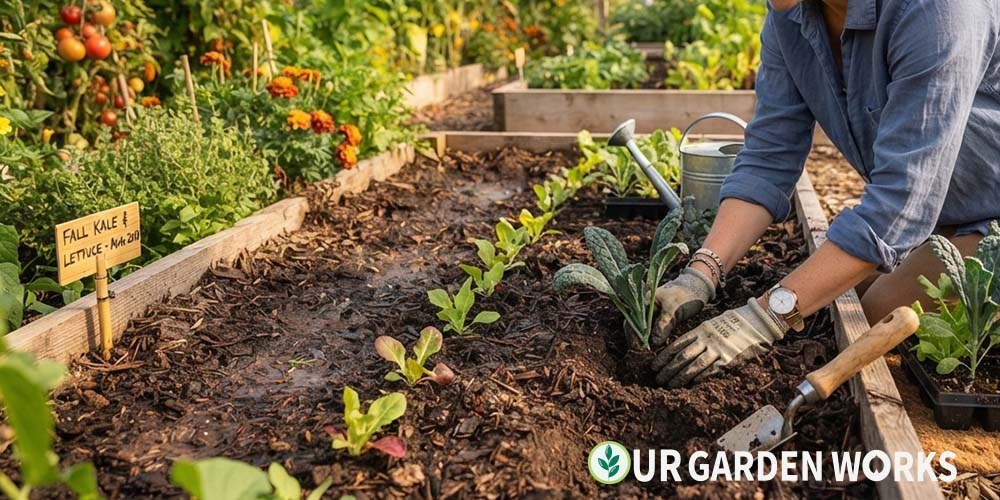
August feels like an odd time to plant anything new — summer crops are still producing, and the idea of starting fresh seems backwards. But for a real list of cold-tolerant vegetables, August is exactly the right window.
Plant now, and you’ll be harvesting through fall and, in many climates, well into the cooler months beyond. Wait until September, and several of these crops won’t have enough time to mature before hard frost.
Editor’s Note: In August, plant kale, lettuce, spinach, radishes, beets, carrots, broccoli, and bush beans for a fall harvest. Count backward from your area’s average first frost date using each crop’s days-to-maturity, and add a couple of weeks of buffer since fall growth slows as light and temperature decrease.
Why August Planting Works — The Backward Math
The logic here runs in reverse from spring planting. Instead of counting forward from your last frost, you count backward from your first fall frost.
Take a crop’s days-to-maturity, add 10–14 days of buffer (since cooling temperatures and shortening days slow growth in fall compared to the same crop grown in spring), and that tells you the latest safe planting date.
Miss that window and the plant either doesn’t mature before frost, or matures right as cold weather arrives and stops growth abruptly.
💡 Find your frost date before doing any of this math
Your local average first frost date is the single number this entire planning approach depends on. Our frost dates lookup tool gives you an accurate estimate for your specific ZIP code in seconds.
The Best Vegetables to Plant in August
| Vegetable | Days to Maturity | Cold Tolerance |
|---|---|---|
| Kale | 50–65 | Excellent — survives hard frost, sweetens with cold |
| Spinach | 40–50 | Excellent — among the most cold-hardy greens |
| Lettuce (loose-leaf) | 30–50 | Good — tolerates light frost |
| Radishes | 25–30 | Good — fast enough to easily beat frost |
| Beets | 50–65 | Good — roots tolerate cold well |
| Carrots | 60–75 | Good — sweeten after light frost |
| Broccoli (transplants) | 50–70 from transplant | Moderate — needs row cover in hard frost |
| Bush beans | 50–55 | Poor — must finish before first frost |
Bush beans are the outlier on cold tolerance here, included because their fast maturity still fits an August planting in most regions with a reasonably late first frost — just don’t expect them to survive any actual cold once it arrives.
Why Some of These Vegetables Actually Taste Better After Frost
This deserves a real explanation, since it sounds counterintuitive at first. Kale, carrots, and several other cold-hardy crops convert stored starches into sugars as a natural antifreeze response when temperatures drop near freezing.
This process, called cold-induced sweetening, genuinely changes the plant’s flavor — kale harvested after a light frost is noticeably sweeter and less bitter than the same kale harvested in summer heat.
This is a real biochemical adaptation, not a coincidence or folklore. The sugar concentration in cell sap also acts as a literal antifreeze, lowering the freezing point of the plant’s internal fluids and helping it survive temperatures that would otherwise cause cellular damage.
Direct Sow vs. Transplant in August
Most of this list direct-sows well, even in still-warm August soil — radishes, beets, carrots, and bush beans all do best seeded straight into the ground.
Broccoli is the exception worth transplanting rather than direct-seeding, since starting it from seed in August often doesn’t leave enough time to reach transplant size before the maturity clock really needs to start. Starting broccoli seedlings indoors in July, or buying transplants, solves this timing gap.
Protecting Fall Crops as Temperatures Drop
A simple row cover or frost cloth extends your harvest window significantly, often by several weeks, by protecting plants from the first few light frosts while they continue maturing.
For crops like lettuce and spinach, a cold frame or low tunnel can push the harvest season even further, sometimes through much of winter in moderate climates. This is a worthwhile investment if you’re planning to keep your fall garden producing as long as possible.
Choosing Varieties Bred Specifically for Fall
Seed catalogs increasingly label certain varieties as fall-specific, and this isn’t just marketing. Some lettuce and spinach varieties are bred for slower bolting in cooling temperatures, or for better cold tolerance than their spring-focused counterparts.
Looking for terms like “slow to bolt,” “winter hardy,” or “cold tolerant” on seed packets gives you a real performance edge for fall plantings, beyond just picking whatever variety happened to be on sale.
For kale specifically, curly varieties like Winterbor are bred for exceptional cold tolerance, while flat-leaf types like Lacinato, though still cold-hardy, tend to handle hard freezes slightly less gracefully.
Using Your Existing Summer Bed Space Efficiently
Most home gardens don’t have empty space sitting around in August — every bed is full of summer crops still producing. The trick is identifying which summer plants are winding down and ready to make room.
Bush beans that have slowed their production, early tomato plantings showing disease or fatigue, or a zucchini plant that’s simply exhausted itself are all reasonable candidates to pull and replace with a fall crop.
Rather than waiting for an entire bed to clear, succession planting in smaller sections as individual summer plants finish keeps the bed productive continuously rather than sitting empty between summer and fall plantings.
Frequently Asked Questions
Is it too late to plant a fall garden if I missed early August?
Not necessarily — fast-maturing crops like radishes and loose-leaf lettuce can still go in through early September in many regions and still mature before frost. Check your specific frost date and count backward using each crop’s days-to-maturity before assuming it’s too late.
Do fall vegetables need different soil prep than spring planting?
Not fundamentally different, though August soil is often more depleted after a full summer of growing other crops. A light refresh with compost before fall planting helps give these crops the nutrients they need for their shorter growing window.
Can I plant fall crops in the same spot where I just harvested summer vegetables?
Yes, this is actually the ideal use of that space — it’s exactly the principle behind succession planting. Just avoid planting the same crop family in the same spot back to back if disease pressure has been an issue, and refresh the soil with compost between plantings.
Will August heat hurt these cool-season crops while they're germinating?
It can slow or inhibit germination for some crops, particularly lettuce and spinach, which prefer cooler soil to sprout reliably. Planting in partial afternoon shade, watering consistently, or simply waiting for a slight cool-down within the planting window all help seeds germinate despite lingering summer heat.
Do I need row covers for every fall crop, or just some?
Most cold-hardy crops on this list (kale, spinach, carrots, beets) don’t need protection for normal fall frosts and only benefit from covers in genuinely hard freezes. Less cold-tolerant crops like broccoli and bush beans benefit more consistently from row cover protection as temperatures drop toward frost.
Should I fertilize fall crops the same way I fertilize spring crops?
A lighter touch generally works better for fall plantings. Since most fall crops have a shorter growing window and cooler temperatures slow nutrient uptake, a single application of balanced fertilizer at planting, rather than repeated feeding through the season, is usually sufficient for the shorter fall cycle.
Stretching the Fall Harvest as Long as Possible
Once your fall crops are in the ground and growing, a few extra steps can meaningfully extend how long you’re actually harvesting before winter truly shuts things down.
Harvesting outer leaves from kale, lettuce, and spinach rather than pulling whole plants lets them continue producing new growth for weeks longer than a single harvest would allow.
For root crops like carrots and beets, a thick layer of mulch over the bed once cold weather sets in can actually let you leave them in the ground and harvest as needed well into early winter, using the soil itself as natural cold storage.
Related Articles in Our Vegetable Gardening Guide
Final Thoughts
We hope this convinces you August is genuinely a planting month, not just a harvesting one. A few fast-growing, cold-hardy crops in the ground now can keep your garden productive well past the point most people have packed it in for the season.
For the next steps once your fall garden is planted, our vegetable gardening guides cover the rest.
Share this post with a fellow gardener who thinks the season is over — and let us know in the comments what you’re planting this August. Happy growing!
