

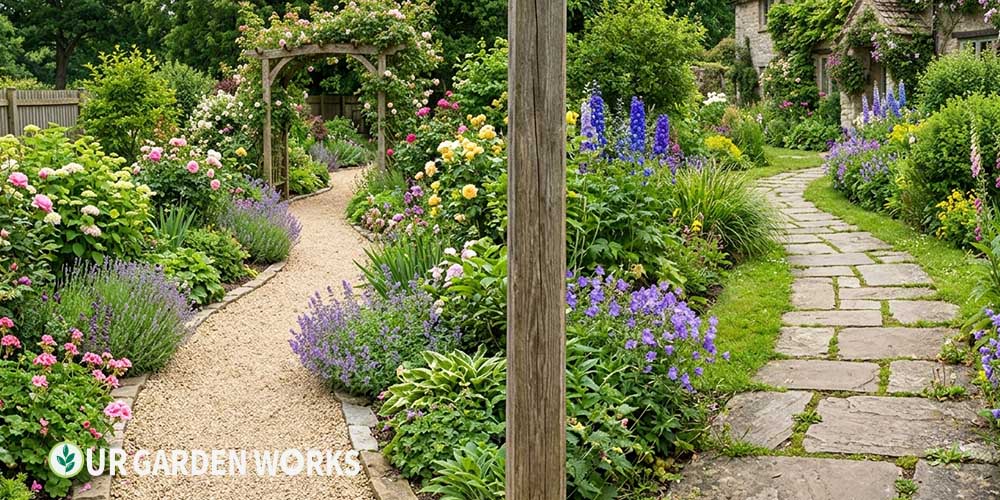
This is one of the most common questions we hear from readers planning a new garden path, and the honest answer is that neither material is universally “better” — they solve different problems and suit different situations.
The right choice depends heavily on your budget, your climate, how the path will be used, and how much ongoing maintenance you’re realistically willing to do.
We’ve broken this comparison down across the factors that actually matter for a real decision, rather than just listing pros and cons in the abstract.
By the end, you should have a clear sense of which material fits your specific yard, not just which one looks nicer in photos.
Gravel vs. Flagstone Garden Path: Gravel is cheaper, faster to install, and easier to adjust or repair, making it ideal for casual paths, tight budgets, and DIY projects. Flagstone costs more and takes longer to install, but provides a more stable, permanent walking surface that handles wheelbarrows and heavy foot traffic better and needs far less ongoing upkeep once it’s down.
Gravel vs. Flagstone Cost Comparison
| Factor | Gravel | Flagstone |
|---|---|---|
| Material cost (per sq ft) | $1–3 | $8–25+ |
| 20-ft path, 3 ft wide (materials only) | $60–180 | $480–1,500+ |
| Professional installation (per sq ft) | $3–6 | $15–30 |
| DIY-friendliness | Very high | Moderate — heavier, more technique-dependent |
Gravel is dramatically cheaper at every stage of the project, from raw materials through installation labor if you hire it out.
This cost gap is the single biggest factor that pushes budget-conscious gardeners toward gravel, especially for longer paths where the per-square-foot difference compounds quickly.
Durability and Lifespan
Flagstone wins decisively here. A properly installed flagstone path — see our step-by-step flagstone installation guide — can last 50+ years with virtually no degradation, since natural stone simply doesn’t wear out the way other materials do.
Gravel, by contrast, needs periodic topping off as material scatters, sinks into soil, or gets tracked away on shoes and equipment over time.
Neither material is particularly vulnerable to freeze-thaw damage when installed correctly, but flagstone holds its exact position better over decades, while gravel paths need more frequent minor maintenance to stay looking fresh and fully covered.
Maintenance Requirements
This is where the practical day-to-day experience of owning each path type really diverges.
Gravel paths need occasional raking to redistribute material that’s shifted from foot traffic or rain, periodic topping off as the layer thins, and more vigilant weed management since wind-blown seeds can settle into the loose surface even with fabric underneath.
Flagstone needs almost nothing once properly installed — occasional joint maintenance (refreshing polymeric sand or trimming groundcover between stones) and the rare reset of an individual stone that’s shifted.
For anyone who wants to install a path once and not think about it again for years, flagstone is the lower-effort long-term choice despite the higher upfront cost.
Accessibility and Usability
Flagstone’s continuous, solid surface is significantly easier to walk on for anyone with mobility concerns, and it accommodates wheelchairs, walkers, and wheelbarrows far better than loose gravel, which shifts underfoot and can be genuinely difficult to navigate with wheels or unsteady footing.
If accessibility is a real consideration for anyone who’ll use the path regularly, this factor alone often settles the decision in flagstone’s favor.
Gravel does have one usability advantage worth noting: it provides better traction in wet conditions for able-bodied walkers, since water drains through it instantly rather than pooling on a surface the way it briefly can on smooth flagstone after rain, before that water has had time to run off.
Climate Considerations
In regions with heavy, prolonged rain, gravel’s superior drainage is a genuine practical advantage — water passes through rather than sheeting across the surface. In regions with significant snow and ice, flagstone is easier to shovel and de-ice cleanly than gravel, which gets disturbed and scattered by shoveling and can end up mixed into snow piles at the path’s edge.
Hot, sunny climates suit either material reasonably well, though light-colored gravel reflects more heat than dark flagstone, which can absorb and hold warmth — a minor consideration for bare feet in peak summer, but rarely a deciding factor on its own.
Appearance and Garden Style
Beyond the practical factors, the two materials genuinely look different and suit different garden styles, which matters just as much as cost or durability for many homeowners.
Gravel has a relaxed, informal character that pairs naturally with cottage gardens, Mediterranean-style landscaping, and naturalistic plantings where a crisp, defined edge would feel out of place. It also produces a distinctive crunching sound underfoot that many gardeners genuinely enjoy as part of the sensory experience of walking through a garden.
Flagstone reads as more deliberate and substantial, fitting formal gardens, traditional cottage designs, and modern minimalist landscapes equally well depending on how the stones are cut and laid.
Irregular, organically shaped flagstone leans rustic; large, more uniformly cut stone slabs lean contemporary. This versatility is part of why flagstone remains such a popular choice across such a wide range of garden aesthetics despite its higher cost.
Real-World Scenarios — Which Would We Choose?
Sometimes it helps to see the decision applied to specific situations rather than evaluated as abstract pros and cons.
For a path connecting a back door to a vegetable garden that gets used multiple times a day, every season, in all weather, we’d lean flagstone. The daily-use, all-weather nature of that route rewards the stability and low maintenance flagstone provides, and the cost difference amortizes well over the kind of decades-long use that path will see.
For a meandering accent path through a flower bed, used occasionally to reach a bench or simply to wander through blooms on a nice evening, gravel is the more sensible choice.
The lower stakes of occasional, casual use don’t justify flagstone’s higher cost, and gravel’s informal character actually suits a wandering, exploratory path better than the more deliberate feel of cut stone.
For a rental property or a path you’re installing in a home you don’t plan to stay in long-term, gravel’s lower upfront cost and faster installation make it the more practical choice — you’re less likely to fully recoup a larger flagstone investment if you’re not the one who’ll enjoy its decades of durability.
Conversely, if you’re in a forever home and thinking about the landscaping your grandchildren might one day inherit, flagstone’s permanence starts to look like the better long-term value despite the steeper initial price.
Which Should You Choose?
| Choose Gravel If… | Choose Flagstone If… |
|---|---|
| Budget is the primary constraint | You want a permanent, decades-long investment |
| You want a fast DIY weekend project | Accessibility (wheelchair, walker, wheelbarrow) matters |
| The path is casual or secondary | The path is a primary, daily-use route |
| You’re open to periodic light maintenance | You want minimal ongoing upkeep |
| You like the look and sound of gravel underfoot | You prefer a more polished, formal appearance |
💡 You don’t have to choose just one
Many of the best garden paths combine both materials deliberately — flagstone or stepping stones for the primary walking surface, with gravel filling the joints or surrounding areas. This hybrid approach gets you flagstone’s stability where your feet actually land, with gravel’s drainage and lower cost filling everything around it.
Frequently Asked Questions
Can I convert a gravel path to flagstone later without starting over?
Partially — you can often reuse the compacted gravel base beneath an existing gravel path as the foundation layer for flagstone, saving the excavation step. You’ll still need to add a leveling sand layer and set the stones, but this shortcut meaningfully reduces the labor of converting an existing path rather than starting completely from scratch.
Is gravel or flagstone better for a path that gets heavy foot traffic?
Flagstone handles sustained heavy traffic better over time, since its solid surface doesn’t compress, scatter, or thin out the way gravel does under repeated use. For a primary path used multiple times daily by a household, flagstone’s higher upfront cost is usually justified by the reduced long-term maintenance.
Which material is better for resale value or curb appeal?
Flagstone and other natural stone paths are generally viewed as a more substantial, higher-end landscaping investment by appraisers and buyers, similar to how stone or brick exterior features tend to be valued over gravel or mulch alternatives.
That said, a well-maintained, attractively designed gravel path with good edging and planting still contributes positively to curb appeal — it’s simply viewed as a more modest investment than stone.
Related Articles in Our Garden Paths Guide
Final Thoughts
We hope this comparison has made the decision feel a lot less like guesswork — the right material really does come down to how you’ll use the path and how much ongoing care you want to put into it.
For all our backyard and landscaping guides, our backyard design guide hub links to everything in this series.
Share this post with a fellow gardener who’s ready to start their own path project — and let us know in the comments which material you chose and why. Happy growing!
