

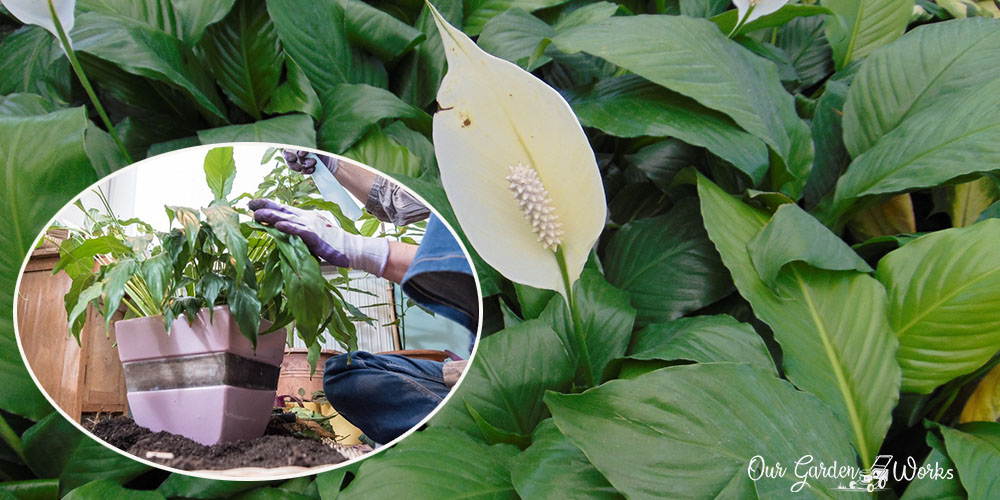
Some debates exist on whether a peace lily can purify the air or it’s just a decorative option. However, many people believe that this plant does provide air-purifying benefits. So, does peace lily clean the air? The answer is yes! Peace lilies can remove many toxins in the air, such as benzene and formaldehyde.
Discover how peace lilies clean the air and the benefits of growing them at home.
Q: Does peace lily clean the air?
A: Yes. In a study by NASA and the Associated Landscape Contractors of America, the peace lily is one of the 12 plants that helped remove air pollutants. The leaves, roots, soil, and related microorganisms in peace lilies are crucial in creating methods to lower indoor pollution.
Peace lilies are effective in removing common household toxins. Air pollutants trapped inside the house contaminate indoor air, which triggers more homeowners to use plants and moss more than usual.
4 Ways peace lily purifies the air
Air purifiers are a trend nowadays, but why spend money on buying those if peace lily can do the job?
Listed below are four ways peace lilies purify the indoor air.
#1 Prevents mildew formation
Mildew is a mold that typically grows in damp, warm, and humid parts of a building or space. It develops from a type of fungus that forms a powdery substance on the surface of materials like wood, paper, leather, or fabrics.
Peace lily helps reduce mildew growth by naturally absorbing moisture from the air and releasing it into the atmosphere. With reduced relative humidity indoors, mildew will fail to form and spread.
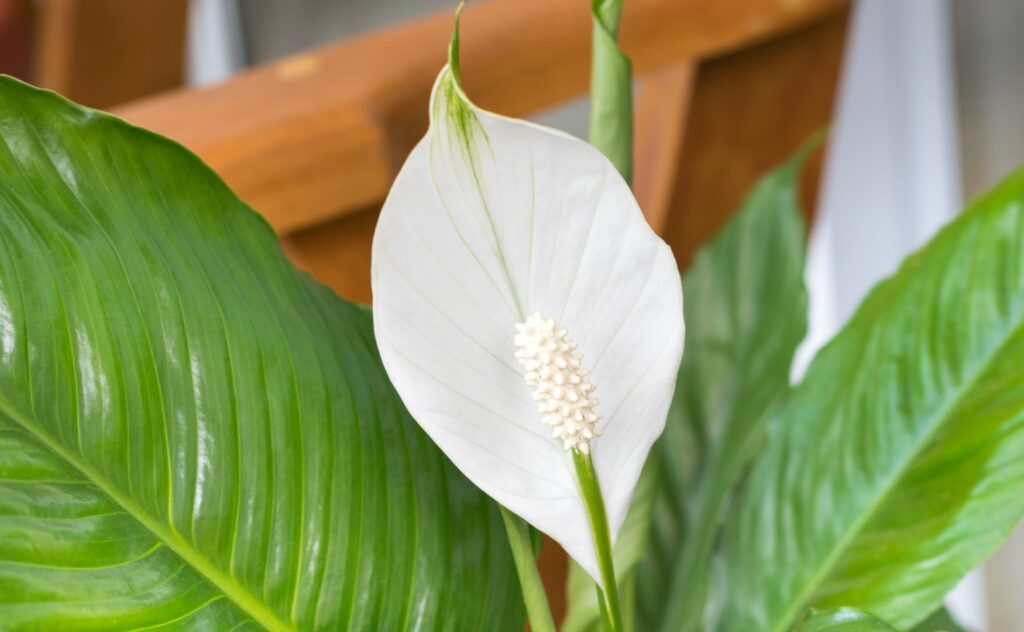
Water peace lily regularly to keep it healthy and enhance its efficiency in preventing mildew formation. Take note that the soil should be kept moist but not soggy. Soggy soil can lead to overwatering issues, mildew formation, and root rot.
It is also crucial to keep the leaves of the peace lily clean. Dust and other debris can block and reduce the plant’s ability to absorb light and moisture.
#2 Absorbs and trap odors
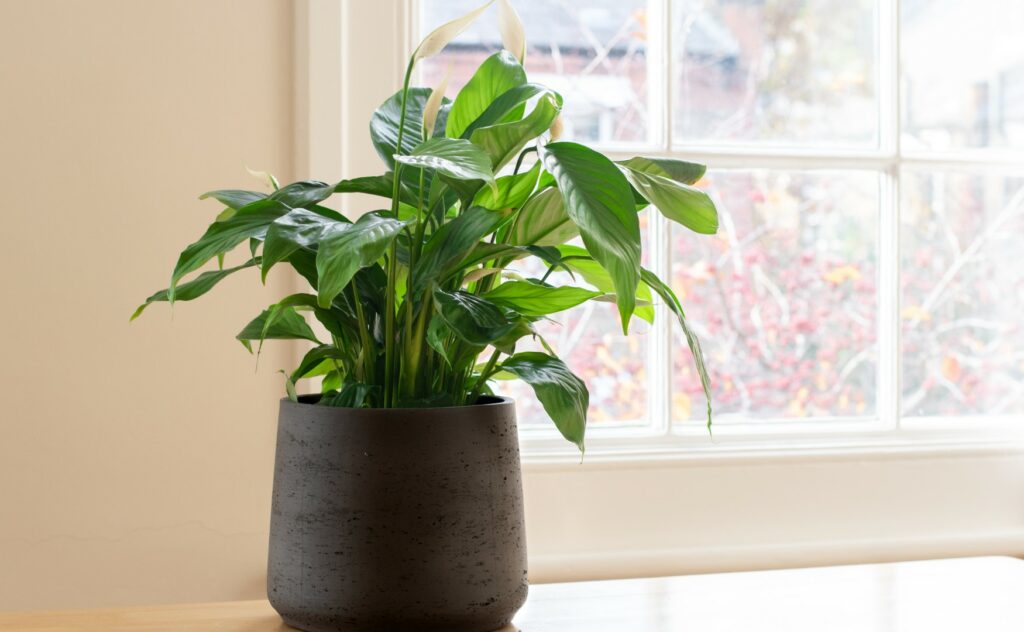
Odor-absorbing plants, like peace lilies, are a great way to spruce up a space without using harmful sprays or scented candles. It also helps to reduce airborne bacteria and other pollutants, which can help to improve the overall air quality in your home.
One of the advantages of odor-absorbing plants like peace lily is they are easy to maintain, and no chemicals are involved. Most of these plants are hardy and require minimal watering and care. They also don’t need any special lighting or upkeep.
The peace lily variety Spathiphyllum Mauna Loa is a popular absorber of alcohol, acetone, benzene, trichloroethylene, and formaldehyde. It is an ideal peace lily variety for areas filled with fumes from cooking fish or other activities that release unpleasant odors and chemicals.
Peace lilies have long, slender leaves with a waxy coating, which helps trap airborne particles. Its large leaves have cutin wax, which acts as a sponge to trap and absorb odors. It also traps and remains in the plant until it dissipates.
With their unique odor-trapping feature, peace lilies are ideal plants for rooms exposed to unpleasant odors, such as bathrooms or kitchens. They are also the best greenery for areas with limited or no ventilation, such as offices or bedrooms.
#3 Releases oxygen and moisture into the air
Plants, including peace lilies, release oxygen in the form of photosynthesis. In this process, leaves absorb carbon dioxide, toxins, and water and convert it to oxygen. They are a crucial part of the ecosystem that keeps humans and animals alive.
Peace lilies release extra moisture into the atmosphere due to their broad leaves, making them efficient humidifiers.
Overall, they provide fresh air and relative humidity, which aids in the prevention of respiratory conditions and colds.
#4 Increases humidity levels
Transpiration is a plant process that releases microscopic droplets of moisture in the air. While most plants release water vapor through their leaves, peace lilies take it one step further by releasing a spray of fine droplets from their flowers.
Peace lilies help increase a room’s humidity, which has several advantages. It helps to keep your skin and eyes hydrated, reducing irritation and dryness.
Additionally, the moisture helps keep your furniture, books, and other items from drying out and cracking.
Peace lilies are also known to be effective at increasing humidity levels at home, which can help to reduce respiratory symptoms. It helps to reduce dust and other allergens indoors, which creates a healthier environment for those who suffer from allergies or asthma.
The plant absorbs water through its leaves which evaporates into the air, increasing room humidity. Increased humidity can help keep the air in your home cozier.
The peace lily is an ideal addition to rooms with dry air due to air conditioning or central heating. Viruses and bacteria travel slower in the air when there’s adequate humidity indoors, saving you from having colds or catching the flu from a sick family member.
Peace lily and air pollution
Does peace lily clean the air?
When it comes to indoor air pollution, the peace lily is the perfect solution. This beautiful flowering plant is known for its ability to filter toxins commonly found in everyday households, known as:
- Benzene: Found in adhesives, cleaning products, and tobacco smoke
- Carbon monoxide: Released from clothes dryers, water heaters, furnaces or boilers, and fireplaces
- Formaldehyde: Released from paints, synthetic fabrics, cosmetic and personal products
- Trichloroethylene: Present in cleaning wipes, aerosol cleaning products, tool cleaners, paint removers, spray adhesives, carpet cleaners, and spot removers
- Xylene: Fumes from cleaning agents, paint thinners and varnishes
By filtering out these air pollutants, peace lilies can help improve air quality and make it easier for us to breathe. They take in these pollutants through their leaves and either retain them on the leaves or transfer them to their roots, where microbes can break them down.
3 Benefits of Growing peace lily at home
With their glossy leaves and pretty white flowers, peace lilies are not only pleasing to the eye but also easy to grow and offer many advantages for your house. These include:
#1 Make your room look better
The beauty of peace lily lies in its simplicity and ability to level up the appearance of any space. They are a great way to bring a sense of nature into any area without being sensitive to the changing growing environment.
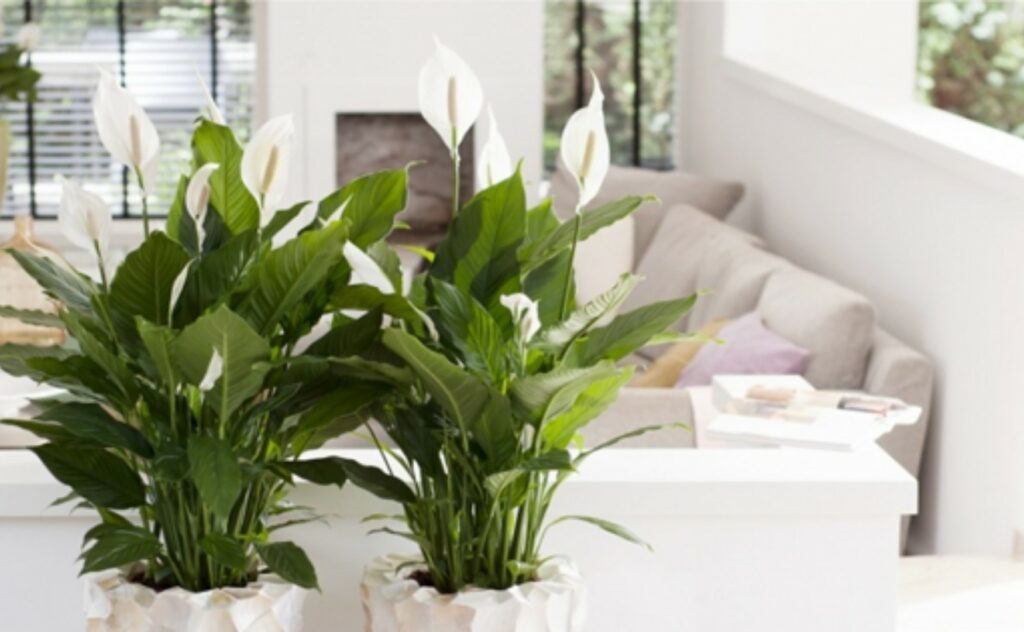
Moreover, the white flowers of the peace lily also help brighten up any room and add a calming, peaceful atmosphere. Peace lily can stand out in gardens with small flowering plants, balancing the contrast between green and other tropical plant colors. They can be used as a centerpiece on a table or tucked away in a corner.
Peace lilies are beautiful plants with a scent similar to potpourri. The combination of its lush green leaves and bright white flowers can instantly make a room look more inviting.
#2 Easy to grow
Peace lilies are simple to cultivate and low-maintenance. Water it once or twice a week when it is actively growing.
Use soil made for acid-loving plants for Peace lilies because they also enjoy slightly acidic soil. The ideal pH range for soil is between 5.5 and 7.0. Most potting soil available at garden centers will have a pH of about 6.5, which is within the range ideal for peace lilies.
To find out the pH level of your soil, you may get a soil test kit at your local garden shop. If the pH level is acidic, use lime, but when it is too alkaline, sulfur or any soil acidifier can help.
To give your peace lily an additional boost, you may also apply fertilizer occasionally. Fertilize it in summer once a month and avoid feeding in winter. However, avoid fertilizing in the winter as they enter dormancy. You may use your preferred fertilizers, such as:
- Liquid fertilizer: They are more efficient than other forms of fertilizer, as they are more readily available for plants to absorb.
- Slow-release fertilizer: Slow-release fertilizer only needs to be used once as it gradually breaks down over time, giving your plants a continuous nutrient source.
Fertilizer burn occurs when plants receive too much fertilizer, resulting in chemical burns on plant roots. It may also happen when you place slow-release fertilizer too close to the stem.
While fertilizing is essential for keeping your peace lily healthy, it is also crucial to ensure it receives adequate light and water and keep it away from drafts and heaters.
#3 Helps with stress reduction
The peace lily is among the most well-liked indoor plants, and it is simple to understand why. It helps lower stress indoors and encourages relaxation aside from being a lovely and elegant tropical plant.
Peace lilies are known for their calming effect because of their beauty, symbolism, and ability to purify the air. Its presence can help to reduce stress and anxiety and bring a sense of balance and harmony to a space. They also provide a natural distraction from intense work environments and add a sense of calm.
Looking at peace lilies can help reduce stress and tension and provide comfort and connection to nature.
The peace lily can be especially beneficial as its beauty and calmness can help to create a peaceful atmosphere in any room. It can even help to improve focus and concentration.
Further Reading: Growing Peace Lily From Seed: A Step-by-Step Guide
Frequently Asked Questions (FAQs)
Is it OK to have a peace lily in your bedroom?
You may place peace lilies in your bedroom as long as there are no curious pets and kids that might accidentally eat their leaves. It is slightly toxic since its plant parts contain calcium oxalate crystals that can be poisonous when ingested.
What toxins do peace lilies remove from the air?
Peace lilies can filter the following toxins in the air:
- Formaldehyde.
- Alcohol.
- Acetone,
- Benzene.
- Trichloroethylene.
- Carbon monoxide.
Final thoughts
The peace lily is true to its name for bringing a sense of peace and tranquility to any room. Adding it to your houseplant collection not only promotes a stress-free environment but also clean and better air quality.
Let us know your thoughts in the comments below, and please don’t forget to share this post with your friends, especially those who love natural air purifiers. They might want to add peace lilies to their collection too!
For peace lily watering schedules, repotting tips, and propagation guides, our plant care guide links to every peace lily article we’ve published.
