

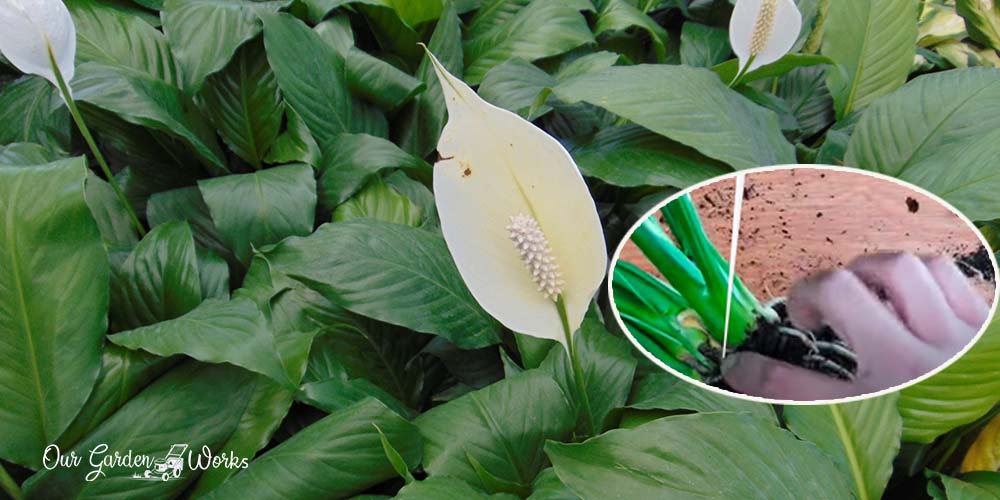
Contrary to a typical flowering plant, peace lilies have no woody stem surrounded by branches. So, one of the FAQs about them is, can you propagate peace lily from cutting? Since it is an herbaceous plant with rhizomes growing underground, the propagation approach is different.
Discover the two propagation methods for peace lilies and their respective advantages.
Learning the difference between these methods can help you grow more than one peace lily without spending a dime.
Aside from savings, you can share your peace lilies with your loved ones from one single mother plant.
Q: Can You Propagate Peace Lily From Cutting?
A: No. You can only propagate peace lilies through seeds and root division.
Peace lilies have rhizomes that grow underground. Once a peace lily blooms and matures, its rhizomes will develop new stems and leaves, which is an ideal candidate for propagation.
If you attempt to cut a peace lily, it will no longer grow back. Instead, the rhizome will have enough energy to develop a new crown where new leaves will emerge.
The benefit of propagating peace lilies from root division is retaining their plant characteristics. They can grow leaves and blooms faster than those planted from seeds.
Mother peace lily vs. Baby peace lily
The first step in propagating peace lilies is identifying which plants are ready for propagation.
You cannot force and divide a young peace lily as it may cause them to die. Usually, a mature peace lily that has bloomed once can be considered a mother plant.
A peace lily may have bloomed, but it may not have enough developed crowns ideal for propagation. The best way to check is to inspect the roots. Check out what a mother peace lily ideal for propagation looks like below:
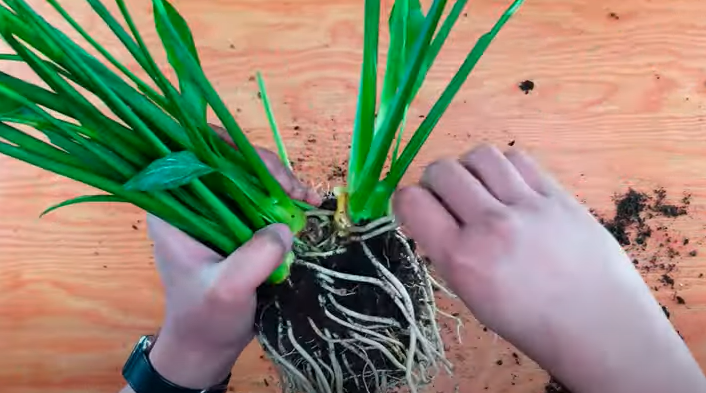
A mother peace lily is usually overcrowded in its pot due to the new shoots that emerge from its rhizome. It’s easy to divide the baby peace lilies from the mother since the crown is like a bundle of soft stems with its own set of roots.
Parts of a peace lily plant
Rhizomes in peace lilies function like those in popular houseplants like monstera and philodendrons.
By definition, a rhizome is a stem-like plant part that grows sideways to spread in the ground. It is similar to a stem cutting that stores plant energy but grows underground and on the trees.
To safely divide your peace lily, below is a brief introduction to its plant parts:
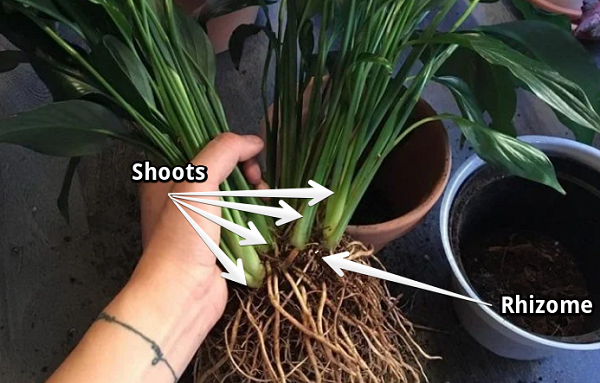
- Spathe: The leaf-like bract that covers the spadix. It is part of the flower of peace lilies that can be white to a greenish hue.
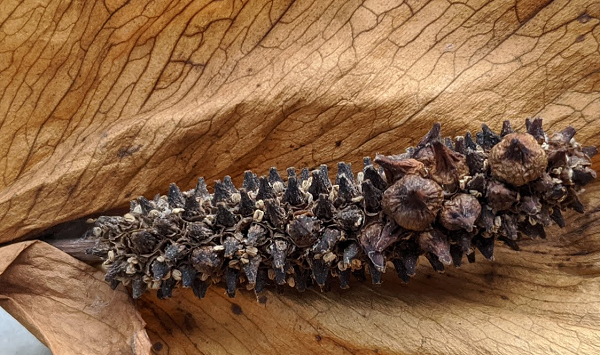
- Spadix: The fleshy spike that holds the tiny flowers of peace lilies. When the blooms wilt, the spadix will slowly develop brown seeds where the blooms once grew.
- Rhizome: The underground root that spreads sideways, forming shoots on its nodes.
- Shoot/crown: A new growth that emerges from the nodes in the rhizome and grows into a new plant ideal for propagation.
Fun fact: Having a rhizome of a peace lily is enough to grow a new plant that can become a new mother plant for new shoots. It is somewhat like a cutting but grows underground.
When is the best time to propagate peace lilies?
Spring and summer are the best time to propagate outdoor peace lilies.
The warm climate is crucial to the recovery of the propagated plant and helps reduce transplant shock on both mother and newly separated shoots.
Indoor peace lilies are ideal for propagation anytime since you can control the temperature through your HVAC system.
They can withstand cool temperatures around 40°F to 50°F. However, they may show signs of stress, like slow growth. Its ideal temperature is around 68°F to 85°F.
How to propagate peace lilies: 2 Methods
Here are the two options that you can use to propagate peace lilies:
Method 1: Propagation through root division
Root division is the quickest way to propagate peace lilies. Once the shoots develop, it only takes 3 to 6 months to grow their blooms.
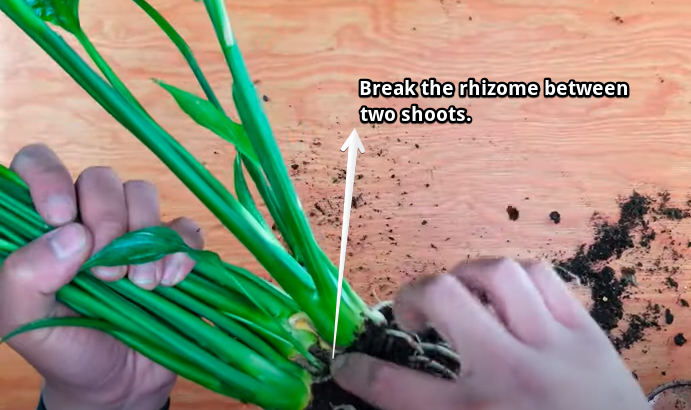
- Identify the crowns: New crowns, sometimes called suckers, are often found clumped around the mother plant. They are easy to detect since they are usually in clumps and bundles. To assess the roots, remove all the soil and excess root balls if the plant is root-bound. Untangling the roots can be a challenge since they love to intertwine with each other. Be gentle in dealing with them to reduce the stress on the plant.
- Divide the mother and crowns: In most cases, you no longer need shears to separate the shoots from the mother plant. You can break them off slowly while keeping the roots intact. The rule of thumb is less wound on the plant, the better.
- Re-pot the mother and shoots: Re-pot the mother and young peace lilies in new pots with fresh but the same soil mix. Using the same soil materials can help reduce the risk of your newly divided plants having transplant shock. Transplant shock occurs in transplants which shows as wilting and temporary plant health decline. It happens when they fail to adjust well to their new environment. If your transplants experience this, you don’t have to worry because it may only last for three to seven days.
- Water and keep an eye on the newly propagated peace lilies: Water the mother and baby peace lilies generously and place them in areas that receive bright indirect light. You’ll notice new growth on the baby peace lilies within a week or two.
You might also like: The Lucky Tree: How To Propagate Money Tree
Method 2: Propagation through seed planting
Propagating peace lilies through seeds is also a good option if you have the patience and space to grow them long-term.
Peace lilies grown from seeds can take years before they bloom. There’s no particular benefit in planting them from seeds, but it’s a good option if no mature peace lilies that produce new shoots are available.
In looking for peace lily seeds, you can either buy commercially available peace lily seeds or take them from a dried flower.
When the spadix dries, peace lily seeds attached to it will come off naturally. They may take a while to germinate and grow into a seedling compared to other houseplants.
The seedlings of peace lilies are slow-growing and can grow an inch or two per year. It can take around three to five years for them to reach maturity.
Mature peace lilies are not self-pollinating. In their natural habitat, insects and wasps are their pollinators. However, in residential gardens and indoor spaces, hand pollination is necessary.
Frequently Asked Questions (FAQs)
Will a peace lily grow back if you cut it?
Peace lilies will not grow back when cut. Instead, new leaves will emerge from the rhizome underground and grow into a new plant. Peace lilies propagate underground through a rhizome – a stem-like structure that develops new shoots in its nodes.
Can peace lilies be grown in water?
Peace lilies can grow in water for several years. To keep them healthy in water, you must avoid using tap water, feed them with fertilizer, and keep them away from direct sunlight.
Peace lilies grown in water may have subtle differences from those in-ground ones, but they produce the same emerald leaves and beautiful blooms.
Can you split a peace lily into two?
Yes, you may split a peace lily through propagation. It is possible to get more than one peace lily from a mother plant if its rhizome developed more than one crown. Peace lilies are propagated through root division and not in cuttings.
How can I make my peace lily grow fast?
A stress-free peace lily grows fast and blooms early. It needs bright indirect light and moist and well-drained soil. Peace lilies are not fuzzy with fertilizers. However, feeding them every 3 to 4 months can boost their leaf and bloom development.
How often do you water a peace lily?
Water peace lilies once the soil has dried up. It usually dries up around five days to a week. Changes in climate and soil composition can affect soil moisture levels. So, check the soil moisture level first before watering.
How can I make my peace lily bloom?
Peace lilies fail to develop enough blooms when they lack enough light exposure. They need at least 5 to 6 hours of bright indirect light to fully develop their flowers. Peace lilies only bloom twice, but the flowers can last for 4 to 6 weeks.
What are the disadvantages of peace lilies?
Peace lilies are mildly toxic to dogs and cats. Though not true lilies, all their plant parts contain calcium oxalate crystals, which can cause a stinging sensation in the mouth and throat when ingested. Discover if peace lily is toxic to cats and dogs here.
What does peace lily mean in Feng Shui?
In Feng Shui, a peace lily symbolizes peace and harmony, which makes it an ideal addition to homes and offices. It helps calm and harmonize the energy in any place.
What happens when you touch a peace lily?
Touching a peace lily without contact with its sap or pollen does not cause any problems. However, people with sensitive skin may experience slight itching when the sap or pollen gets on their skin. For safety, use gloves when handling peace lilies.
How do I know when my peace lily needs repotting?
Peace lilies propagate through their rhizomes and can get crowded in their pot immediately. It’s time to re-pot your peace lily when:
- The roots are starting to show around its pot.
- The leaves are wilting due to the plant roots choking the plant itself.
- When the soil dries up fast after watering.
In Conclusion
Peace lilies are an elegant plant to add to your interiors. They are easy to grow and propagate due to their rhizomes. We hope that the next time someone asks you, can you propagate peace lily from cuttings? You’ll give them a thorough answer based on your experience.
We hope this post equipped you with all the essential propagation methods you’ll need in growing peace lilies. They might be a bit risky to grow around pets and kids, but with precaution, they make an ideal asset for your interiors and garden.
How did peace lilies change the atmosphere in your home? Let us know in the comments!
Also, please share this post with your friends and let them get as many baby peace lilies from one single mother peace lily. Who says gardening has to be expensive?
For peace lily watering schedules, repotting tips, and propagation guides, our plant care guide links to every peace lily article we’ve published.

2 thoughts on “Propagation Q&A: Can You Propagate Peace Lily From Cutting?”