

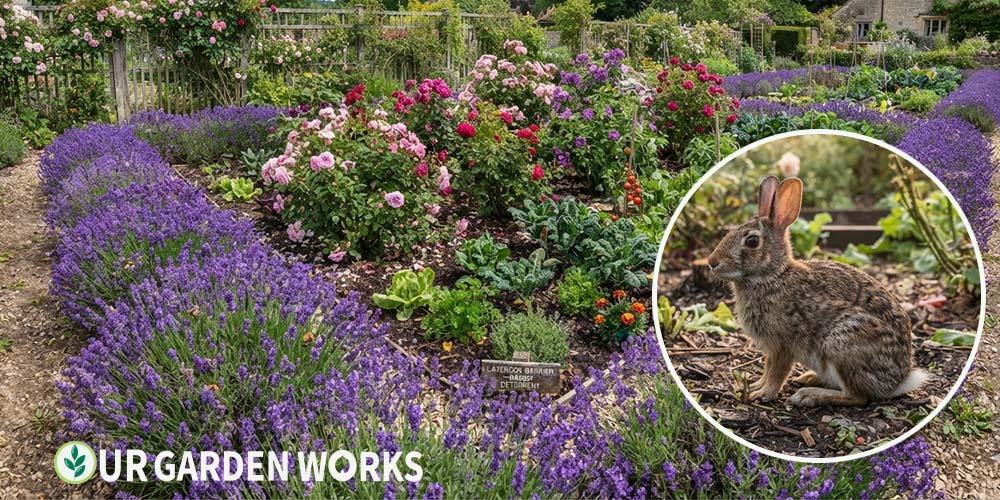
Every list of rabbit-resistant plants includes lavender. And if you’ve ever wondered whether that reputation is deserved — whether lavender actually keeps rabbits away or just sounds like it should — the answer is genuinely reassuring: lavender is one of the most reliably rabbit-resistant plants you can grow.
Rabbits have extremely sensitive noses, and lavender’s volatile aromatic oils are significantly irritating to them. While no plant is completely rabbit-proof in a starving population, lavender is about as close as garden plants get to genuinely unattractive.
Quick Answer: Rabbits almost never eat lavender. The plant’s strong aromatic oils are intensely irritating to rabbits’ sensitive nasal passages. Lavender is one of the most reliably rabbit-resistant garden plants available. Growing it as a border around more vulnerable plants like roses or vegetables creates a scent barrier that genuinely reduces rabbit interest in what’s inside.
Why Rabbits Avoid Lavender
It comes down to scent. Wild rabbits have approximately 100 million scent receptors — compared to about 6 million in humans.
Strong aromatic compounds that smell pleasant to us are genuinely overwhelming and irritating to rabbits’ nasal passages.
Lavender produces linalool and linalyl acetate — the same compounds that make it attractive to pollinators and relaxing to humans — but these are intensely unpleasant to rabbits at close range.
Additionally, the grey-green, slightly fuzzy leaves of lavender have a texture rabbits find unappealing, and the taste of lavender foliage is bitter and medicinal — nothing like the tender, moist leaves rabbits prefer.
The Exceptions
Rabbits will eat lavender in two specific situations: when they are severely food-deprived (deep winter, drought conditions, high population pressure) and when very young seedlings are present before the plant’s essential oils have fully developed.
Established lavender with mature, oil-rich foliage is consistently avoided. Lavender seedlings in their first weeks are more vulnerable.
How to Use Lavender as a Rabbit Deterrent
The most effective use of lavender’s rabbit-deterrent properties is as a perimeter planting around beds containing plants rabbits do want to eat.
Border Strategy
Plant lavender in a continuous border around rose beds, hosta beds, or vegetable garden perimeters. The scent creates a barrier that makes rabbits reluctant to cross into the bed.
A solid border is more effective than scattered individual plants — rabbits can navigate around isolated lavender plants but a continuous fragrant row creates a stronger deterrent effect.
This pairs particularly well with roses. For the complete rose protection approach — including fencing and repellents alongside companion plantings — see our do rabbits eat roses guide.
Best Lavender Varieties for Rabbit Deterrence
| Variety | Height | Hardiness | Scent Intensity |
|---|---|---|---|
| English lavender (Lavandula angustifolia) | 18–24 in | Zones 5–8 | ⭐⭐⭐ Strong |
| Spanish lavender (Lavandula stoechas) | 18–24 in | Zones 7–9 | ⭐⭐⭐ Very strong |
| French lavender (Lavandula dentata) | 24–36 in | Zones 8–11 | ⭐⭐ Moderate |
| Hidcote (compact English type) | 12–18 in | Zones 5–8 | ⭐⭐⭐ Strong |
| Munstead (compact English type) | 12–18 in | Zones 5–8 | ⭐⭐⭐ Strong |
For cold-climate gardeners (Zone 5 and colder), English lavender varieties — particularly Hidcote and Munstead — are both the hardiest and the most fragrant. They return each spring reliably and intensify in scent as they age and mature.
Other Strongly Aromatic Plants That Repel Rabbits
Lavender isn’t the only aromatic deterrent. For a more complete rabbit-resistant garden design, combine it with other strongly scented plants that rabbits consistently avoid:
- Catmint (Nepeta): Highly aromatic, low-growing, prolific bloomer — one of the best ground-level rabbit deterrents for shade
- Russian sage (Perovskia): Similar scent and texture to lavender; rabbits avoid it consistently
- Ornamental sage (Salvia): Both the herbs and ornamental varieties deter rabbits
- Rosemary: Very strongly aromatic; reliably avoided where it’s hardy (Zones 7+)
- Mint: Intensely aromatic; best used in containers to contain spreading
- Wormwood (Artemisia): Extremely bitter and aromatic; one of the strongest rabbit deterrents available
For the complete list of plants that reliably deter rabbits — including perennials, bulbs, and shrubs — see our plants rabbits won’t eat guide.
The Lavender Border Strategy — How Much Do You Need?
One lavender plant does almost nothing. A solid perimeter of lavender does a great deal. The question most gardeners have after deciding to use lavender as a deterrent is how dense and continuous the planting needs to be to create a meaningful scent barrier.
The practical answer: plant lavender close enough that the canopies touch when mature — typically 18 inches apart for compact varieties like Hidcote and Munstead, 24 inches for standard English lavender.
A gap in the lavender border is a gap in the scent barrier. Rabbits navigate by nose and will walk around isolated fragrant plants.
Minimum Effective Border Width
A single row of lavender at the bed edge creates a meaningful but not impenetrable barrier for light to moderate rabbit pressure.
Two staggered rows — lavender at the very edge with a second row of catmint 12 inches back — creates a deeper aromatic barrier that’s more effective against established rabbit populations.
💡 The best lavender companion combination
Lavender at the outer edge + catmint (Nepeta) immediately behind it creates the most effective aromatic border available. Lavender handles full sun; catmint tolerates more shade and fills gaps.
Together they create overlapping scent zones and season-long deterrence. Both return every spring with minimal care. This combination borders well with roses, hostas, and vegetable garden perimeters — all three of the most common rabbit targets.
Lavender vs Other Aromatic Deterrents — Which Is Best for Your Garden?
Lavender is the most widely recommended aromatic rabbit deterrent, but it’s not always the best choice for every garden condition. Here’s how to choose based on your specific situation:
| Situation | Best Aromatic Deterrent | Why |
|---|---|---|
| Full sun, well-drained soil | Lavender (Hidcote or Munstead) | Thrives, produces maximum oil in these conditions |
| Partial shade (under trees, north-facing beds) | Catmint (Walker’s Low) | Lavender struggles in shade; catmint thrives |
| Zone 4 or colder | Catmint or wormwood | More winter-hardy than lavender |
| Wet or clay soil | Russian sage or wormwood | Lavender dies in wet soil; these tolerate it better |
| Very high rabbit pressure | Wormwood (Artemisia) | Strongest deterrent available — combine with lavender |
| Edible garden border | Rosemary or sage | Deters rabbits AND is edible — dual purpose |
For the complete list of all rabbit-resistant plants including non-aromatic options, see our plants rabbits won’t eat guide.
Lavender Growing Basics
Using lavender as a rabbit deterrent works best when the plants are healthy and producing maximum fragrance. Key requirements:
- Full sun — minimum 6 hours daily. Lavender in shade produces significantly less aromatic oil and loses much of its deterrent effect.
- Excellent drainage. Lavender dies in wet soil. Raised beds or slightly sloped ground is ideal.
- Lean soil. Don’t over-fertilize — rich soil produces lush growth with less oil concentration. The more stressed and lean the soil, the more aromatic the lavender.
- Annual pruning. Cut back by one-third in spring to prevent woodiness and encourage fresh, oil-rich new growth.
Frequently Asked Questions
Will lavender keep rabbits out of my vegetable garden?
As a perimeter border, lavender reduces rabbit interest — it’s not a guarantee. A solid lavender border combined with repellents applied to high-value vegetables gives you meaningful protection without fencing.
For complete protection of a vegetable garden, physical fencing remains the most reliable method. See our complete rabbit control guide for fencing that works alongside border plantings.
My rabbits ate my lavender seedlings — does it not work?
Young lavender seedlings in their first weeks have not yet developed the full concentration of aromatic oils that makes mature plants unattractive. Protect lavender seedlings just as you would any new planting until they’re established (roughly 8–12 weeks after transplanting).
Once the plant is actively growing and producing oil-rich foliage, rabbit interest drops significantly.
Is lavender safe for rabbits to eat — as a pet food or if wild rabbits nibble it?
Lavender is not toxic to rabbits, but it’s not recommended as food. The aromatic oils can cause mild digestive upset in rabbits that eat significant quantities.
Wild rabbits who nibble established lavender are unlikely to eat enough to cause problems — they typically take one taste and leave. Don’t intentionally feed lavender to pet rabbits.
Part of Our Rabbit Garden Pest Guide
Final Thoughts
We hope this gives you a clear answer on lavender’s place in your rabbit-deterrent toolkit — and helps you put it to work where it’s most effective. A solid lavender border around your roses or raised beds is one of the most attractive and low-maintenance rabbit deterrents available.
For the complete plant list of reliable rabbit-resistant choices, our plants rabbits won’t eat guide covers 20+ options.
Share this with a fellow gardener who is looking for beautiful plants that pull double duty as pest deterrents — and let us know in the comments what rabbit damage looks like in your garden this season. Happy growing!
