

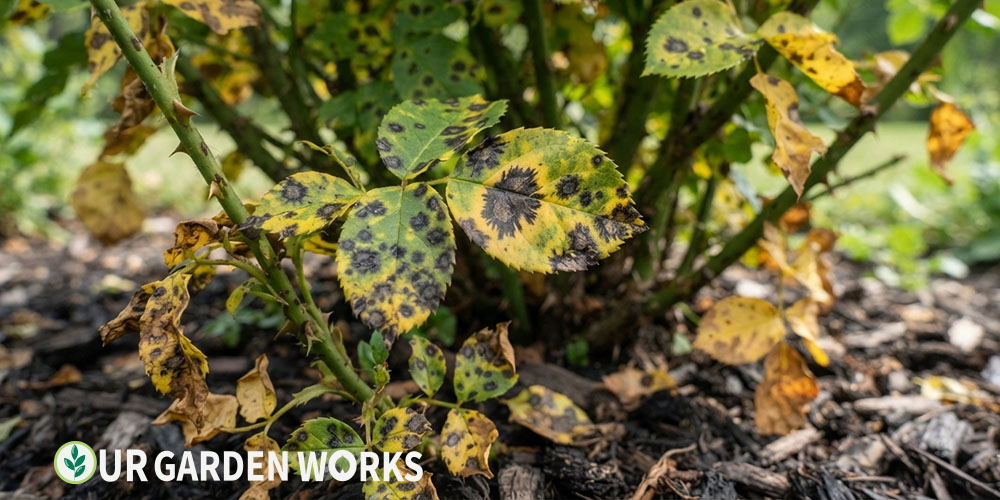
Black spot is, without much competition, the single most common disease rose growers deal with worldwide. If you’ve grown roses for more than a season or two without ever seeing it, consider yourself fortunate — most rose gardens encounter it eventually, regardless of how well the plants are cared for otherwise.
The good news is that black spot is well understood, predictable, and very manageable once you commit to a consistent approach.
This guide covers exactly what it looks like, why it happens, how to treat an active infection, and the long-term habits that keep it from coming back every single year.
Quick Answer: Black spot produces circular black or dark brown spots with feathered, irregular edges, usually surrounded by a yellow halo, starting on lower leaves and working upward. It’s a fungal disease that thrives in humid conditions and spreads via water splash. Remove affected leaves, apply a fungicide labeled for black spot, improve airflow around the plant, and water at soil level rather than overhead going forward.
What Black Spot Actually Looks Like
Black spot produces roughly circular spots, typically a quarter inch to half inch across, in shades of black to dark brown.
The defining visual feature is the spot’s edge — rather than a clean, sharp border, black spot margins look feathered or fringed, almost as if the black pigment is bleeding slightly into the surrounding tissue.
A yellow halo frequently surrounds each spot, and as the disease progresses, entire leaves yellow and drop from the plant, often starting with the lowest leaves and working upward over the course of the season.
Severely affected bushes can lose most of their lower and middle foliage by late summer, leaving a sparse, leggy appearance even though the plant itself usually survives.
💡 The feathered edge is the giveaway
Several other rose problems produce dark spots, but black spot’s distinctively feathered, irregular margin sets it apart from cleaner, sharper-edged spots caused by other issues. If you’re looking at a spot with a crisp, well-defined border, it’s worth considering other causes before assuming black spot.
Why Black Spot Happens
Black spot is caused by the fungus Diplocarpon rosae, which needs water sitting on leaf surfaces for several hours to germinate and infect new tissue.
This is why the disease is so strongly tied to weather and watering habits — humid climates, frequent rain, overhead irrigation, and morning dew that lingers into the day all create the exact conditions this fungus needs to thrive.
The fungus overwinters in fallen leaves and on cane surfaces, which means a garden that had black spot one season is primed to have it again the following year unless those overwintering spores are addressed through cleanup.
This cycle is exactly why treating only the current season’s symptoms, without addressing what’s lingering in the garden over winter, leads to the same frustrating recurrence year after year.
Treating an Active Black Spot Infection
Directions
- Remove all visibly affected leaves immediately, including any that have already fallen to the ground beneath the plant. Dispose of them in the trash, not the compost pile, since composting doesn’t reliably kill fungal spores.
- Apply a fungicide labeled specifically for black spot — products containing chlorothalonil, myclobutanil, or copper are all effective options. Follow label instructions for application frequency, typically every 7-14 days during active disease pressure.
- Water at the base of the plant rather than overhead, and water in the morning so any incidental moisture on leaves dries quickly during the day rather than sitting overnight.
- Improve airflow by thinning overly dense growth and ensuring adequate spacing between plants — stagnant, humid air around foliage is exactly what the fungus favors.
- Continue monitoring and treating through the season, since black spot pressure typically persists as long as warm, humid conditions continue.
⚠️ Don’t stop treatment after symptoms improve
It’s tempting to stop fungicide applications once new growth looks clean, but black spot pressure often returns if treatment stops too early in a season with sustained humid weather. Continue your treatment schedule through the period when conditions favor the disease, rather than reacting only when symptoms reappear.
Preventing Black Spot From Returning
Fall cleanup is the single highest-leverage prevention step available, since removing every fallen leaf from beneath and around your roses eliminates the fungus’s primary overwintering location.
Many experienced rose growers consider thorough autumn cleanup more important to next year’s black spot pressure than anything they do during the active growing season itself.
Mulching beneath roses with a fresh 2-3 inch layer each spring creates a physical barrier between the soil (where old spores may persist despite cleanup efforts) and new lower leaves, further reducing reinfection risk.
Choosing black spot-resistant varieties for future plantings is also worth serious consideration if the disease has been a recurring, significant problem — modern shrub roses, particularly many Knockout varieties, show dramatically better resistance than older hybrid tea types.
A preventive fungicide schedule, started in early spring before symptoms appear rather than reactively once spots show up, is the final piece for gardens with an established history of heavy black spot pressure.
This proactive timing, similar to the principle covered in our tomato disease guides, consistently outperforms waiting for visible symptoms before beginning treatment.
Black Spot vs. Other Rose Leaf Spots
| Disease | Spot Color | Edge Character | Yellow Halo |
|---|---|---|---|
| Black spot | Black to dark brown | Feathered, irregular | Common |
| Rust | Orange to rust-red (not black) | Raised, powdery pustules | Sometimes |
| Anthracnose | Brown to purplish-red | Sunken, sharply defined | Less common |
| Downy mildew | Purple to brown angular blotches | Angular, follows veins | Rare |
If your spots are orange or rust-colored rather than black, our guide to rust on roses covers that specific disease in detail, since the treatment approach differs somewhat from black spot.
Rose Varieties With Strong Black Spot Resistance
If black spot has been a persistent, frustrating problem in your garden despite consistent treatment and good cleanup habits, switching some plantings to genuinely resistant varieties is worth serious consideration rather than continuing to fight the same battle indefinitely.
Knockout roses remain one of the most widely available and reliably resistant options, bred specifically to shrug off black spot pressure that would devastate an older hybrid tea in the same conditions.
Many modern shrub and landscape rose varieties, often marketed with disease-resistance claims directly on their plant tags, have undergone breeding specifically targeting black spot and other common rose diseases.
While no variety is completely immune in extremely high-pressure conditions, the difference in severity between a resistant variety and a susceptible one growing side by side in the same garden is often dramatic enough to notice within a single season.
It’s worth noting that resistance doesn’t mean immunity, and even the most resistant varieties can show some black spot symptoms during an unusually wet, humid season.
The practical benefit of choosing resistant varieties is a meaningfully lighter disease burden requiring less intensive management, not a guarantee you’ll never see a single spot.
How Climate and Variety Affect Black Spot Risk
Black spot pressure varies dramatically by region, and understanding your local risk level helps calibrate how aggressive your prevention strategy needs to be.
Humid climates in the Southeast and parts of the Pacific Northwest face significantly higher black spot pressure than arid regions like the Southwest, where low humidity rarely gives the fungus the moisture window it needs to establish.
If you garden in a high-pressure region, choosing resistant varieties isn’t just a nice-to-have — it’s often the difference between a manageable, occasional issue and a constant, season-long battle.
Conversely, gardeners in naturally dry climates may find that good watering habits alone, without needing aggressive fungicide schedules, keep black spot from ever becoming a significant problem.
Frequently Asked Questions
Will black spot kill my rose bush?
Rarely outright, but severe, repeated infections over multiple seasons without treatment can significantly weaken a plant, reduce bloom production, and make it more vulnerable to winter damage due to reduced energy reserves.
Most established rose bushes survive black spot for years, even when poorly managed, but they perform far better when the disease is kept under control.
Can black spot spread to other plants in my garden?
Diplocarpon rosae is specific to roses and won’t infect unrelated plants like tomatoes, hydrangeas, or perennials in the same bed. It can, however, spread readily between different rose bushes growing near each other, which is why treating and cleaning up around all roses in an affected area matters, not just the most visibly symptomatic plant.
Is black spot worse in a particularly rainy year?
Yes, significantly — since the fungus requires extended leaf wetness to infect, a rainy season with frequent overcast, humid days creates ideal conditions for rapid spread regardless of how well you’ve otherwise managed the disease in previous years. In an unusually wet season, expect to treat more frequently and aggressively than your typical schedule.
Are organic treatments effective against black spot, or do I need synthetic fungicides?
Copper-based fungicides and neem oil, both considered organic-acceptable options, provide meaningful control when applied consistently and preventively, though they may require more frequent application than some synthetic alternatives.
For severe, established infections, synthetic fungicides like chlorothalonil or myclobutanil often provide faster, more decisive control if organic options haven’t kept pace with disease pressure.
Related Articles in Our Rose Leaf Problems Guide
- Holes in Rose Leaves — Causes, Identification, Treatment
- Rust Spots on Rose Leaves
- Why Aren’t My Roses Blooming?: Top 9 Reasons And How To Fix Them
- 10 Best Rose Fertilizers – (Reviews & Top Picks for 2026)
- 10 Best Insecticides For Roses – Reviews & Top Picks (2026)
- What Causes Yellow Leaves On Knockout Roses And How To Avoid Them
Final Thoughts
We hope this guide has given you the full picture on black spot — what it is, why it keeps coming back, and the consistent habits that actually break the cycle. It’s one of the most common rose problems out there, and also one of the most manageable once you commit to fall cleanup and proper watering.
For more rose care guidance, our plant care guides cover everything from planting to pest and disease management.
Share this post with a fellow rose grower who’s battling black spot this season — and let us know in the comments what’s worked for your garden. Happy growing!
