

Spring pest pressure follows a predictable pattern every year, and once you understand why, the timing stops feeling random.
Overwintered eggs hatch as soil warms, new tender growth is exactly the food source many insects evolved to target, and beneficial predator populations haven’t caught up yet to keep things in balance. The result is a short window where pest populations can build fast if you’re not watching for them.
The good news: most spring pests are far easier to manage early, before populations explode, than later in the season once they’re established. This guide covers the ten most common offenders and the specific response that actually works for each.
Editor’s Note: The most common spring garden pests are aphids, slugs, cutworms, flea beetles, cabbage worms, spider mites, thrips, leafminers, Japanese beetle grubs emerging as adults, and squash bugs. Check new growth and leaf undersides weekly starting in early spring — catching any of these in their first week saves significantly more plant tissue than treating an established infestation.
Why Spring Specifically Concentrates Pest Pressure
Many common garden pests overwinter as eggs laid in soil, plant debris, or bark crevices the previous fall, timed precisely to hatch when spring temperatures and new plant growth align.
This isn’t coincidence — it’s the insect’s entire life cycle built around synchronizing offspring with the most nutritious, easiest-to-eat plant tissue of the year, which is exactly the tender new growth your plants are producing right now.
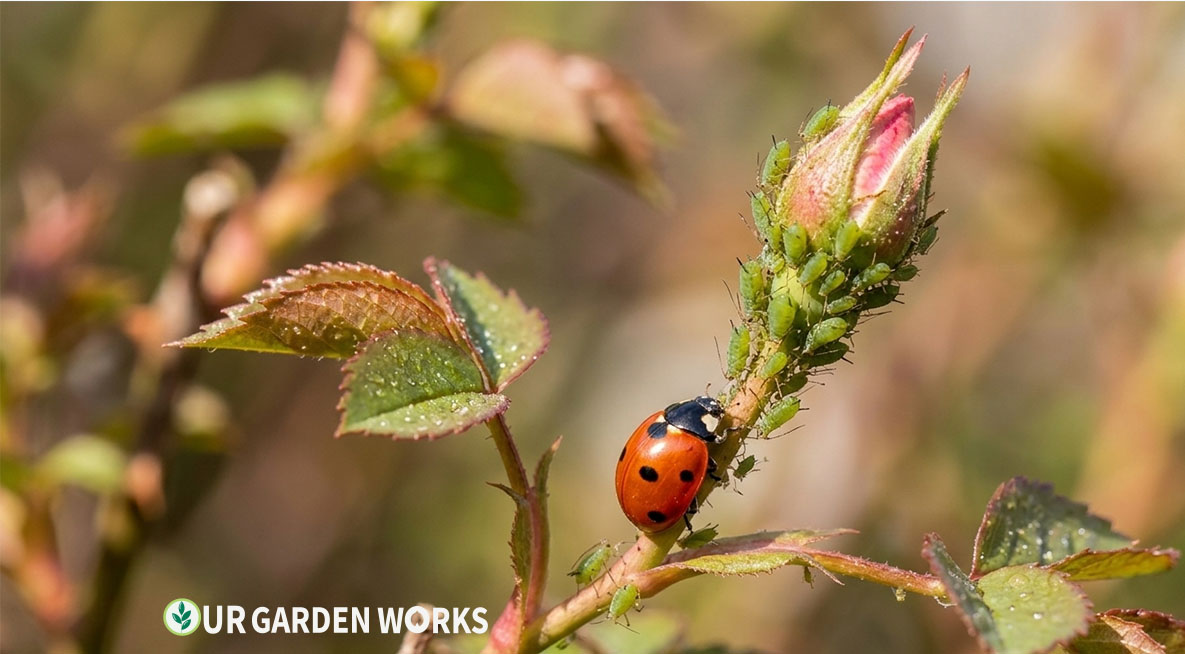
Beneficial predators like ladybugs, lacewings, and parasitic wasps follow a slower population curve, since they depend on pest populations existing first before their own numbers can build.
This creates a natural lag where pests get a head start most years — which is exactly why early spring monitoring matters more than monitoring at almost any other point in the season.
Why Tender New Growth Is So Much More Vulnerable Than Mature Foliage
It’s worth understanding exactly why spring’s new growth attracts so much more pest pressure than the same plant’s mature leaves later in the season.
New leaves and shoots have thinner cell walls, lower concentrations of the bitter defensive compounds many plants build up over time, and a higher proportion of easily digestible sugars and proteins relative to tougher structural fiber.
From an insect’s perspective, this makes new growth dramatically more nutritious and easier to consume than mature tissue — which is exactly why pests so often appear to materialize the moment new shoots emerge, even on a plant that showed no signs of pest activity the week before.
This same vulnerability window closes somewhat as the season progresses and tissue toughens, which is part of why the same plant often becomes noticeably more pest-resistant by midsummer without any intervention at all.
The 10 Pests to Watch For
1. Aphids
Small, soft-bodied insects clustering on new growth and leaf undersides, often alongside sticky honeydew residue. Spray with insecticidal soap, covering undersides thoroughly. See our insecticidal soap vs neem oil guide for the right product choice.
2. Slugs and Snails
Ragged holes in leaves and a telltale slime trail, most active during cool, damp spring weather. Hand-pick in the evening when they’re active, or use beer traps and diatomaceous earth barriers around vulnerable seedlings.
3. Cutworms
Caterpillars that sever young seedling stems at the soil line overnight, often leaving the plant top lying nearby with no visible culprit. Place cardboard collars around transplants for the first few weeks — this single barrier stops cutworms cold.
4. Flea Beetles
Tiny, jumping black beetles that riddle leaves (especially brassicas and eggplant) with small round holes. Row covers installed at planting prevent the worst damage; once established, a light dusting of diatomaceous earth helps.
5. Cabbage Worms
Green caterpillars that blend into brassica leaves while chewing significant holes. Hand-pick when found, and check leaf undersides for the small yellow egg clusters that precede an infestation.
6. Spider Mites
Nearly invisible to the naked eye, but their feeding causes a fine stippled, bronzed look on leaves, often with delicate webbing in heavy infestations. They thrive in dry, dusty conditions — regular leaf misting genuinely helps prevent outbreaks.
7. Thrips
Tiny, slender insects causing silvery streaking and distorted new growth, particularly on alliums and flowering plants. Blue or yellow sticky traps help monitor populations before damage becomes severe.
8. Leafminers
Larvae that tunnel inside leaf tissue, leaving distinctive winding white trails visible through the leaf surface. Remove and destroy affected leaves promptly — this interrupts the larvae before they complete their cycle and emerge as adults.
9. Japanese Beetle Grubs (Emerging as Adults)
White, C-shaped grubs overwinter in lawns and emerge as adult beetles in late spring to early summer, skeletonizing leaves on roses and many ornamentals. Treating lawns with beneficial nematodes in spring targets the grub stage before adults ever emerge.
10. Squash Bugs
Brownish-gray insects that cluster at the base of squash and pumpkin plants, with distinctive bronze egg clusters on leaf undersides. Check leaf undersides weekly once squash plants are up, and scrape off egg clusters before they hatch.
Building a Weekly Spring Monitoring Habit
Most of the pests above are dramatically easier to manage if caught within their first week of activity, before populations build past a level any single treatment can fully address.
A five-minute weekly walk through the garden — checking new growth, leaf undersides, and the soil line around stems — catches the overwhelming majority of these issues while they’re still small enough to hand-manage.
This habit matters more in spring than in any other season precisely because of the vulnerability window described above.
A pest population that establishes itself on tender new growth in April, when that tissue offers the least resistance, often becomes much harder to control by May once it’s had several weeks of essentially unimpeded reproduction.
The same population caught in its first week is frequently manageable with nothing more than hand-picking or a single targeted treatment.
💡 Marigolds and other companion plants help, but don’t replace monitoring
Companion planting genuinely reduces pest pressure over a season, but it’s a supplement to active monitoring, not a substitute for it.
See our guide on what marigolds actually repel for a clear-eyed look at what companion planting can and can’t do.
Why Treating Early Costs Less Effort Than Treating Late
It’s worth being explicit about the math behind early intervention, since it’s the real argument for weekly monitoring even when the garden looks fine on the surface. A small aphid colony of a few dozen individuals, caught in its first week, can typically be controlled with one or two treatments of insecticidal soap or even simple hand-removal.
That same colony, given three or four uninterrupted weeks to reproduce, can expand into the thousands — aphids reproduce asexually and rapidly under favorable spring conditions, meaning population growth genuinely compounds rather than progressing linearly.
The treatment required to control an established population of that size is substantially more involved than the treatment that would have worked in week one, which is the entire economic case for the weekly monitoring habit this guide recommends.
This same logic extends to several of the other pests on this list, particularly slugs and squash bugs, both of which lay eggs in batches that hatch into an entire new generation almost simultaneously. Removing or treating one adult slug or one cluster of squash bug eggs prevents dozens of future individuals, while missing that same window means dealing with the full hatched generation instead.
Frequently Asked Questions
Should I spray preventively before I see any pests at all?
Generally no — broad preventive spraying, even with organic products, can harm beneficial insects that would otherwise help control pest populations naturally. Monitoring and treating specific problems as they appear is more effective long-term than blanket prevention.
Why do I see more pests some springs than others?
Mild winters allow more overwintering eggs and larvae to survive, while a hard, prolonged freeze can knock back populations significantly before spring even begins. Weather in the preceding fall and winter is a genuine predictor of how heavy spring pest pressure will be.
Are ladybugs and other beneficial insects actually effective against these pests?
Yes, meaningfully so, especially against aphids — a single ladybug larva can eat dozens of aphids per day. The challenge is timing: beneficial populations build more slowly than pest populations in early spring, which is exactly why early monitoring and light intervention matters until predator numbers catch up.
Should I treat every plant in my garden preventively at the start of spring?
No — preventive blanket treatment, even with organic products, tends to do more harm than good by also affecting the beneficial insects that would otherwise help control pest populations naturally. Targeted treatment based on actual weekly monitoring, applied only where a specific pest is confirmed, produces better long-term results than a calendar-based preventive spray schedule.
Do raised beds or containers see less spring pest pressure than in-ground gardens?
Often somewhat less, particularly for soil-dwelling pests like cutworms and certain beetle grubs, since fresh, bagged soil used to fill raised beds and containers typically doesn’t carry overwintering eggs the way established garden soil does. Flying and wind-dispersed pests like aphids and whiteflies, however, find raised beds and containers just as easily as in-ground plantings, so this protection is partial rather than complete.
🐛 Related Articles in Our Pest Control Guide
Final Thoughts
We hope this guide helps you catch spring’s pest wave early, when a few minutes of hand-picking or a single spray treatment goes much further than waiting until populations are established.
For more on natural pest control products, our pest control guides cover the rest of the toolkit.
If there’s one habit worth taking from this guide above everything else, it’s simply looking — turning leaves over, checking the soil line, scanning new growth for a few minutes each week.
Most of spring’s pest problems are genuinely manageable when caught early; the difficulty almost always comes from discovering a problem weeks after it started, once the population has already had time to multiply well beyond what a first response could easily handle.
A few minutes a week is a small price for staying ahead of all ten, and the habit gets easier every season as you learn to recognize what’s normal for your specific garden.
Share this post with a fellow gardener who’s ready to get growing — and let us know in the comments which of these has shown up in your garden this spring. Happy growing!
